15 Small Closet Organization Ideas Without Pretending You Have More Space
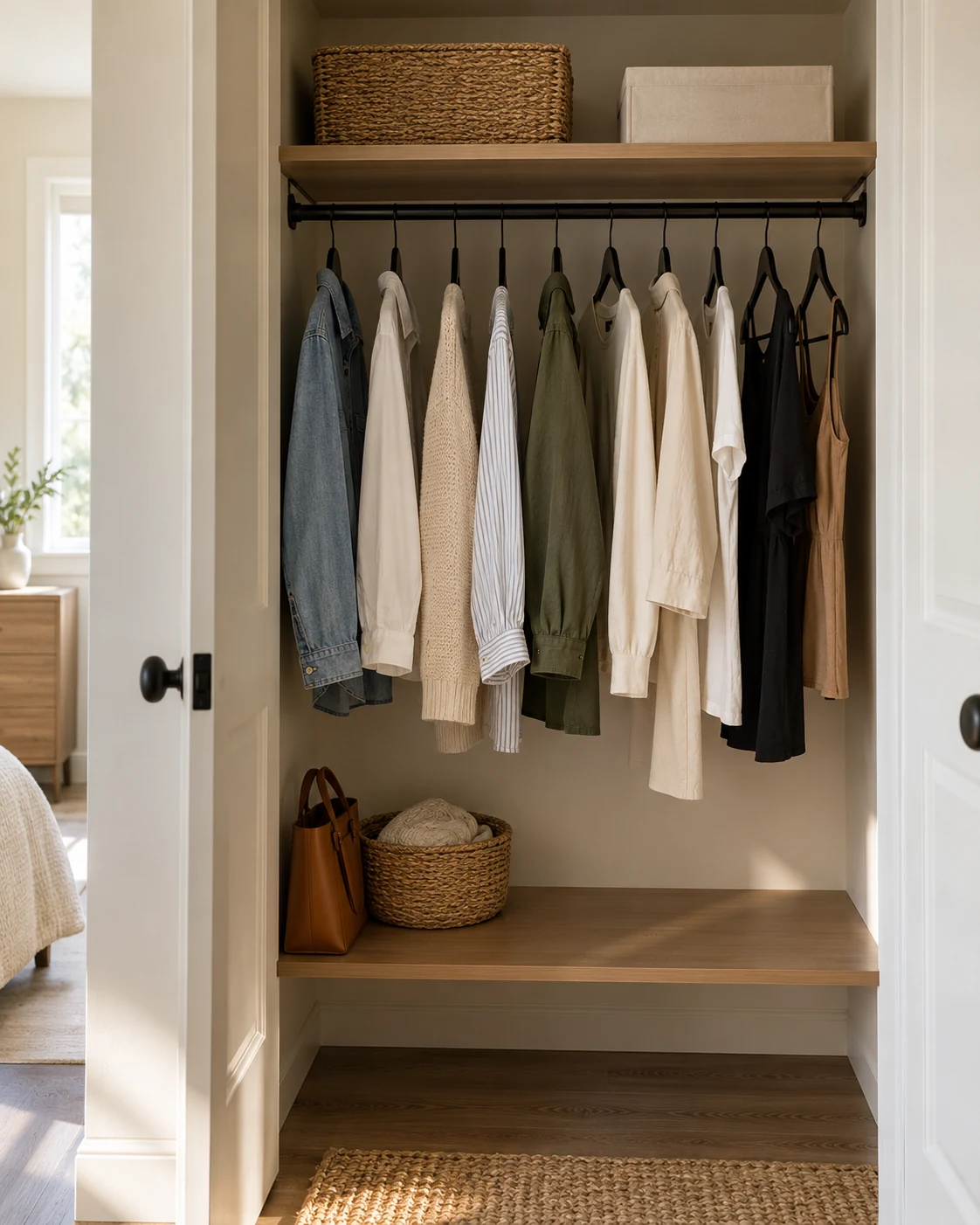
Explore the ideas
- 1. Make room for the clothes in use now
- 2. Put soft piles inside fabric bins
- 3. Give one shelf a simple divider
- 4. Hang the pieces that actually benefit
- 5. Use one hanging shelf for lighter categories
- 6. Separate shoes from the main clothes
- 7. Keep long garments on one side
- 8. Give bags a defined shelf space
- 9. Keep the everyday layer nearest the opening
- 10. Fold small items into a visible bin
- 11. Use the top shelf for light, infrequent items
- 12. Make a repeat outfit easy to find
- 13. Create a temporary return spot
- 14. Leave a little space on the rod
- 15. Reset one shelf before expanding the system
A small closet doesn’t gain capacity because every hanger matches. It becomes more useful when clothes have boundaries and you can return them easily. Start by noticing which part currently fails during an ordinary morning or laundry day.
If the sweater piles keep collapsing, another matching hanger won’t fix that shelf. Shoes beneath long dresses create a different problem again. Start with the problem that frustrates you most, then choose a change addressing that issue.
Measure your closet’s usable opening, shelf depth, rod position, and available floor. Check the condition and stated limits of existing fittings where possible. A tidy arrangement can still overload a rod or put too much weight on a shelf.
1. Make room for the clothes in use now
Give currently worn clothes the easiest space to reach. Pieces needed only occasionally can use a less convenient location if they remain appropriately stored. This isn’t a requirement to discard clothes you want to keep.
Comparable options, not the exact pictured items. Check the selected color, size and buying notes.
Materials, fit and differences from the concept
- Amazon Basics slim velvet hangers: Slim velvet hangers, 50-pack. Reduced hanger bulk does not increase the closet rod load capacity.
Start with one short section rather than emptying everything without a return plan. Notice which garments compete for the same space. Reducing that immediate congestion can make the closet more usable before you buy any organizers.
2. Put soft piles inside fabric bins
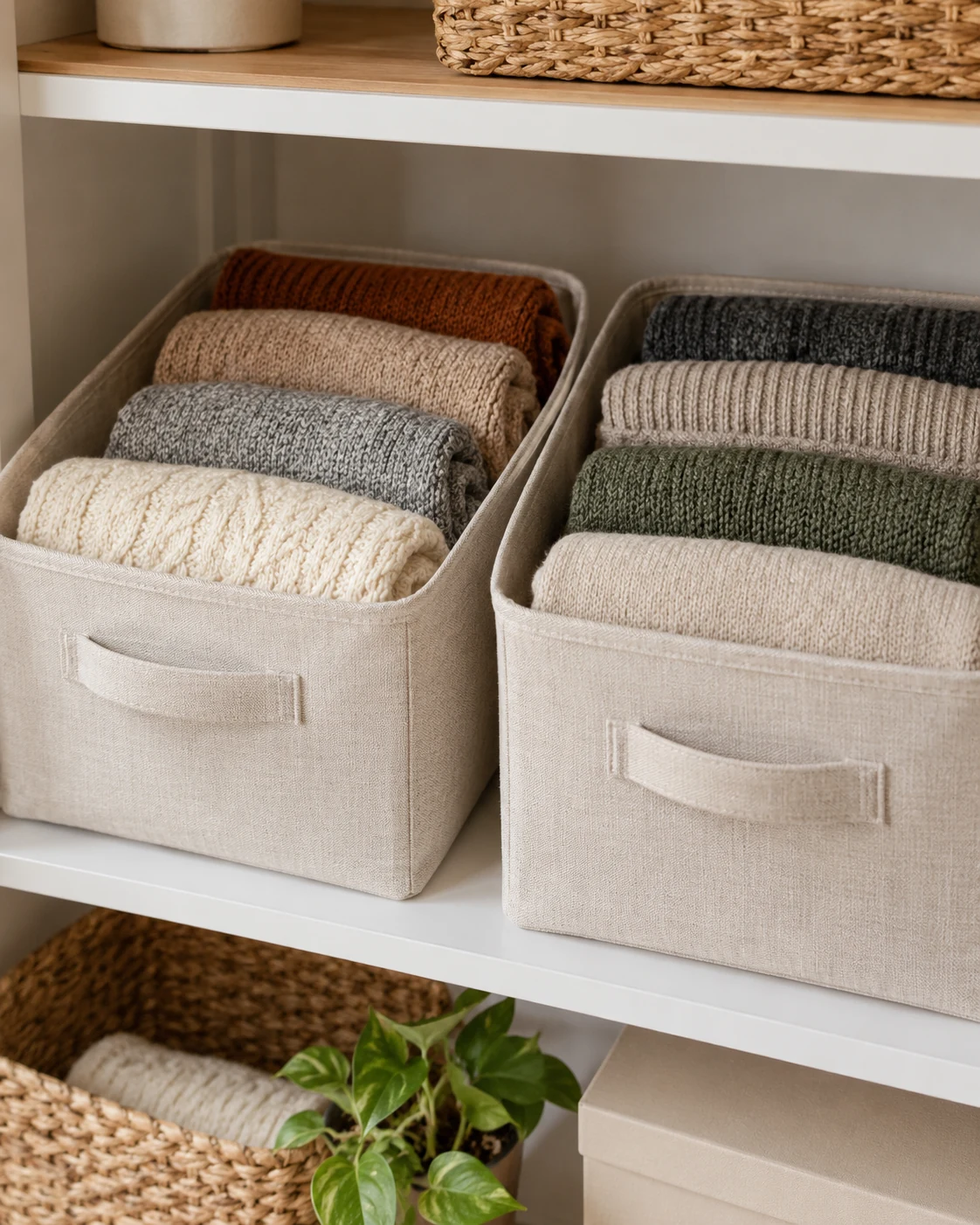
Soft knits can collapse into neighboring stacks even when you fold them carefully. An open fabric bin provides a physical boundary around a modest group. Fold pieces to the bin’s dimensions so you can see and remove them comfortably.
Comparable options, not the exact pictured items. Check the selected color, size and buying notes.
Materials, fit and differences from the concept
- Lifewit fabric organizer bins: Assorted fabric storage bins. Compare each bin size with the shelf and actual folded category; not rigid drawers.
Keep enough room to lift one item without dragging out the rest. A stuffed bin replaces a falling pile with another difficult search. Choose a shallow enough container that the category doesn’t disappear into its bottom.
3. Give one shelf a simple divider
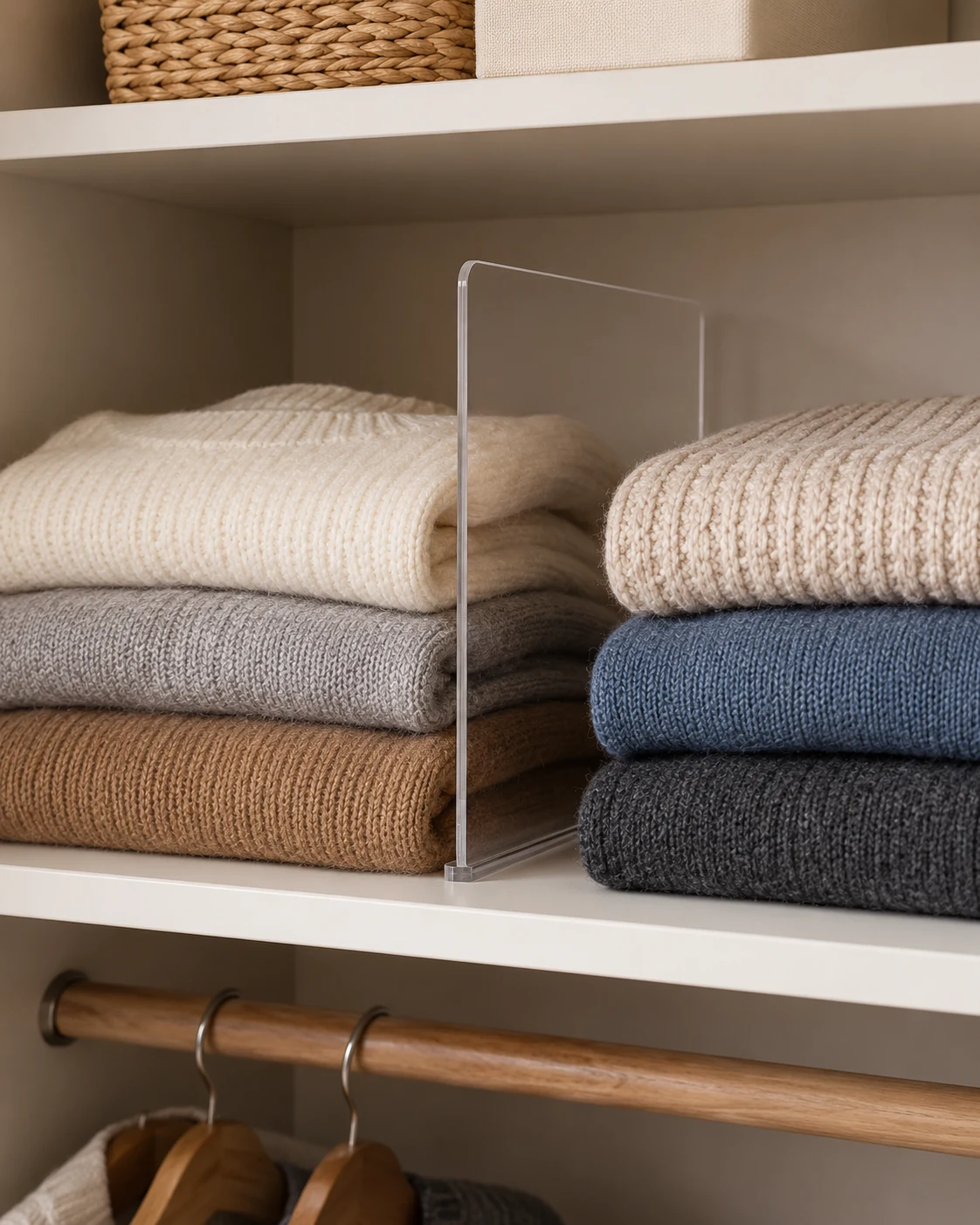
A divider can stop two small folded stacks from leaning into each other. Keep the stacks low enough that you can reach their lower pieces without dismantling everything. Clear dividers leave the shelf’s contents visible from the front.
Comparable options, not the exact pictured items. Check the selected color, size and buying notes.
Materials, fit and differences from the concept
- Clear acrylic shelf dividers: Clip-on acrylic shelf dividers. Listed shelf-thickness limit is 0.75 inch; measure your board and do not force the mount.
Check the divider’s mounting range against your shelf thickness before ordering. A clip-on design doesn’t fit every board, and forcing it can damage the accessory. The selected option has specific fit limits rather than universal compatibility.
4. Hang the pieces that actually benefit
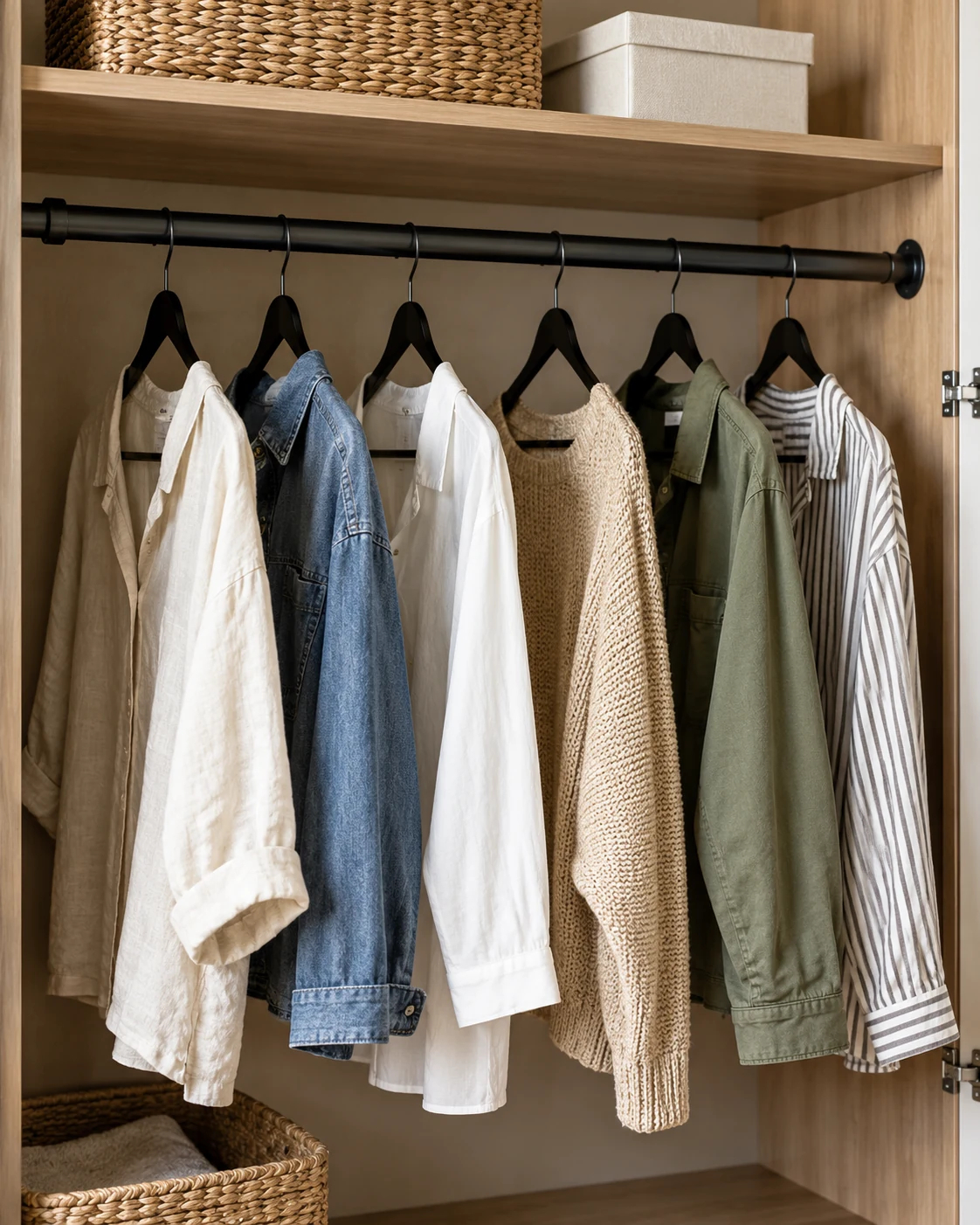
Shirts and suitable trousers may be easier to find on hangers than in deep folded piles. Some knits are better stored folded when hanging would distort their shape. Use the garment’s care needs rather than one rule for the whole wardrobe.
Comparable options, not the exact pictured items. Check the selected color, size and buying notes.
Materials, fit and differences from the concept
- Amazon Basics slim velvet hangers: Slim velvet hangers, 50-pack. Reduced hanger bulk does not increase the closet rod load capacity.
Slim hangers can reduce bulk between garments, but they don’t strengthen the rod. Keep the total load within the fitting’s capacity. Leave room for your hands so removing one shirt doesn’t pull several others along.
5. Use one hanging shelf for lighter categories
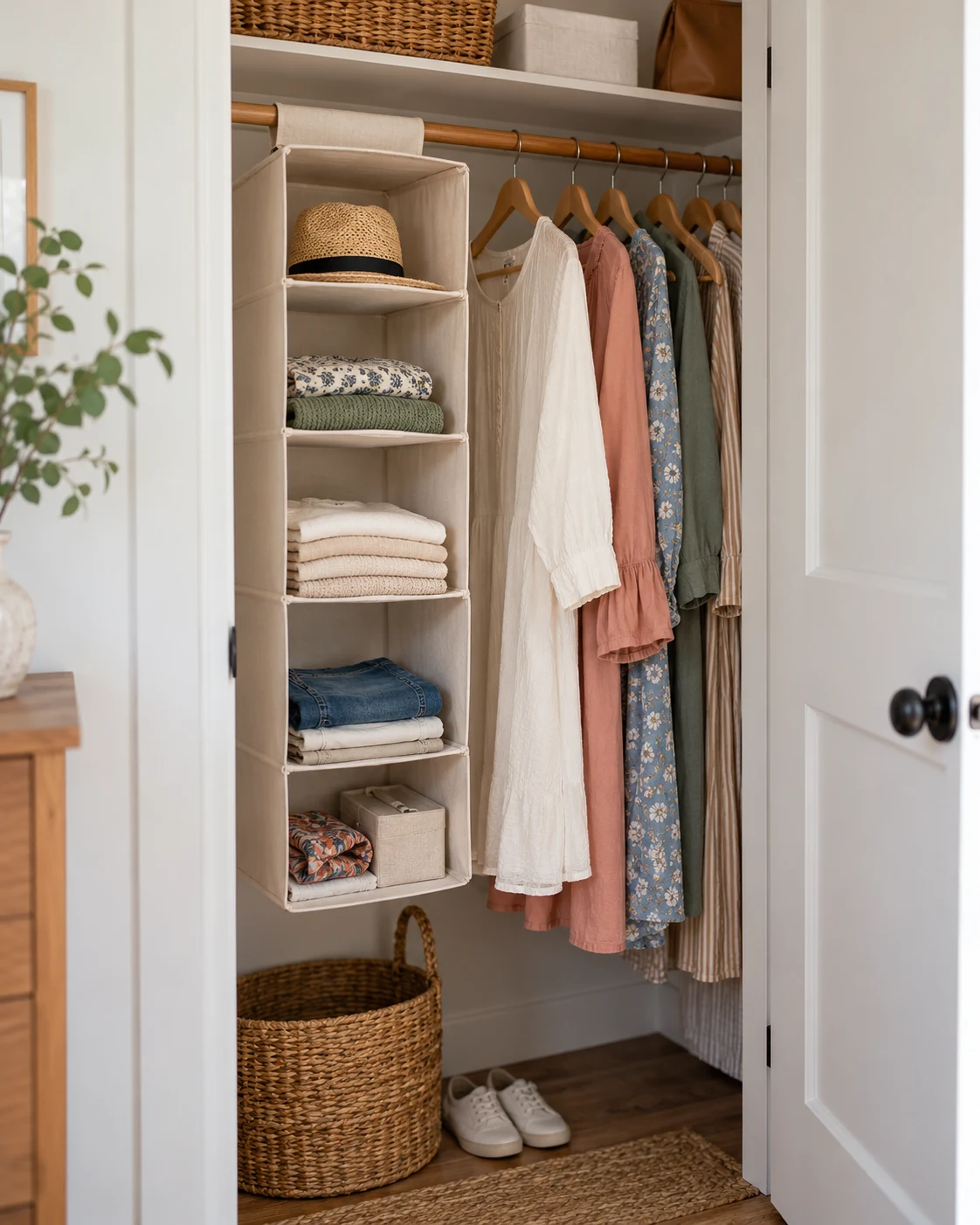
A fabric hanging organizer can add compartments where the closet lacks shelves. Use it for appropriate lighter items and keep each compartment manageable. Its width also occupies rod space, so it needs to earn that trade.
Comparable options, not the exact pictured items. Check the selected color, size and buying notes.
Materials, fit and differences from the concept
- YOUDENOVA fabric hanging shelves: Six-compartment fabric hanging organizer. Its width and weight use existing rod capacity; follow load guidance.
Check the attachment and load guidance for the actual organizer. Don’t fill it simply because several empty compartments remain. Keep long garments and the closet door clear of its sides and lower edge.
6. Separate shoes from the main clothes

A low shoe rack can use the floor beneath shorter hanging garments. Let shoes dry appropriately before returning them to enclosed storage. Keep their soles away from hanging fabric and anything clean that shares the lower shelf.
Comparable options, not the exact pictured items. Check the selected color, size and buying notes.
Materials, fit and differences from the concept
- Simple Houseware three-tier shoe rack: Three-tier shoe rack. Actual pair capacity depends on footwear sizes and shapes; check door and garment clearance.
Measure your actual footwear rather than relying on an advertised pair count. Boots, larger shoes, and wider styles use space differently. Check that the loaded rack still allows the closet door to close without contact.
7. Keep long garments on one side
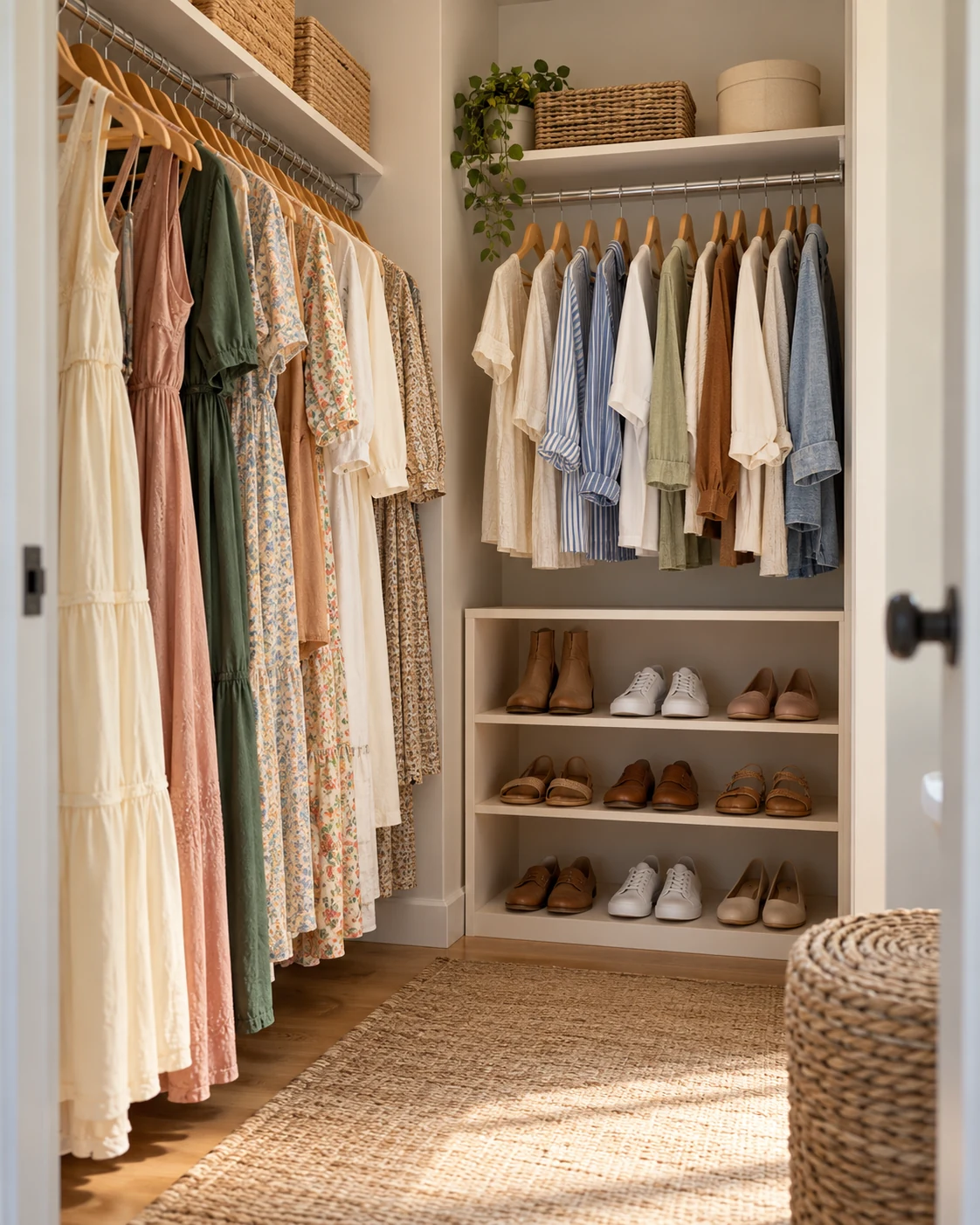
Grouping long dresses or coats can preserve usable floor beneath the shorter garments elsewhere. That may provide a sensible location for a small shoe rack or another low item. The change uses existing height more deliberately without adding another shelf.
Comparable options, not the exact pictured items. Check the selected color, size and buying notes.
Materials, fit and differences from the concept
- Amazon Basics slim velvet hangers: Slim velvet hangers, 50-pack. Reduced hanger bulk does not increase the closet rod load capacity.
- Simple Houseware three-tier shoe rack: Three-tier shoe rack. Actual pair capacity depends on footwear sizes and shapes; check door and garment clearance.
Leave enough clearance that long hems don’t rest on shoes or the floor. If the rod position cannot provide that space, reassess the storage location. Don’t fold or compress a special garment without considering its material and care requirements.
8. Give bags a defined shelf space
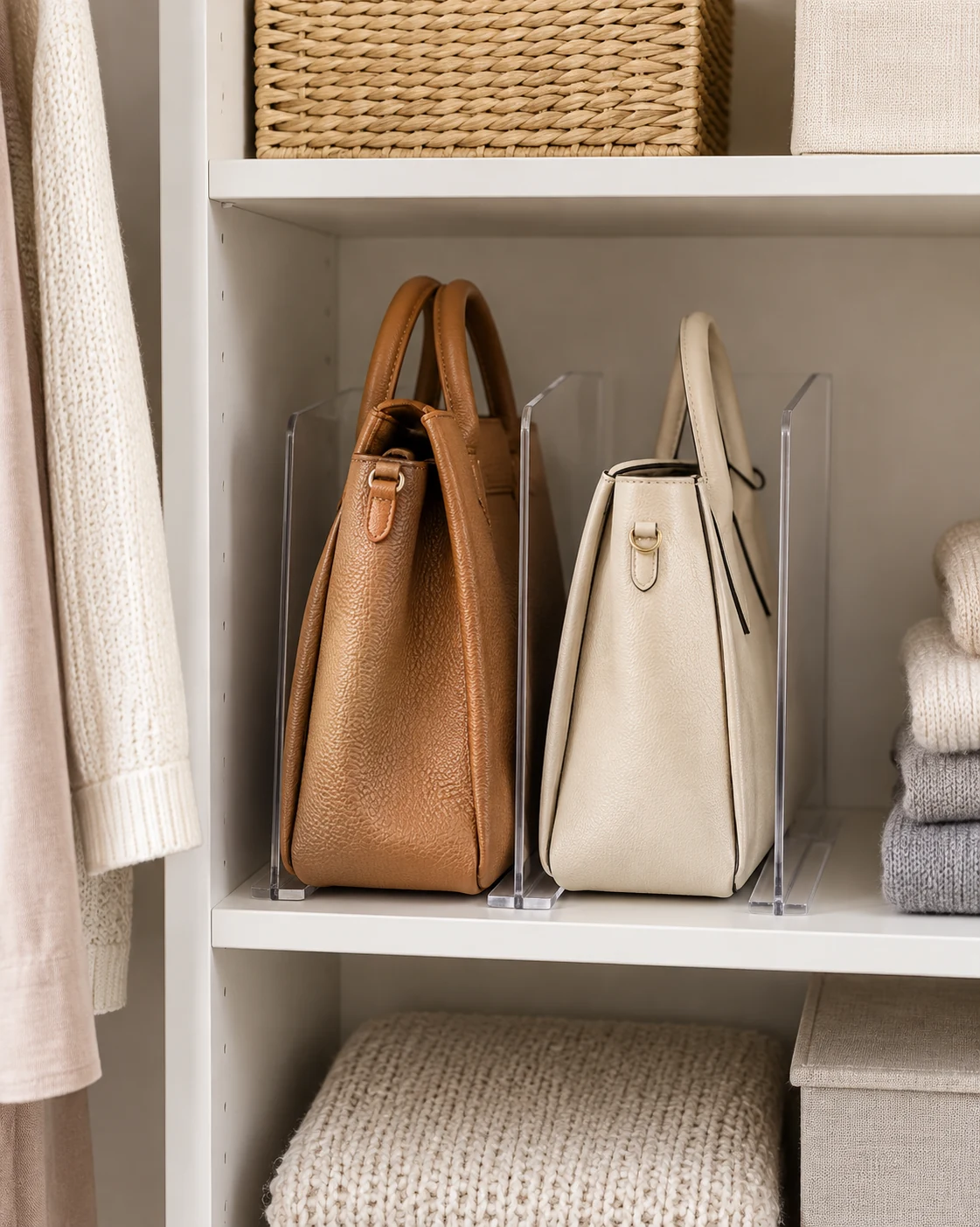
A modest shelf section can keep everyday bags upright without crushing them between clothes. Dividers may help separate soft bags when they suit the shelf and bag shapes. Leave handles and straps arranged so they don’t catch as you remove a neighboring item.
Comparable options, not the exact pictured items. Check the selected color, size and buying notes.
Materials, fit and differences from the concept
- Clear acrylic shelf dividers: Clip-on acrylic shelf dividers. Listed shelf-thickness limit is 0.75 inch; measure your board and do not force the mount.
Use the bag maker’s storage advice when shape or material requires particular support. A rigid divider isn’t a reason to squeeze leather against a tight edge. Keep infrequently used bags elsewhere if the everyday shelf becomes crowded.
9. Keep the everyday layer nearest the opening
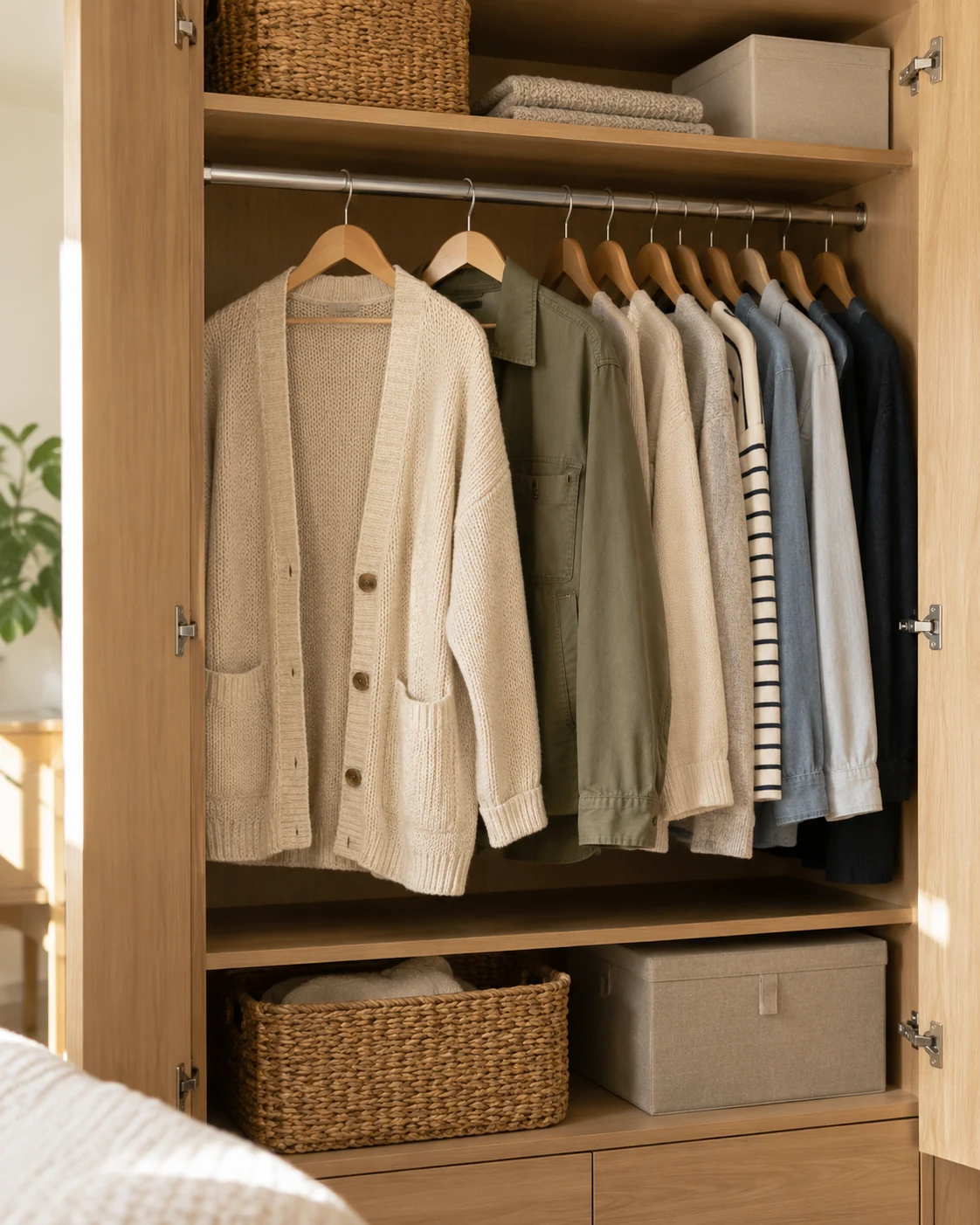
Put the cardigan or jacket you reach for repeatedly near the closet opening. It should come out without searching behind special-occasion pieces. This small location change can save more effort than reorganizing every color in the wardrobe.
Comparable options, not the exact pictured items. Check the selected color, size and buying notes.
Materials, fit and differences from the concept
- Amazon Basics slim velvet hangers: Slim velvet hangers, 50-pack. Reduced hanger bulk does not increase the closet rod load capacity.
Check that the chosen spot doesn’t block the door or another useful category. One convenient garment shouldn’t make everything else harder to reach. Rotate the easy-access layer when your routine or season changes.
10. Fold small items into a visible bin
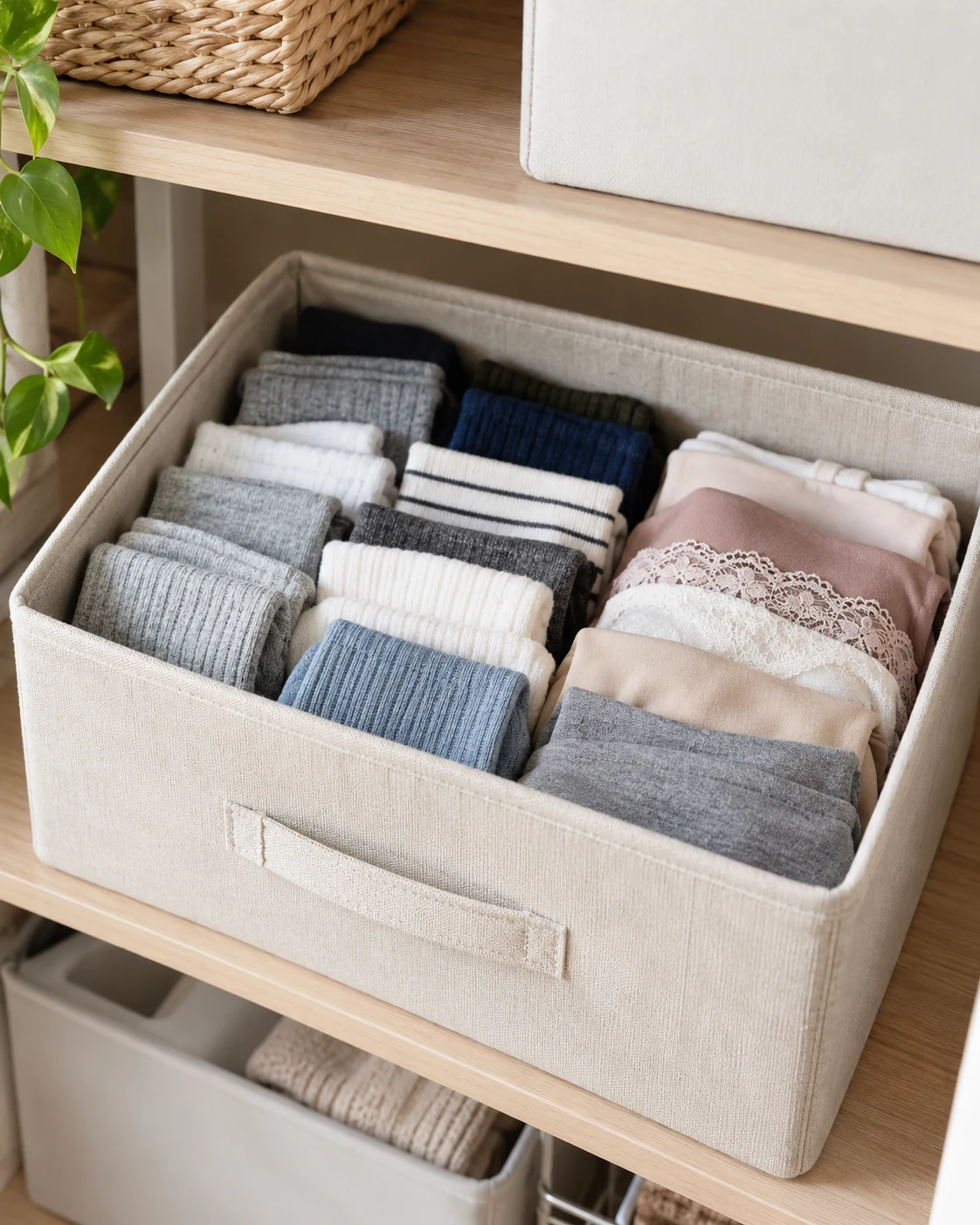
A shallow open bin can keep socks or light underlayers from spreading across a shelf. Stand folded pieces where their differences remain visible. The arrangement should support your normal laundry routine rather than demand a complicated fold every time.
Comparable options, not the exact pictured items. Check the selected color, size and buying notes.
Materials, fit and differences from the concept
- Lifewit fabric organizer bins: Assorted fabric storage bins. Compare each bin size with the shelf and actual folded category; not rigid drawers.
Try the method with one freshly washed load before expanding it. If returning the items feels fussy, use a simpler grouping. An organization system needs to work when you’re tired, not only when arranging its first photograph.
11. Use the top shelf for light, infrequent items
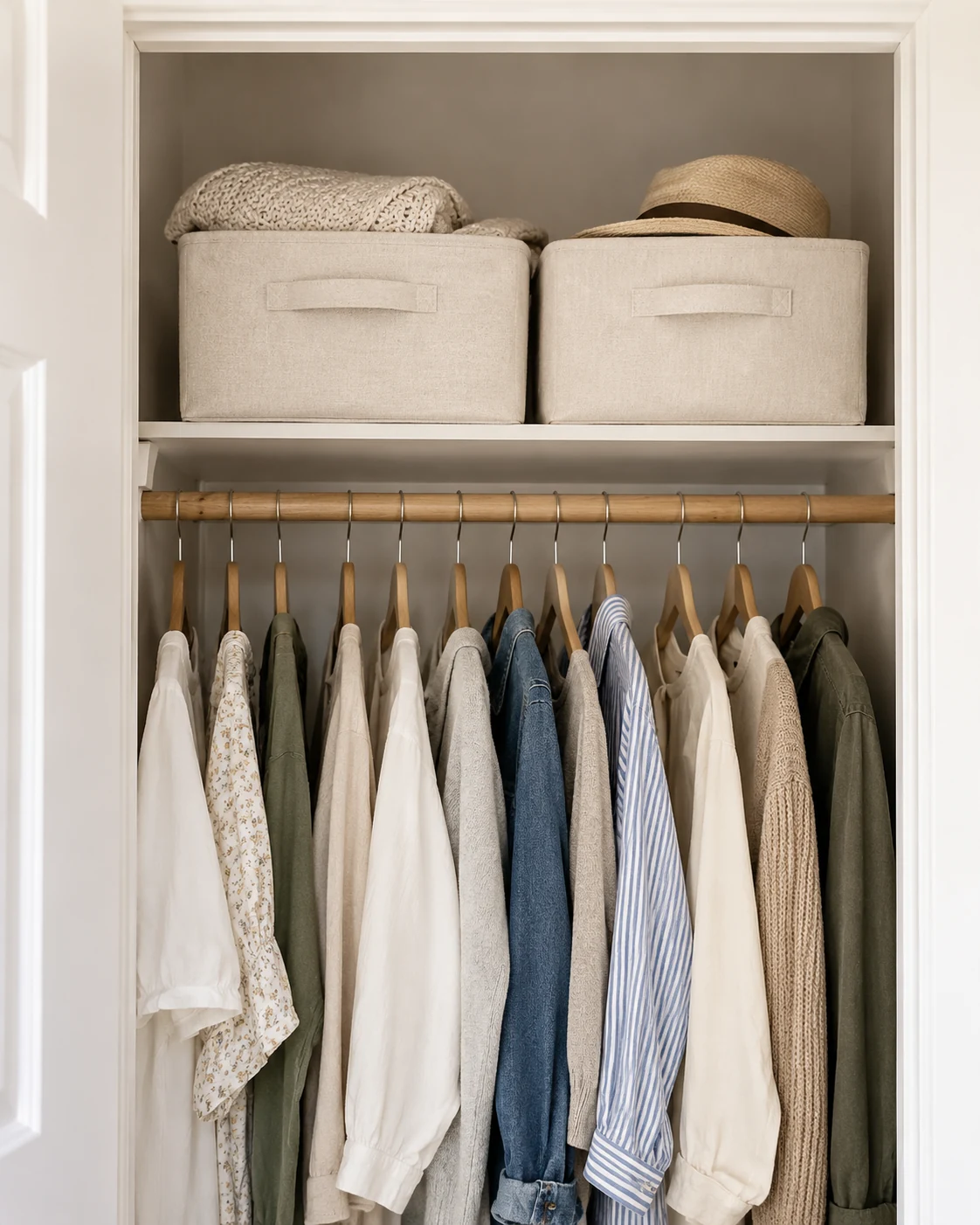
Light items you rarely need can use a less convenient upper shelf. Keep containers easy to identify without lifting every box down. Avoid placing heavy objects overhead simply because that area looks empty.
Comparable options, not the exact pictured items. Check the selected color, size and buying notes.
Materials, fit and differences from the concept
- Lifewit fabric organizer bins: Assorted fabric storage bins. Compare each bin size with the shelf and actual folded category; not rigid drawers.
Use an appropriate stable means of access when necessary rather than climbing closet fittings. Check that bins don’t project dangerously beyond the shelf. The top shelf still needs a sensible load and enough space for safe handling.
12. Make a repeat outfit easy to find
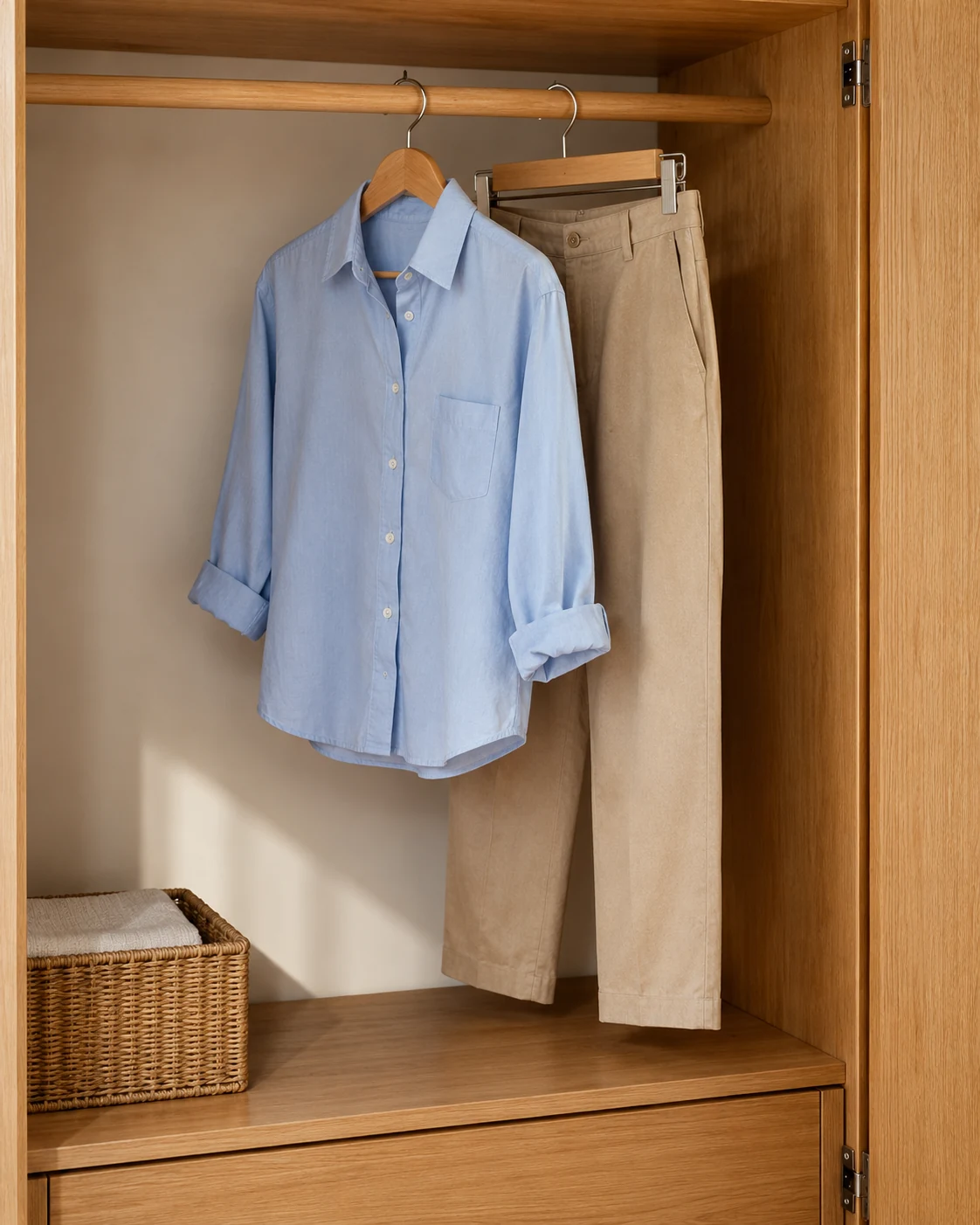
Place a frequently worn shirt and suitable trousers near each other when that helps your mornings. They don’t need a special organizer or permanent outfit label. A little proximity can reduce decisions while keeping both pieces available for other combinations.
Comparable options, not the exact pictured items. Check the selected color, size and buying notes.
Materials, fit and differences from the concept
- Amazon Basics slim velvet hangers: Slim velvet hangers, 50-pack. Reduced hanger bulk does not increase the closet rod load capacity.
Choose outfits you already know work, rather than creating a row of untested possibilities. The business casual looks can help identify another useful pairing. Keep the arrangement flexible enough that laundry doesn’t leave a confusing empty system.
13. Create a temporary return spot
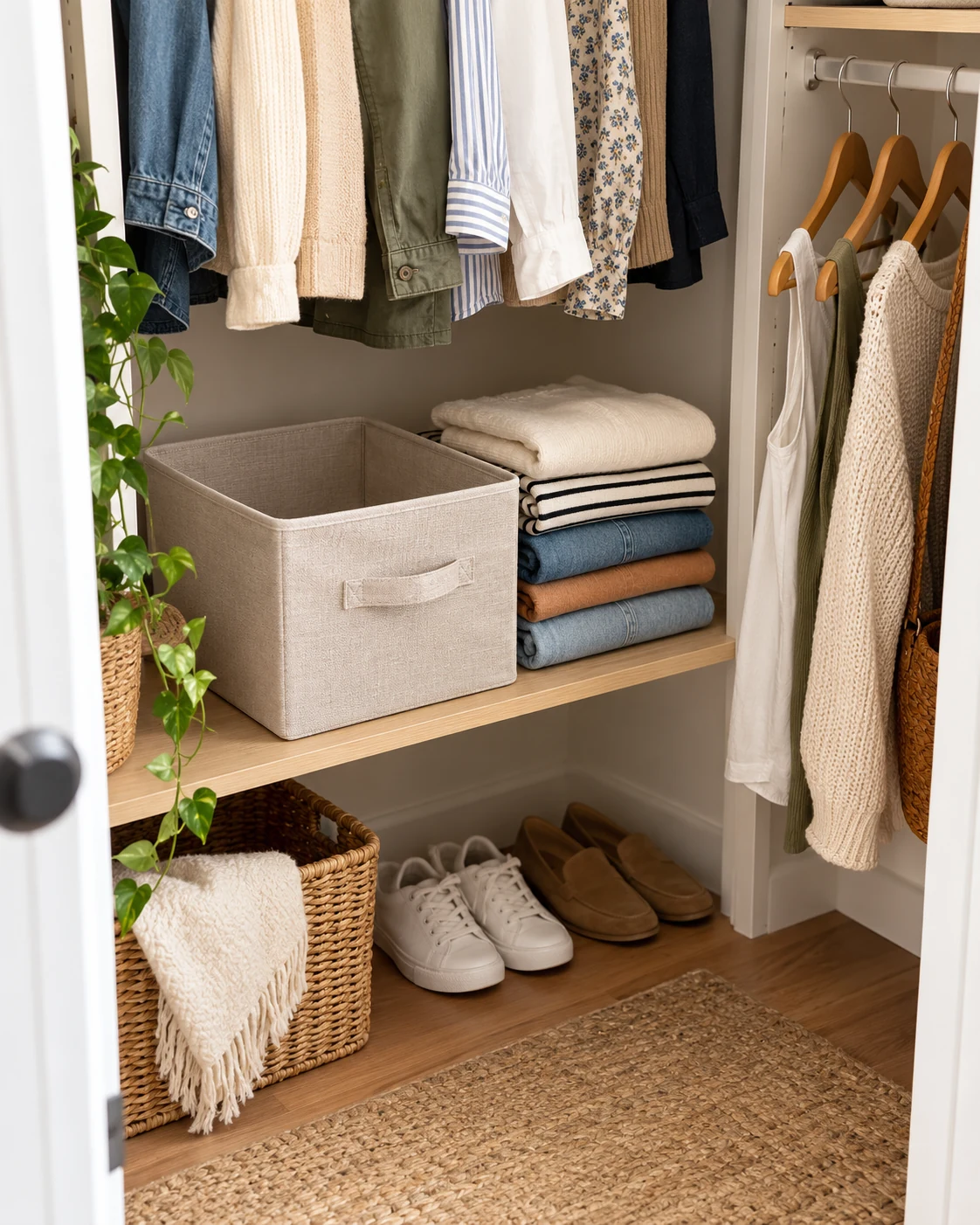
A small temporary space can hold items waiting to return to their proper location. Keep it separate from clean permanent storage categories. Its purpose is containing a short delay, not creating another indefinite pile.
Comparable options, not the exact pictured items. Check the selected color, size and buying notes.
Materials, fit and differences from the concept
- Lifewit fabric organizer bins: Assorted fabric storage bins. Compare each bin size with the shelf and actual folded category; not rigid drawers.
Choose a boundary small enough that it prompts a manageable reset. Decide when you’ll empty it, such as after putting away laundry. If it never clears, simplify the return task instead of buying a larger holding bin.
14. Leave a little space on the rod
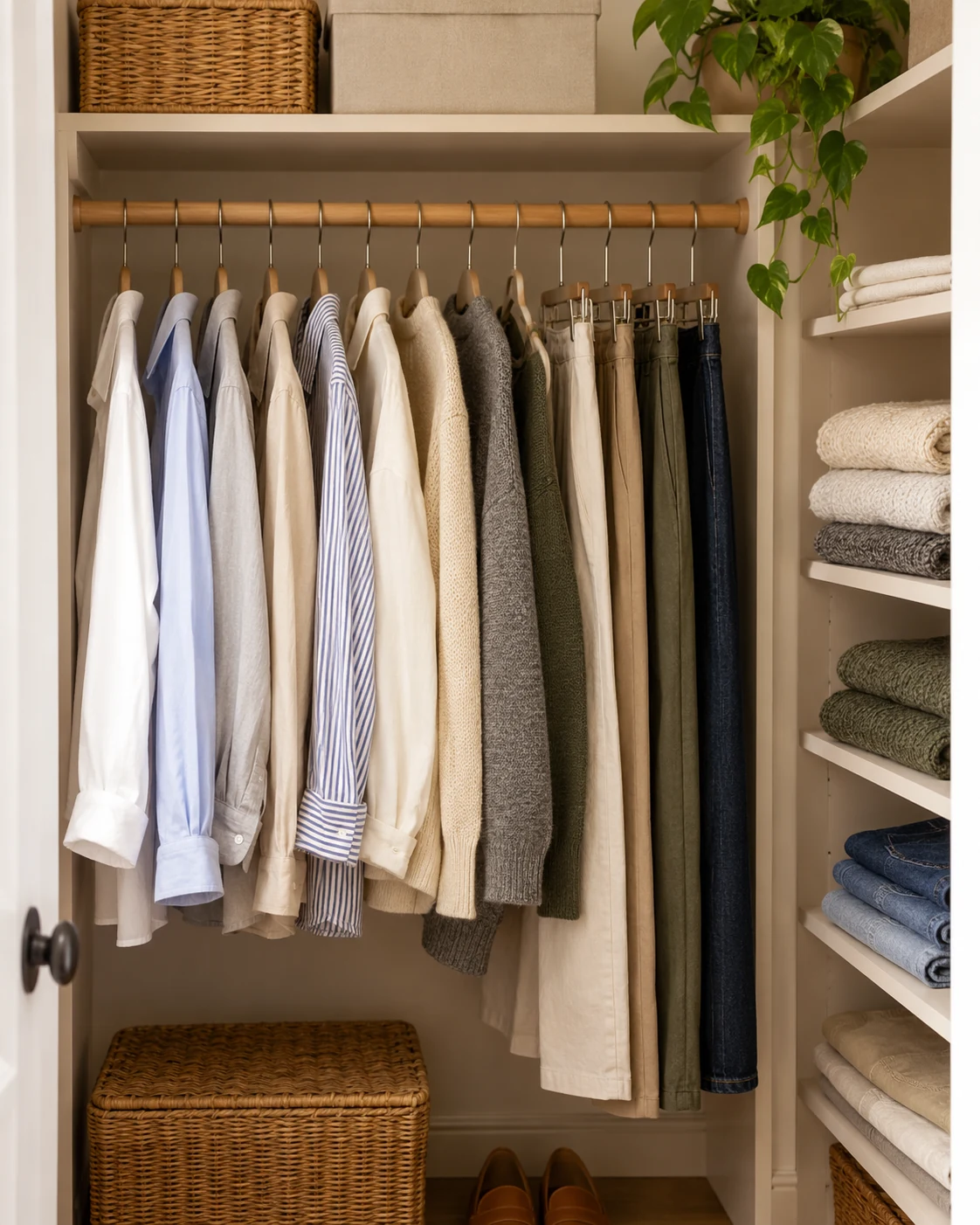
A little breathing room between garments makes browsing and returning clothes easier. Matching slim hangers may help, but the practical goal is movement rather than visual uniformity. You should be able to lift one item without wrestling its neighbors.
Comparable options, not the exact pictured items. Check the selected color, size and buying notes.
Materials, fit and differences from the concept
- Amazon Basics slim velvet hangers: Slim velvet hangers, 50-pack. Reduced hanger bulk does not increase the closet rod load capacity.
Notice where the rod becomes tightly packed again after a normal week. That section may contain too many pieces for its available width. Change the allocation before assuming another hanger style will solve the problem.
15. Reset one shelf before expanding the system
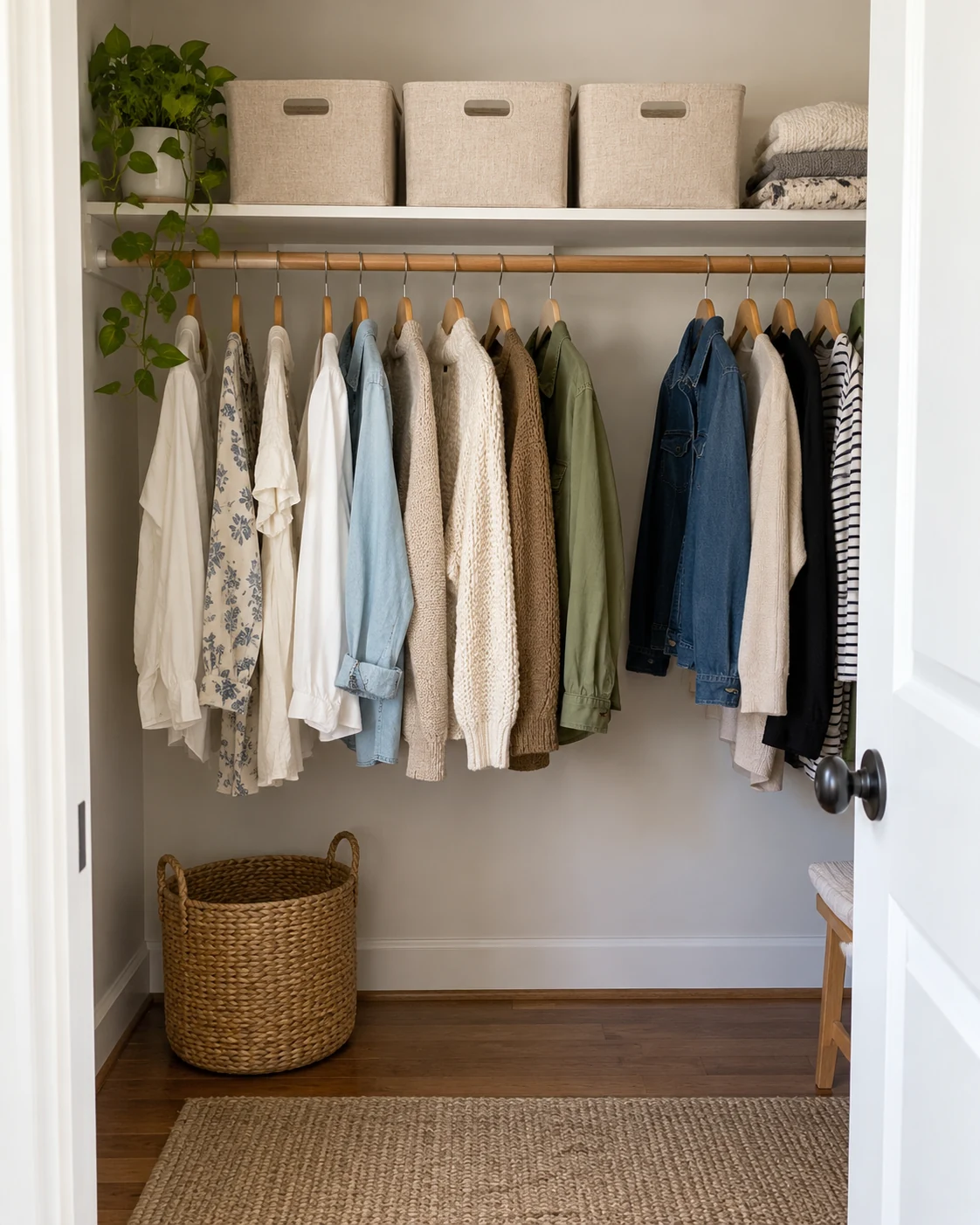
Finish one useful shelf and live with it before reorganizing the entire closet. Test how it behaves when several items leave and return. Keep the successful parts and adjust whatever still needs too much attention.
Comparable options, not the exact pictured items. Check the selected color, size and buying notes.
Materials, fit and differences from the concept
- Lifewit fabric organizer bins: Assorted fabric storage bins. Compare each bin size with the shelf and actual folded category; not rigid drawers.
- Amazon Basics slim velvet hangers: Slim velvet hangers, 50-pack. Reduced hanger bulk does not increase the closet rod load capacity.
A smaller working system is easier to maintain than a complete arrangement built around imaginary habits. The pantry organization guide uses the same retrieval-and-return test for groceries. Apply that practical standard wherever storage looks tidy but remains frustrating to use.
Visuals are original AI-generated editorial concepts, not photographs of actual products, tested projects or hosted events.


