8 Small Space Watch Party Ideas That Give Everyone a Useful Seat
Explore the ideas
- 1. Four seats with a clear side route
- 2. Six seats only when the room allows
- 3. Put the snack station beyond the viewing area
- 4. Give drinks a stable place near the seats
- 5. Use warm light without creating screen glare
- 6. Serve small snack portions near the action
- 7. Keep coats and bags off the guest seats
- 8. Make a quieter movie-night version
Count the seats before planning the snacks. A beautiful watch party corner doesn’t work when half the guests can’t comfortably see the screen. Start with the people the room can actually accommodate, then add the enjoyable details around them.
These eight visual setups show seating, snacks and small arrangements worth borrowing. They are AI-generated room concepts rather than measured plans or photographs of hosted events. Check your own doors, furniture and walking space before moving anything.
Ask guests about seating and other practical needs before settling the invitation list. A floor cushion or backless stool isn’t a suitable substitute for everyone. The useful capacity is the number of comfortable places with workable views.
1. Four seats with a clear side route
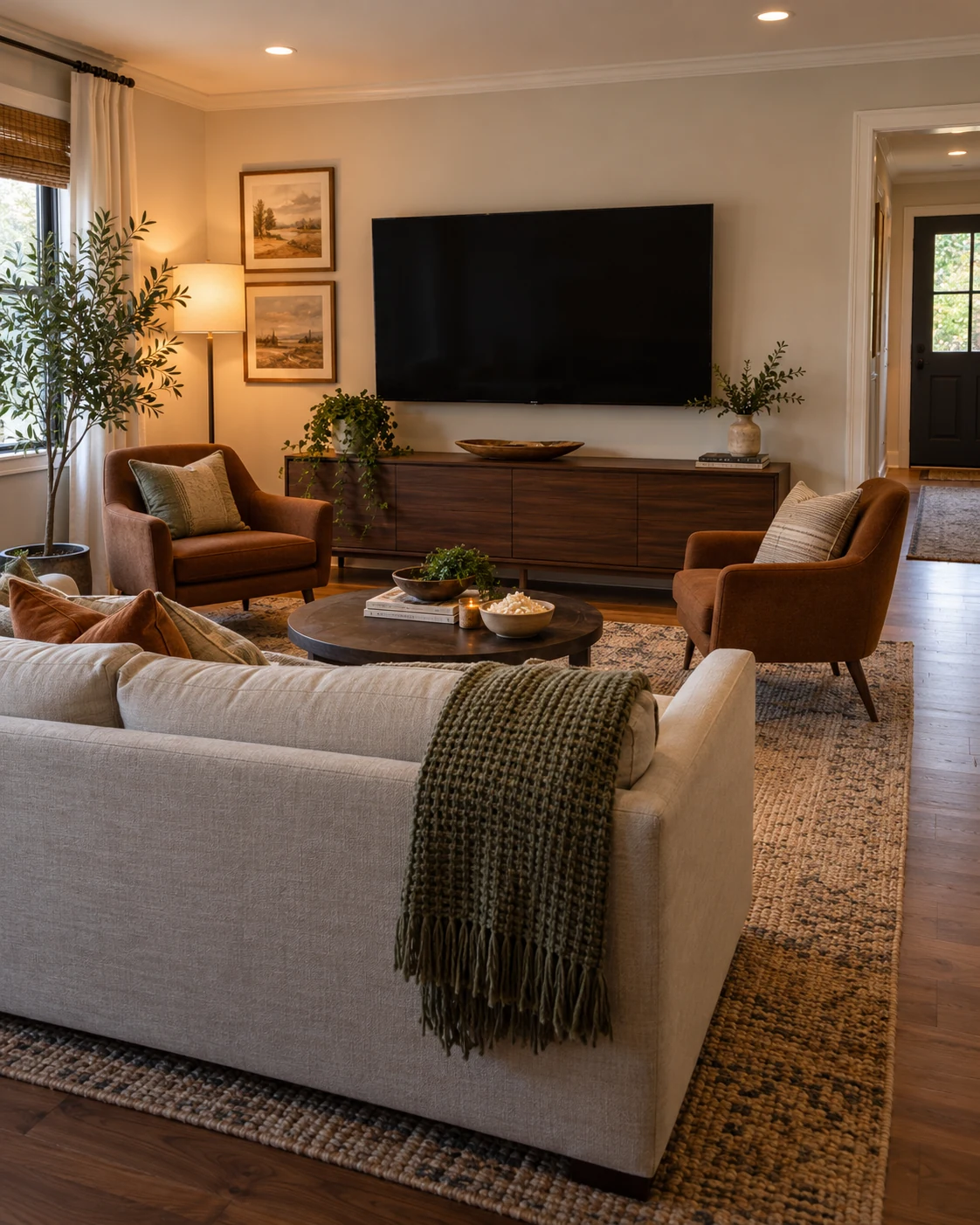
A two-seat sofa and two angled chairs create four intentional places. The furniture points toward one screen without closing every gap around the table. A side route lets someone leave without asking the entire room to move.
Sit in each proposed position before guests arrive. Check the view at ordinary seated height rather than from the doorway. A screen visible while standing may disappear behind another person’s head or a nearby chair.
Angle the chairs according to the real view. A decorative conversation arrangement may need adjusting when everyone faces the same wall. Comfort should decide the final position rather than the neatest overhead photograph.
Leave enough usable space around the coffee table for normal movement. Don’t add another stool simply because the floor still appears partly empty. A smaller guest list can make the evening more comfortable than one additional squeezed-in place.
Tell people what type of gathering you’re planning. A focused match and a chatty movie night use the room differently. Knowing the expectation helps guests choose whether the setup sounds enjoyable for them.
2. Six seats only when the room allows
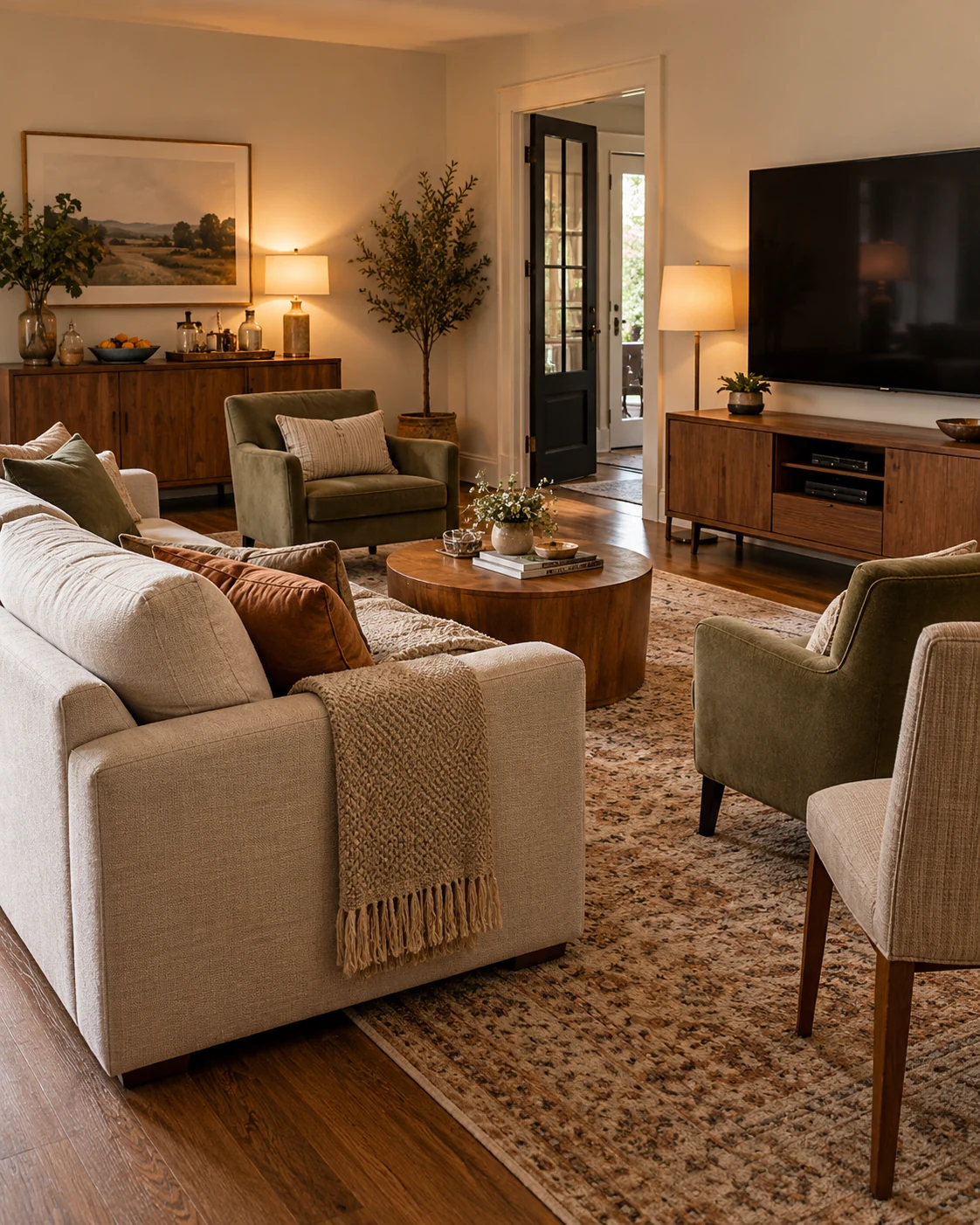
A larger sofa, two armchairs and a stable dining chair can create six places. The extra seat belongs only when it has a genuine view and useful access. This example isn’t permission to fit six people into every small room.
Test the dining chair in the actual position. Its height may give a different screen angle from the lower sofa seats. Check that the person sitting there won’t block someone behind or need to twist all evening.
Consider how each guest reaches a drink or small plate. A seat without any suitable surface can make the arrangement feel improvised in an uncomfortable way. Give the extra chair a practical place rather than merely counting it.
Keep the route to the door usable after everyone is seated. An empty-room walkthrough doesn’t reveal legs, bags and moving chairs. Ask someone to sit while you test passing through the proposed gap.
Remove the extra seat when those checks don’t work. Another gathering or smaller invitation list is a reasonable choice. Comfortable capacity should shape the plan rather than follow a target number of guests.
3. Put the snack station beyond the viewing area
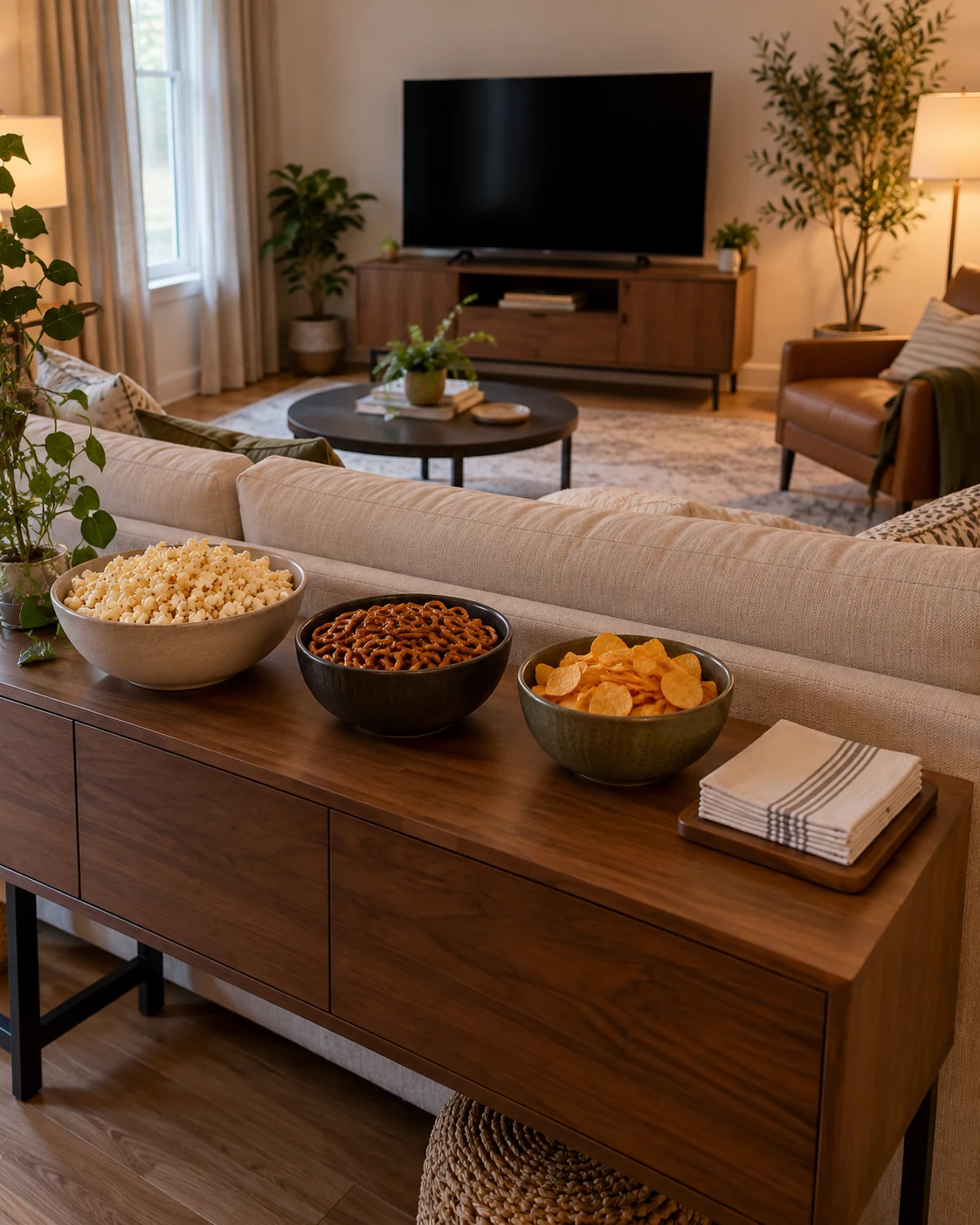
A narrow sideboard can take the bulk snacks away from the main table. Smaller bowls stay near the seats, while refills happen elsewhere. That division gives people a reason to move without carrying everything across the screen.
Place the station along a route people can use easily. A spare surface behind an awkward chair isn’t automatically a useful serving spot. Walk from each seat before deciding where the larger bowls belong.
Use food containers and utensils suited to what you’re serving. Keep different foods separate when ingredients or guest preferences require it. Ask about allergies directly rather than assuming a familiar snack is appropriate for everyone.
For perishable foods, keep portions small and track their time outside temperature control. USDA guidance generally limits that time to two hours. Above ninety degrees Fahrenheit, the limit becomes one hour.
Replace a used portion with a fresh, properly stored one rather than topping it up. A large full bowl isn’t automatically easier or safer to manage. The serving plan should support the evening without turning the host into a constant runner.
4. Give drinks a stable place near the seats
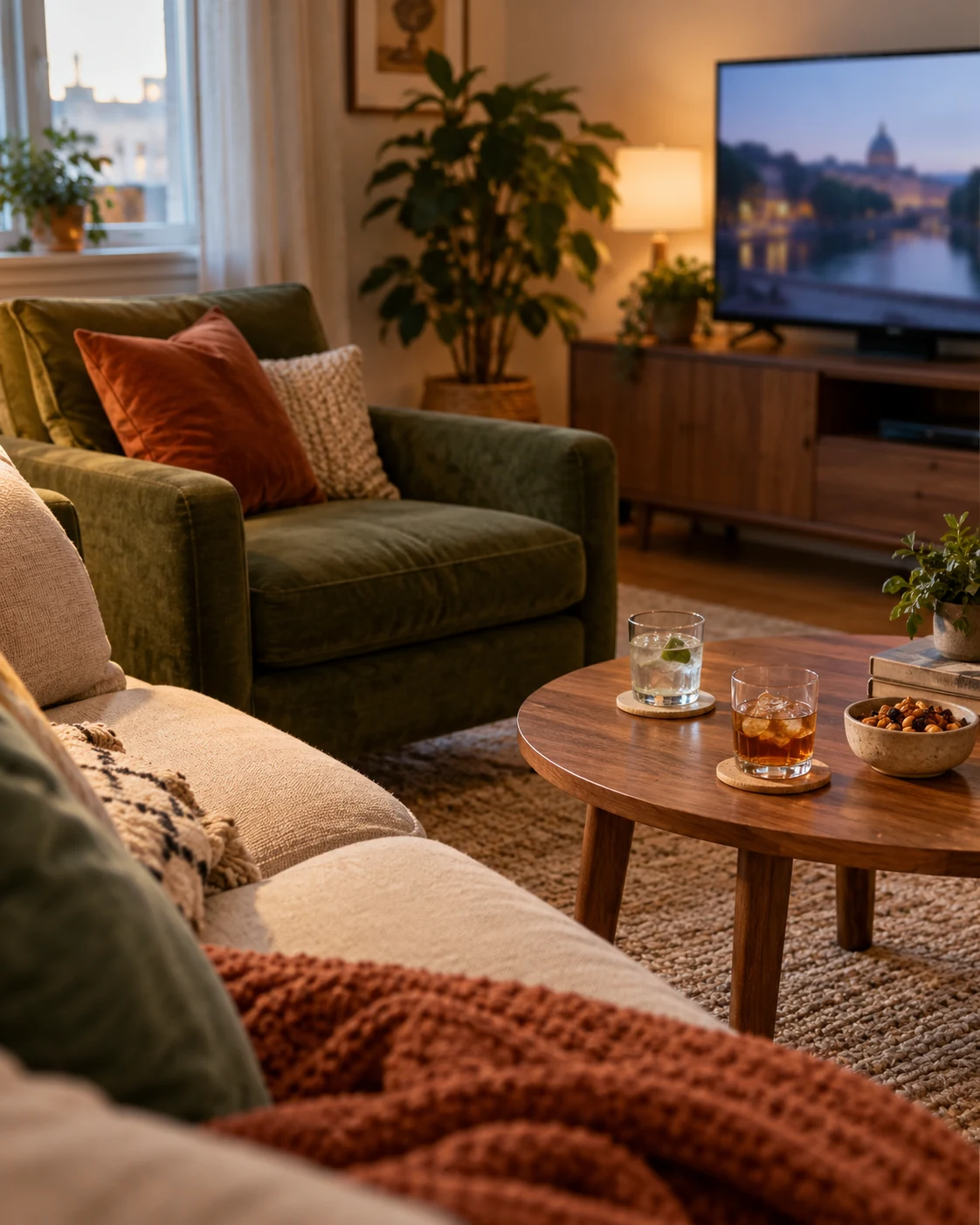
A modest side table can make a chair feel like a proper guest place. Drinks stay within reach without balancing on an armrest or the floor. Coasters and a small bowl keep the surface simple enough to use.
Check the table’s stability before relying on it. A narrow decorative stand may move when someone reaches for a glass. Use furniture appropriate for ordinary use rather than copying the smallest object in an image.
Keep the route around the table clear. A useful drink spot becomes less useful when everyone catches it while passing. Test the arrangement with the chair occupied and the room’s door fully open.
Avoid filling the surface with decorations before adding the actual glass. Practical items need their own footprint first. A low flower or small ornament is optional once those needs are comfortably covered.
Tell guests where refills are available. That lets people manage their own drinks without repeatedly interrupting the host. Simple information often contributes more than another matching serving accessory.
5. Use warm light without creating screen glare
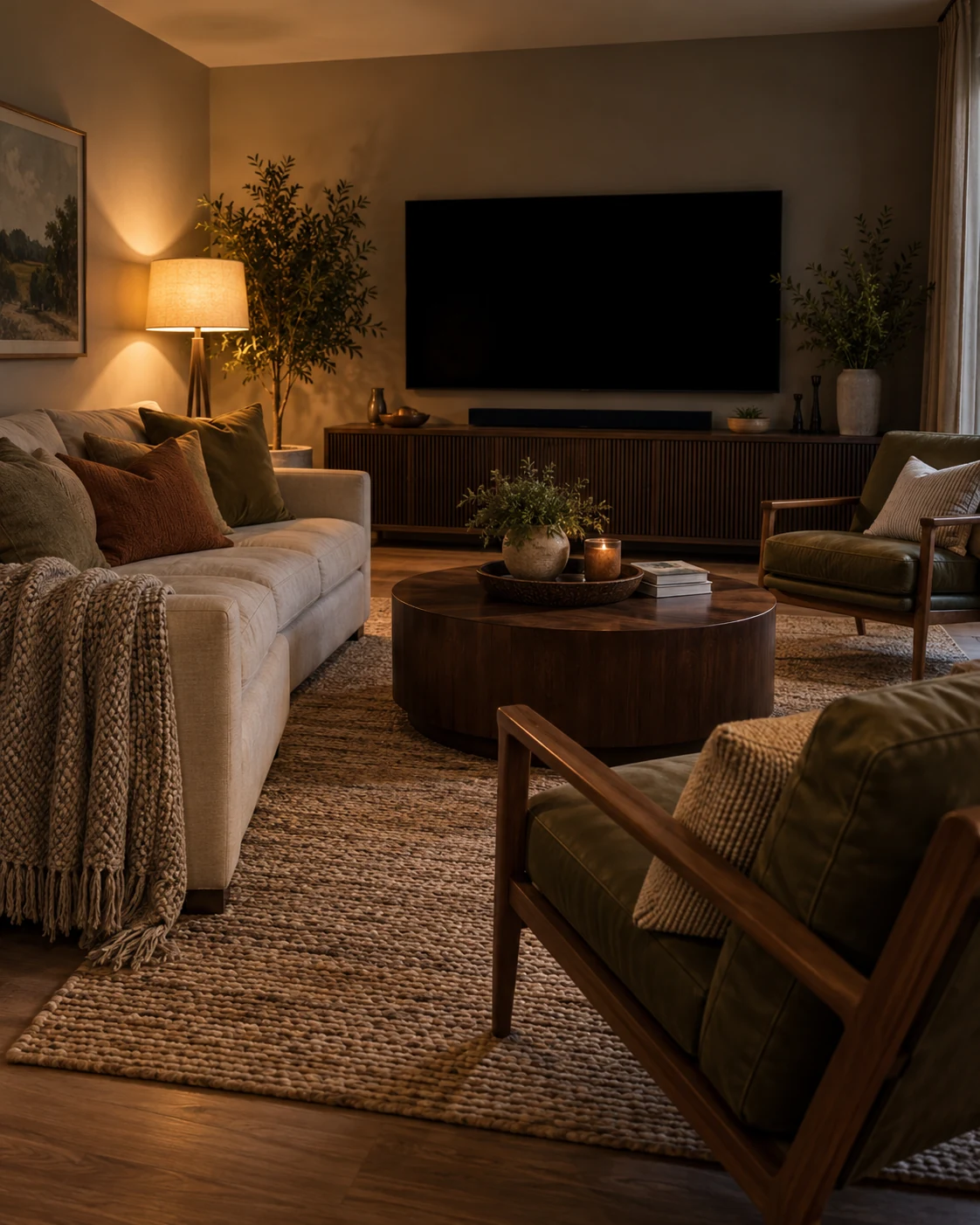
Warm shaded lamps can make the room comfortable without a harsh ceiling light. Their position matters when a screen reflects nearby bright surfaces. Test the room at the time of day the gathering will actually happen.
Switch on the usual lamps and sit in each place. Look for reflections, uncomfortable brightness and dark routes between furniture. A photograph taken from one flattering corner won’t reveal every seat’s view.
Move or redirect an ordinary lamp when that solves the problem. You don’t need specialty lighting simply to make the evening feel considered. Keep cables arranged so they don’t cross the main walking route.
Leave enough light for guests to move and handle food comfortably. A completely dark room may suit part of a film but complicate ordinary hosting. Ask people what feels comfortable rather than assuming everyone prefers the same brightness.
Check captions and volume before the main event starts. Those practical choices can affect the experience more than a decorative banner. If needs conflict, discuss them early instead of making someone repeatedly ask during the evening.
6. Serve small snack portions near the action
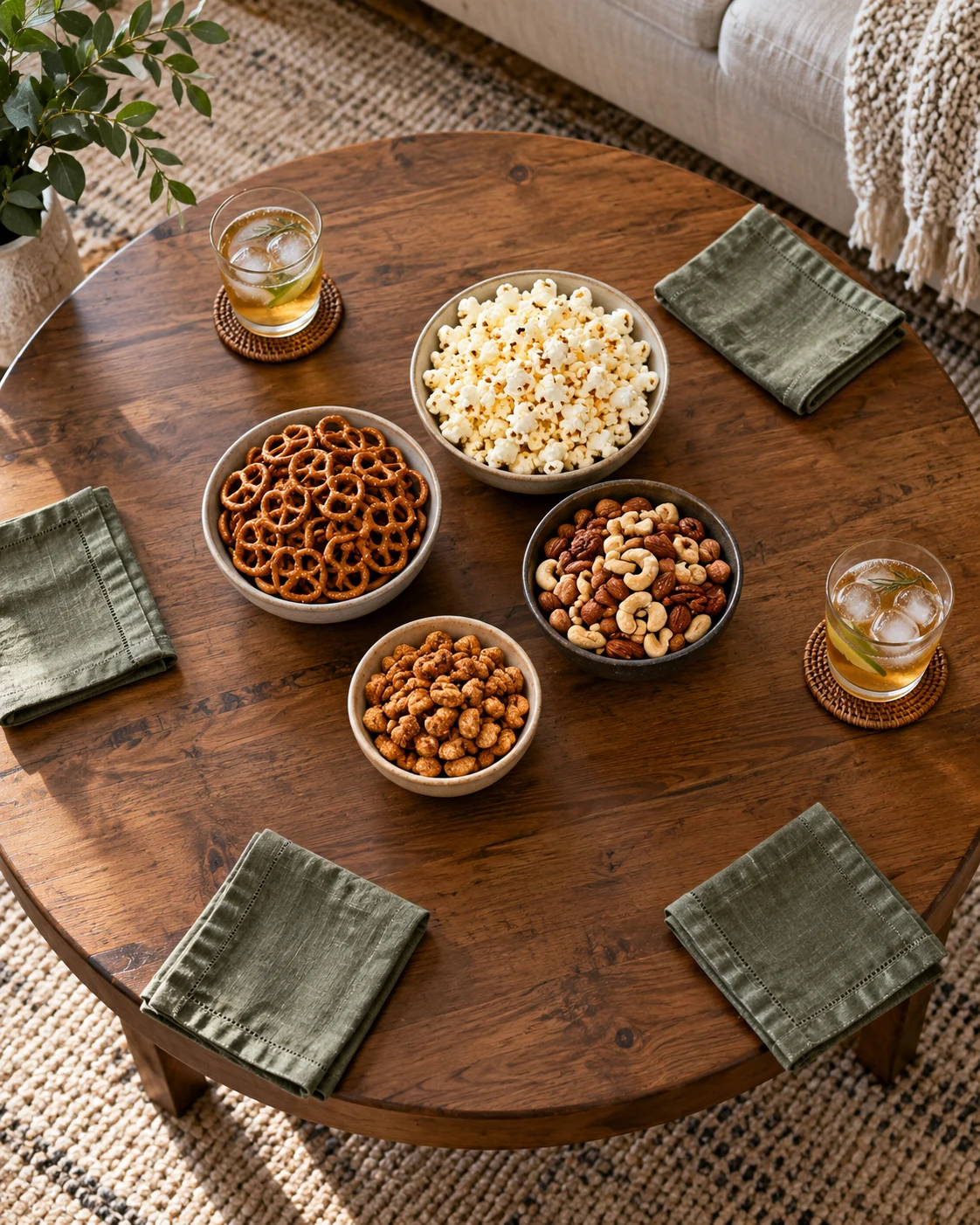
Several modest bowls can be easier to reach than one oversized centerpiece. The arrangement leaves clear table space for glasses and ordinary movement. Snacks become part of the evening without taking over the room.
Choose foods people can handle comfortably from their seats. A snack requiring several utensils may fit a dining table better than this setup. Let the available surfaces shape the menu rather than balancing plates on laps by necessity.
Keep ingredient packaging available when guests need to check it. A bowl of mixed snacks can hide information that matters to someone. Don’t promise an allergen-free arrangement without verifying the actual ingredients and handling.
Put spare napkins somewhere obvious. Small practical supplies should be easy to find without opening several cupboards. A separate refill surface can hold extras while keeping the coffee table uncluttered.
Reconsider anything that repeatedly needs the host’s attention. A manageable snack plan gives you time to enjoy what everyone came to watch. You can serve fewer options rather than turn every break into a catering task.
7. Keep coats and bags off the guest seats
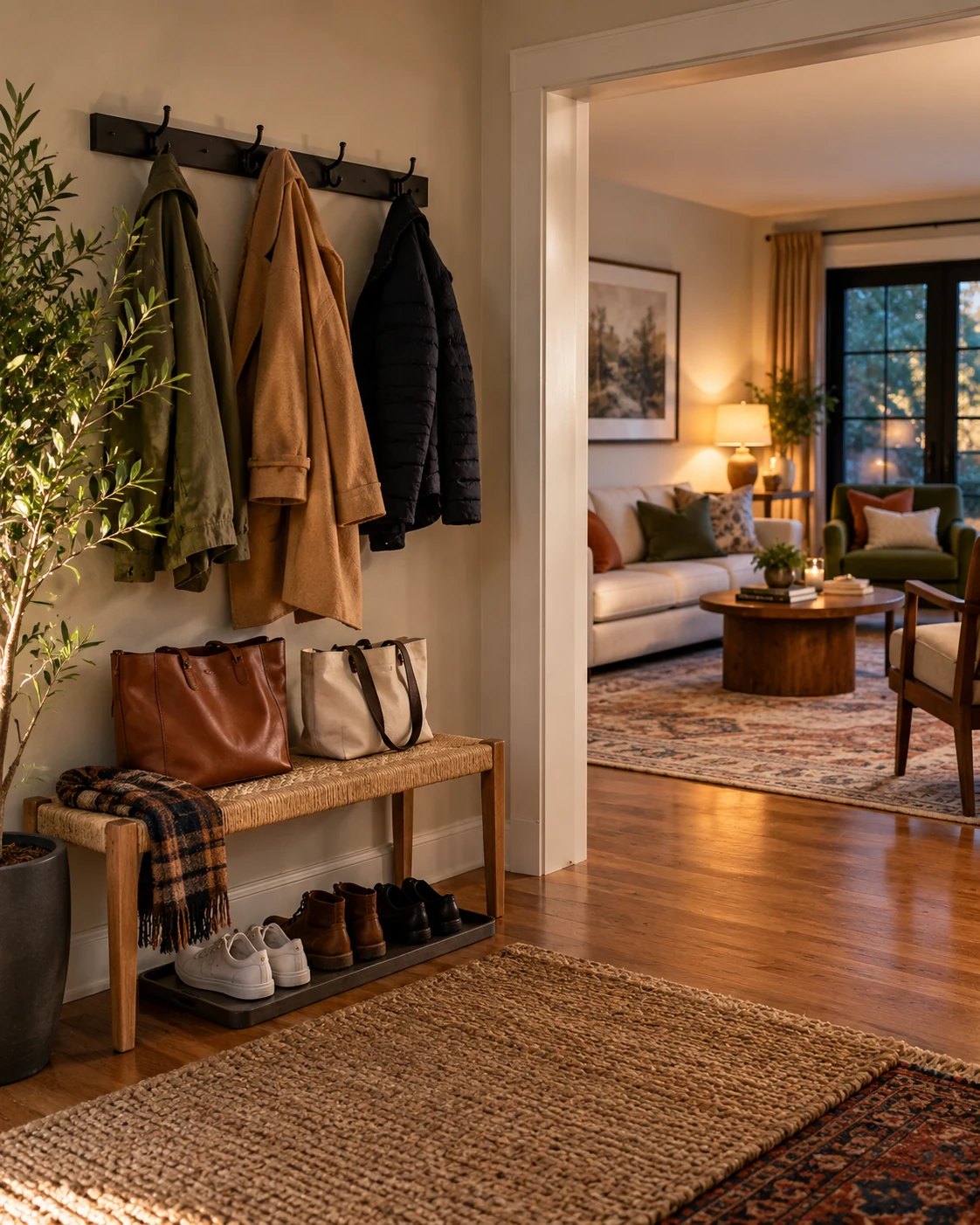
An entry corner can stop the sofa becoming a coat pile before the event starts. A suitable rail, shelf or bench gives belongings an obvious destination. The main doorway still needs to open and remain usable.
Choose the arrangement around your actual available storage. Don’t overload a hook or improvise a hanging rail without checking its intended use. Ordinary existing furniture may be enough when the invitation list matches the room.
Keep wet belongings separate where necessary. A damp umbrella beside a guest’s bag creates another avoidable problem. Our rainy day guide includes a simple arrival setup for wet coats and shoes.
Tell guests where their belongings can go when they arrive. That small welcome prevents a stack forming on the nearest chair. It also helps people find things without interrupting the screen later.
Check the area again after everyone has settled. A bag placed neatly at first can still slide into a walking route. The arrangement needs to work during the gathering rather than only before the doorbell rings.
8. Make a quieter movie-night version
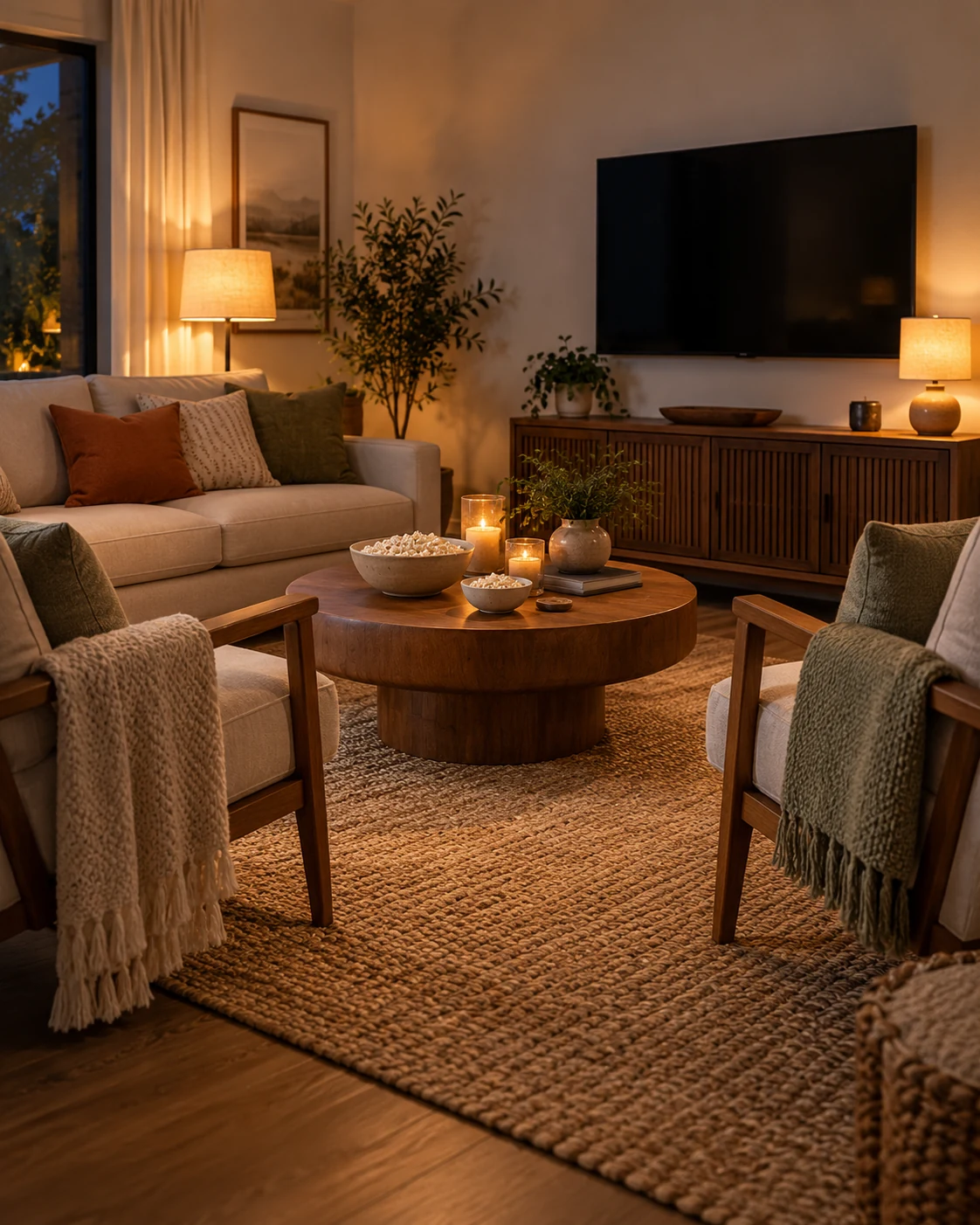
The same room can feel different with soft throws and a simpler snack selection. A movie night doesn’t need the visual language of a loud sporting event. Let the atmosphere match what people are coming to enjoy.
Ask whether guests prefer focused watching or conversation around the film. Agreeing on that early avoids a room divided between competing expectations. You can plan a break for chatting instead of trying to do everything at once.
Keep the useful seating and clear routes from the earlier setups. Changing the mood doesn’t remove those practical needs. A cozy throw is an extra detail rather than a substitute for a comfortable seat.
For a different kind of gathering, explore the Galentine decor ideas. The New Year setups also show ways to keep serving separate from the main seating. Borrow the useful detail without importing an entire occasion into your evening.
Finish by checking the room from a guest’s point of view. Can you see, sit, reach a drink and leave your place comfortably? When those answers work, the attractive details have a much better foundation.