8 Galentine Party Decor Ideas for a Small, Lovely Gathering
Explore the ideas
- 1. Pink linen with burgundy napkins
- 2. Put paper hearts above the gathering
- 3. Red and white without a crowded centerpiece
- 4. Use a few small borrowed vases
- 5. Make a sofa gathering feel intentional
- 6. Keep the palette soft with cream and dusty rose
- 7. Add a small paper detail beside each plate
- 8. Move serving to a nearby surface
A Galentine table still needs room for the people using it. Start with the plates, glasses and seats before deciding where the flowers belong. The prettiest detail is usually the one that doesn’t need moving every few minutes.
These eight visual examples offer different ways to use pink, burgundy, paper and ordinary household pieces. Borrow a color relationship or one small arrangement rather than buying an entire matching setup. The AI-generated concepts illustrate styling ideas rather than photographs of completed events.
The four-person settings are planning examples, not a required guest count or table size. Check your own room, cupboards and serving plans first. You might already own most of what makes a small gathering feel considered.
1. Pink linen with burgundy napkins
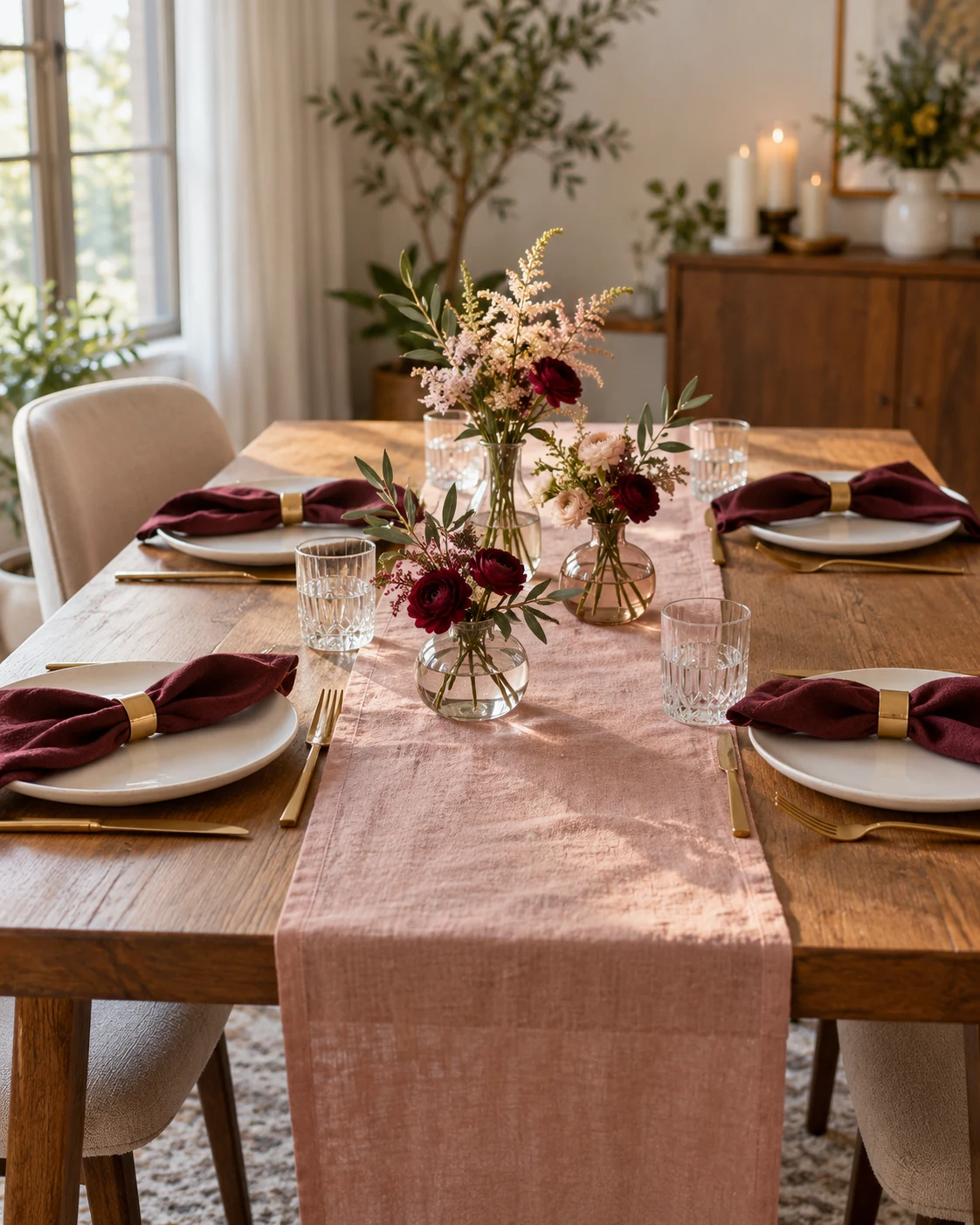
The narrow blush runner gives the darker napkins something soft to sit beside. White plates and clear glasses keep the individual places easy to read. Three low flower bottles repeat the palette without forming a wall across the table.
Lay out the plates before measuring the runner’s useful width. Its role is to add color rather than occupy every space between diners. Leave room for whatever you intend to serve at the table.
Compare burgundy textiles against the runner in ordinary light. Some dark reds lean purple, while others look noticeably brown beside pink. Either relationship can work when you enjoy it, so don’t chase an exact screen match.
Use your existing white or neutral plates when their size fits the meal. The setting doesn’t depend on purchasing a specific shape of crockery. Repeated napkin color can connect slightly different plates just as comfortably.
Keep the flowers low enough for conversation across the table. Check that while seated rather than standing above the arrangement. If the vases take too much space, move one to a nearby shelf instead.
2. Put paper hearts above the gathering
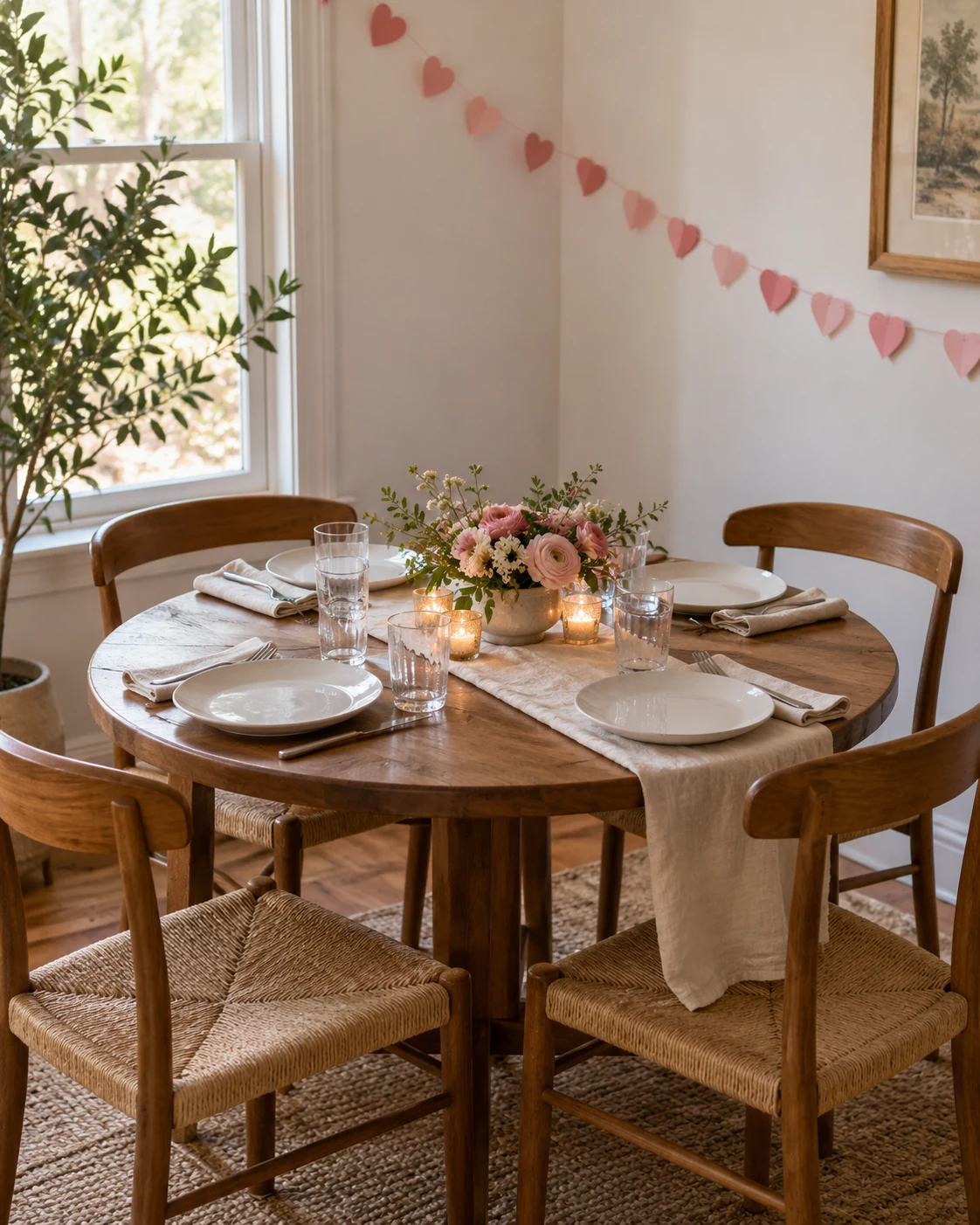
A simple heart garland gives the wall a festive detail while leaving the tabletop useful. The cream cloth and ordinary place settings stay quiet beneath it. You don’t need another themed object beside every plate.
Choose the wall position around the actual activity. Keep decorations away from heat, food handling and anything people need to reach. A pretty backdrop shouldn’t interfere with opening a cupboard or pulling out a chair.
Use a mounting method approved for the surface and your tenancy rules. Removable doesn’t mean every painted wall will behave the same way. Follow the package directions rather than guessing from how light the paper feels.
Vary the pinks modestly if you’re making the hearts from existing paper. The shapes already repeat, so their color doesn’t need to match perfectly. A limited palette can connect different scraps without making the wall look cluttered.
Stop once the main gesture reads clearly from the seats. More strings may turn a small corner into something harder to live around. The gathering can feel special without transforming the entire room into a backdrop.
3. Red and white without a crowded centerpiece
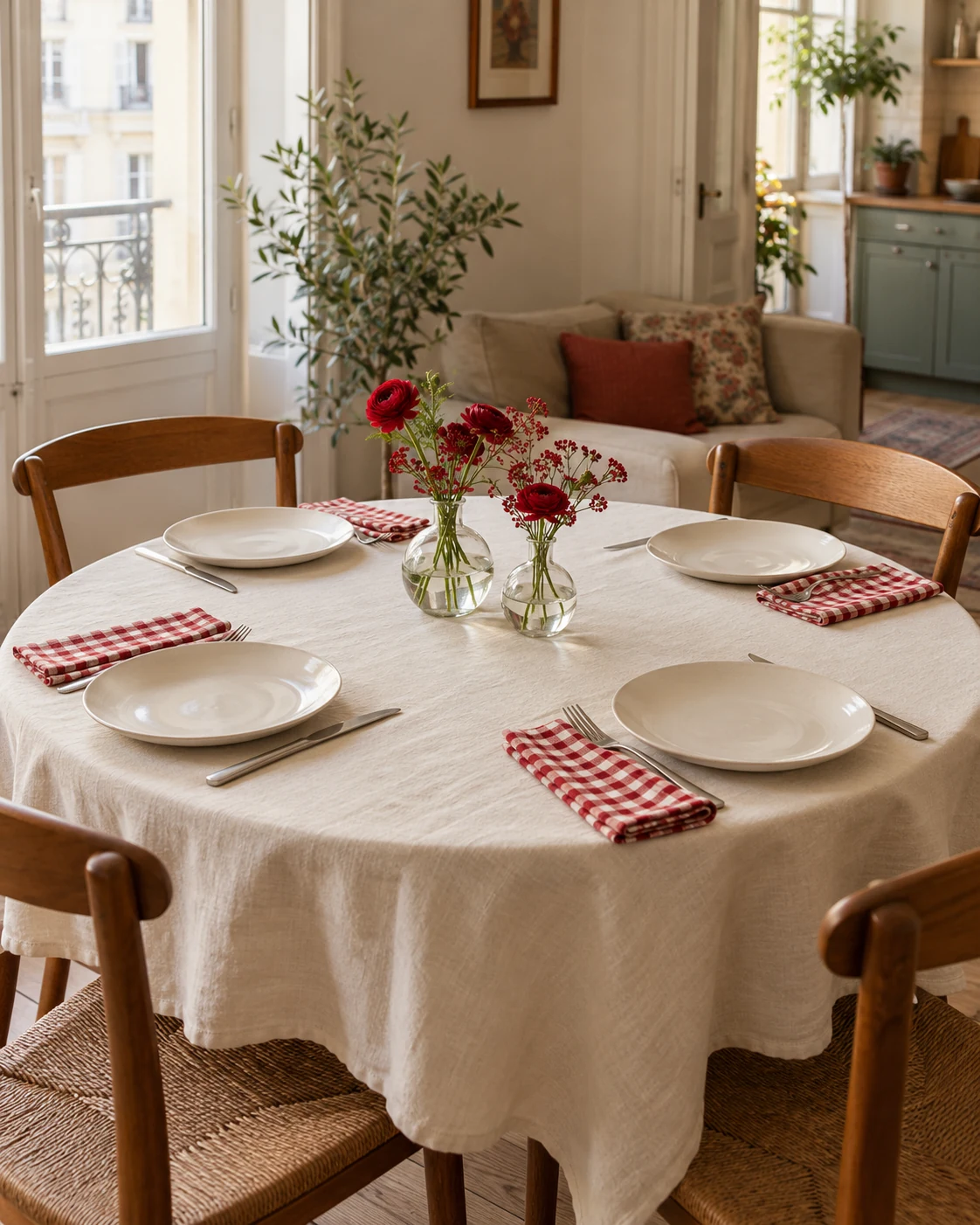
Red gingham gives this table most of its pattern. The plain cream cloth and white plates create a quieter background around it. A few short red stems repeat the color without requiring several types of decoration.
Check the napkin’s scale beside the plates. A bold check becomes a stronger graphic block than a fine gingham. Choose the version you like at normal dining distance rather than only in a close photograph.
The floral arrangement can stay deliberately modest. Two small bottles may provide enough repetition across a four-person table. Large bunches aren’t automatically more welcoming when they take away useful serving space.
Use water glasses people can comfortably place and reach. Tall decorative pieces can compete with stems and become awkward around elbows. Practical glassware helps the setting work beyond the moment everyone first sits down.
If you already own red textiles, begin there before buying pink ones. The occasion doesn’t require a compulsory shade. A color you can use again may suit the gathering better than a matching temporary set.
4. Use a few small borrowed vases
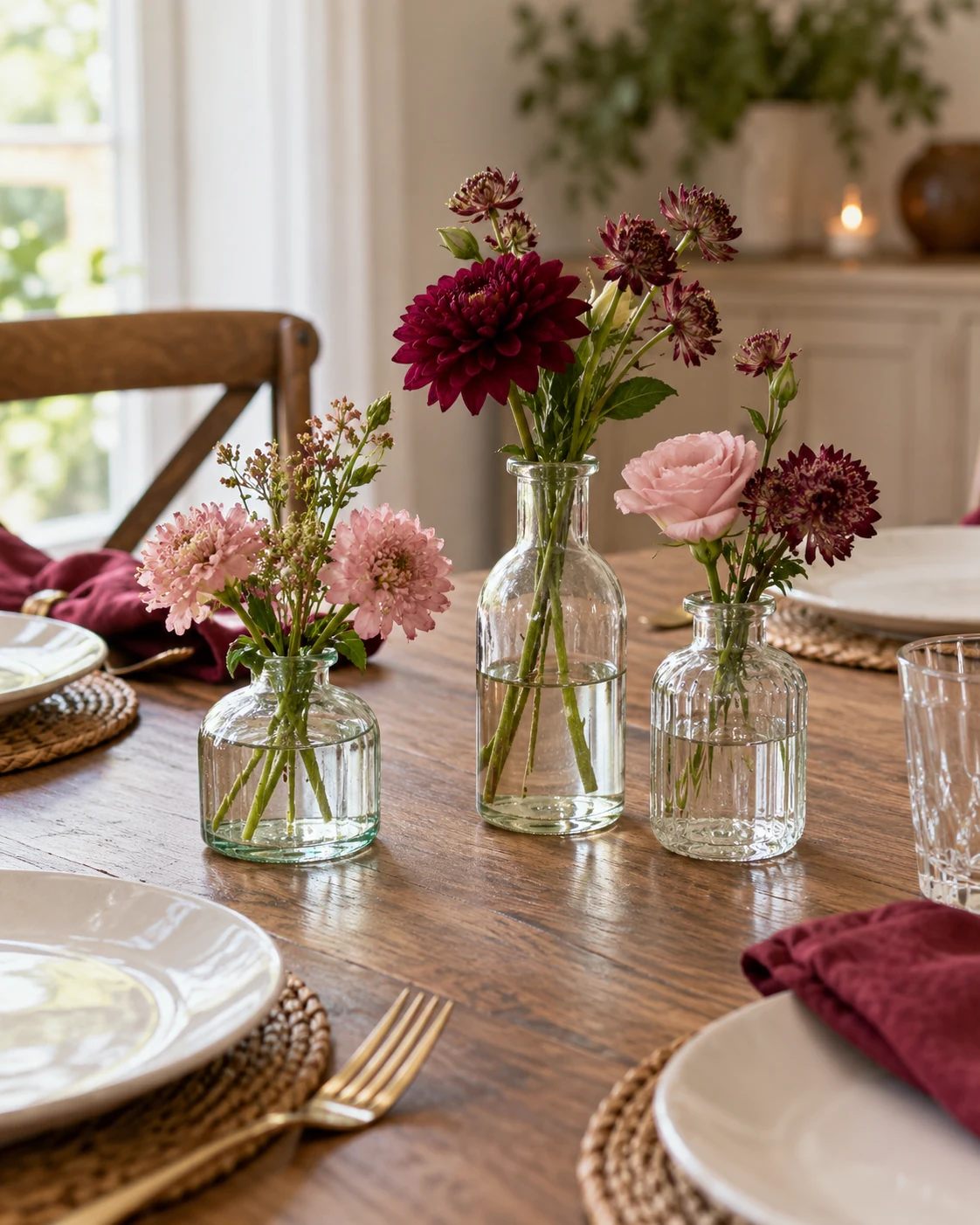
Mismatched bottles can look related when the stems share a limited palette. Their different outlines provide variation without another material or ornament. Keeping the flowers short leaves more space for faces and conversation above the arrangement.
Choose clean, stable containers appropriate for holding water. A very narrow bottle can tip more easily than its photograph suggests. Test the arrangement on the actual table before placing it beside food or guests.
Borrow the containers when that makes sense for your group. Ask clearly about returning them rather than assuming a party contribution becomes permanent. You can also use suitable bottles you already own without presenting them as a matching collection.
Trim the overall arrangement around the usable space you have. Don’t force three vases onto a table that comfortably holds only one. The repeated colors still work when the other flowers sit on a nearby surface.
Keep the flowers separate from food preparation and serving tasks. If a guest has a relevant sensitivity, ask before making flowers the main decoration. A folded textile or paper detail can provide the color instead.
5. Make a sofa gathering feel intentional
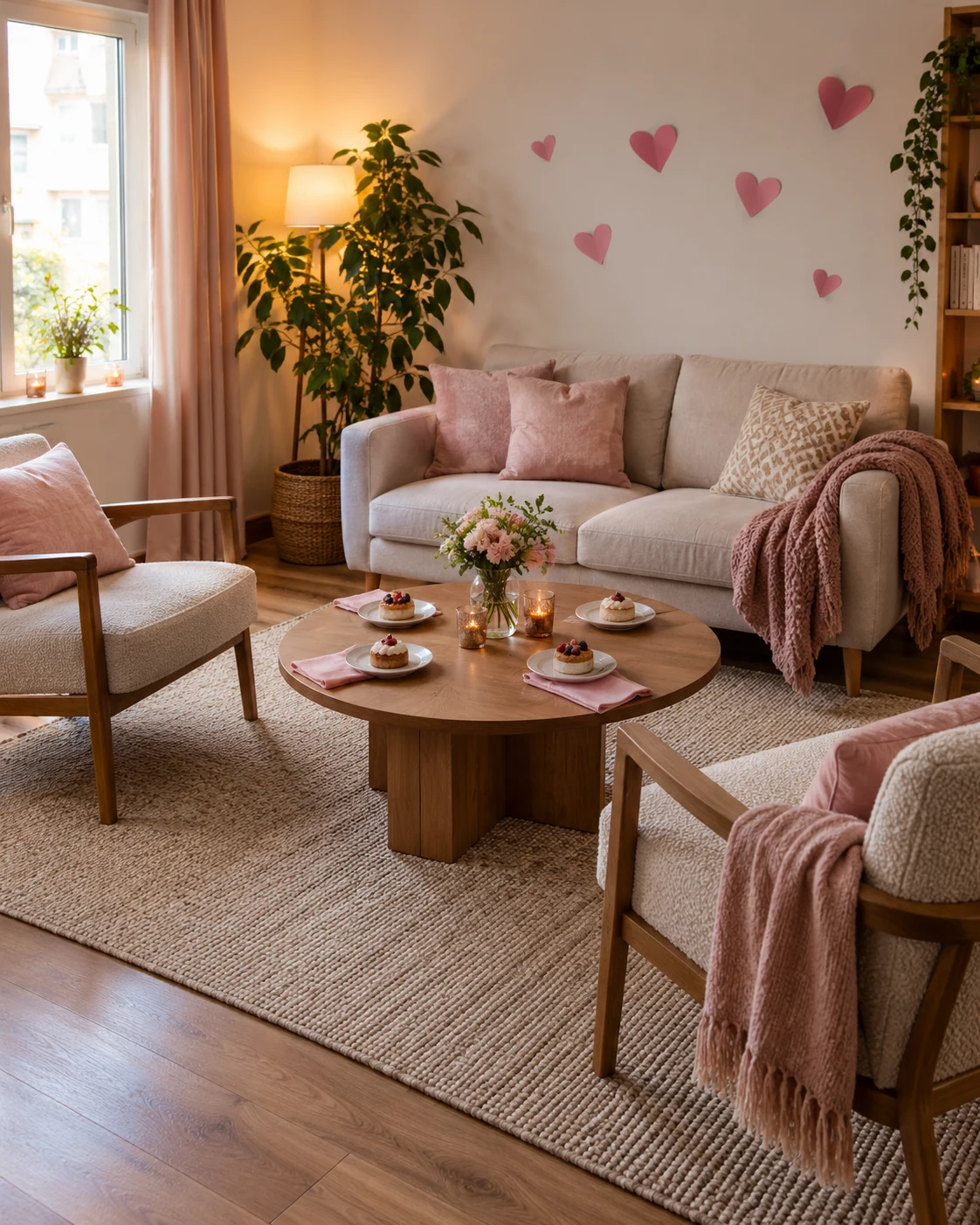
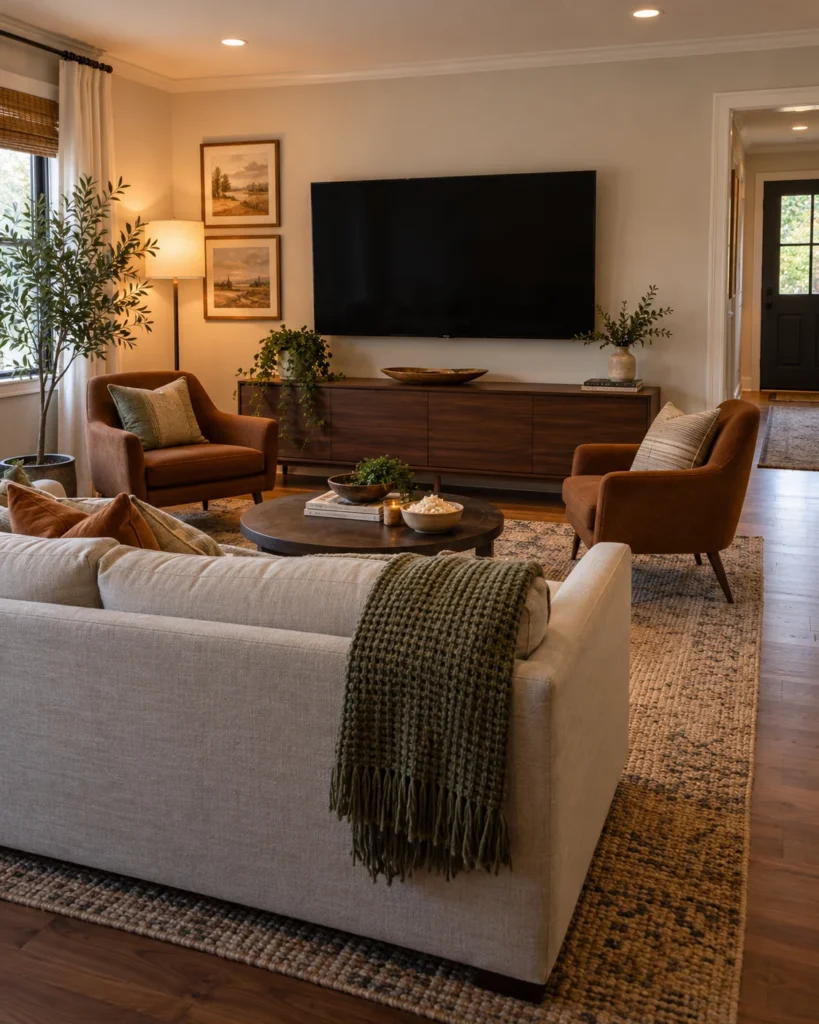
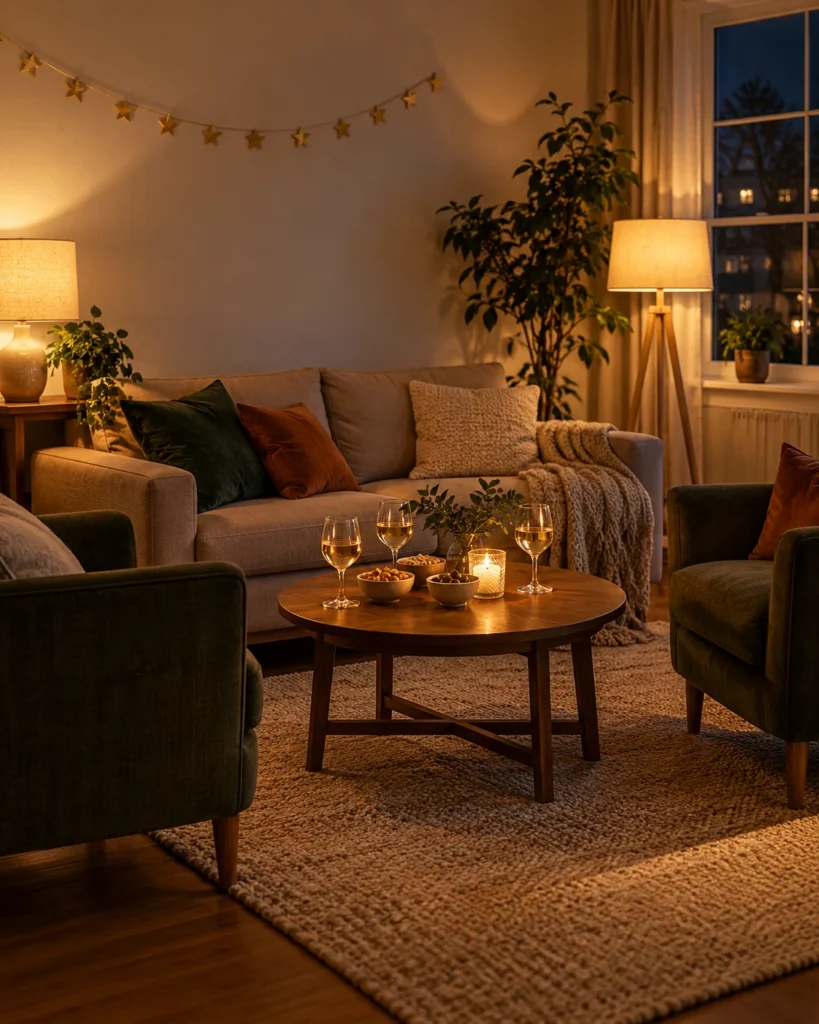
You don’t need a dining room to make the evening feel considered. Four dessert plates, coordinated napkins and one low arrangement can connect a small seating group. The room still looks like somewhere people can comfortably spend time.
Count suitable seats before planning the food. A floor cushion or low stool won’t work equally well for every guest. Ask about practical needs rather than deciding the smallest possible furniture makes the best gathering.
Choose food around the available surfaces. Something needing several utensils may be better suited to a proper dining setup. The menu can become simpler instead of making everyone balance an awkward plate.
Put a stable surface within useful reach of each seat. A nearby table matters more than matching every cushion or throw. Keep the walking route clear once people and their belongings fill the room.
Our small space watch party ideas show more ways to test seating and drink positions. You can borrow those practical arrangements without making the gathering about a screen. The room should support the people and activity you’ve actually invited.
6. Keep the palette soft with cream and dusty rose
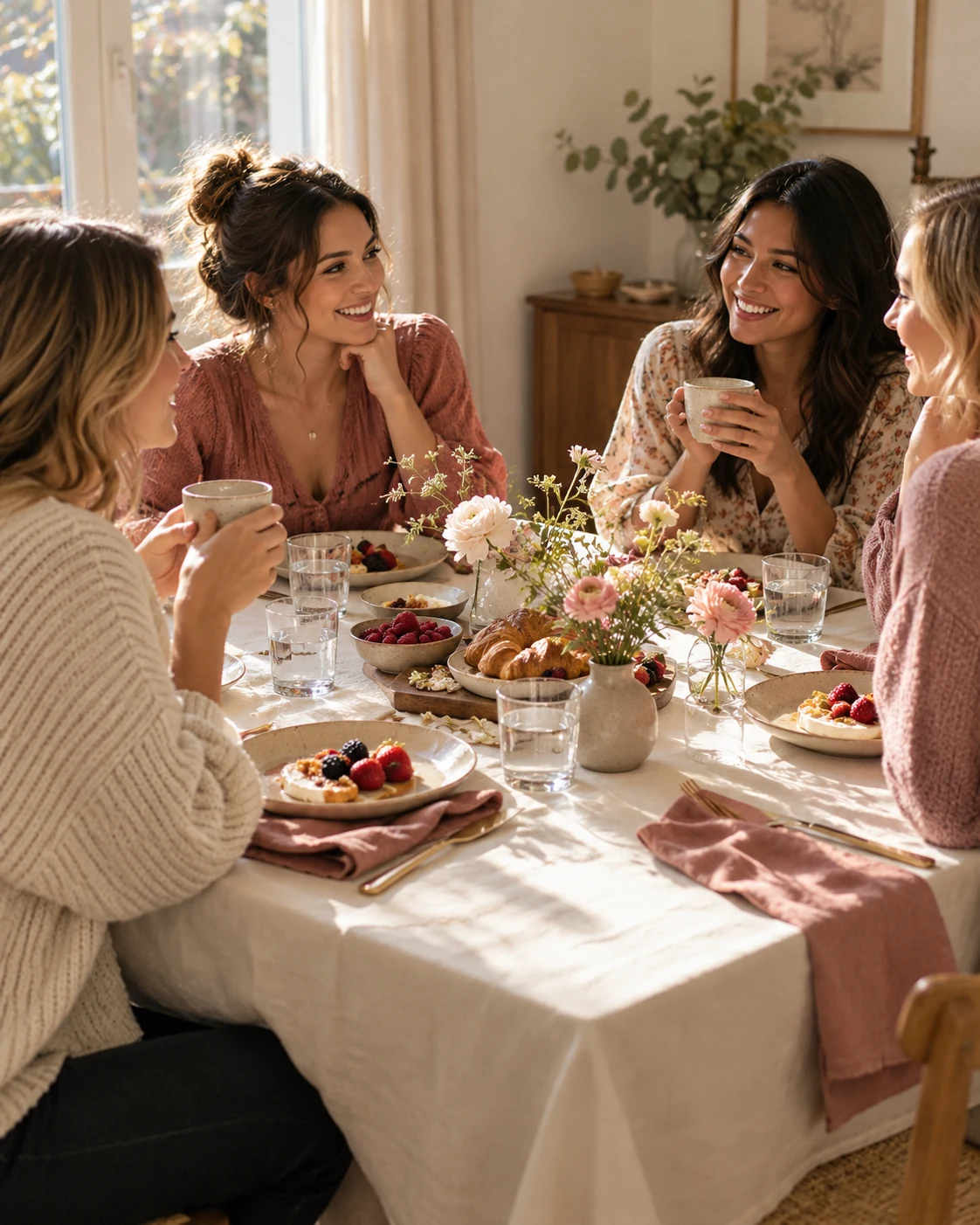
Muted rose napkins give cream textiles a gentle point of contrast. The setting feels different from brighter red and pink without requiring more decorative pieces. Simple stoneware and clear glasses let those softer colors remain visible.
Compare the cream shades together before assuming they must match exactly. Textiles and ceramics naturally reflect light differently. A few related tones can feel comfortable when their surfaces provide enough distinction.
Keep the flowers within the same quieter range if you want the table to stay restrained. A very bright bouquet would become the obvious focal point. That can work too, but it changes which detail leads the arrangement.
This is a useful direction when your existing cupboards already contain neutral tableware. Add one textile color rather than replacing otherwise suitable pieces. The gathering’s personality can come from how you combine familiar objects.
Check the setting under the light you expect to use. A sunny breakfast and a lamp-lit evening can make the same rose look different. Choose around the actual plan rather than only the most flattering photograph.
7. Add a small paper detail beside each plate
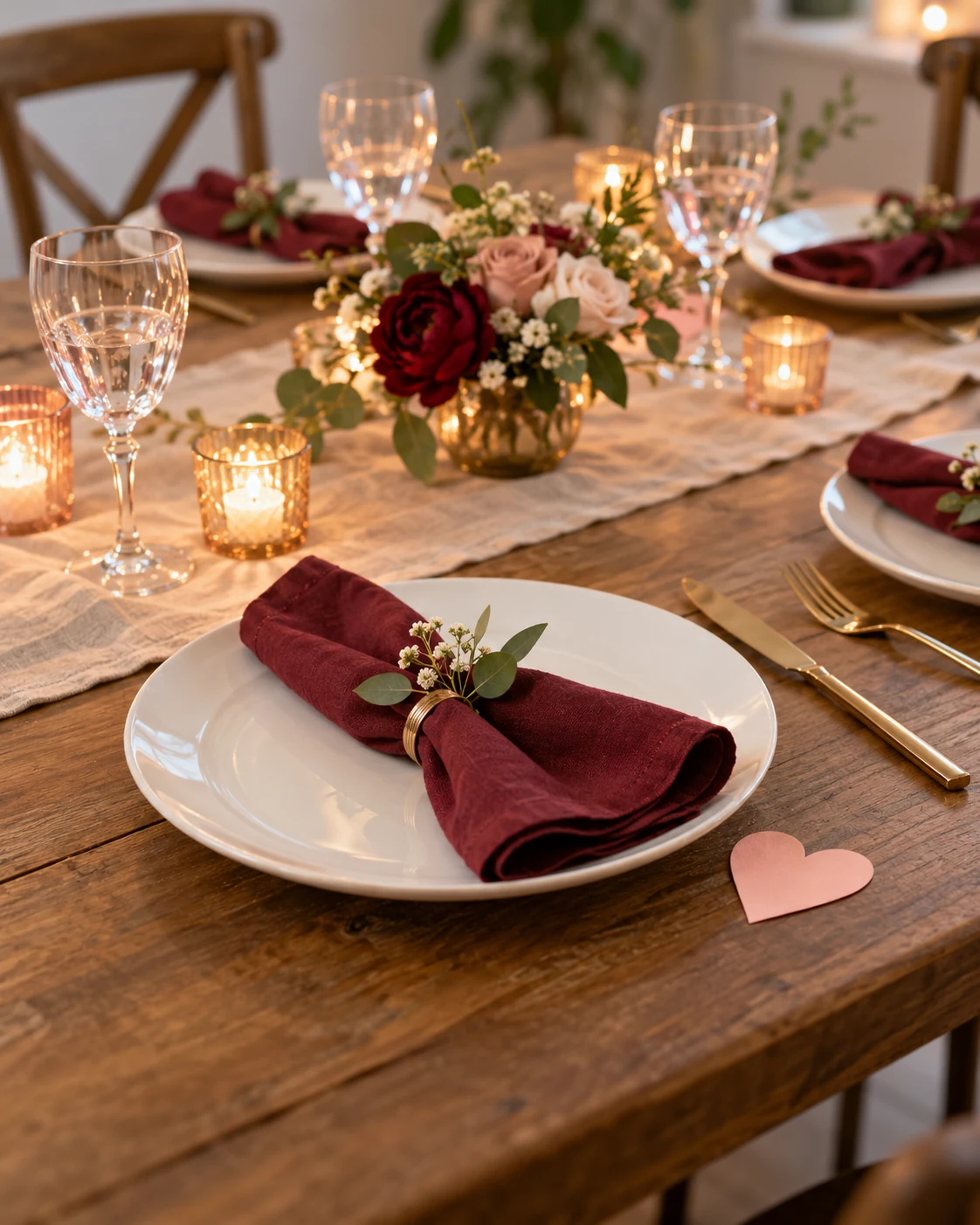
A plain paper heart can provide the occasion’s reference without covering the plate. Here, the burgundy napkin supplies most of the color and texture. The small paper shape adds a second detail with a much lighter footprint.
Keep it separate from anything people need to eat or handle. You want guests to understand where the paper belongs without moving several decorations first. A clear spot beside the place setting is usually enough.
You can leave the heart blank when names or messages aren’t useful. Not every decorative surface needs wording. A personal note is another option when you want to write one for each guest.
Choose paper that holds its shape for the evening’s arrangement. Very thin scraps may curl or shift across the table more than expected. Make one example before cutting a complete set.
Skip another favor when the paper detail already does the job. Small gatherings can become crowded through lots of individually modest objects. Keep the pieces that contribute something specific and leave room for ordinary use.
8. Move serving to a nearby surface
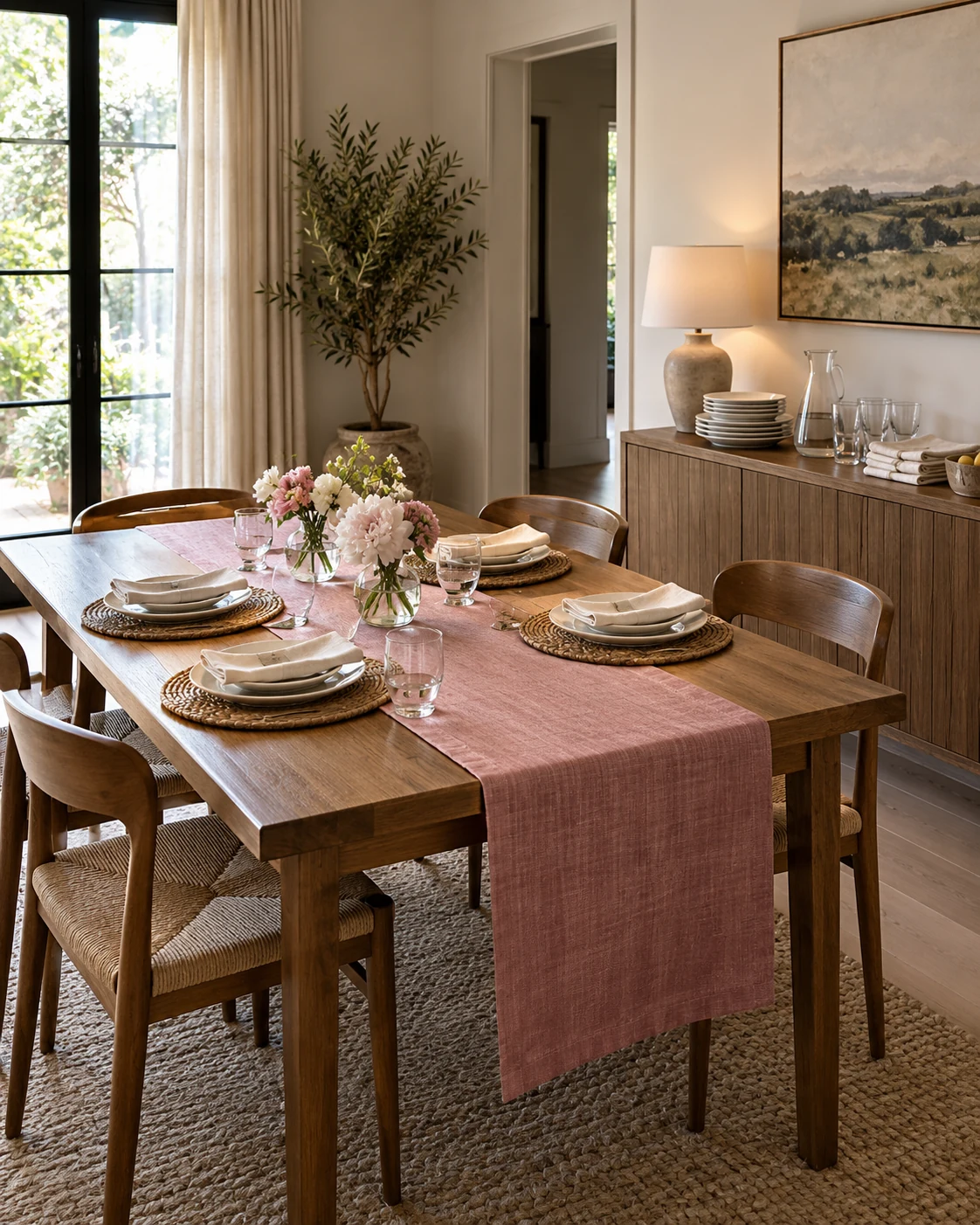
A narrow sideboard can free the table from extra bottles, plates and spare napkins. Guests still see a welcoming setting, while the practical supplies remain close. This can matter more than reducing the centerpiece by another inch.
Check the route between the seats and serving surface. A sideboard behind an awkward chair won’t automatically improve the room. Walk through the arrangement with the chairs occupied before deciding where everything belongs.
For a hypothetical four-person gathering, begin with four suitable places and clear serving space. Add a runner, low flowers or paper hearts only when they fit. That inventory describes possible needs rather than an instruction to purchase every item.
Check cupboards, ask about borrowing and buy only the genuine gap. Keep later uses in mind when choosing something new. A plain napkin or modest vase can serve another ordinary dinner after the occasion passes.
For another small gathering, the New Year ideas show separate serving and seating arrangements. Borrow whichever detail makes your own evening easier. The finished room should invite people to settle in rather than worry about disturbing the display.