Engagement Photo Ideas That Fit Your Real Relationship

Explore the guide
- 1. Walk a familiar route without performing a scene
- 2. Sit together and let the conversation lead
- 3. Use a familiar window at home
- 4. Start on the steps you already know
- 5. Pause over a book you both recognize
- 6. Choose a cafe with room for the camera
- 7. Stay on a garden path you can use comfortably
- 8. Keep a covered option for changing weather
- 9. Use a plain city wall and a little space
- 10. Give your hands something familiar to do
- 11. Include your hands without making the ring the whole story
- 12. Finish with one quiet portrait together
- Bring three requests to the planning conversation
Useful engagement photo ideas begin with something you would comfortably do together. That might mean a short walk, a conversation or sitting beside a familiar window. You don’t have to turn your relationship into a performance for the camera.
Choose one setting you like and tell your photographer what feels uncomfortable. Mention anything to skip, including kissing, sustained eye contact or standing for long periods. Those preferences can shape the session before anyone starts suggesting poses.
The twelve concepts below offer different starting points for that conversation. Their illustrations show fictional partners, rather than real clients or completed engagement sessions. Use your own comfortable clothes and ordinary belongings instead of buying props to recreate them.
1. Walk a familiar route without performing a scene
A familiar sidewalk gives you somewhere to go without inventing an elaborate activity. Walk at an easy pace and talk about something ordinary. Your photographer can suggest where to begin and when to pause.
Use suitable pieces you already own for this idea.
Keep the route short enough that repeating a small section doesn’t become tiring. Tell the photographer if walking toward the lens makes you feel watched. Walking across the frame, or simply stopping together, offers another version of the same setting.
Choose a location where photography won’t obstruct other people or put you near moving traffic. Leave room for people to pass. A meaningful route only works when everyone can use it comfortably.
2. Sit together and let the conversation lead
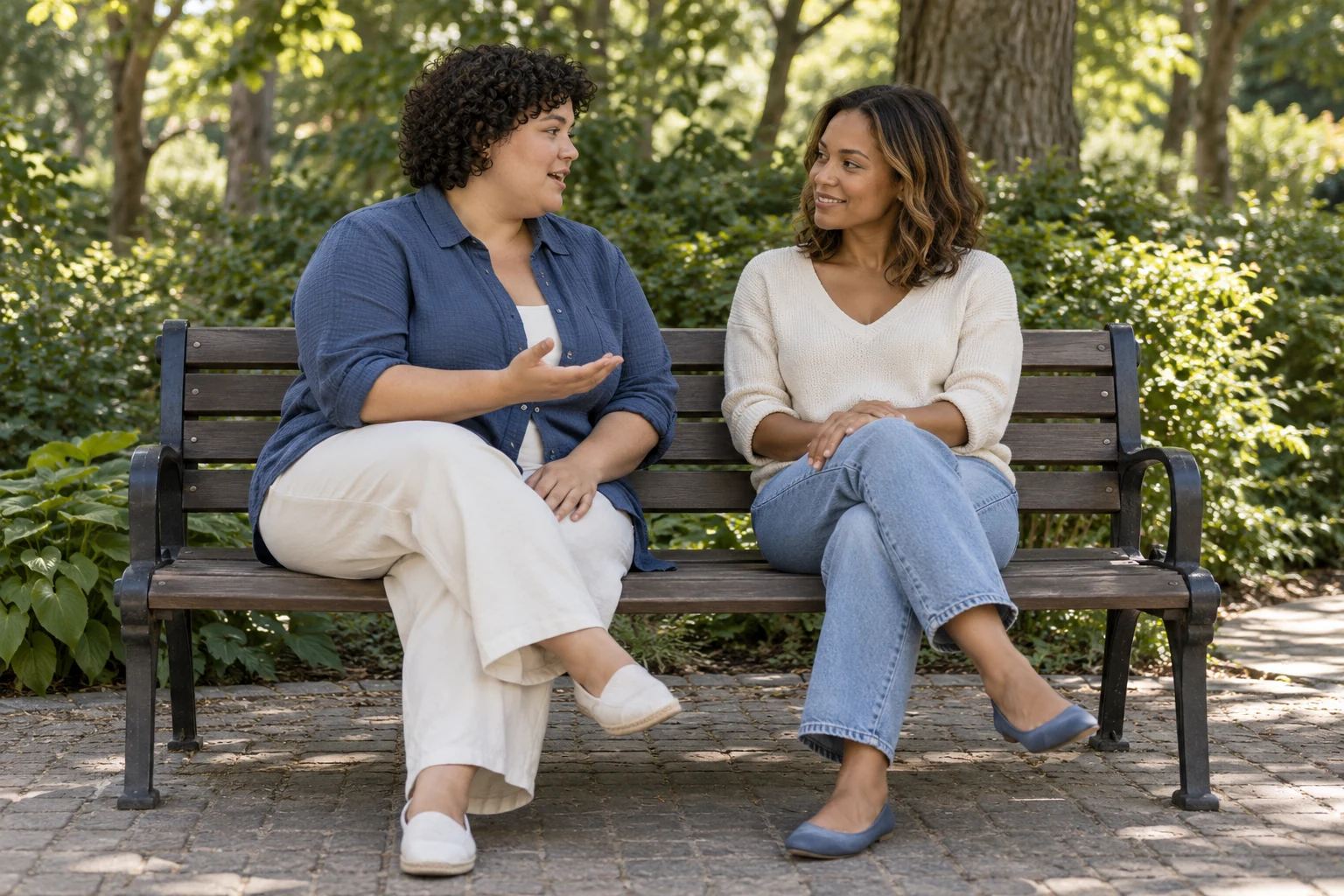
An existing bench can suit partners who prefer sitting or need regular breaks. Sit as you normally would, with enough room for your own comfortable posture. A quiet conversation gives the photographer something to observe beyond a held smile.
Use suitable pieces you already own for this idea.
You can face each other briefly, look ahead or listen while your partner speaks. Touching isn’t required for the picture to show connection. Ask for directions that respect how you actually like to sit together.
Check the bench and its approach before choosing it as your main location. A pretty background doesn’t make uneven ground or uncomfortable seating suitable. Keep a different seated option available if conditions change.
3. Use a familiar window at home
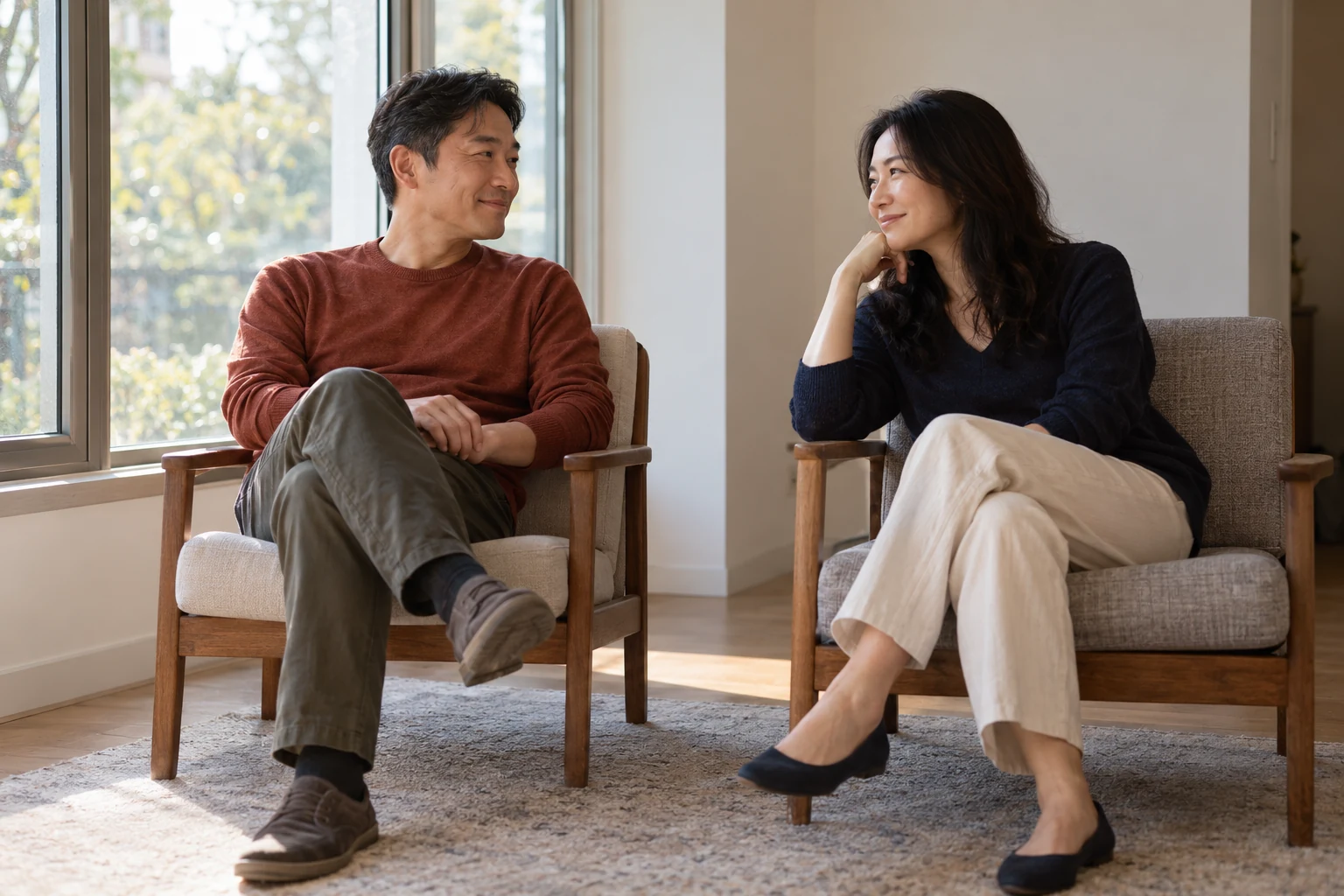
Home can provide a setting without travel or an unfamiliar audience. Try sitting near a window in chairs you already use. Your photographer can check the available light and decide where the camera should go.
Use suitable pieces you already own for this idea.
Choose a small area you are comfortable showing, rather than rearranging the whole house. Move private paperwork and personal photographs out of the frame if you prefer. Keep the space recognizable without making every household detail part of the picture.
Discuss who will attend and which rooms are available before the session. You can limit photography to one shared space. Familiar surroundings still deserve clear privacy boundaries.
4. Start on the steps you already know
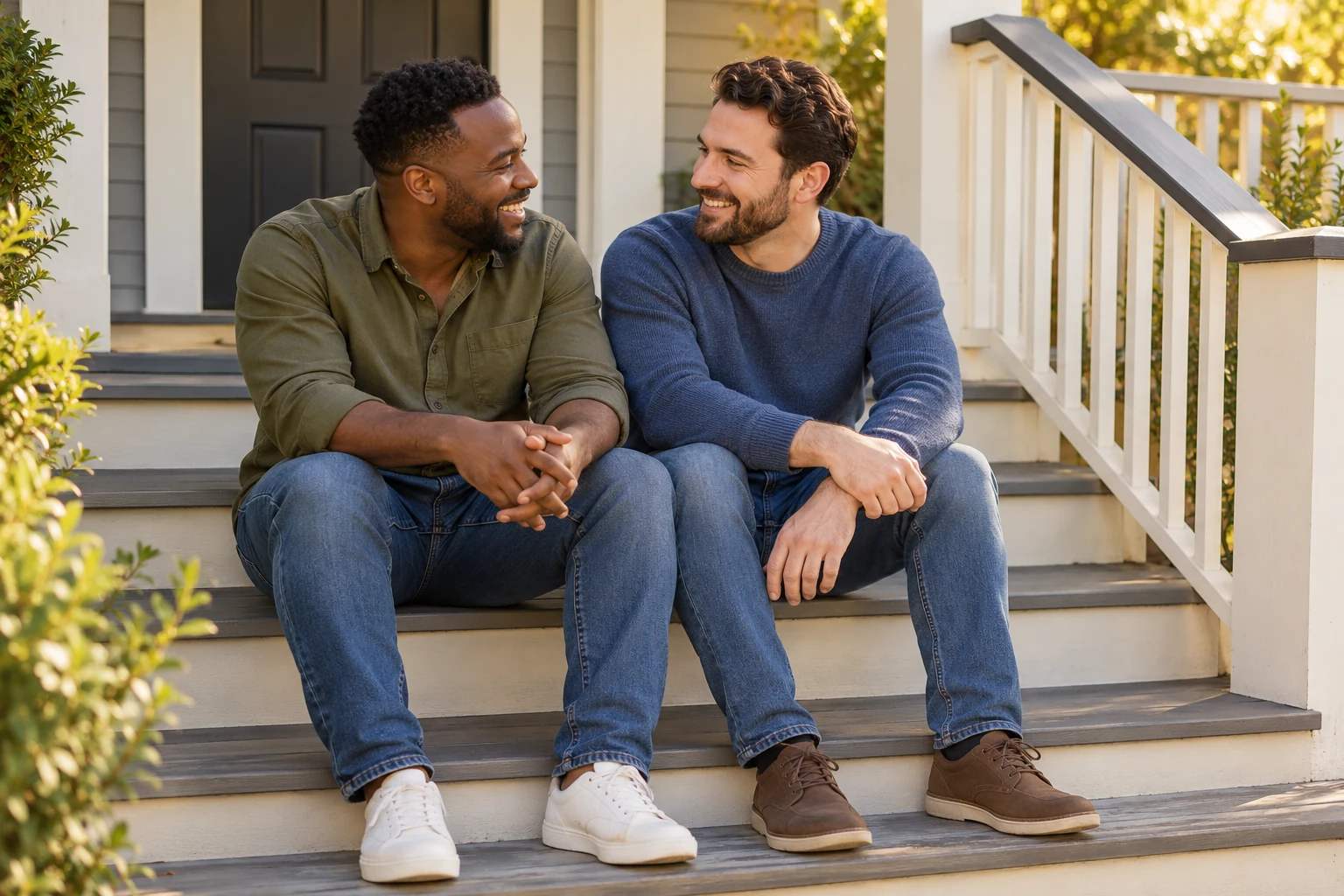
Front steps can place the two of you within an everyday part of your life. Sit beside each other when the surface and access suit you. Let the photographer compose around the doorway, railing or familiar shape of the porch.
Use suitable pieces you already own for this idea.
Keep house numbers and identifying details outside the frame when privacy matters. Choose level seating elsewhere if the steps don’t work for either partner. There is no reason to balance on a railing or use an uncomfortable perch.
This idea can also work with an existing porch seat. The important part is the familiar setting and how you occupy it together. Your exact doorway doesn’t need to become the subject.
5. Pause over a book you both recognize

A book can give your attention somewhere to land besides the camera. Bring one you already own and would actually discuss together. Read a short passage or point out something familiar without pretending to browse an entire shop.
Use suitable pieces you already own for this idea.
Ask the business before planning photographs inside a bookstore. Explain the group size, equipment and time you expect to need. Keep aisles available and follow the owner’s conditions, including any restrictions on shelves or displays.
If permission isn’t available, take the same book to your own living room. The shared reference can remain meaningful in a simpler setting. You don’t need to purchase another book for the picture.
6. Choose a cafe with room for the camera

A cafe can suit partners who enjoy sitting and talking together. Check with the business before arranging a professional session. An ordinary customer visit doesn’t automatically establish permission for a planned shoot.
Use suitable pieces you already own for this idea.
Pick a quieter time agreed with the staff and keep the setup small. Let your conversation lead rather than repeatedly lifting drinks for the camera. Leave space around the table for other guests and employees.
Skip this idea when the room is crowded or the arrangement feels disruptive. A familiar table at home can support the same conversational portrait. Choose the setting for your comfort, rather than its popularity online.
7. Stay on a garden path you can use comfortably
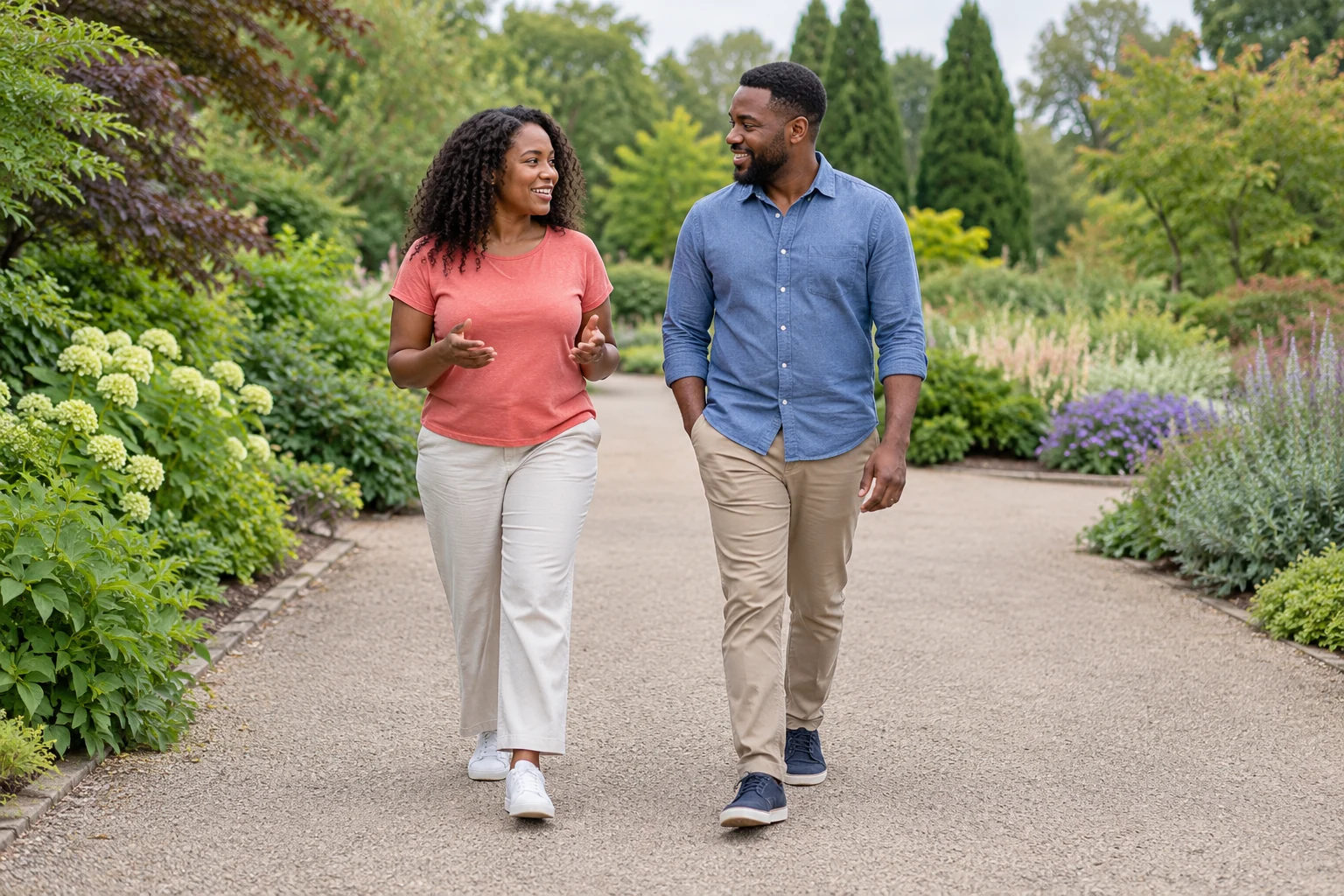
A garden path offers plants and changing light without requiring elaborate posing. Choose an established route that suits your footwear and access needs. Stand or move within the path, keeping planted areas undisturbed.
Use suitable pieces you already own for this idea.
Check the garden’s current photography rules with its staff before making plans. Admission, opening hours and session permissions can involve separate decisions. Don’t assume another couple’s photographs establish permission for your own visit.
Tell the photographer which parts of the setting matter most. Greenery, an open view or a quiet paved corner can lead to different compositions. A specific preference helps more than requesting a generally romantic atmosphere.
8. Keep a covered option for changing weather
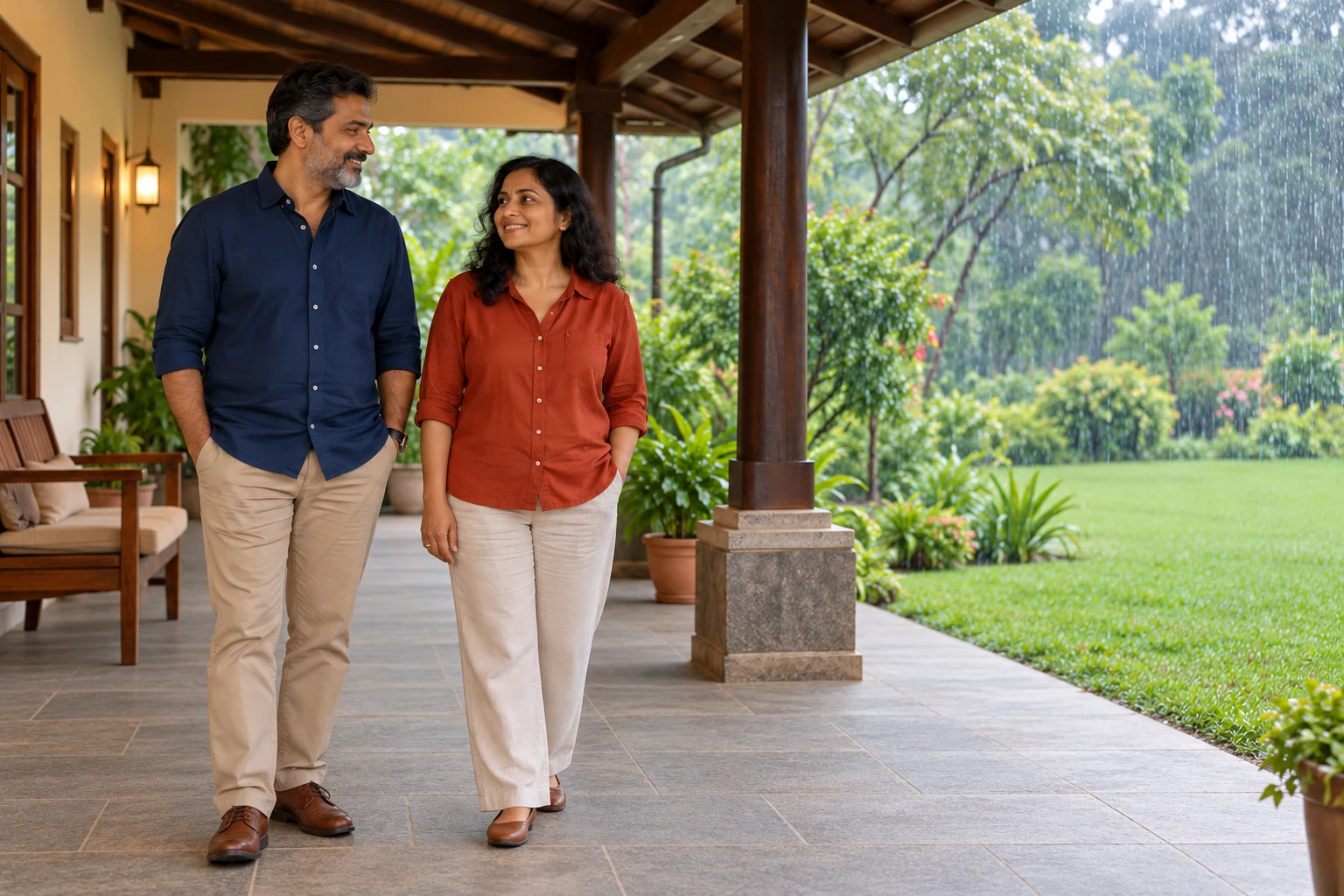
A porch or another approved sheltered space can provide a useful alternative when weather changes. Confirm that it remains available at your session time. Discuss the conditions that would mean postponing instead of continuing.
Use suitable pieces you already own for this idea.
Rain in the background doesn’t require standing in it. You can stay under cover and let the photographer assess the light. Avoid turning a weather change into an uncomfortable clothing challenge or a slippery walk.
Choose an indoor alternative when wind, temperature or other conditions make the sheltered option unsuitable. Agree on who makes the final timing decision. Keep that conversation separate from pressure to recreate a dramatic reference image.
9. Use a plain city wall and a little space
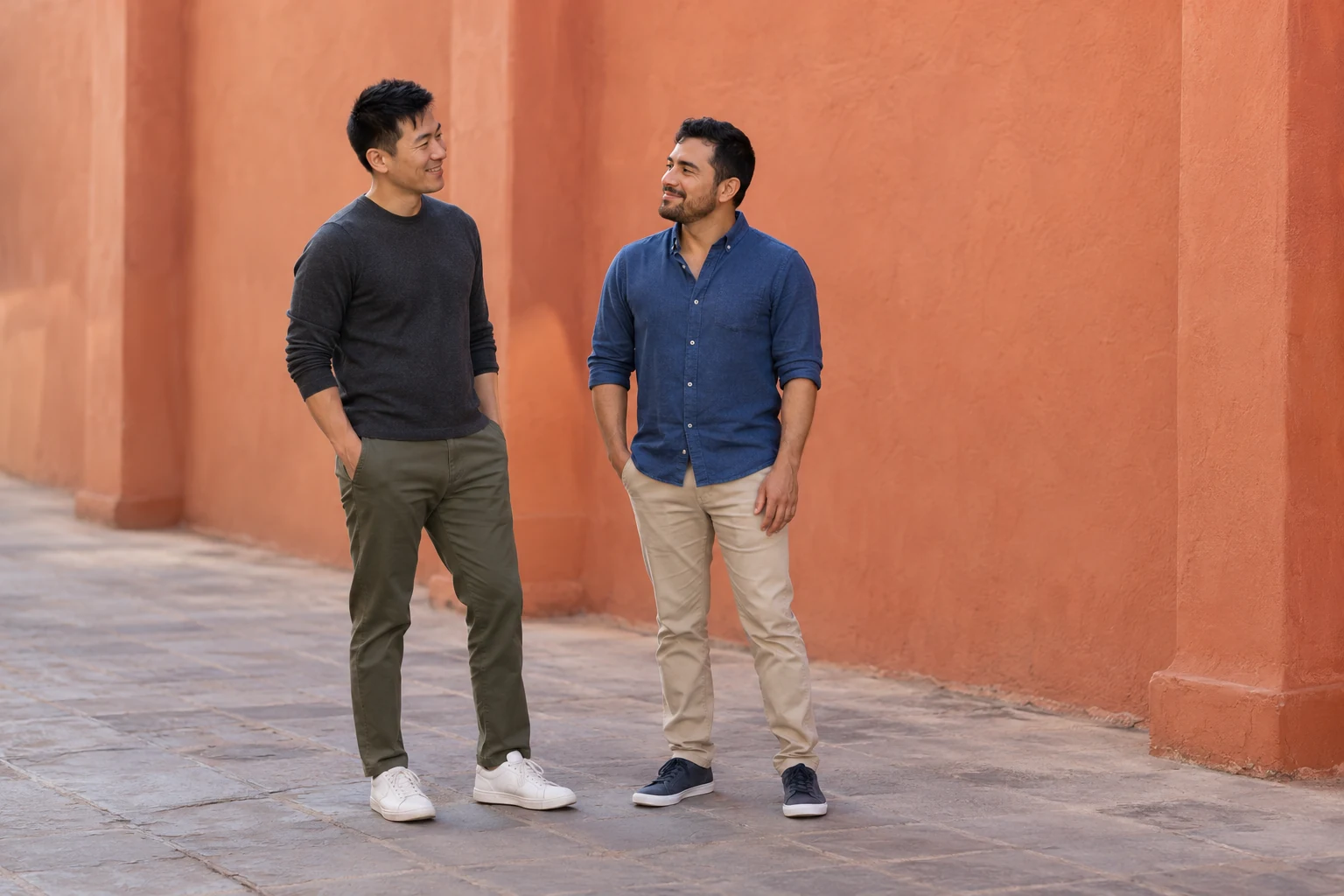
A simple wall can support a portrait without a busy landmark behind you. Stand a comfortable distance apart and turn toward each other if that feels natural. Your photographer can vary the framing without requiring a new location.
Use suitable pieces you already own for this idea.
You don’t have to lean against the wall or hold hands. Looking ahead together can be another useful version. Ask for a seated alternative nearby if standing becomes uncomfortable.
Choose a pedestrian space where you can pause without blocking access. Check ownership and any location rules before arranging the session. Keep recognizable artwork out of the concept unless its use has been appropriately considered.
10. Give your hands something familiar to do
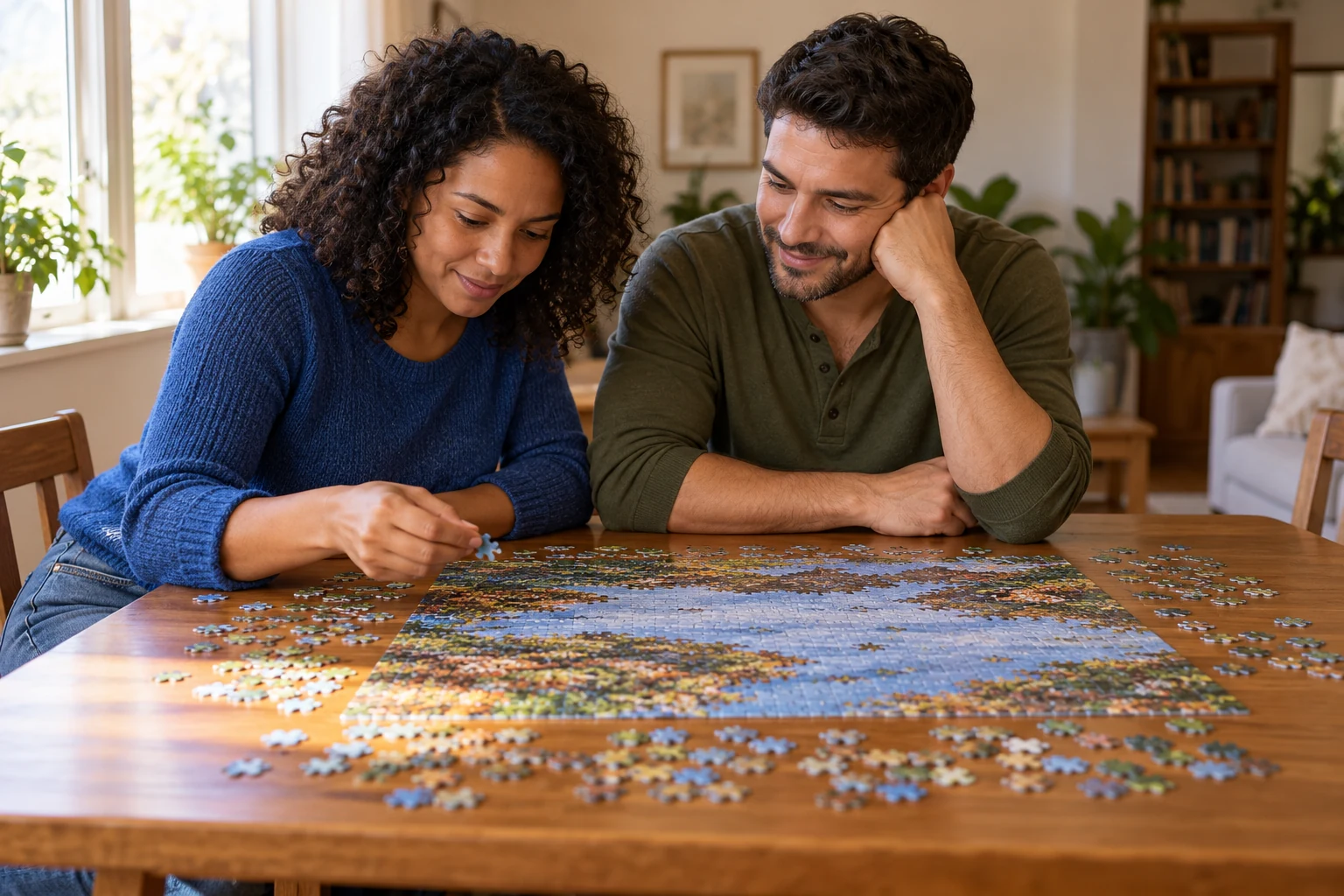
An activity you already enjoy can give a home session a clear starting point. A familiar puzzle works when both partners would genuinely spend time with it. Keep the activity simple enough that conversation remains possible.
Use suitable pieces you already own for this idea.
Let the photographer watch what happens before adding extra direction. You can pause, compare pieces or look toward each other between turns. The activity is a useful prompt, rather than a test of how naturally you behave.
Leave it out if concentrating makes the session feel more demanding. Sitting together without a prop can work equally well. There is no need to invent a shared hobby for photographs.
11. Include your hands without making the ring the whole story
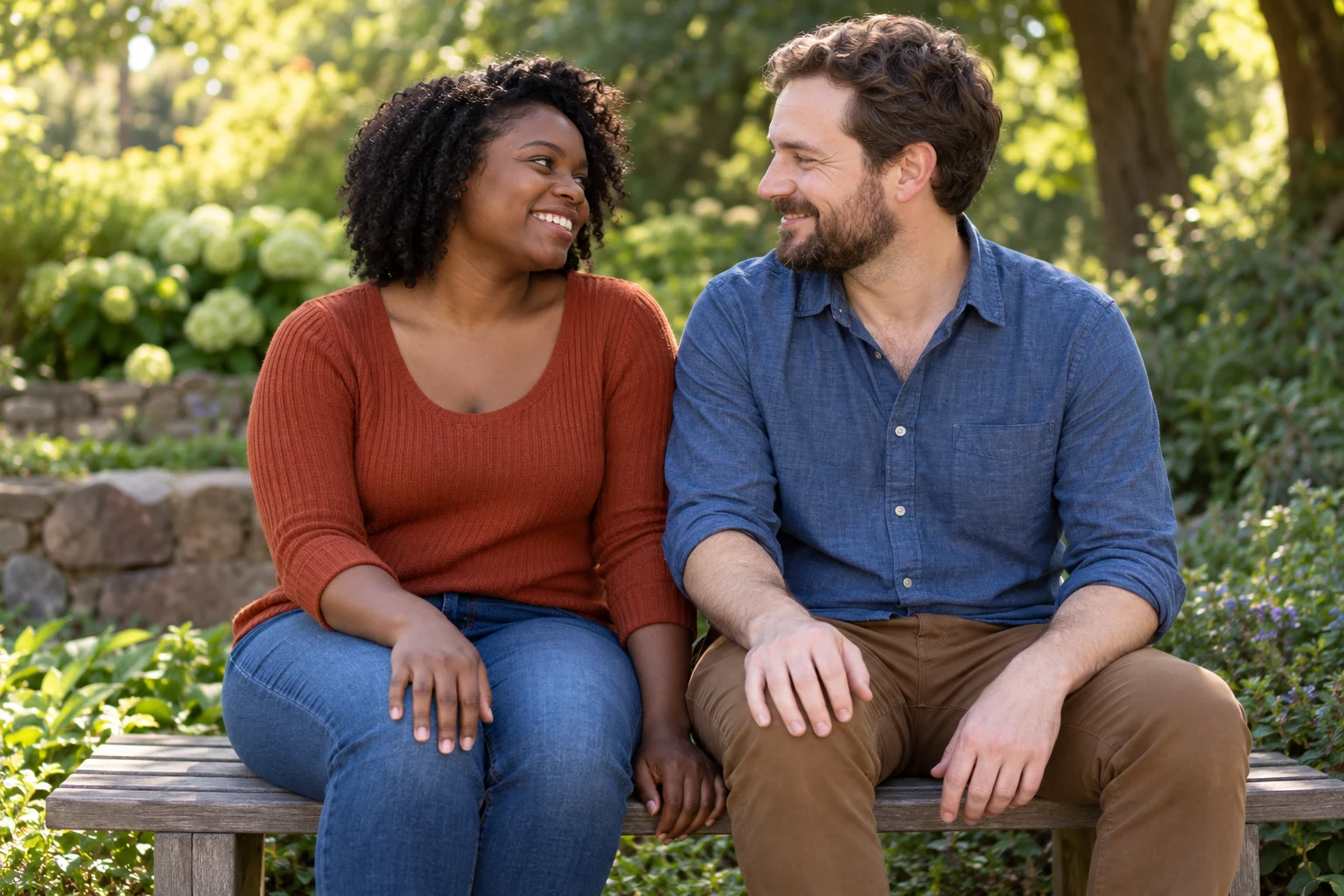
A closer composition can include hands while keeping faces and setting in view. Rest them where they feel comfortable, including separately on your own knees. An engagement portrait doesn’t require intertwined fingers or a jewelry advertisement.
Use suitable pieces you already own for this idea.
Tell the photographer whether you want a ring detail at all. Some couples prefer a wider picture showing how they sit together. Others want both versions, provided there is time and everyone remains comfortable.
Avoid copying hand positions that feel strained or require constant adjustment. A simpler position gives you less to monitor. The illustration is a framing concept, not a required pose or an exact jewelry example.
12. Finish with one quiet portrait together
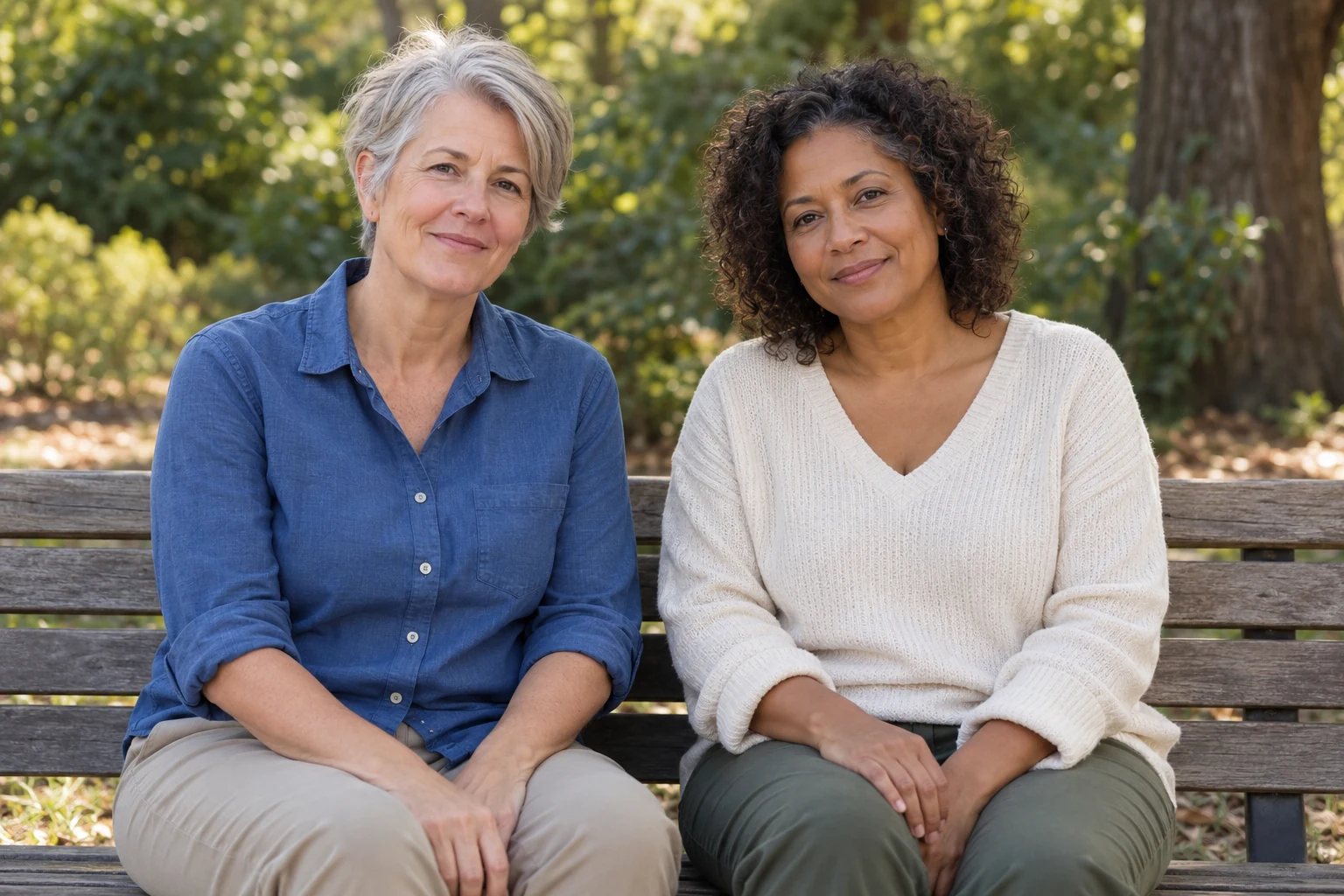
A straightforward portrait can sit alongside the more conversational pictures. Choose a seated or standing position that already feels manageable. Look toward the camera if you want, without forcing a large smile.
Use suitable pieces you already own for this idea.
Ask the photographer for a clear, simple instruction when several directions feel overwhelming. You can pause between frames or request another approach. Finishing quietly may suit you better than adding one more elaborate location.
Tell the photographer how you expect to use this picture. A printed announcement and a wide display can need different framing. Discuss those uses before assuming every photograph will fit every format.
Bring three requests to the planning conversation
Pick one movement idea, one seated alternative and one portrait you would like to try. Share any firm boundaries alongside those requests. Treat the list as a starting conversation rather than a demand to reproduce someone else’s pictures.
Confirm the location, travel time, weather alternative and any access arrangements with the people involved. Ask the photographer about printing, sharing and permitted edits under your agreement. Also explain your preferences about their use of your images in publicity.
Check current guidance with the specific national park; permits depend on your planned activity. Rules depend on the activity and circumstances, with other visitor requirements still applying. Your photographer can help clarify the actual plan with the location.
If you display a portrait at your celebration, our bud vase centerpiece ideas offer table arrangements. Keep any photograph clear of dining space and use it according to your agreed rights. A familiar image can belong in the celebration without becoming another complicated display.
Visuals are original AI-generated editorial concepts, not photographs of actual products, tested projects, cooked results or real events.