A Family Game Night Without a Long Rules Lesson
Explore the guide
- 1. Start with a yes-or-no guessing round
- 2. Act out familiar actions
- 3. Draw for a shared guess
- 4. Turn existing paper into picture pairs
- 5. Build a spoken category chain
- 6. Add one sentence to a story
- 7. Try an open practice hand of UNO
- 8. Rotate pairs through Connect 4
- 9. Describe a picture without showing it
- 10. Guess an ordinary sound
- 11. Notice one changed detail
- 12. Finish with a rematch people actually want
Choose the first game for the people sitting down, rather than the collection on your shelf. Someone may enjoy guessing but dislike reading cards aloud. Another player might understand the rules yet struggle with a long wait between turns.
Follow each game’s age guidance and safety information before considering an adaptation. Pairing with an adult doesn’t remove those requirements. Keep small game pieces away from children under three, including younger siblings nearby.
The twelve options below mix spoken games, simple drawing and two optional boxed choices. Use them as a menu, rather than trying to complete everything. Begin with one appealing activity and keep a different kind ready if interest fades.
1. Start with a yes-or-no guessing round
One player thinks of an ordinary object everyone knows, such as a shoe or umbrella. Everyone else takes turns asking questions answered with yes or no. Agree on a small question limit before making a final guess together.
Use suitable pieces you already own for this idea.
For a first round, offer the category so nobody spends several turns guessing the wrong subject. Ask about use, shape or location rather than spelling. This keeps reading out of the activity without making the answer deliberately obscure.
Let the thinker give a hint when the questions stall. You can count a shared discovery instead of naming one winner. No cards, phone or printed prompt collection is needed.
2. Act out familiar actions

Try a simple charades round using actions such as brushing teeth, rowing or walking a dog. The performer chooses something familiar and communicates through movement without speaking. Other players guess, then someone else chooses the next action.
Use suitable pieces you already own for this idea.
Keep a seated version available for anyone who prefers it. Hand movements can communicate an action without running around the room. Ask before choosing prompts involving a person’s habits, and leave embarrassing impressions out.
A timer is optional, not something you need to buy. You can finish a turn after a few guesses instead. Someone who dislikes performing can join the guessing without being pushed onto an imaginary stage.
3. Draw for a shared guess
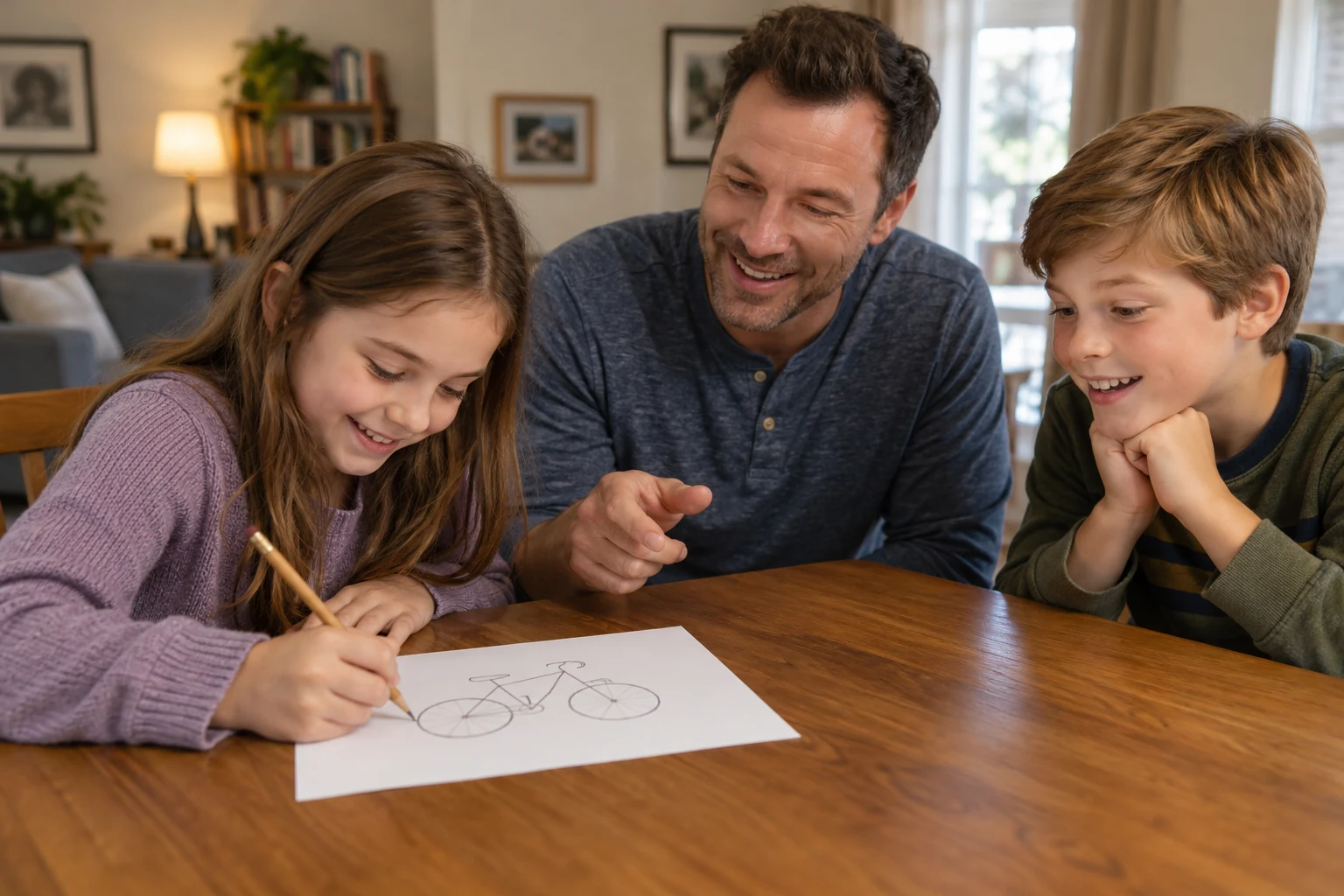
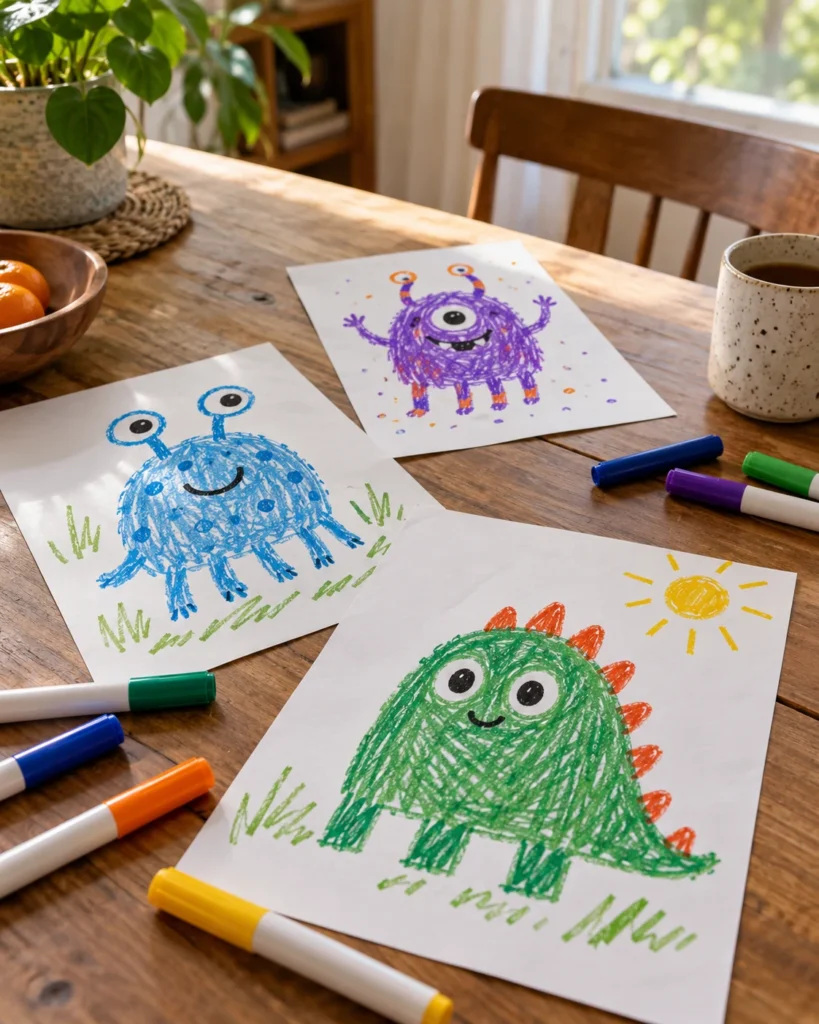
Use existing paper and pencils, with one person drawing while the others guess the subject. Start with a recognizable object, such as a bicycle or balloon. Keep the drawing simple enough that producing beautiful artwork isn’t part of the task.
Use suitable pieces you already own for this idea.
Agree whether letters and spoken hints are allowed before the first turn. For this suggested version, skip letters and give one spoken hint if everyone gets stuck. Rotate the pencil after the answer rather than rewarding whoever shouts loudest.
Choose another activity if holding a pencil isn’t comfortable for a player. Pointing at somebody else’s drawing can still support shared guessing. Our small-space kids craft stations offer ideas for arranging an existing table area.
4. Turn existing paper into picture pairs
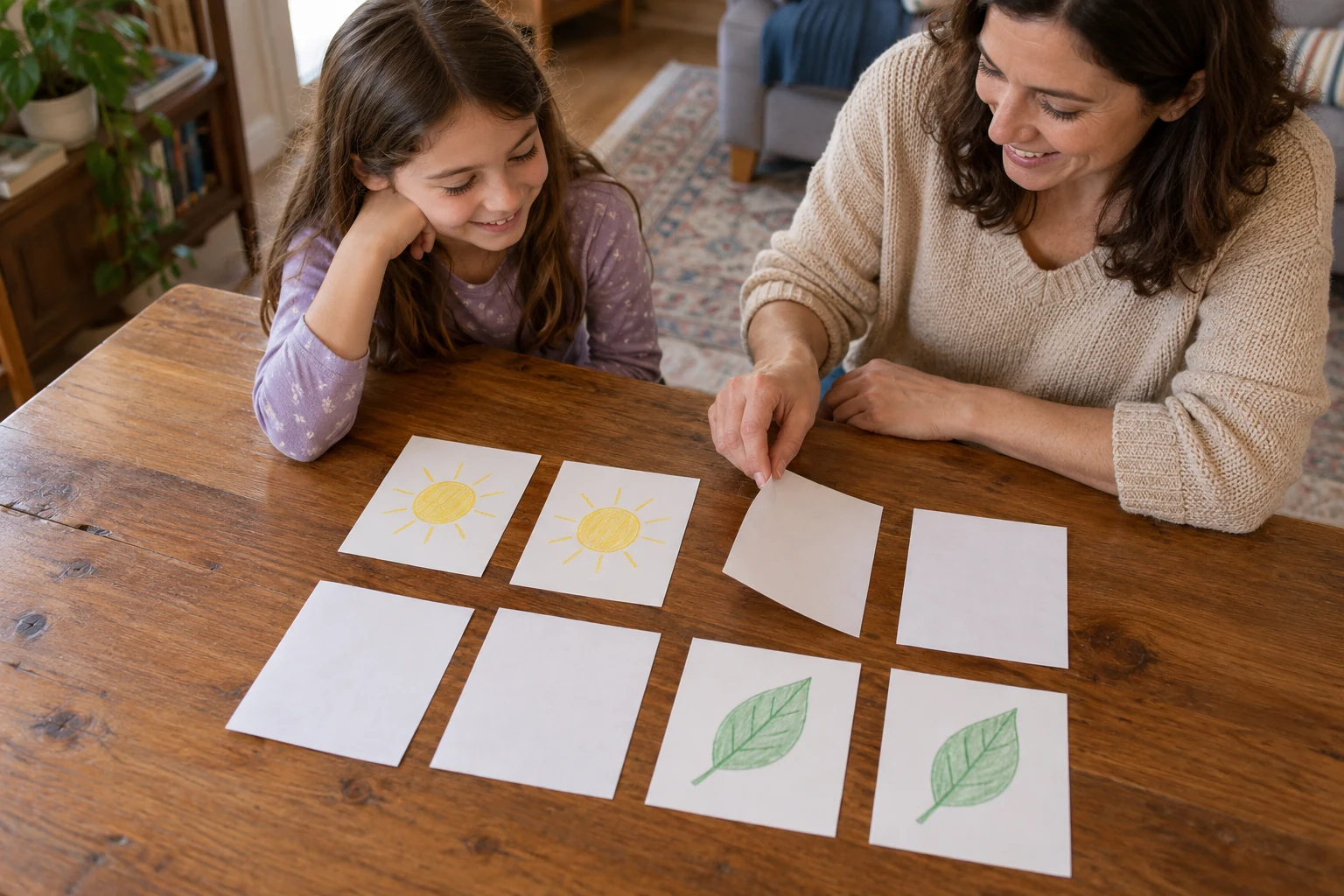
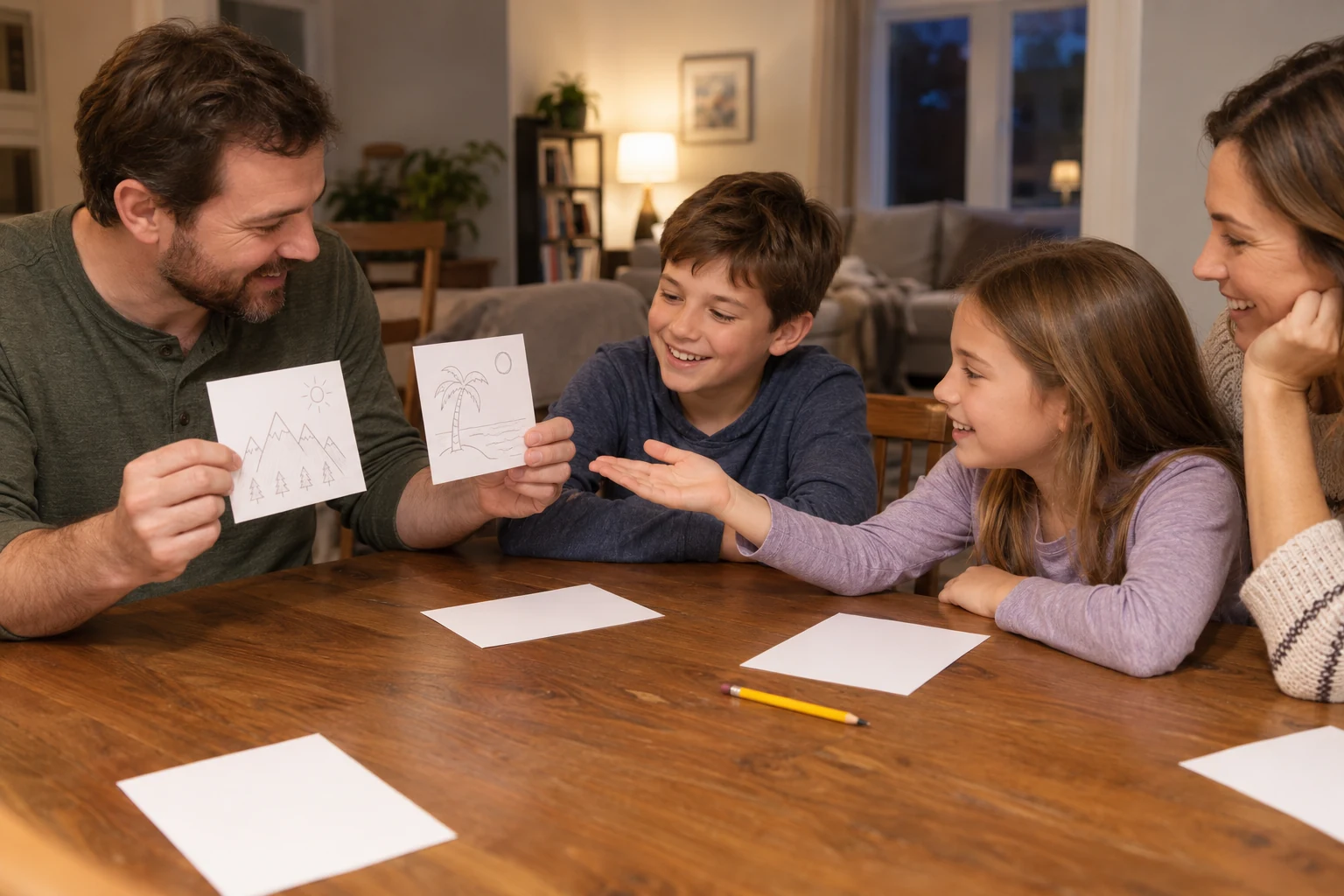
Draw the same simple picture on two separate pieces of existing paper. Repeat with a few different pictures, keeping the backs similar enough to conceal each drawing. Lay the pieces face down in a small arrangement everyone can comfortably reach.
Use suitable pieces you already own for this idea.
Players turn over two pieces at a time and look for matching pictures. Decide whether a match earns another turn or simply stays visible. Keeping matches on the table lets everyone see the collection developing.
Start with fewer pairs when the larger arrangement feels frustrating. You can also search together instead of collecting separate scores. Use suitable paper pieces, with adult supervision and materials chosen for the children actually participating.
5. Build a spoken category chain
Choose a category with plenty of familiar answers, such as animals or things in a kitchen. Each player adds one example when their turn arrives. In this version, nobody has to repeat the entire chain before contributing.
Use suitable pieces you already own for this idea.
Allow a reminder when someone accidentally repeats an answer. If the category runs dry, change it together instead of eliminating the next uncertain player. A relaxed chain works differently from a memory contest, so explain which version you’ve chosen.
Avoid categories that depend on one person’s specialist knowledge. Movie references can exclude someone who hasn’t watched the same films. Ordinary shared vocabulary gives more players somewhere useful to begin.
6. Add one sentence to a story
Begin with a plain opening, such as a missing umbrella appearing inside a cupboard. Each person adds one sentence, then passes the story onward. These are suggested starting points, rather than prompts anyone must follow exactly.
Use suitable pieces you already own for this idea.
Agree on the tone before starting, especially when ages and interests differ. Keep frightening or embarrassing material out when someone doesn’t want it. Ask players to build on the previous contribution instead of replacing it with an unrelated adventure.
Give the next person a choice between two possibilities if inventing a sentence feels difficult. End after an agreed circuit around the group. The story doesn’t need recording, illustrations or a finished book to count as an enjoyable round.
7. Try an open practice hand of UNO
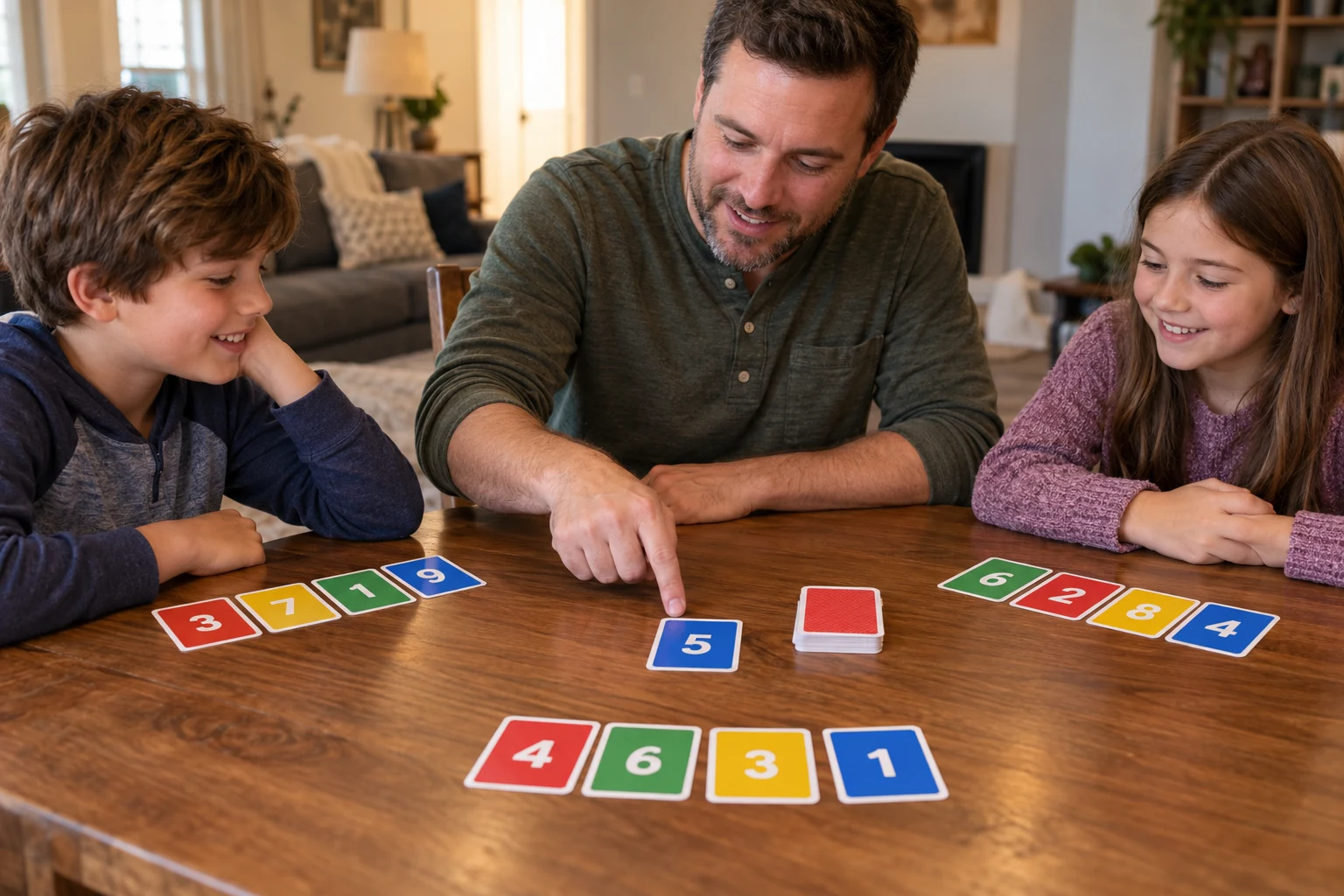
The selected UNO deck is marked for ages seven and older, with two to ten players. Players match colors or numbers, with action cards adding further rules. Use the instructions included with your exact deck, since editions differ.
Comparable options, not the exact pictured items. Check the selected variant and current directions.
Fit and buying notes
- Mattel UNO card game in a box: The selected boxed UNO edition is for ages seven and older, with two to ten players. It includes color-identification symbols. Use its supplied rules; an open practice hand is a teaching suggestion. Keep small pieces away from younger children.
For teaching, agree on an open practice hand before beginning ordinary play. Show the cards and explain one example turn without keeping a competitive score. This is a suggested demonstration, not a replacement for Mattel’s official rules.
The selected box version includes color-identification symbols alongside its colors. Check that everyone can comfortably identify the actual cards and hold their hand. Don’t assume those symbols solve every visual or handling difficulty.
8. Rotate pairs through Connect 4

Connect 4 gives two players a visible goal: line up four discs of their own color. The selected 2025 edition is marked for ages six and older. It includes integrated storage, but that doesn’t turn the game into a simultaneous group activity.
Comparable options, not the exact pictured items. Check the selected variant and current directions.
Fit and buying notes
- Hasbro Connect 4, 2025 edition: The selected 2025 edition is for two players, ages six and older. It includes carrying/storage features and score trackers. Follow the instructions supplied with this edition. Rotate pairs between games when more people want to join; keep discs away from younger children.
With more people, rotate pairs between completed games so the same players aren’t always waiting. Ask whether watching a short match sounds enjoyable before choosing this format. A separate spoken activity may suit the waiting group better than unsolicited coaching.
Use the instructions supplied with this edition for setup, scoring and storage. Don’t borrow special rules from a different Connect 4 version. No round length is guaranteed, and the discs need appropriate handling and storage around younger children.
9. Describe a picture without showing it
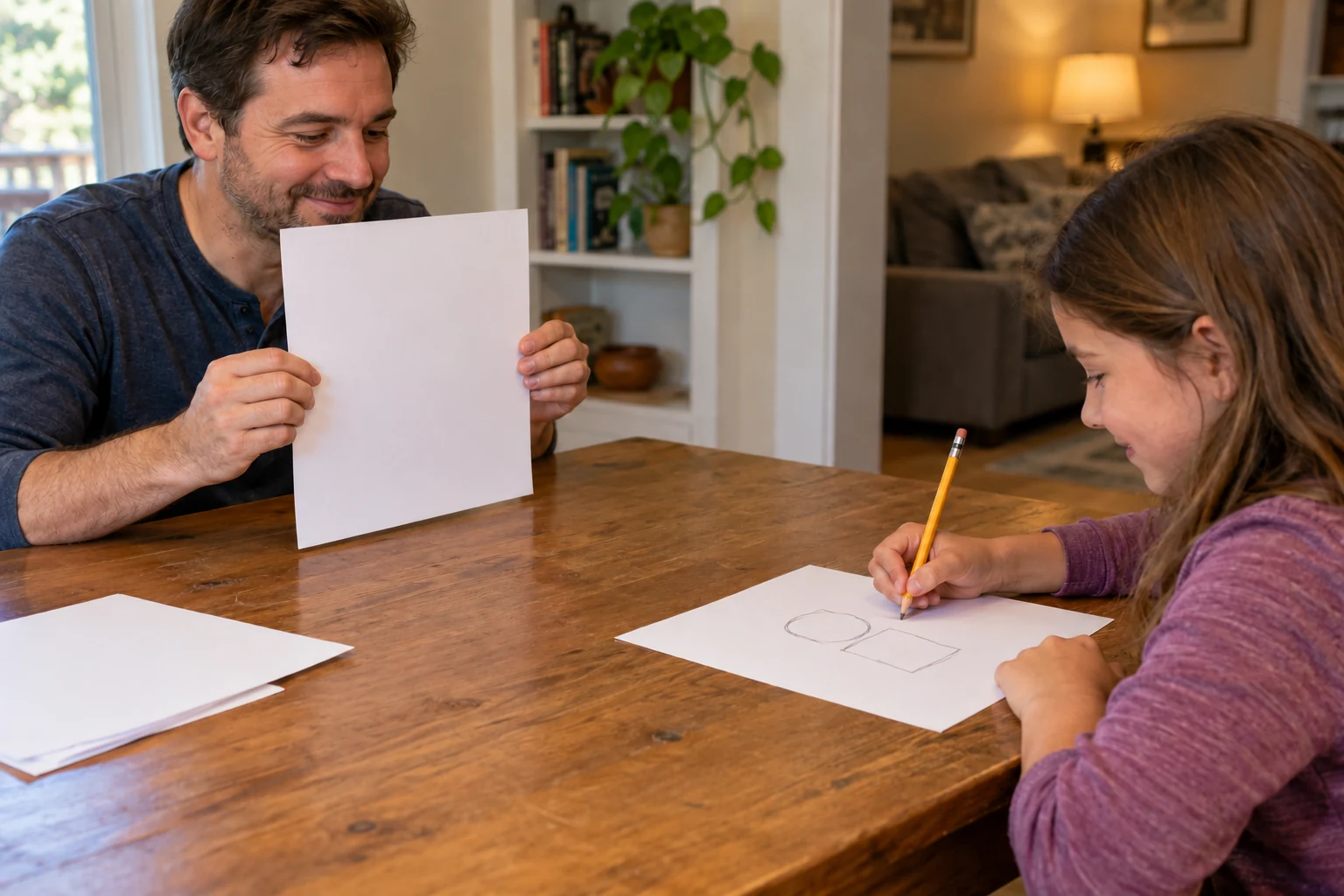
One person draws a simple arrangement on existing paper and keeps it hidden. They describe its shapes and positions while another person draws what they hear. A circle above a square is enough for a first attempt.
Use suitable pieces you already own for this idea.
Here, the goal is following a description rather than identifying an object. Agree whether the listener can ask questions. Compare the pictures afterward without treating differences as evidence that someone listened badly.
Keep each description short and specific, adding one shape at a time. Swap roles if both people want another attempt. Choose another activity when this doesn’t fit someone’s hearing, sight or drawing needs.
10. Guess an ordinary sound
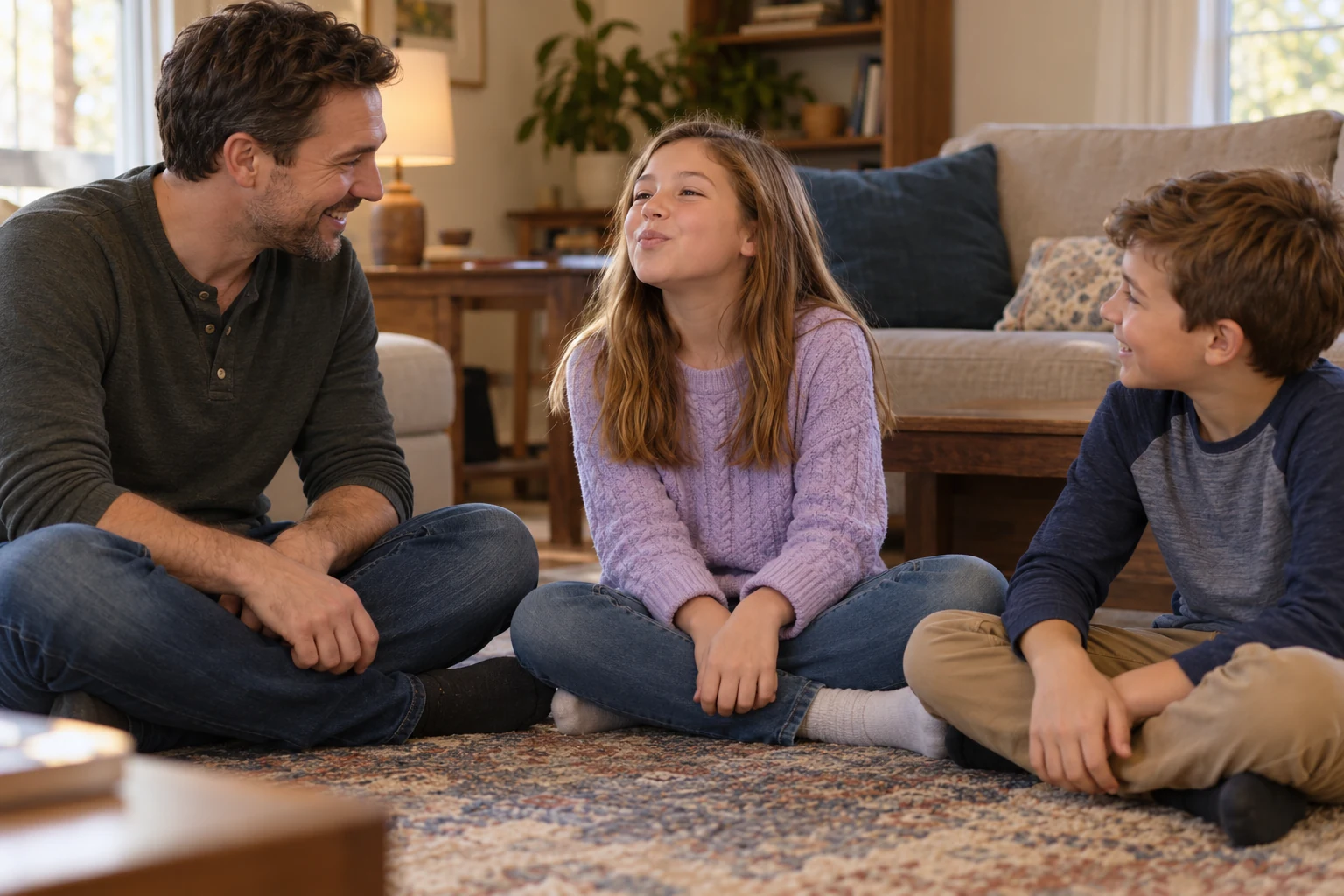
Take turns imitating a familiar sound, such as rain or a cat’s purr. Other players guess the source without seeing a written prompt. Keep the volume comfortable and avoid making sudden sounds close to anyone’s ears.
Use suitable pieces you already own for this idea.
Choose sounds everyone has a reasonable chance of recognizing. A private joke or obscure television reference can leave another player watching from the sidelines. You can offer a category when the first guesses miss.
Nobody needs to produce a convincing impression. If listening or making sounds doesn’t suit the group, return to action guessing instead. The activity needs no recordings, subscription, speaker or special sound cards.
11. Notice one changed detail
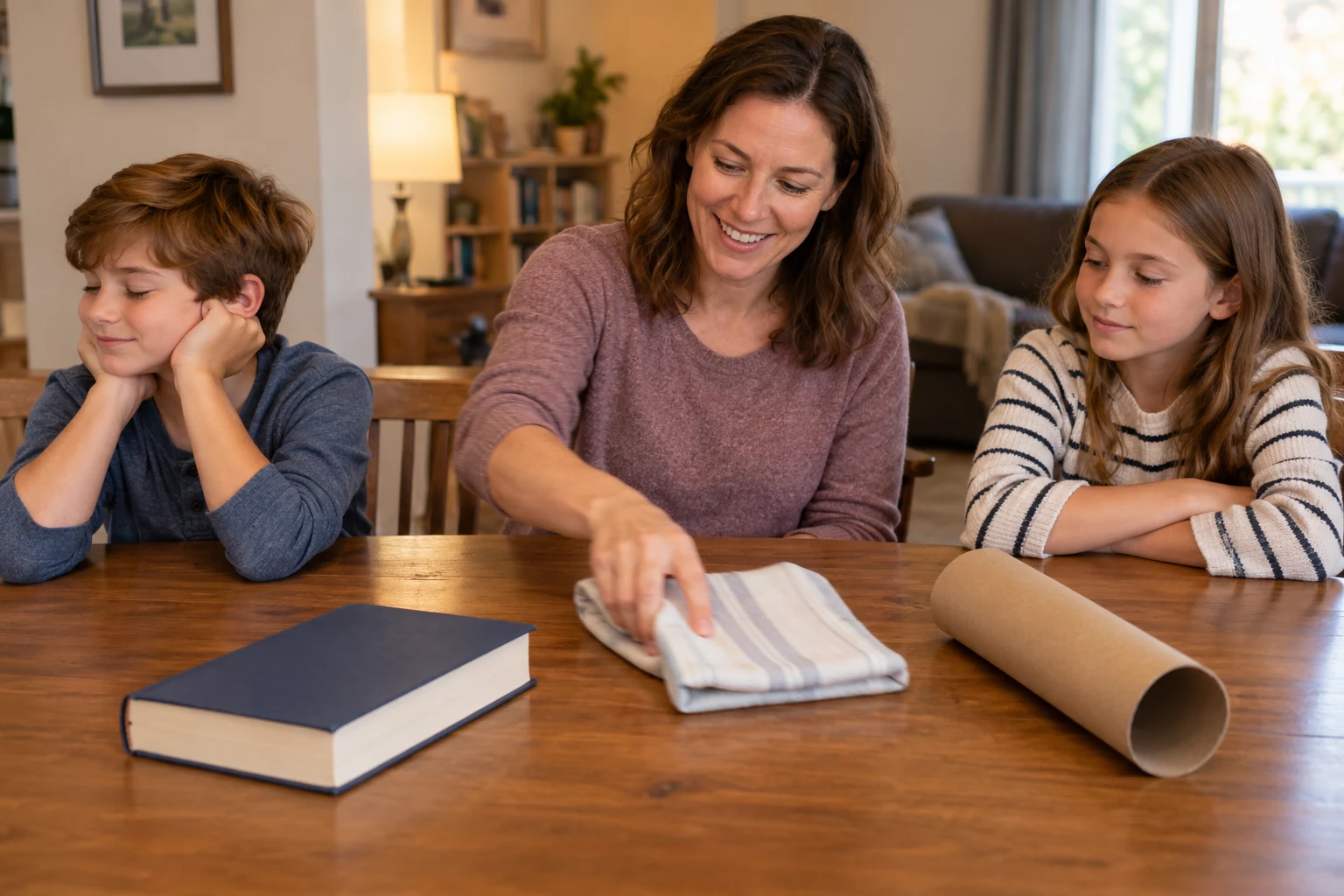
Arrange a few suitable existing household objects where everyone can see them. An adult should choose large, unbreakable items appropriate for the children present. A folded cloth and an ordinary book can work without introducing tiny counters or fragile glass.
Use suitable pieces you already own for this idea.
Let players look, then ask them to turn away while one item changes position or disappears. They look again and describe the difference. Use fewer objects or leave more looking time when the challenge becomes frustrating.
Keep the activity at the table rather than sending children to collect objects around the house. No blindfold is necessary. Stop if the materials or the guessing format aren’t appropriate for the group.
12. Finish with a rematch people actually want
Offer a choice between two activities the group already understands. A familiar second round often needs less explanation than opening another unfamiliar box. Let someone pass rather than making participation the price of ending the evening pleasantly.
Use suitable pieces you already own for this idea.
If people request a house rule, explain it before play and check that everyone agrees. Keep practice rounds separate from any competitive result. Changing a rule halfway through to rescue one player can create a different disagreement.
Put away the pieces together and notice which activity people would choose again. That is useful information for the next evening, without turning tonight into a performance review. For a longer afternoon, our rainy-day activities for kids include other supervised indoor options.
Visuals are original AI-generated editorial concepts, not photographs of actual products, tested projects, cooked results or real events.