10 Ways to Grow Herbs in Pots Without Giving Every Plant the Same Care
Explore the ideas
- 1. Basil in its own reachable pot
- 2. Mint with a container boundary
- 3. Rosemary in a drier-care corner
- 4. Thyme where its stems can spread
- 5. Parsley near the kitchen door
- 6. Chives in one compact clump
- 7. Keep cilantro on a seasonal plan
- 8. Group separate pots by watering needs
- 9. Leave room around the root ball
- 10. Make checking moisture part of using the herbs
- Read the pot as well as the plant
- Build a collection around the meals you make
A row of matching herb pots can hide several different watering problems. Basil and rosemary may look lovely together while wanting different conditions around their roots. Growing herbs in pots becomes easier to understand when you separate the decoration from the care.
Choose herbs you actually use, then check whether your available light suits them. A kitchen-facing window or sheltered balcony isn’t automatically sunny enough because it feels bright indoors. Observe the direct sunlight and ask about the particular plant before buying.
The ideas below use separate containers so you can adjust one plant without disturbing another. Select pots around root space, drainage and expected growth rather than a matching set alone. These are planting and care concepts, not a record of plants grown or tested by MerriMuse.
1. Basil in its own reachable pot
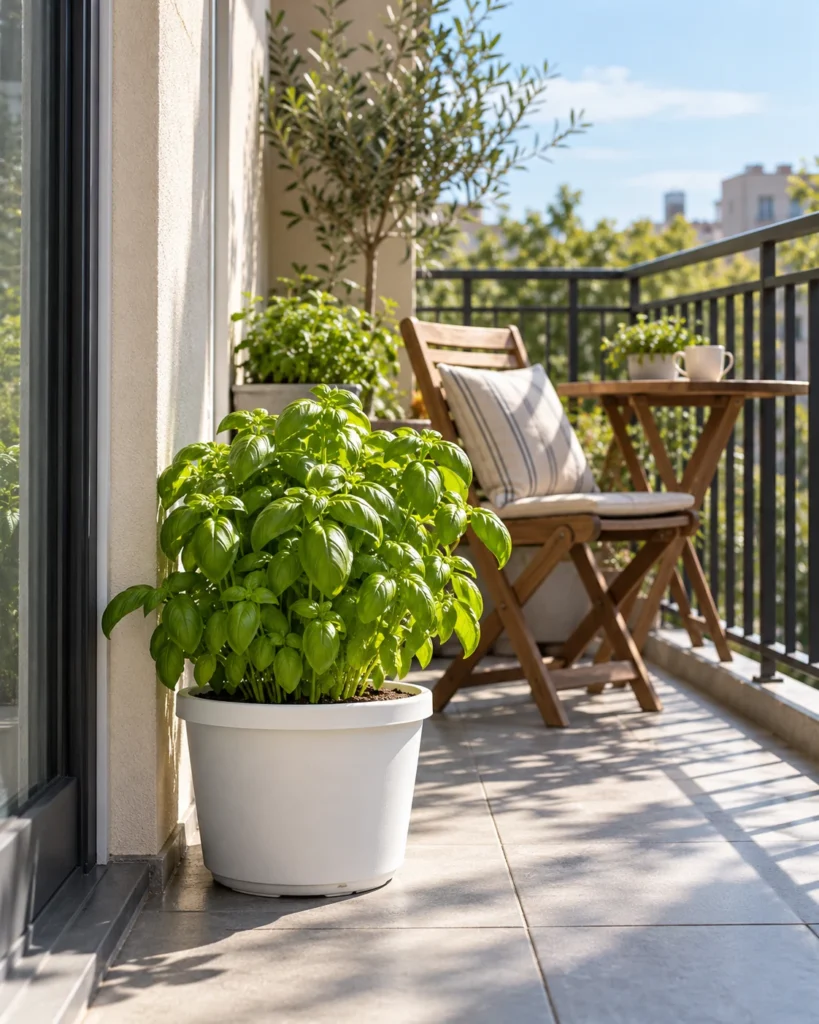
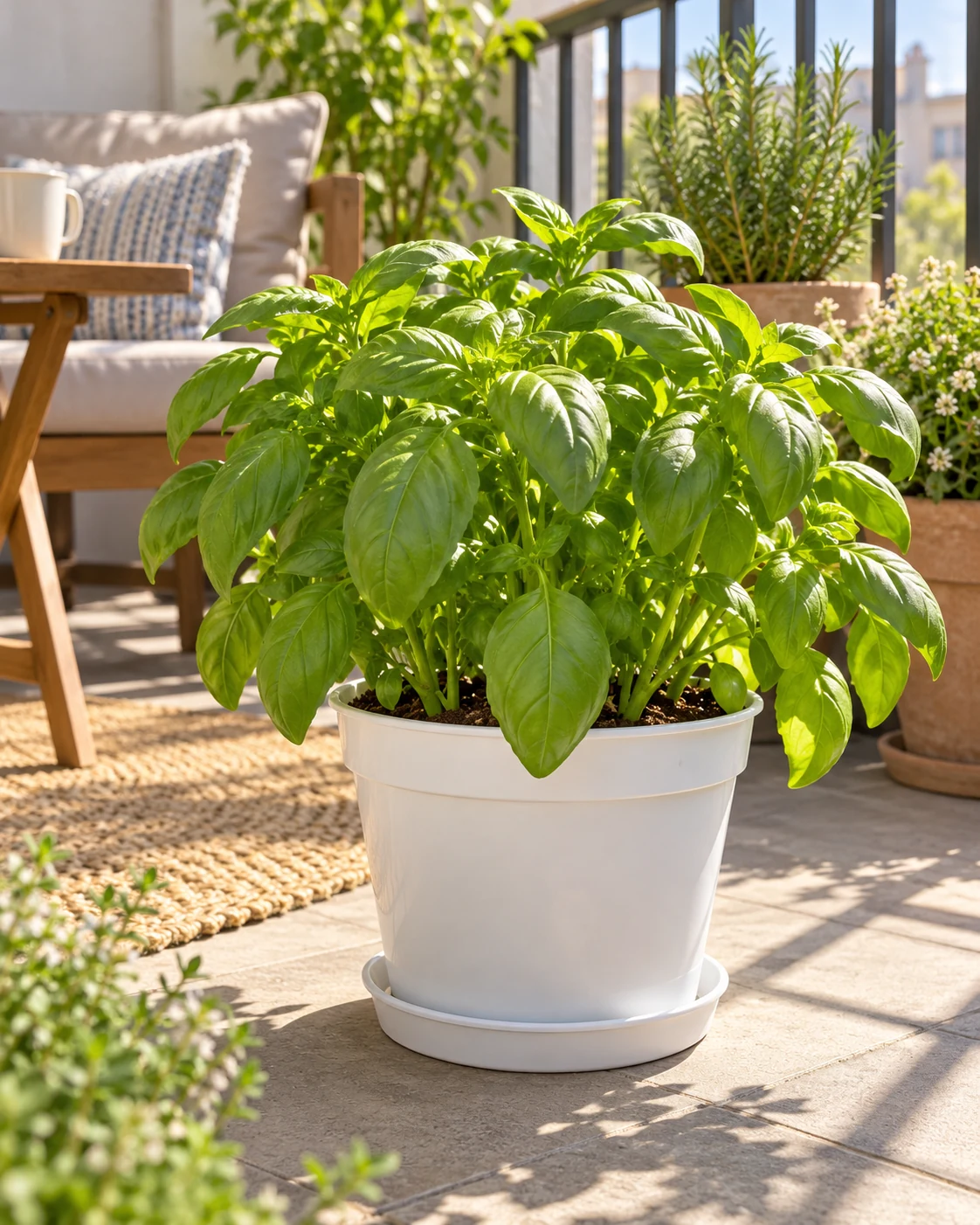
Basil is a useful starting choice if it’s already part of your cooking. Choose suitable sunlight and a position reachable without moving neighboring pots. A convenient position can make ordinary checks more likely to happen before the leaves look unhappy.
Comparable options, not the exact pictured items. Check the selected color, size and buying notes.
Materials, fit and differences from the concept
- D’vine Dev ten-inch planter and saucer: D’vine Dev white ten-inch plastic planter with drainage and matching saucer. Select by mature plant needs and usable volume. Wet growing medium adds weight; the empty pot weight does not establish balcony load safety.
- Miracle-Gro outdoor potting mix: Two eight-quart bags of Miracle-Gro outdoor container potting mix, containing plant food. Follow the current bag directions before adding fertilizer. Regional shipping varies; no US-stock or delivery guarantee is made.
Check the growing medium rather than watering because the whole row received water yesterday. Basil needs more consistent moisture than herbs such as rosemary and thyme. That doesn’t mean leaving collected water around the roots or soaking already wet medium.
2. Mint with a container boundary
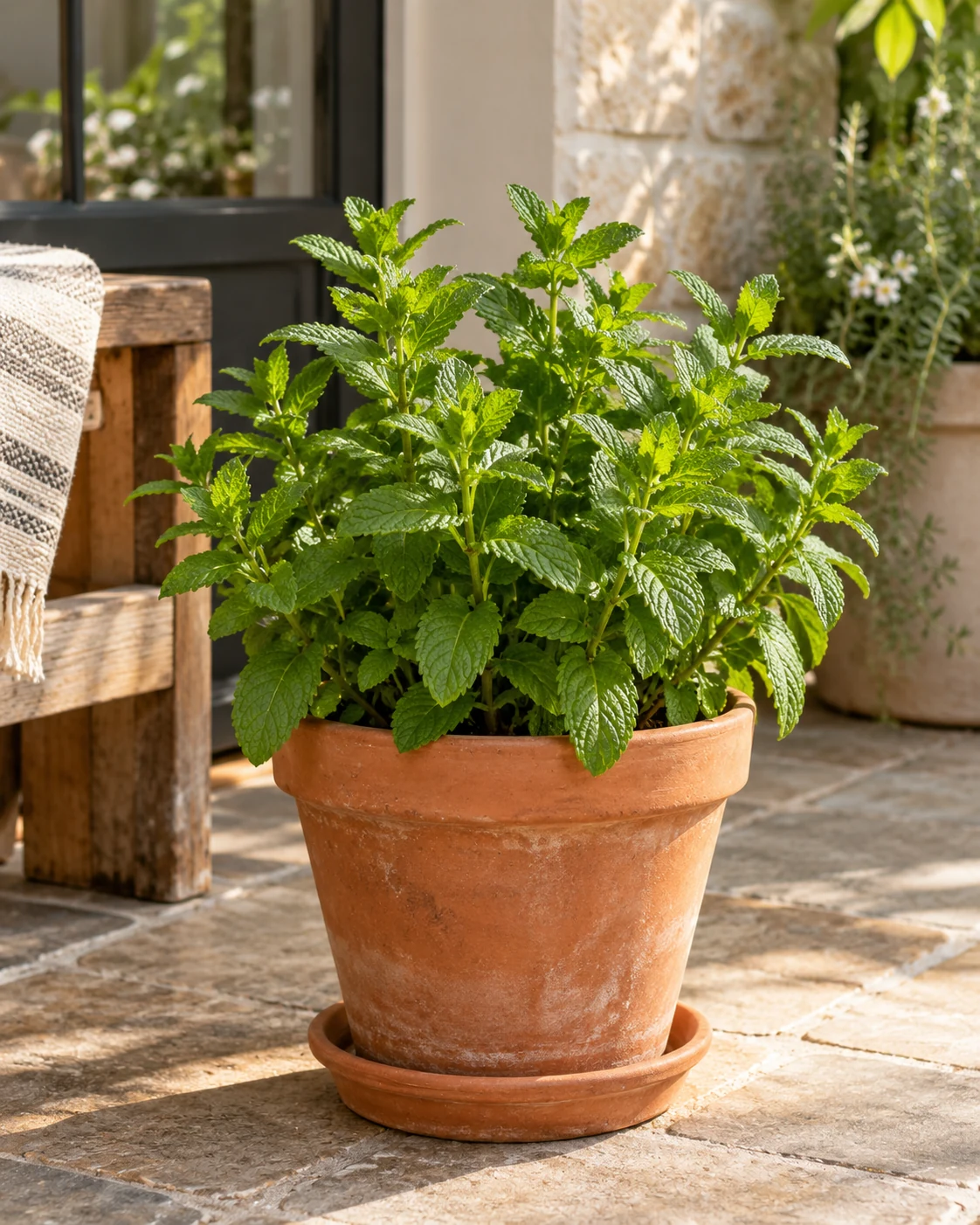
Give mint its own container instead of asking it to share a small decorative bowl. You can maintain its root space and position separately while keeping the leaves easy to reach. Choose a mint you enjoy using rather than collecting several names that won’t reach the kitchen.
Comparable options, not the exact pictured items. Check the selected color, size and buying notes.
Materials, fit and differences from the concept
- Eight-inch terracotta pots and saucers: Two eight-inch terracotta pots with drainage holes and saucers. Plants and growing medium are separate. Clay can break and may dry faster than plastic; a saucer is not permission to leave roots standing in water.
- Miracle-Gro outdoor potting mix: Two eight-quart bags of Miracle-Gro outdoor container potting mix, containing plant food. Follow the current bag directions before adding fertilizer. Regional shipping varies; no US-stock or delivery guarantee is made.
Check the plant’s moisture needs and the way that particular pot dries. Clay and plastic can behave differently in the same exposure. Keep drainage functioning and inspect the saucer instead of assuming it manages excess water.
3. Rosemary in a drier-care corner
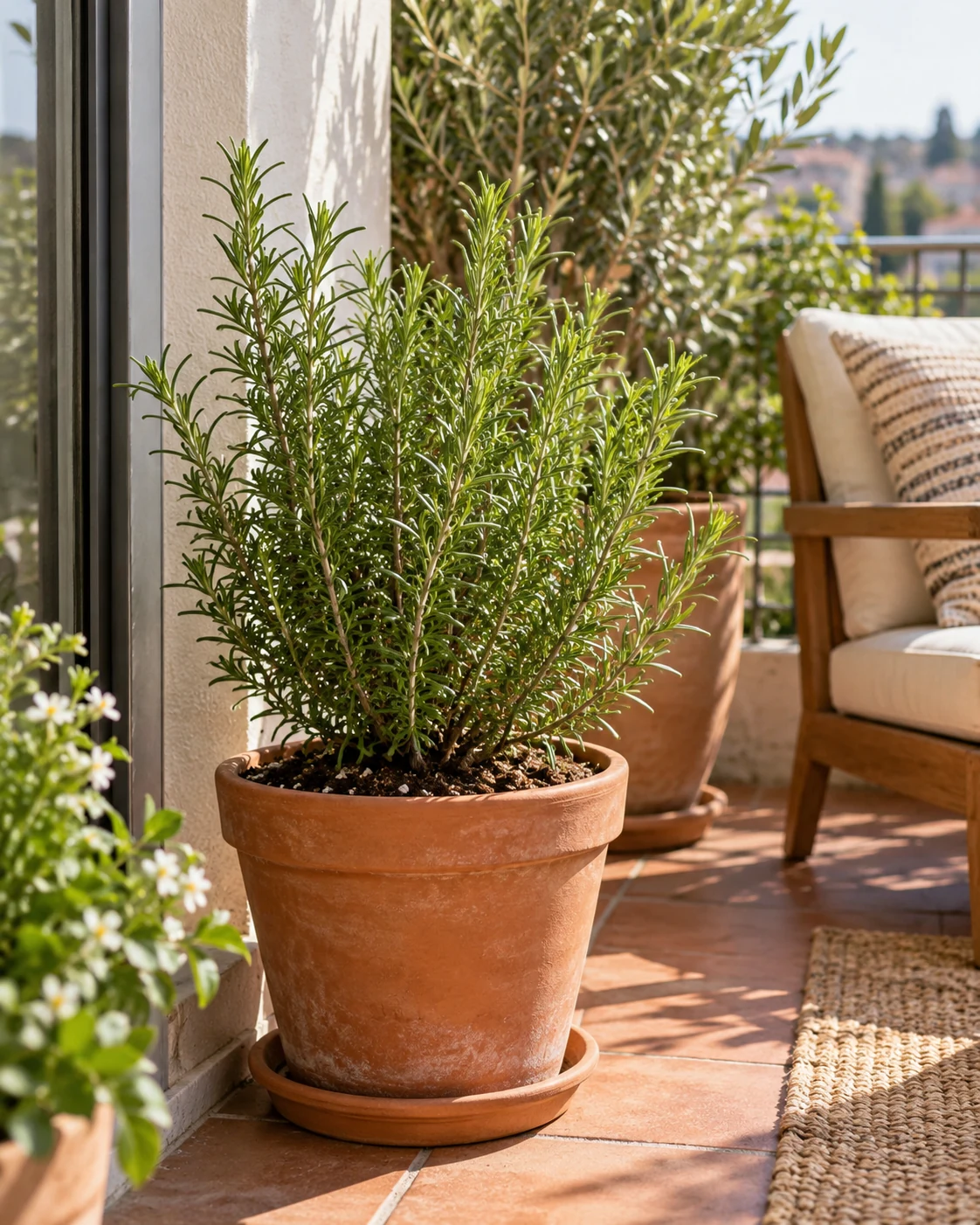
Rosemary shouldn’t automatically receive the same watering as basil beside it. Let growing conditions and moisture needs guide the decision ahead of the decorative arrangement. A separate pot lets you respond without watering the entire display.
Comparable options, not the exact pictured items. Check the selected color, size and buying notes.
Materials, fit and differences from the concept
- Eight-inch terracotta pots and saucers: Two eight-inch terracotta pots with drainage holes and saucers. Plants and growing medium are separate. Clay can break and may dry faster than plastic; a saucer is not permission to leave roots standing in water.
Choose adequate root space and drainage, then follow suitable local guidance for the plant. Don’t interpret a drier preference as permission to ignore it indefinitely. A small exposed pot can behave differently from a sheltered larger container holding the same herb.
4. Thyme where its stems can spread
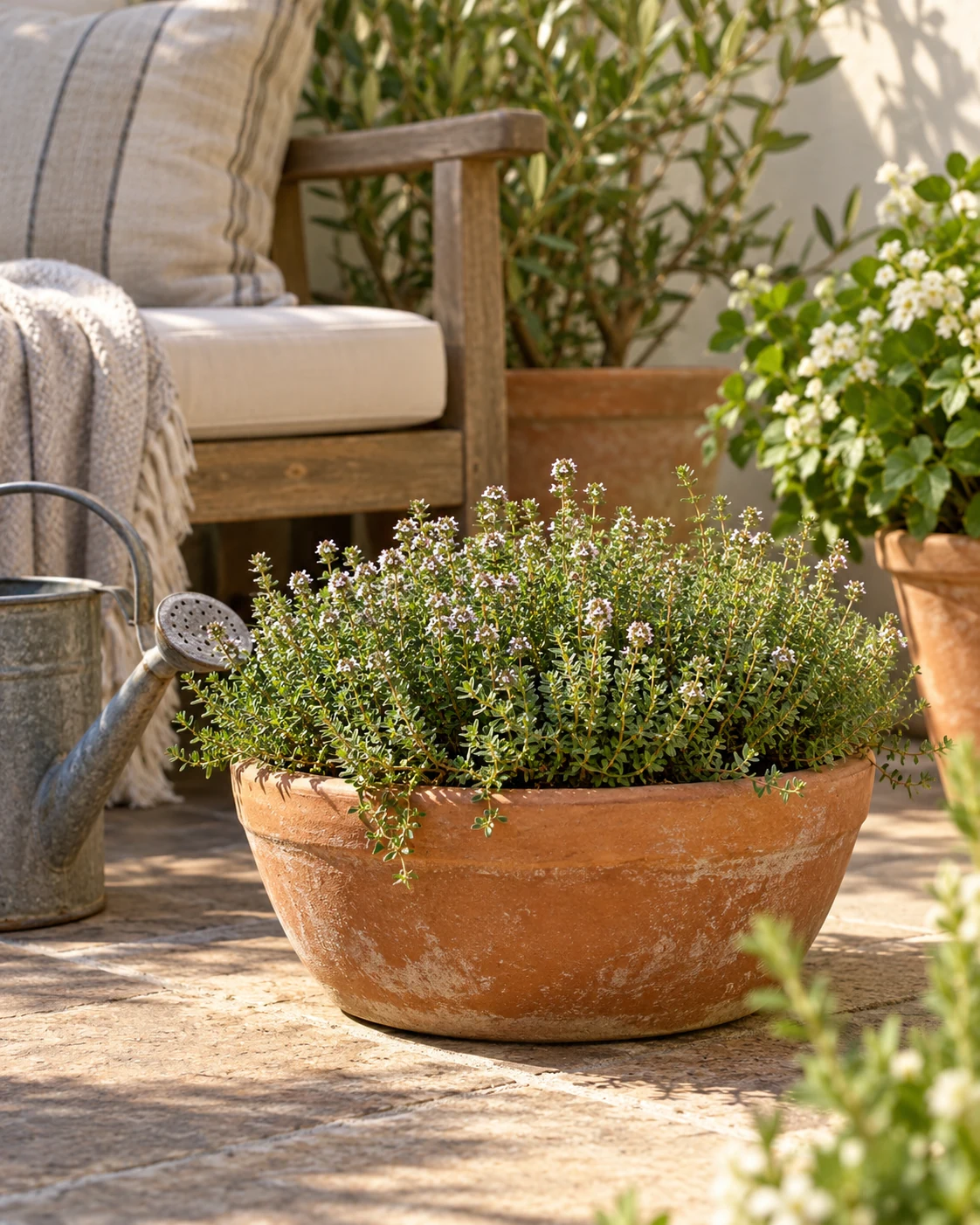
Thyme can offer a lower texture beside taller herbs without needing to occupy their root space. Leave its stems room rather than pushing another pot tightly against the edge. You should still be able to see the growing medium and reach the container.
Comparable options, not the exact pictured items. Check the selected color, size and buying notes.
Materials, fit and differences from the concept
- Eight-inch terracotta pots and saucers: Two eight-inch terracotta pots with drainage holes and saucers. Plants and growing medium are separate. Clay can break and may dry faster than plastic; a saucer is not permission to leave roots standing in water.
Its drier-care grouping can sit near rosemary while the pots remain separate. Check each one individually, particularly when their sizes differ. Repeating the same amount of water doesn’t establish that both root balls need that amount.
5. Parsley near the kitchen door
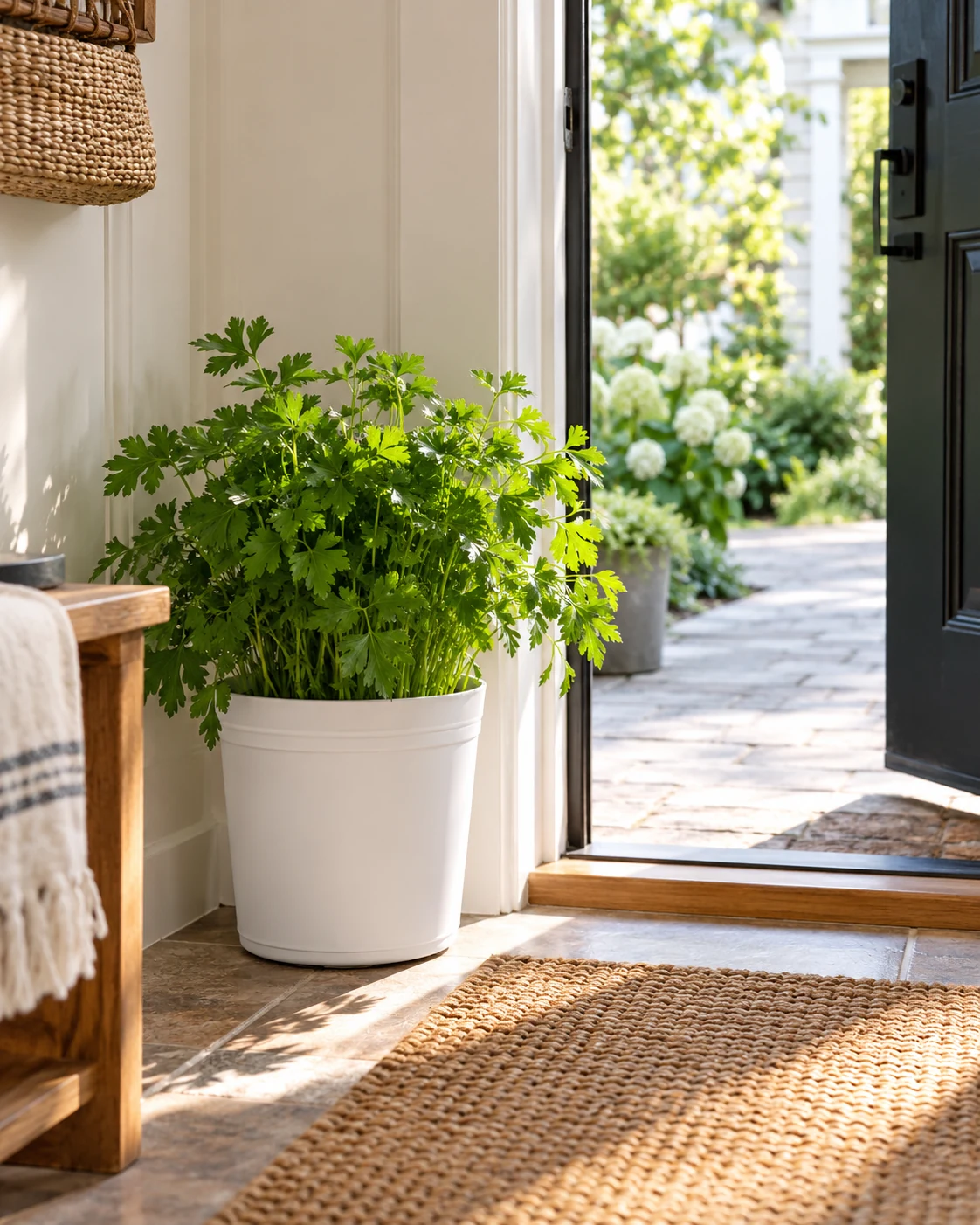
Parsley can earn its place when you regularly want a small fresh addition to meals. Position it conveniently without blocking the doorway or placing it in unsuitable light. A nearby plant is only useful if it can also grow in that location.
Comparable options, not the exact pictured items. Check the selected color, size and buying notes.
Materials, fit and differences from the concept
- D’vine Dev ten-inch planter and saucer: D’vine Dev white ten-inch plastic planter with drainage and matching saucer. Select by mature plant needs and usable volume. Wet growing medium adds weight; the empty pot weight does not establish balcony load safety.
It belongs among herbs needing more consistent moisture than rosemary and thyme. Check how quickly its particular container dries before settling into a routine. Keep each plant’s identity and care information available instead of relying on similar-looking leaves.
6. Chives in one compact clump
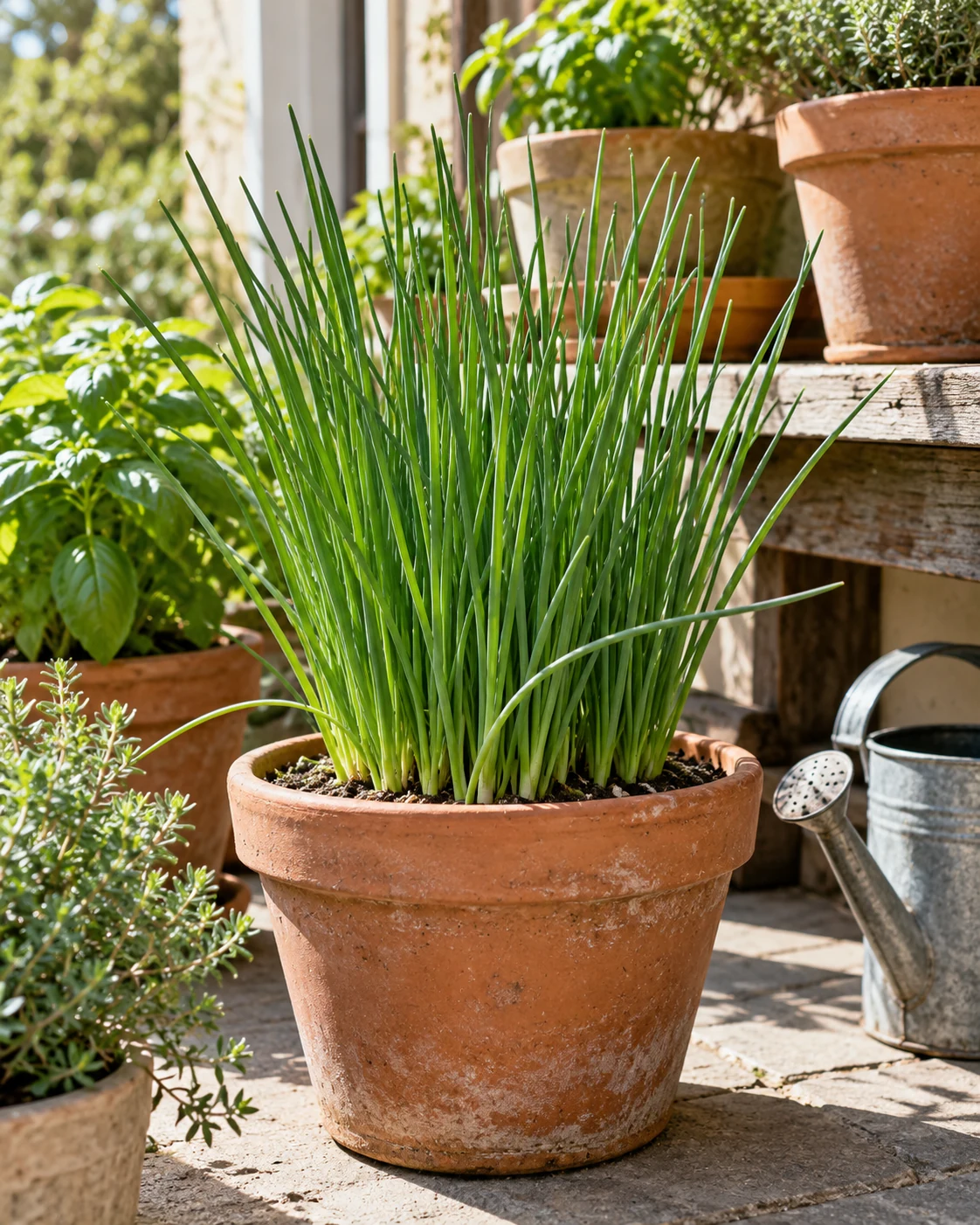
Chives give a pot a different upright shape from parsley’s broader leaves. Keep the clump accessible so you can inspect it without reaching across another plant. The container should suit the growing clump rather than remain permanently sized for its first photograph.
Comparable options, not the exact pictured items. Check the selected color, size and buying notes.
Materials, fit and differences from the concept
- Eight-inch terracotta pots and saucers: Two eight-inch terracotta pots with drainage holes and saucers. Plants and growing medium are separate. Clay can break and may dry faster than plastic; a saucer is not permission to leave roots standing in water.
Choose the plant because you’ll use it, not merely to complete a row of seven herbs. Check its local growing and seasonal requirements before deciding where it belongs. A manageable collection of favorites can be more useful than a larger group receiving rushed care.
7. Keep cilantro on a seasonal plan

Cilantro can move toward flowering when conditions become hot. That makes it a different planning problem from a permanent decorative shrub. Plan around your season and needs instead of expecting one plant to provide leaves indefinitely.
Comparable options, not the exact pictured items. Check the selected color, size and buying notes.
Materials, fit and differences from the concept
- D’vine Dev ten-inch planter and saucer: D’vine Dev white ten-inch plastic planter with drainage and matching saucer. Select by mature plant needs and usable volume. Wet growing medium adds weight; the empty pot weight does not establish balcony load safety.
Ask about suitable sowing or replacement timing for your conditions. Keep the pot separate so changing one seasonal plant doesn’t dismantle the whole garden. A photograph of lush leaves shows one moment, rather than a promise of year-round harvesting.
8. Group separate pots by watering needs
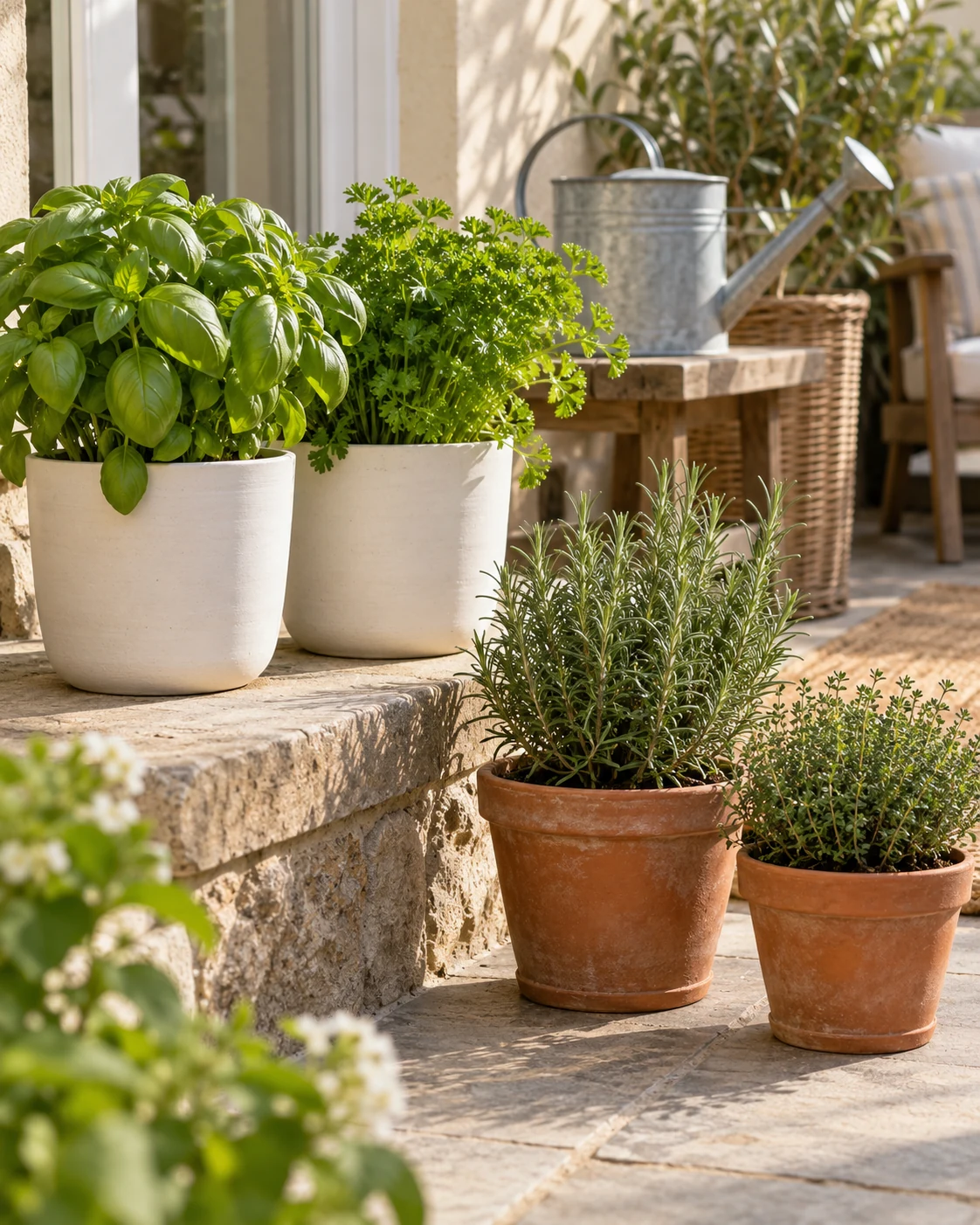
Basil and parsley can form one convenient checking group while rosemary and thyme sit elsewhere. Each plant can still have its own container and drainage arrangement. Grouping by care can reduce confusion without requiring every pot to match.
- D’vine Dev ten-inch planter and saucerView on Amazon
- Eight-inch terracotta pots and saucersView on Amazon
- Fiskars 40-ounce watering canView on Amazon
Comparable options, not the exact pictured items. Check the selected color, size and buying notes.
Materials, fit and differences from the concept
- D’vine Dev ten-inch planter and saucer: D’vine Dev white ten-inch plastic planter with drainage and matching saucer. Select by mature plant needs and usable volume. Wet growing medium adds weight; the empty pot weight does not establish balcony load safety.
- Eight-inch terracotta pots and saucers: Two eight-inch terracotta pots with drainage holes and saucers. Plants and growing medium are separate. Clay can break and may dry faster than plastic; a saucer is not permission to leave roots standing in water.
- Fiskars 40-ounce watering can: Fiskars 40-ounce watering can with a narrow spout. Intended as a small indoor can; it can carry water to a sheltered container setup. Check assembly and store indoors instead of implying outdoor weather resistance.
Leave room to lift or inspect one plant without pulling several leaves aside. Look at the whole route you use while carrying water. Our small balcony garden layouts consider access and floor space before adding another container.
9. Leave room around the root ball
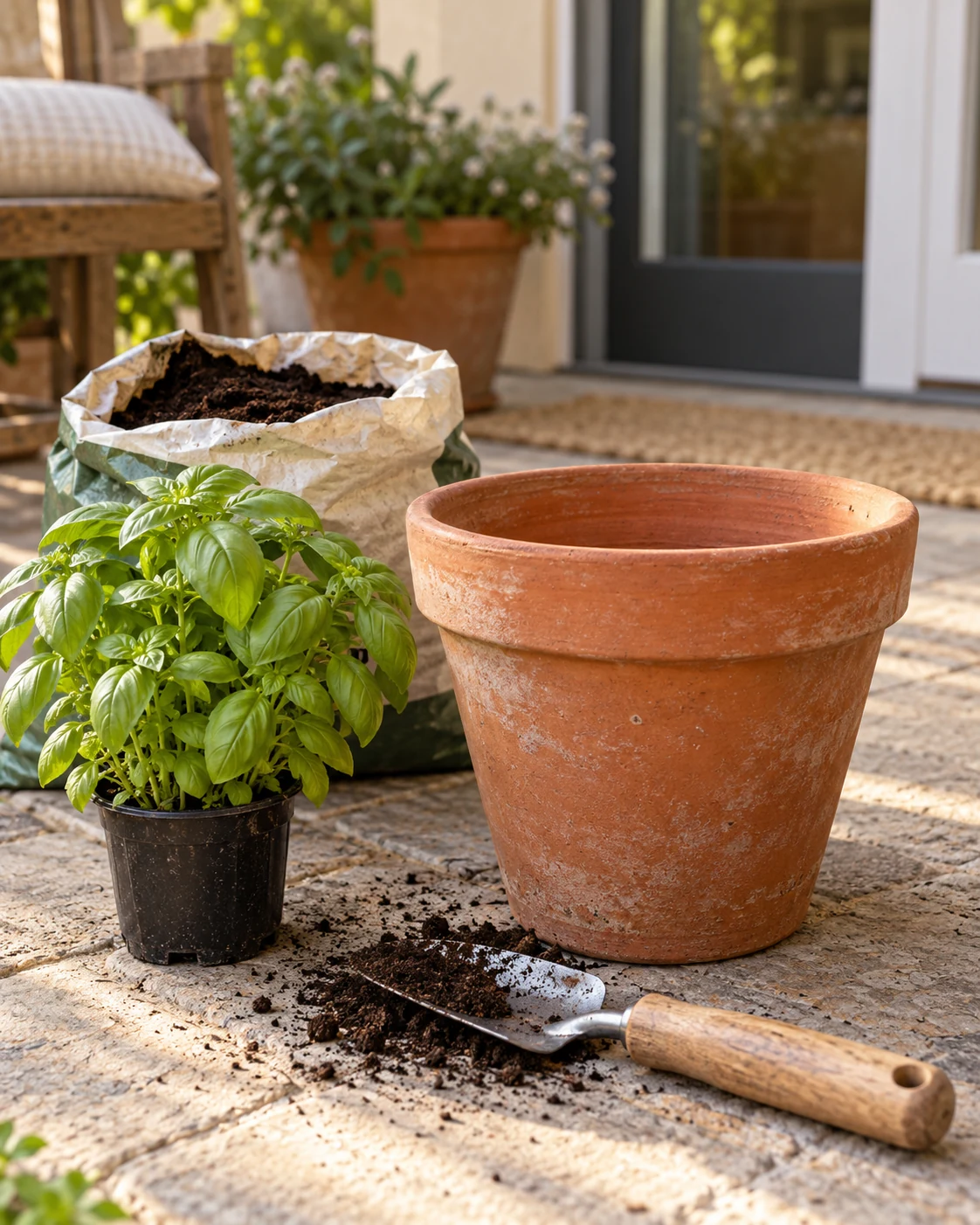
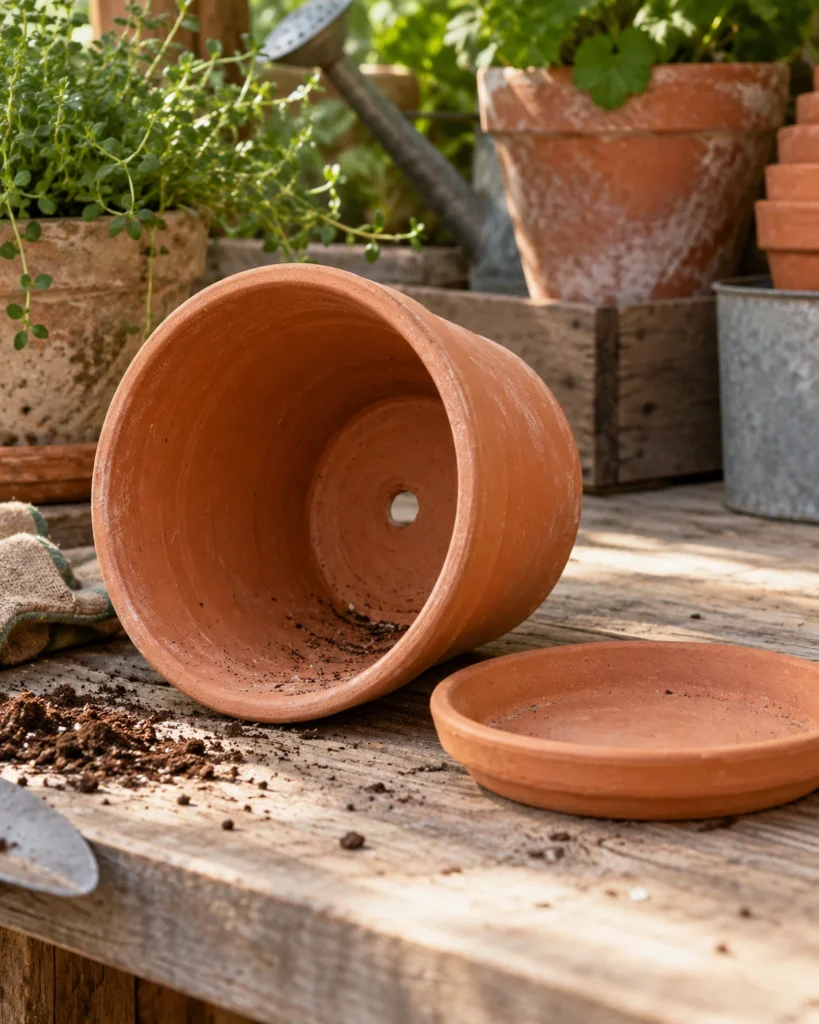
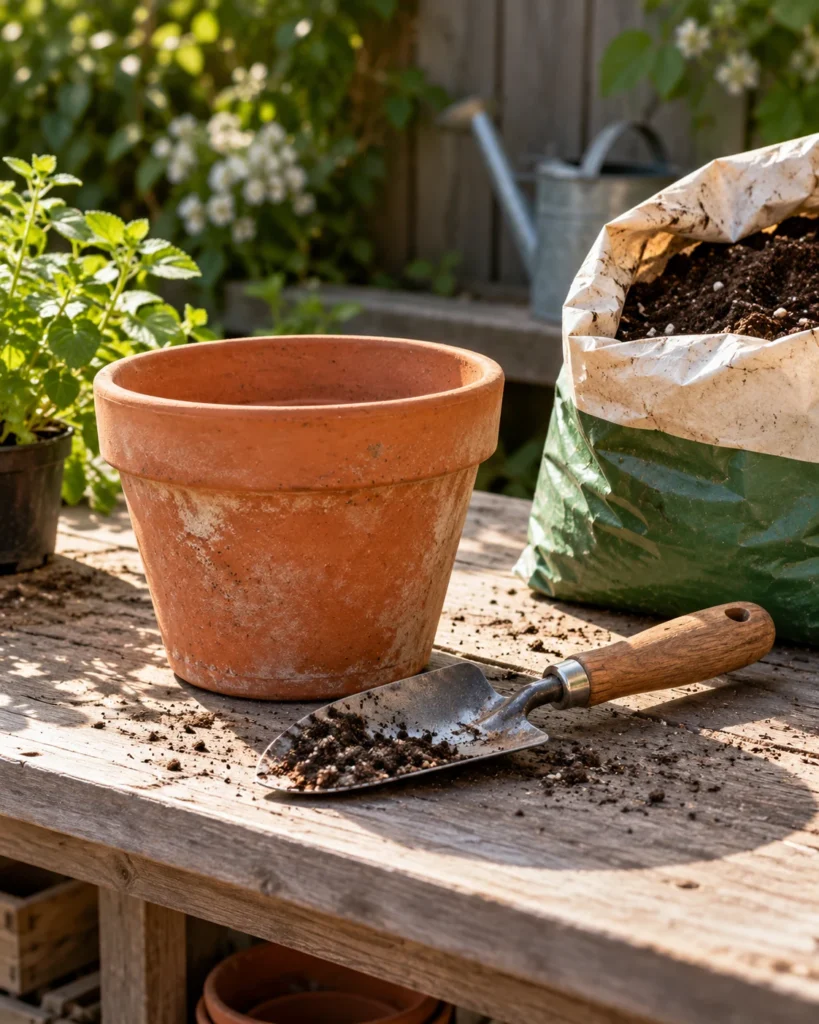
Compare the nursery plant’s actual root ball with the proposed container before repotting. Decorative outer dimensions don’t tell you how much usable growing space remains inside. Choose appropriate container growing medium, rather than filling the pot with ordinary heavy garden soil.
- Eight-inch terracotta pots and saucersView on Amazon
- Miracle-Gro outdoor potting mixView on Amazon
- Fiskars Ergo garden trowelView on Amazon
Comparable options, not the exact pictured items. Check the selected color, size and buying notes.
Materials, fit and differences from the concept
- Eight-inch terracotta pots and saucers: Two eight-inch terracotta pots with drainage holes and saucers. Plants and growing medium are separate. Clay can break and may dry faster than plastic; a saucer is not permission to leave roots standing in water.
- Miracle-Gro outdoor potting mix: Two eight-quart bags of Miracle-Gro outdoor container potting mix, containing plant food. Follow the current bag directions before adding fertilizer. Regional shipping varies; no US-stock or delivery guarantee is made.
- Fiskars Ergo garden trowel: Fiskars Ergo hand trowel with cast-aluminum head. A potting tool, not a structural installation tool. Keep away from unsupervised children.
Retain the growing-medium packaging so you can check its contents and directions later. The linked outdoor mix contains plant food, which matters before you add another fertilizer. Follow the product and plant guidance instead of combining several feeding products because they’re available.
10. Make checking moisture part of using the herbs
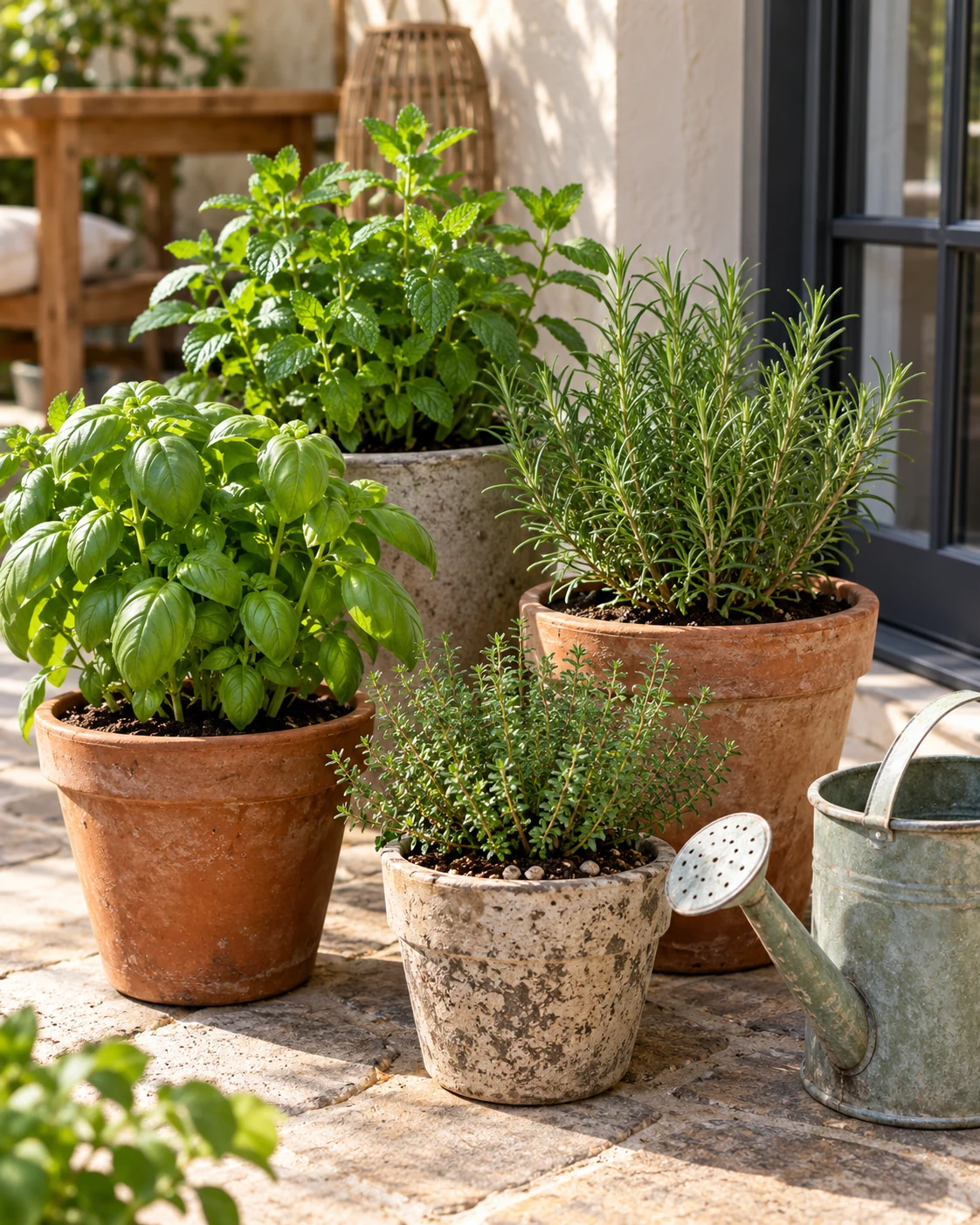
When you reach for an herb, take a moment to notice its growing conditions too. Check the medium and drainage arrangement instead of treating leaf color as the only signal. A narrow-spout watering can can help reach the surface without soaking neighboring objects.
Comparable options, not the exact pictured items. Check the selected color, size and buying notes.
Materials, fit and differences from the concept
- Fiskars 40-ounce watering can: Fiskars 40-ounce watering can with a narrow spout. Intended as a small indoor can; it can carry water to a sheltered container setup. Check assembly and store indoors instead of implying outdoor weather resistance.
- Eight-inch terracotta pots and saucers: Two eight-inch terracotta pots with drainage holes and saucers. Plants and growing medium are separate. Clay can break and may dry faster than plastic; a saucer is not permission to leave roots standing in water.
Keep that tool appropriate to its intended use and storage. The linked small can is intended for indoor plants, so store it indoors between trips outside. You can use an existing suitable vessel instead when it already provides comfortable control.
Read the pot as well as the plant
A terracotta container can dry differently from a plastic one in the same place. Pot size, wind and sun exposure also change what happens between checks. That’s why a fixed calendar alone can’t describe every plant in a mixed collection.
Keep saucers appropriate to the surface beneath them and check collected water after watering. A decorative pot cover doesn’t replace drainage planning. On a balcony, also consider runoff and the building’s actual rules and structural limits.
Choose one adjustment at a time when a plant isn’t doing well. Moving it, changing the medium and adding fertilizer simultaneously can make the result harder to understand. Seek species-specific help if the problem persists rather than copying another herb’s care indefinitely.
Build a collection around the meals you make
Write down the herbs you bought or wished for during the past few weeks. Start with the ones whose requirements your space can meet. You don’t need to grow everything used by every recipe in your collection.
Keep the first arrangement small enough to notice changes in each plant. When the routine feels manageable, decide whether another herb solves a real need. The useful collection fits both your growing conditions and your ordinary cooking.
Visuals are original AI-generated editorial concepts, not photographs of actual products, tested projects or hosted events.