15 Self-Care Ideas That Cost No Money and Fit an Ordinary Day

Explore the ideas
- 1. Enjoy the window view you already have
- 2. Wear the comfortable clothes waiting in your drawer
- 3. Read a chapter from a book you own
- 4. Put on a familiar song
- 5. Clear one seat you want to use
- 6. Make a drink from what is already available
- 7. Write down one thing occupying your attention
- 8. Step outside where access is comfortable
- 9. Give one meal your attention
- 10. Use the towel you like
- 11. Revisit a photograph that matters
- 12. Let a hobby stay unfinished for now
- 13. Ask for company without designing an event
- 14. Make one small request for tomorrow
- 15. Leave a little time unassigned
- Choose the smallest version that feels worthwhile
Self-care ideas that cost no money can begin with something already within reach. You don’t need a new candle, matching outfit or beautifully stocked bathroom to take a break. Choose an ordinary comfort you actually want, then leave the shopping list out of it.
These fifteen ideas are options rather than a routine to finish. Some involve another person, while others need only a chair or a familiar book. Pick what fits your space, access and available time, including the option to do less.
The aim here is a more comfortable ordinary moment. None of these activities promises to treat a health condition or fix a difficult situation. They can simply give a little attention to a preference you’ve been setting aside.
1. Enjoy the window view you already have
Choose a spot where you can sit comfortably and see something beyond the room. Leave the window closed when opening it isn’t practical or safe. A patch of sky, neighboring tree or changing light can be enough to notice.
Use the suitable pieces you already own for this idea.
You don’t need to identify every bird or turn the pause into a photography project. Let the view remain an ordinary view for a few minutes. If the window faces somewhere unpleasant, choose another comfortable place instead of forcing this particular idea.
2. Wear the comfortable clothes waiting in your drawer
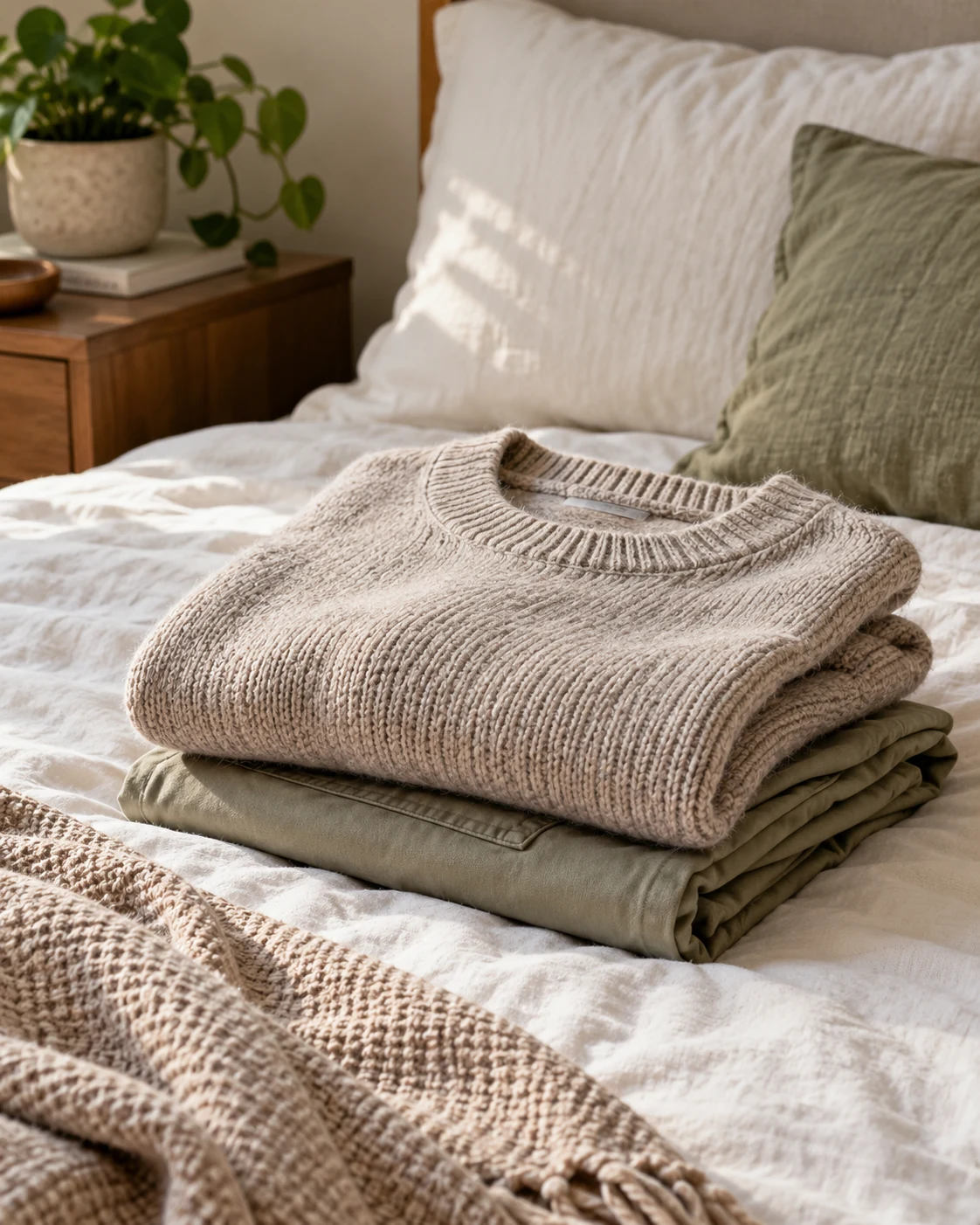
Change into something you already know feels comfortable. Choose around the actual room and weather, rather than an image of the perfect evening. That might mean familiar soft trousers, a loose shirt or a forgotten comfortable layer.
Use the suitable pieces you already own for this idea.
Skip the wardrobe overhaul while you’re there. The useful decision is choosing clothes for the next part of your day. You can close the drawer without sorting everything else that happens to be inside it.
3. Read a chapter from a book you own

Pick up a book you wanted to read before another task interrupted it. Start where you remember, or return to a passage you already enjoy. There is no need to finish a certain number of pages to justify opening it.
Use the suitable pieces you already own for this idea.
Use the seat and light you already have. Our reading nook ideas include small adjustments around existing spaces. Borrow the useful arrangement without buying furnishings or treating the whole room as a project.
4. Put on a familiar song

Choose music you can already access without paying for anything new. Play one song because you want to hear it, rather than designing a whole playlist. Let the choice be specific, including a favorite you haven’t played recently.
Use the suitable pieces you already own for this idea.
Keep the volume comfortable and considerate of people nearby. You can listen while seated, moving gently around the room or doing nothing else. If quiet sounds more appealing today, choose that instead of making music another requirement.
5. Clear one seat you want to use
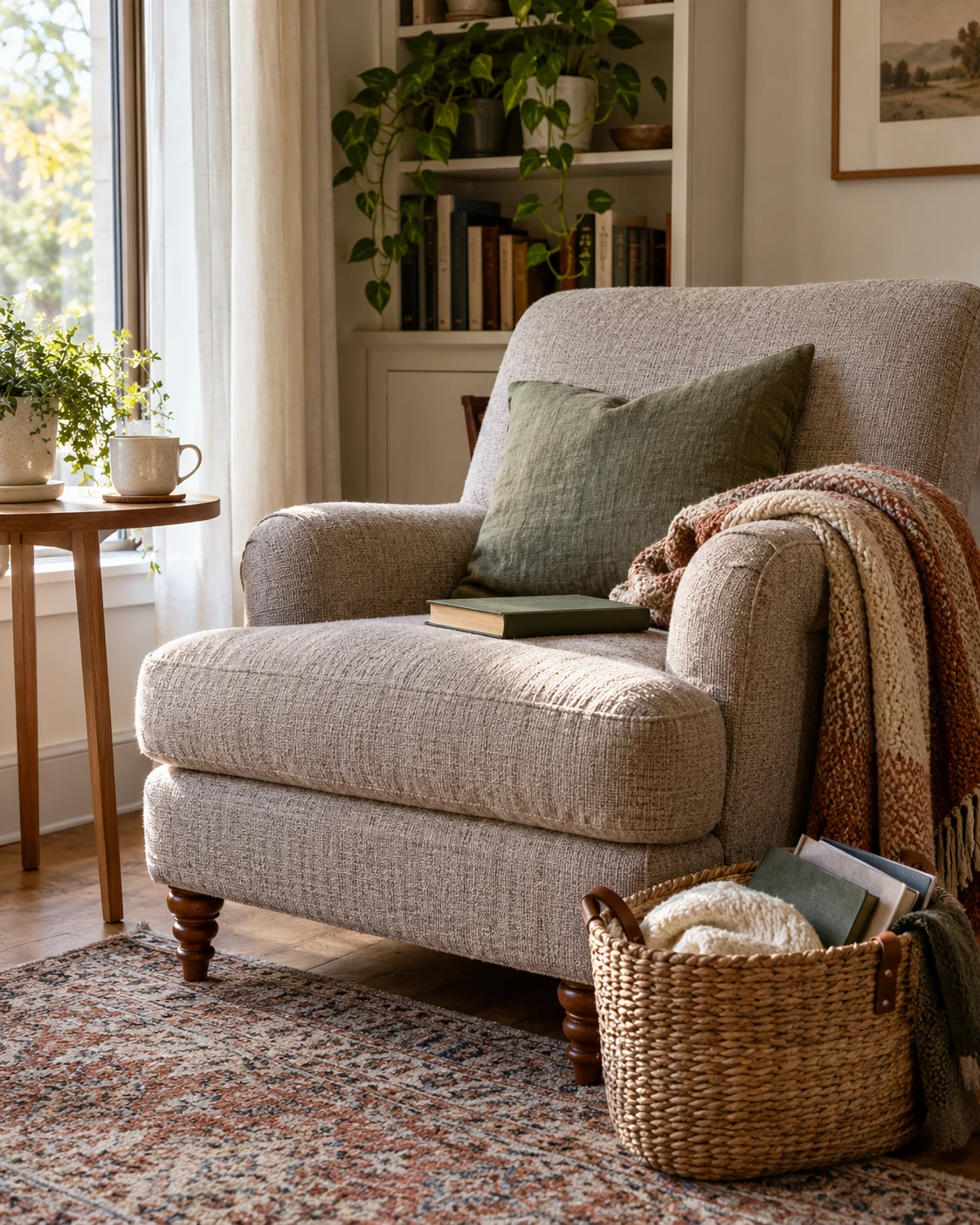
Move the things preventing you from sitting in your preferred chair. Give them an appropriate temporary or permanent destination nearby. Then sit down, rather than automatically expanding the task into cleaning the entire room.
Use the suitable pieces you already own for this idea.
This idea only helps when the small adjustment gives you somewhere you want to be. It isn’t a test of whether you’ve earned a rest. Our smaller Sunday reset options use clear stopping points when a practical task would be useful.
6. Make a drink from what is already available
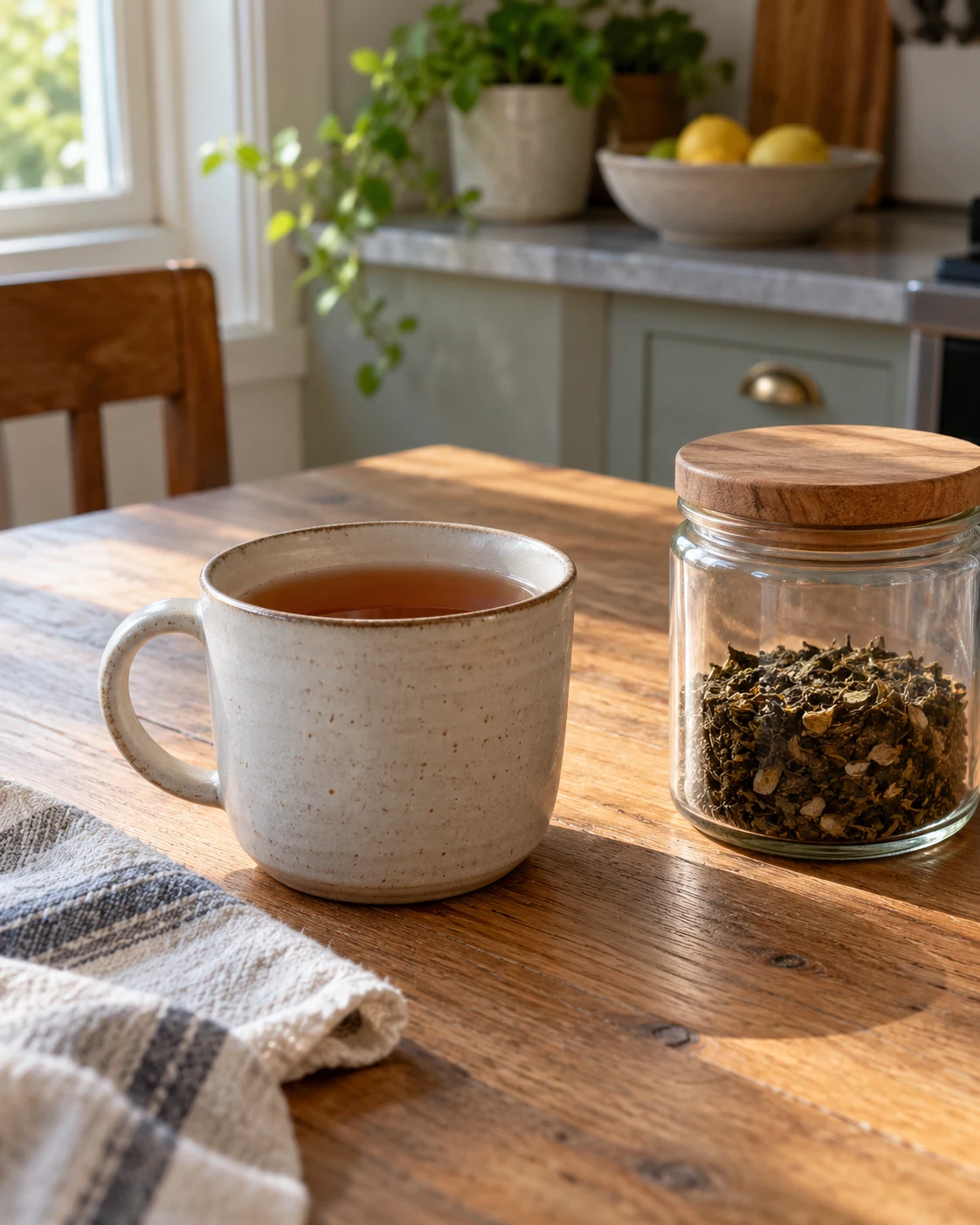
Choose something ordinary you already have and enjoy. Make the drink in the mug or glass that feels comfortable to use. There is no need for a new ingredient, elaborate garnish or special recipe.
Use the suitable pieces you already own for this idea.
Put it somewhere stable and reachable, then give yourself time to drink it. Follow your own needs and any guidance relevant to what you choose. A simple familiar drink doesn’t need a wellness claim attached to become an enjoyable pause.
7. Write down one thing occupying your attention
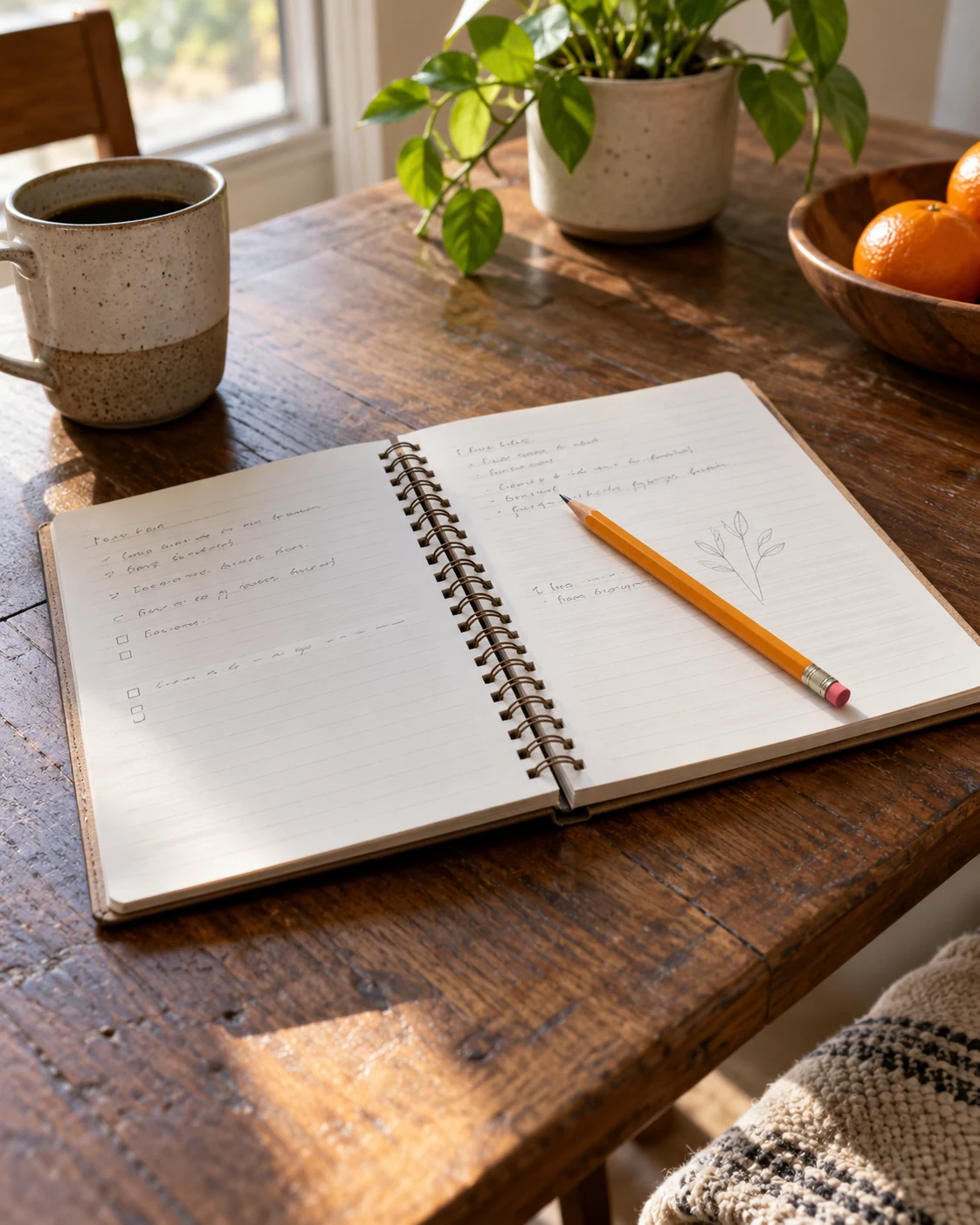
Use available paper or an existing note rather than shopping for a journal. Write the thing you keep returning to in ordinary language. You might need a reminder, a question or a few sentences you don’t intend to share.
Use the suitable pieces you already own for this idea.
Stop when you’ve put down what you wanted to capture. You don’t owe the page a lesson or a positive conclusion. If writing feels unhelpful today, leave it and choose something less demanding from this list.
8. Step outside where access is comfortable
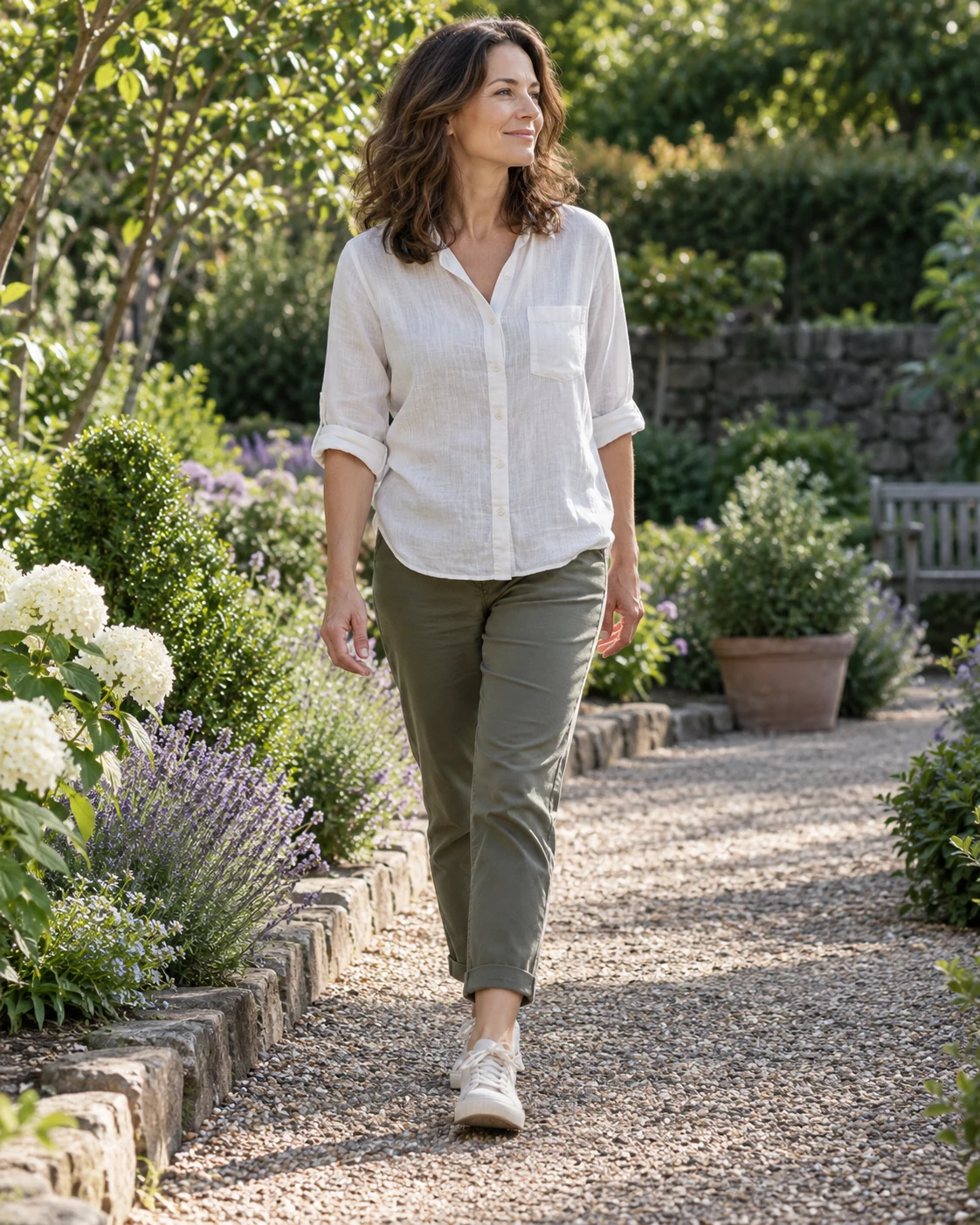
Choose an ordinary outdoor place you can reach comfortably. A short familiar route, accessible courtyard or nearby seat can suit different days. Check the actual weather and conditions before deciding whether going outside appeals to you.
Use the suitable pieces you already own for this idea.
You don’t need to turn the outing into exercise, errands or a scenic achievement. Stay within the time and distance that feel manageable. If going out isn’t available, a comfortable indoor pause remains a complete alternative.
9. Give one meal your attention

Sit somewhere practical with the food you were already going to eat. Put aside another task when you can, including the work you’ve been trying to finish simultaneously. Let the meal remain ordinary rather than arranging a special occasion around it.
Use the suitable pieces you already own for this idea.
Shared homes and busy schedules don’t always offer a silent table. Choose a smaller change when that’s the reality today. You might close the work document or move a pile that was occupying your eating space.
10. Use the towel you like

Bring out the clean towel or familiar household item you keep saving for another occasion. Use it for the ordinary purpose it already serves. You don’t need to build a spa routine around this one small preference.
Use the suitable pieces you already own for this idea.
Keep the idea suited to your actual facilities and access. It might be choosing a comfortable washcloth or laying out familiar clothes afterward. Leave new products and elaborate steps out when they would make the moment harder to arrange.
11. Revisit a photograph that matters
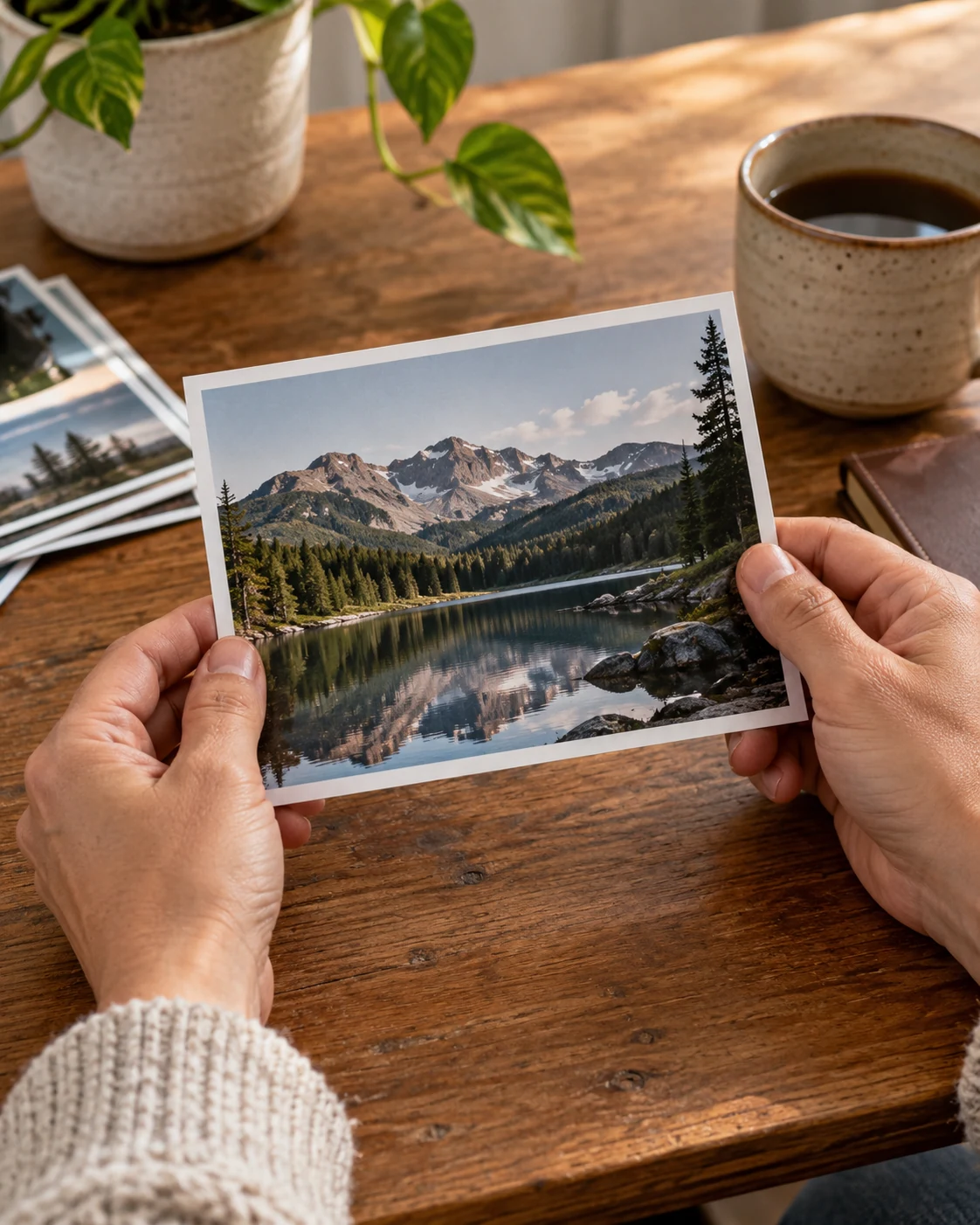
Choose a photograph you already have, printed or stored on an existing device. Notice one detail you hadn’t thought about recently. It might be a room, familiar landscape or ordinary gathering rather than a major milestone.
Use the suitable pieces you already own for this idea.
You don’t need to organize the whole collection while looking at it. Close the album or image when you’ve had enough. Pick another activity if that particular photograph brings up something you don’t want to revisit today.
12. Let a hobby stay unfinished for now
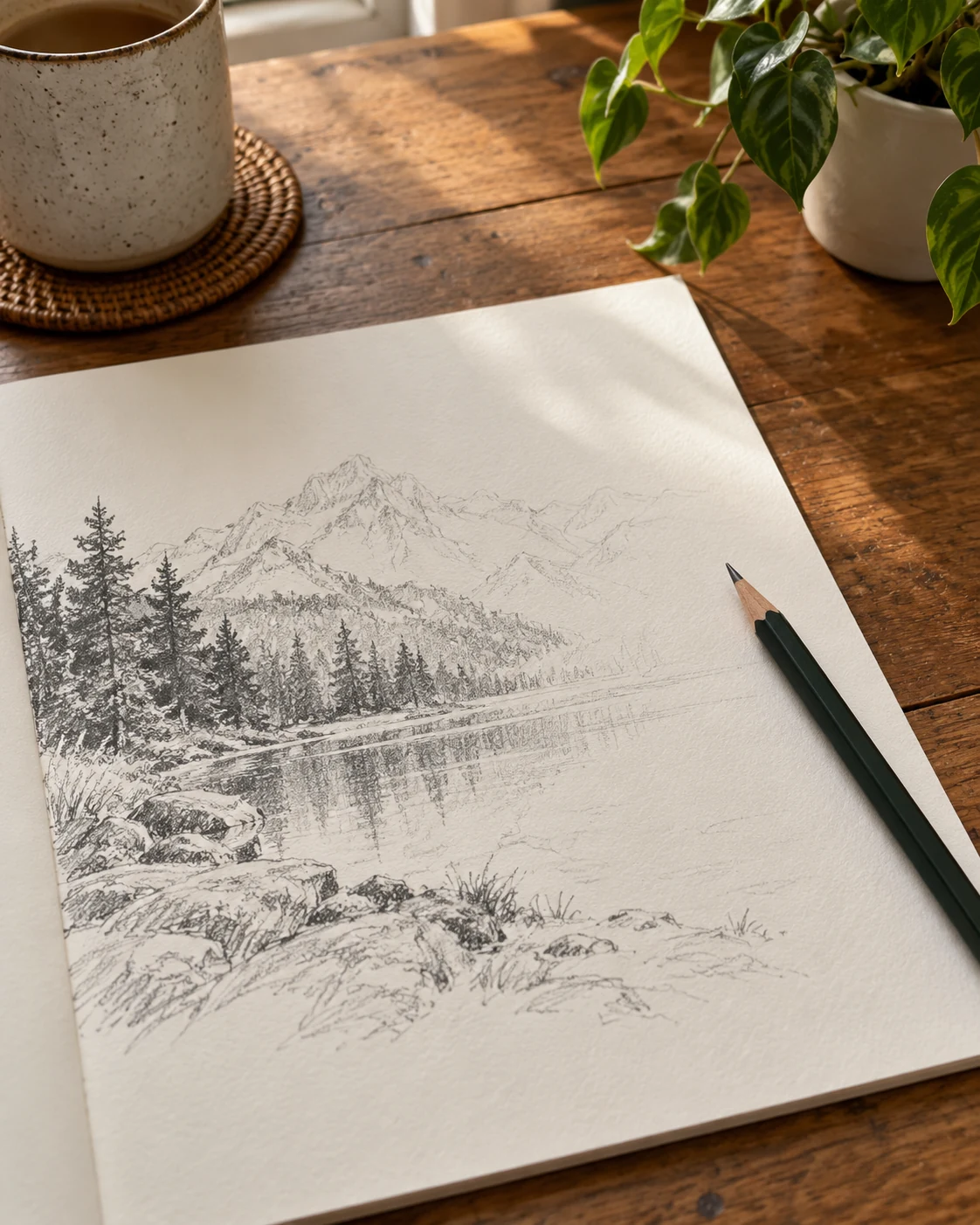
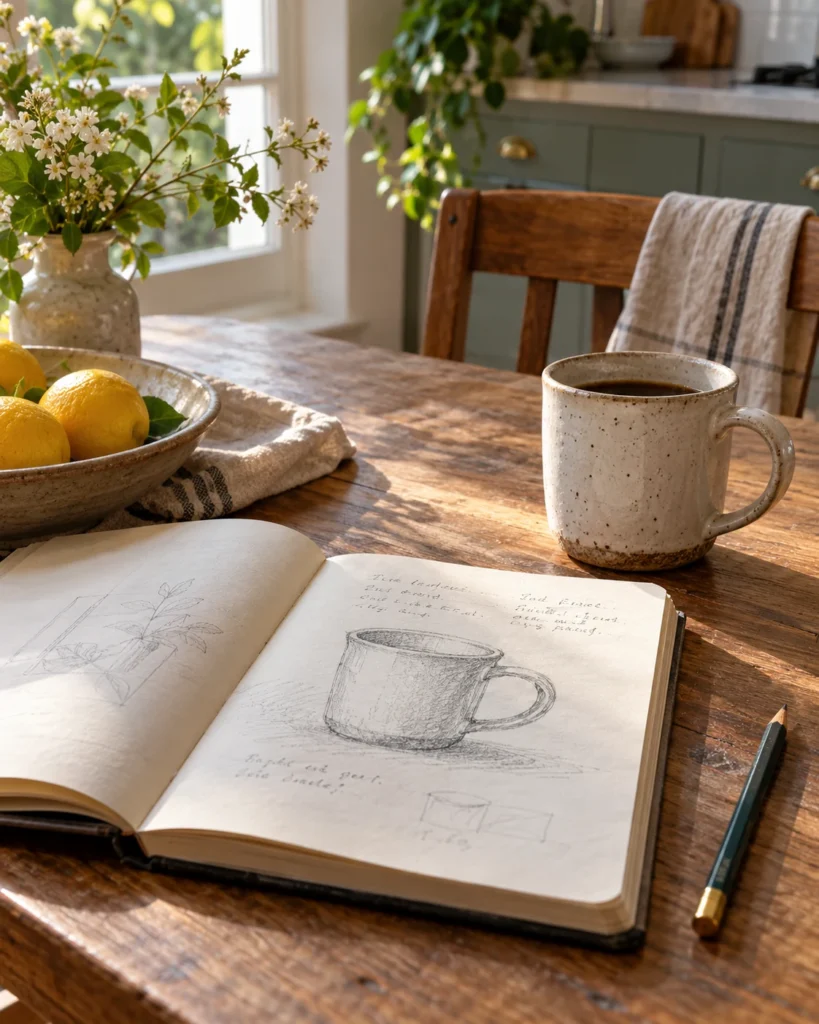
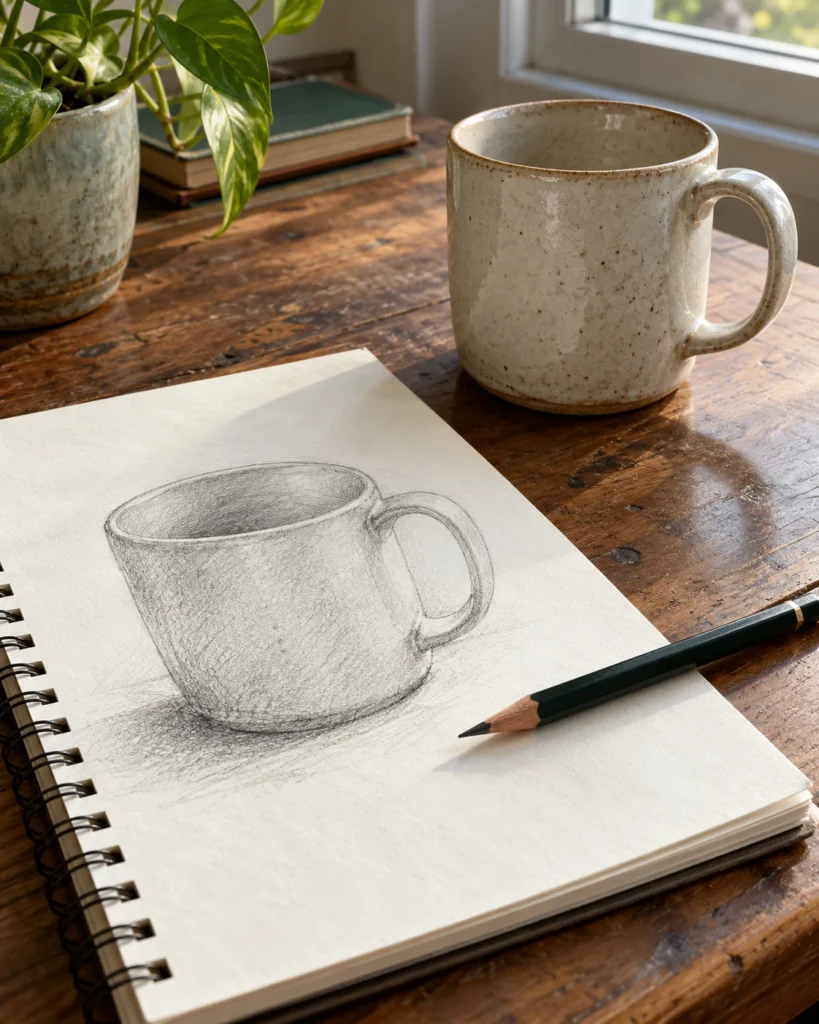
Return briefly to a familiar hobby using the materials already available. Read a few lines aloud, add to a drawing or look through unfinished paper pieces. Keep the next step small enough that stopping remains easy.
Use the suitable pieces you already own for this idea.
Put the materials away appropriately when you’re done, even when the project isn’t finished. You don’t have to turn every interest into a finished object or another income stream. Enjoying one part can be enough for this session.
13. Ask for company without designing an event

Invite someone you’re comfortable with to share an ordinary moment, when that feels welcome. Be clear about the small plan, such as a chat or sitting together. Give them room to decline without turning their availability into a judgment about the invitation.
Use the suitable pieces you already own for this idea.
You don’t need to clean every room or provide special food beforehand. Choose a form of company that suits both people. A familiar conversation can remain a conversation, without becoming another occasion requiring preparation.
14. Make one small request for tomorrow
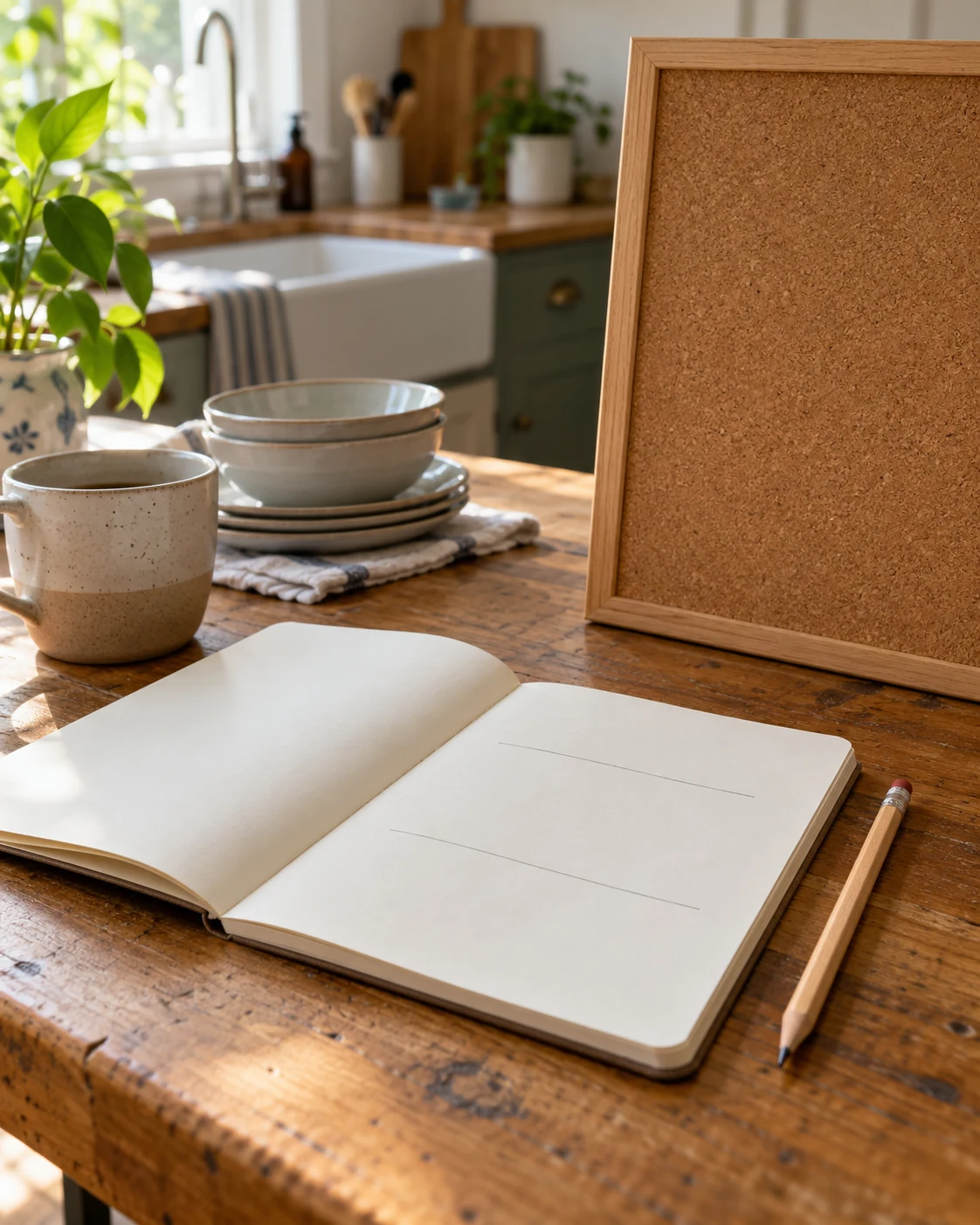
Notice a practical thing that would make tomorrow easier to arrange. Perhaps you need the shared table at a certain time or help moving a household task. Ask specifically instead of hoping someone guesses what you were trying to organize.
Use the suitable pieces you already own for this idea.
Keep the request open to discussion when another person’s plans are involved. You can agree on a smaller version or a different time. The useful result is a clearer arrangement, rather than adding another compulsory item to tomorrow’s list.
15. Leave a little time unassigned
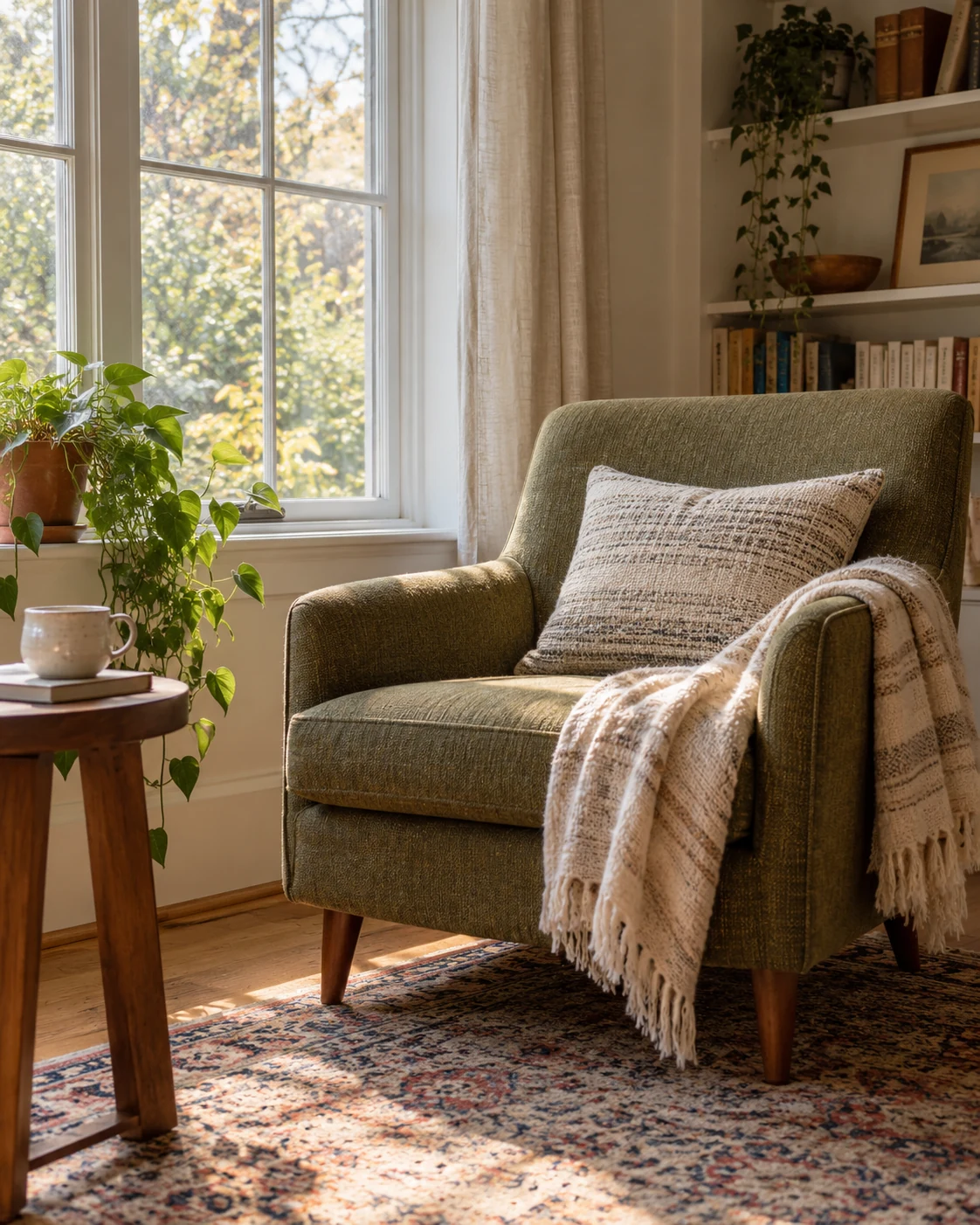
Choose a short gap that doesn’t immediately need another purpose. Sit where you’re comfortable and decide what you feel like doing next. You can leave the gap quiet instead of filling it with another useful activity.
Use the suitable pieces you already own for this idea.
There is no final task that proves you’ve used the break correctly. Stop browsing suggestions when one ordinary option already sounds appealing. The list can wait while you use the chair, hear the song or finish the drink.
Choose the smallest version that feels worthwhile
Start with what is already available today, including your actual energy and surroundings. Cross out anything that needs purchases, access you don’t have or preparation you don’t want. A shorter personal list can be more useful than collecting dozens of possibilities.
Notice which ideas feel comfortable to return to, rather than measuring how impressive they look. Keep those options somewhere easy to remember if that helps. You can change your mind tomorrow without having failed a routine or wasted a purchase.
Visuals are original AI-generated editorial concepts, not photographs of actual products, tested projects or hosted events.