Slow Cooker Lentil Soup: Liquid, Texture and Timing
Explore the guide
- 1. Decide what you want in the bowl
- 2. Choose whole brown or green lentils
- 3. Check the cooker before choosing the batch
- 4. Measure a simple starting formula
- 5. Cut vegetables for the way you want to eat
- 6. Inspect and rinse before loading
- 7. Load with room above the soup
- 8. Treat time as a planning range
- 9. Check the lentils before changing the broth
- 10. Adjust the thickness after tenderness
- 11. Finish one serving before seasoning everything
- 12. Cool promptly and reheat somewhere else
Slow cooker lentil soup needs three decisions: lentil type, cooker load and final consistency. A full afternoon of cooking doesn’t automatically settle all three. Start with whole lentils and leave room to adjust the broth after they soften.
This is a researched, explicitly untested cooking guide with a proposed starting formula. MerriMuse hasn’t cooked this batch, measured its yield or verified its timing in a particular appliance. Every food image is an AI-generated illustration, including the preparation scenes.
Use the quantities as a starting proposal rather than a promised result. Your appliance instructions, actual fill level and the lentils’ condition still matter. Montana State Extension provides a developed formula through University of Minnesota if you prefer that reference.
1. Decide what you want in the bowl
This version aims for separate whole lentils, small vegetables and enough broth to remain spoonable. It isn’t a smooth bisque or a thick lentil puree. That distinction helps you choose ingredients before the cooker starts.
Use suitable pieces you already own for this idea.
Consider how you’ll serve the soup before adjusting its thickness. A small lunch bowl may suit more broth than a substantial dinner portion. Neither preference requires changing the cooking method halfway through.
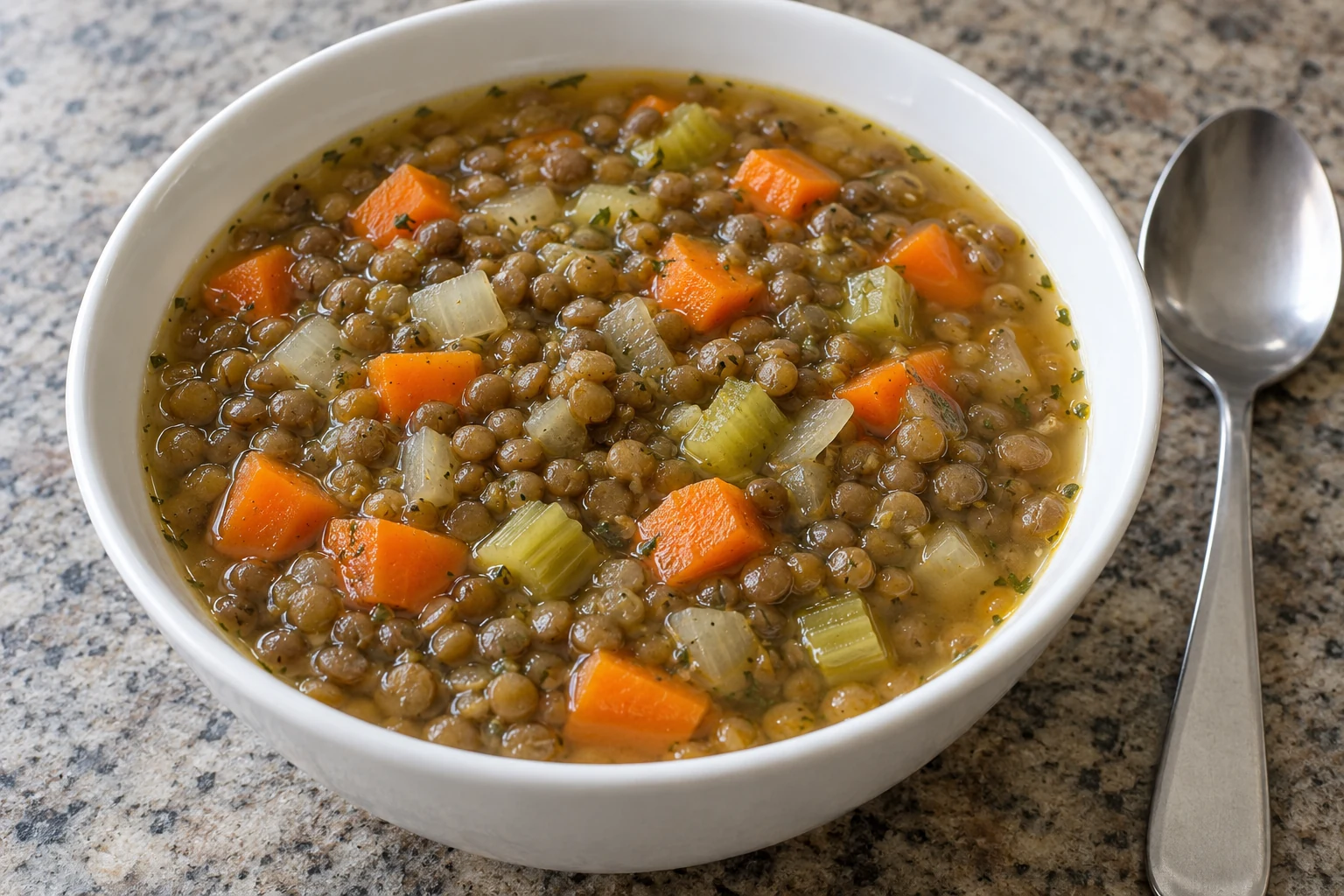
The pictured bowl shows the intended direction, without proving the formula produces that exact appearance. Color, lentil shape and broth clarity will vary. Don’t use a generated image as your doneness test.
2. Choose whole brown or green lentils

Look for whole brown or green lentils when buying the ingredients. Split red lentils break down differently and won’t reliably preserve the same texture. Switching varieties also changes how useful the timing references become.
Use suitable pieces you already own for this idea.
Lentils generally don’t require soaking before cooking. Check their package for any specific preparation directions. An old bag may behave differently from a fresher one, even when the variety matches.
Don’t substitute dried kidney beans or an unidentified dried bean mixture. Those ingredients need their own verified preparation and safety instructions. Keeping this guide limited to lentils avoids turning a simple substitution into a different cooking problem.
3. Check the cooker before choosing the batch
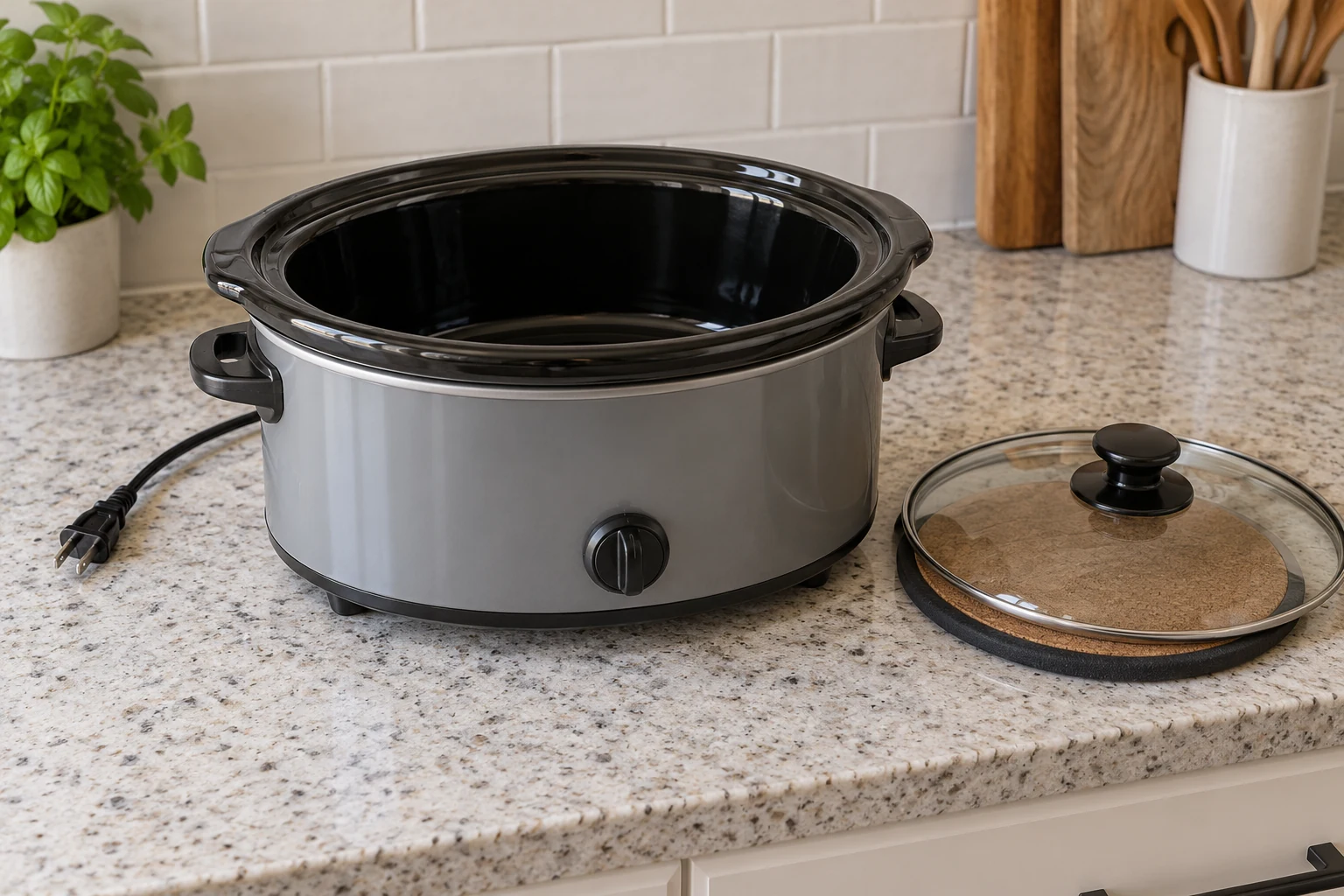
A four-quart manual cooker is one possible starting size for this proposal. The selected Hamilton Beach model has Low, High and Warm settings. It doesn’t provide an automatic timer that ends cooking for you.
Comparable options, not the exact pictured items. Check the selected variant and current directions.
Fit and buying notes
- Hamilton Beach manual four-quart slow cooker, Brushed Gray: Manual Low, High and Warm dial; no automatic timer or shutoff claimed. At least half full for best results; maker requires two inches of headspace for soups. Check actual load and instructions. Warm does not cook raw ingredients. Do not use this cooker to reheat leftovers.
Its instructions call for at least half filling and two inches of headspace for soup. General federal guidance recommends keeping slow cookers between half and two-thirds full. Check both conditions against your actual appliance and loaded ingredients.
Adding the listed cup quantities doesn’t establish the final occupied volume. Lentils, vegetable pieces and liquid share space, and crock shapes differ. Choose a properly sized appliance if the actual load cannot satisfy its directions.
4. Measure a simple starting formula
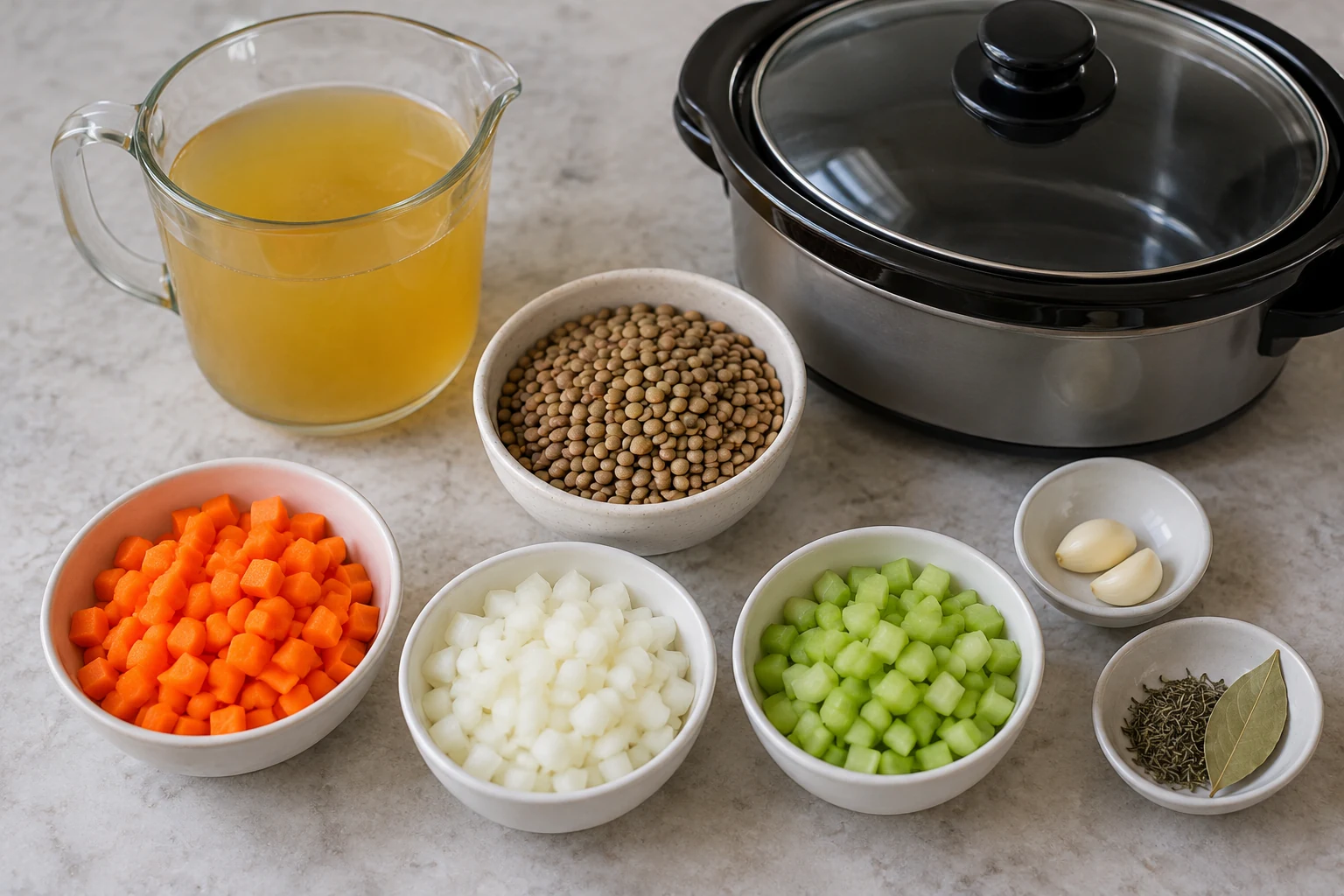
The proposed base uses one cup dry whole lentils and five cups low-sodium vegetable broth. Add 1.5 cups diced carrot, one cup diced onion and one cup diced celery. These are untested starting quantities, rather than measurements from a completed cook.
Comparable options, not the exact pictured items. Check the selected variant and current directions.
Fit and buying notes
- Hamilton Beach manual four-quart slow cooker, Brushed Gray: Manual Low, High and Warm dial; no automatic timer or shutoff claimed. At least half full for best results; maker requires two inches of headspace for soups. Check actual load and instructions. Warm does not cook raw ingredients. Do not use this cooker to reheat leftovers.
For seasoning, add two minced garlic cloves, one teaspoon dried thyme and one bay leaf. Keep lemon juice and additional salt for the end. Check the broth label because different products contribute different amounts of salt.
Use ordinary measuring cups rather than estimating from the illustration. Keep a little extra broth available for a later consistency adjustment. This proposal doesn’t establish a measured serving count, nutritional analysis or guaranteed leftover quantity.
5. Cut vegetables for the way you want to eat
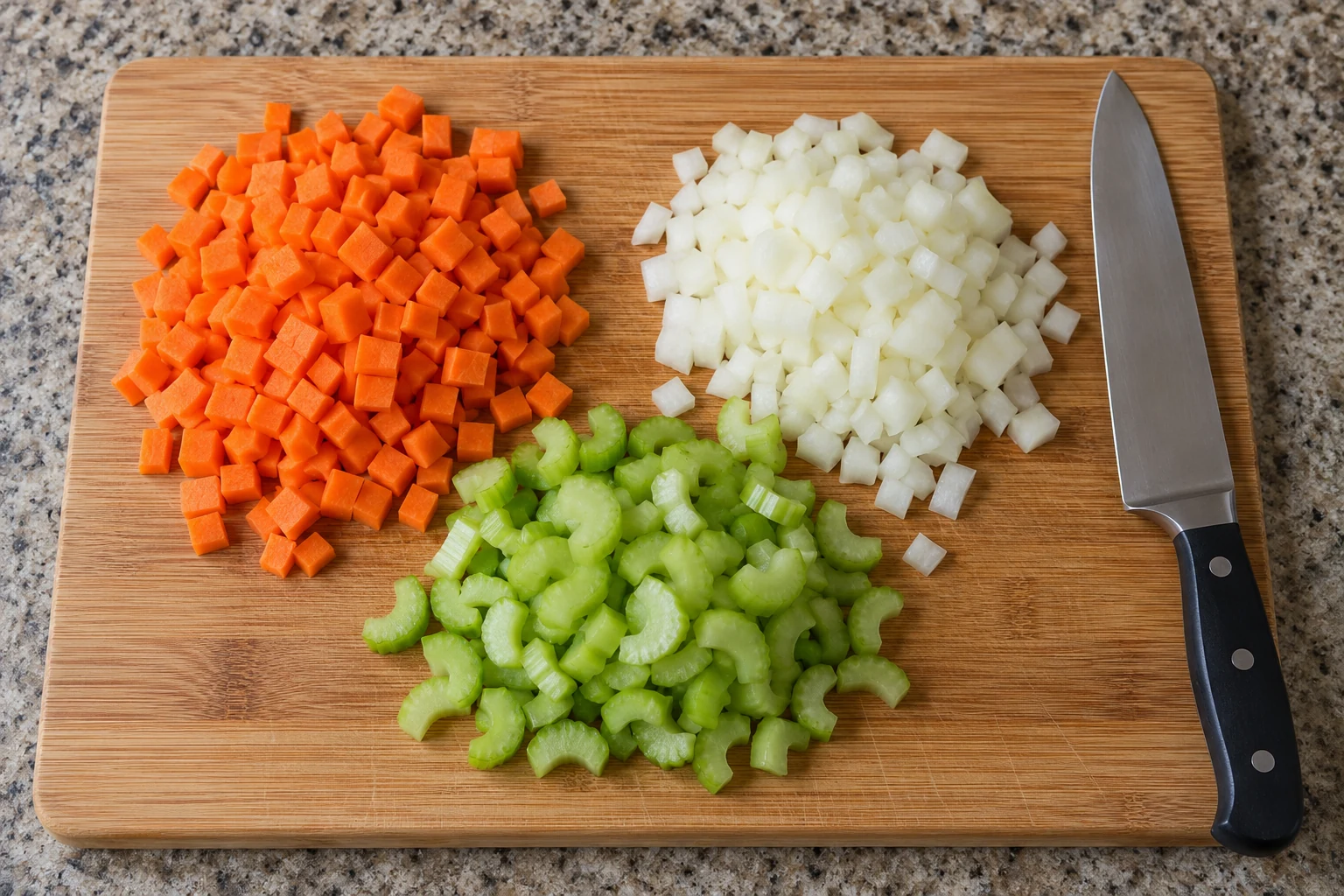
Small carrot pieces fit comfortably on a spoon alongside the lentils. Chop the onion and celery into similarly manageable pieces. Large carrot chunks can remain a separate texture problem after the lentils soften.
Use suitable pieces you already own for this idea.
Wash the vegetables and use a clean board and knife. Keep the work area clear enough to handle the knife comfortably. Preparation doesn’t need additional tools or decorative cuts.
If you prepare ingredients earlier, refrigerate them until you’re ready to load and start cooking. Don’t leave the assembled ingredients sitting on the counter for hours. A delayed start isn’t part of this method.
6. Inspect and rinse before loading
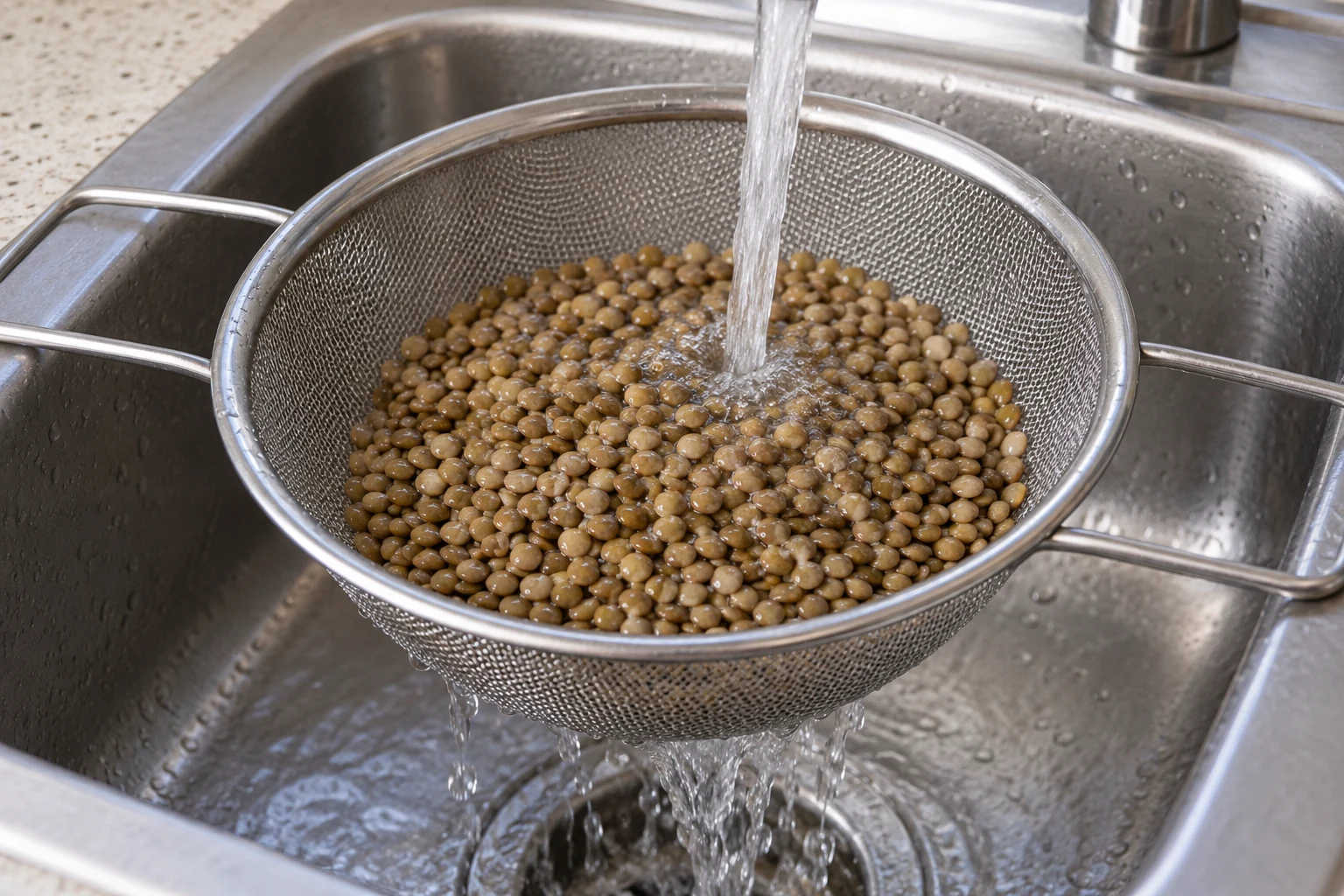
Spread out the dry lentils enough to notice debris or small stones. Remove anything that doesn’t belong, then rinse the lentils in a fine strainer. Follow any additional directions printed on their package.
Use suitable pieces you already own for this idea.
This short preparation step is separate from soaking. You don’t need to turn it into an overnight task for ordinary whole lentils. Keep the rinsed lentils with the other prepared ingredients until cooking begins.
Use clean utensils and wash your hands before handling the food. A vegetable soup still needs ordinary kitchen hygiene. The absence of raw meat doesn’t remove the need for safe preparation and storage.
7. Load with room above the soup
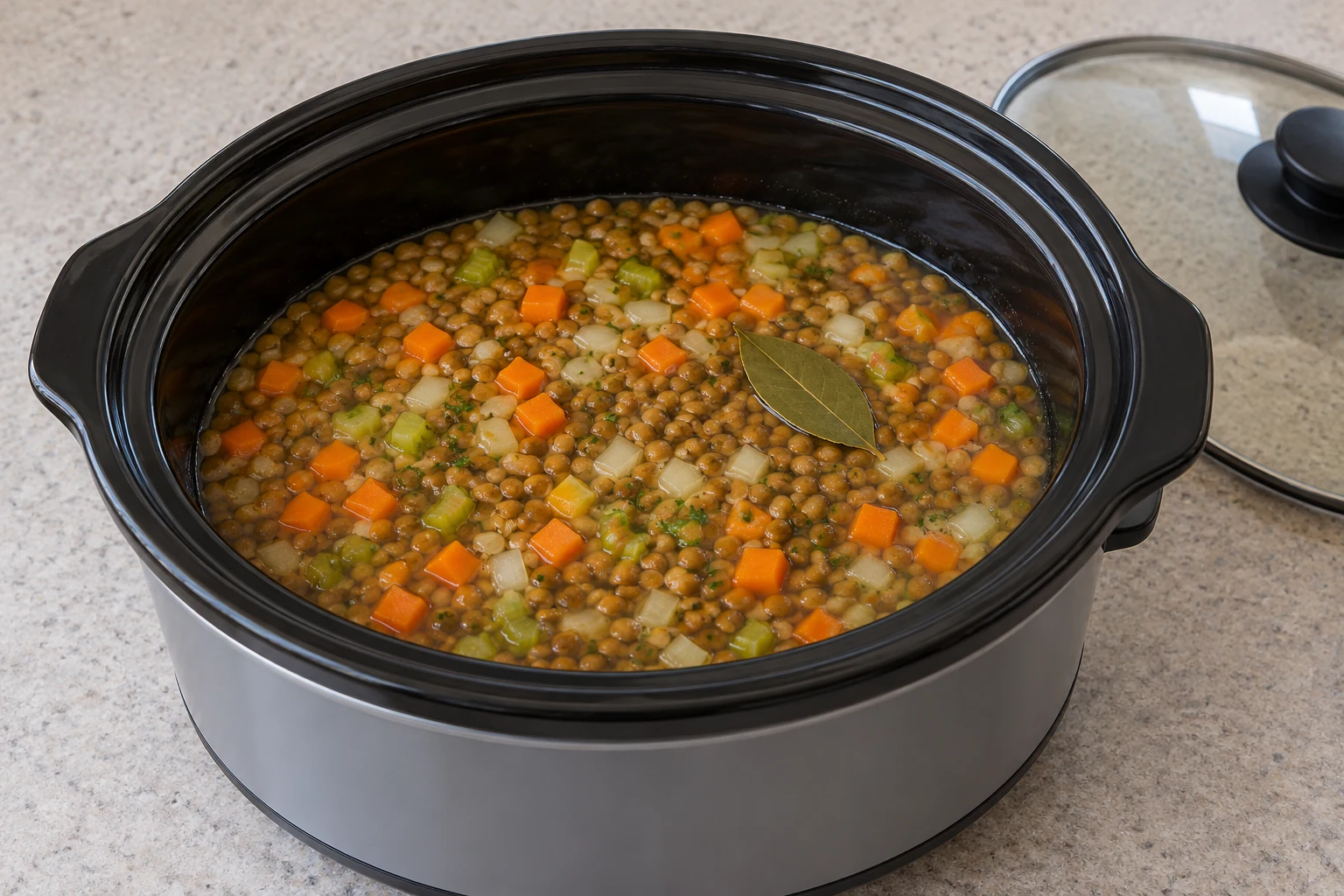
Put the firmer vegetables toward the bottom, following the appliance’s loading directions. Add the lentils, broth, garlic, thyme and bay leaf. Check the actual soup level before fitting the lid.
Comparable options, not the exact pictured items. Check the selected variant and current directions.
Fit and buying notes
- Hamilton Beach manual four-quart slow cooker, Brushed Gray: Manual Low, High and Warm dial; no automatic timer or shutoff claimed. At least half full for best results; maker requires two inches of headspace for soups. Check actual load and instructions. Warm does not cook raw ingredients. Do not use this cooker to reheat leftovers.
Leave the required headspace instead of squeezing an oversized batch into the crock. Don’t halve or double everything automatically to solve a fit problem. A substantially different load needs an appropriate appliance and renewed timing checks.
Keep the base and cord dry, with the cooker on a suitable clear counter. Don’t heat an empty crock or expose the crock to sudden temperature changes. Consult the current manual if your model’s instructions differ.
8. Treat time as a planning range
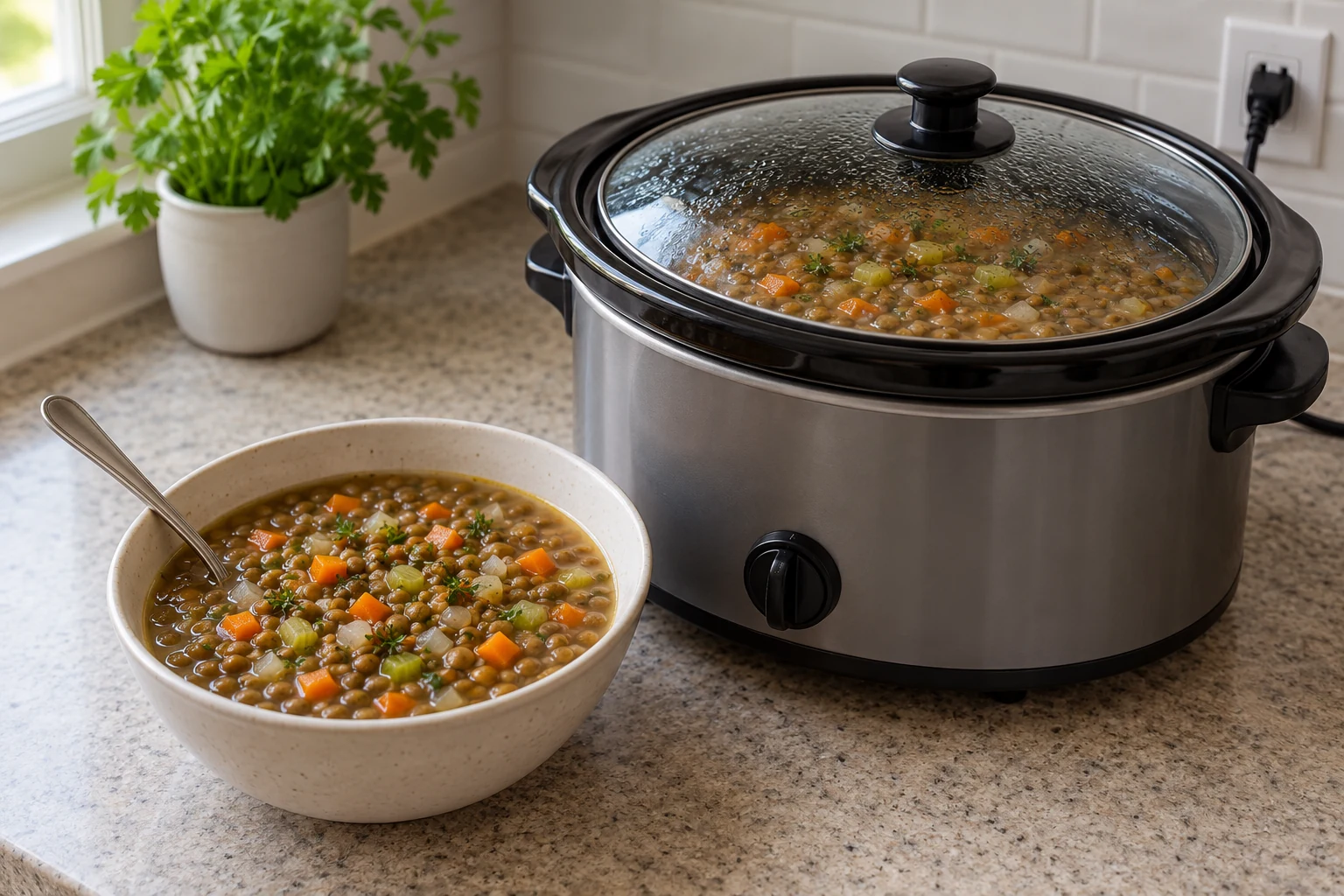
Start cooking promptly on Low or High, according to the chosen recipe and appliance directions. Warm isn’t a setting for cooking these raw ingredients. Don’t use an external delayed-start arrangement.
Comparable options, not the exact pictured items. Check the selected variant and current directions.
Fit and buying notes
- Hamilton Beach manual four-quart slow cooker, Brushed Gray: Manual Low, High and Warm dial; no automatic timer or shutoff claimed. At least half full for best results; maker requires two inches of headspace for soups. Check actual load and instructions. Warm does not cook raw ingredients. Do not use this cooker to reheat leftovers.
Montana State Extension’s different lentil formula lists eight to ten hours on Low. Its High setting range is four to five hours. Those published ranges describe that recipe, rather than verified times for this proposal.
Plan to be available to check your soup instead of assuming the clock guarantees tenderness. Keep the lid in place during cooking rather than repeatedly opening it. If power fails, follow current food-safety guidance instead of guessing from appearance.
9. Check the lentils before changing the broth

Remove a small soup sample with a clean utensil and let it cool appropriately. Look for tender lentils without a hard, chalky center. Check the carrot pieces separately rather than assuming both ingredients finish together.
Comparable options, not the exact pictured items. Check the selected variant and current directions.
Fit and buying notes
- Hamilton Beach manual four-quart slow cooker, Brushed Gray: Manual Low, High and Warm dial; no automatic timer or shutoff claimed. At least half full for best results; maker requires two inches of headspace for soups. Check actual load and instructions. Warm does not cook raw ingredients. Do not use this cooker to reheat leftovers.
If the lentils remain firm, additional liquid alone doesn’t mean dinner is ready. Continue cooking as appropriate and reassess tenderness. Their age, variety, cooker setting and actual load can all complicate a fixed schedule.
Avoid diagnosing every firm lentil as a salt or tomato problem. Published lentil recipes use different ingredient combinations successfully. This proposal keeps acidic finishing ingredients separate to reduce variables, without claiming acid always prevents softening.
10. Adjust the thickness after tenderness
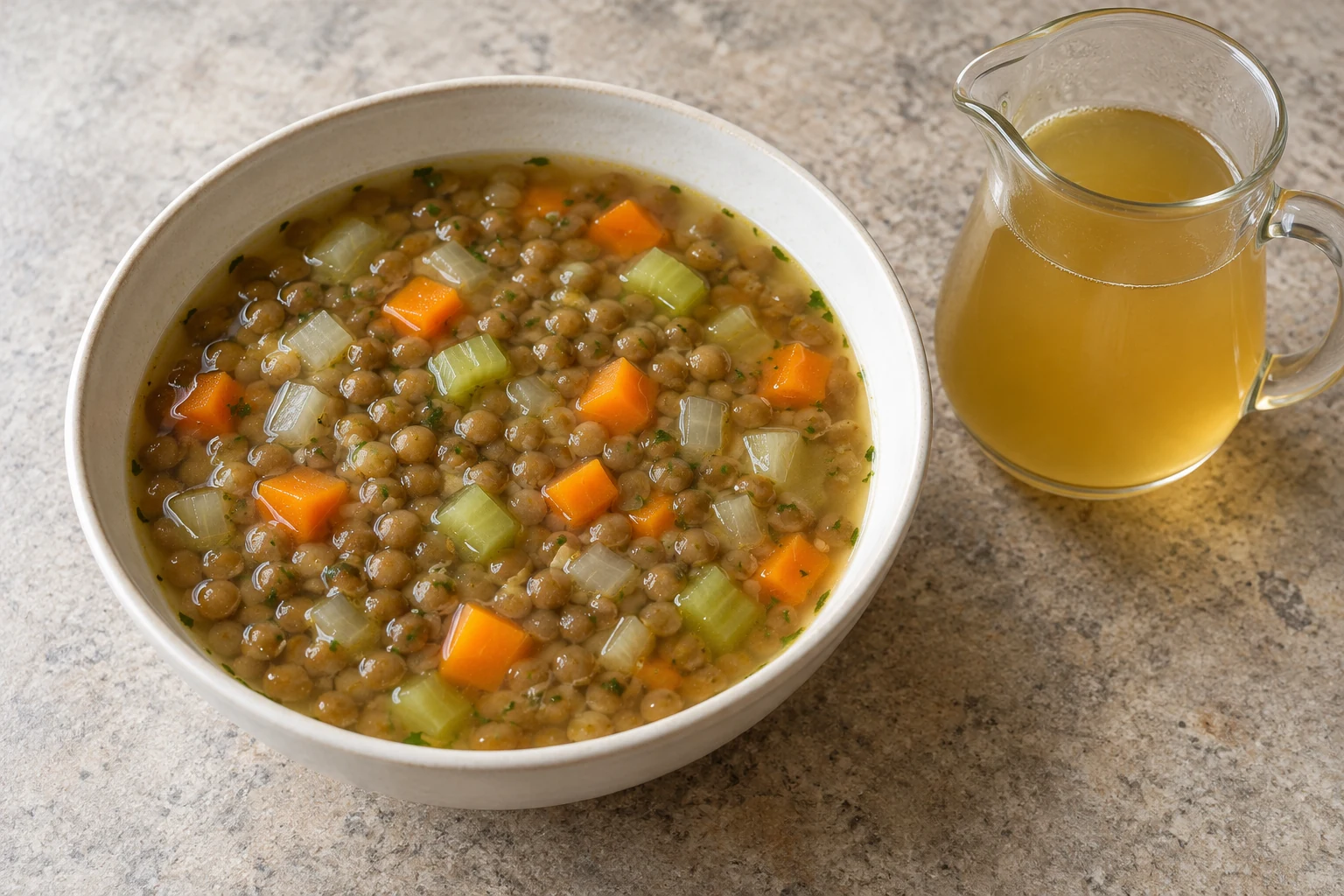
Once the lentils and vegetables are tender, stir gently and assess the broth. Add a small amount of appropriately warmed broth if you want a looser soup. Follow the crock’s temperature precautions and keep the required headspace.
Use suitable pieces you already own for this idea.
If it’s already thinner than you prefer, don’t immediately add more dry lentils. They would introduce another uncooked ingredient with its own timing needs. Accept a brothier bowl or use a separately verified adjustment method.
A slow cooker retains moisture differently from an uncovered stovetop pot. Repeatedly removing the lid isn’t a dependable shortcut for fixing the formula. Record your actual quantities and preferences if you choose to develop another batch.
11. Finish one serving before seasoning everything
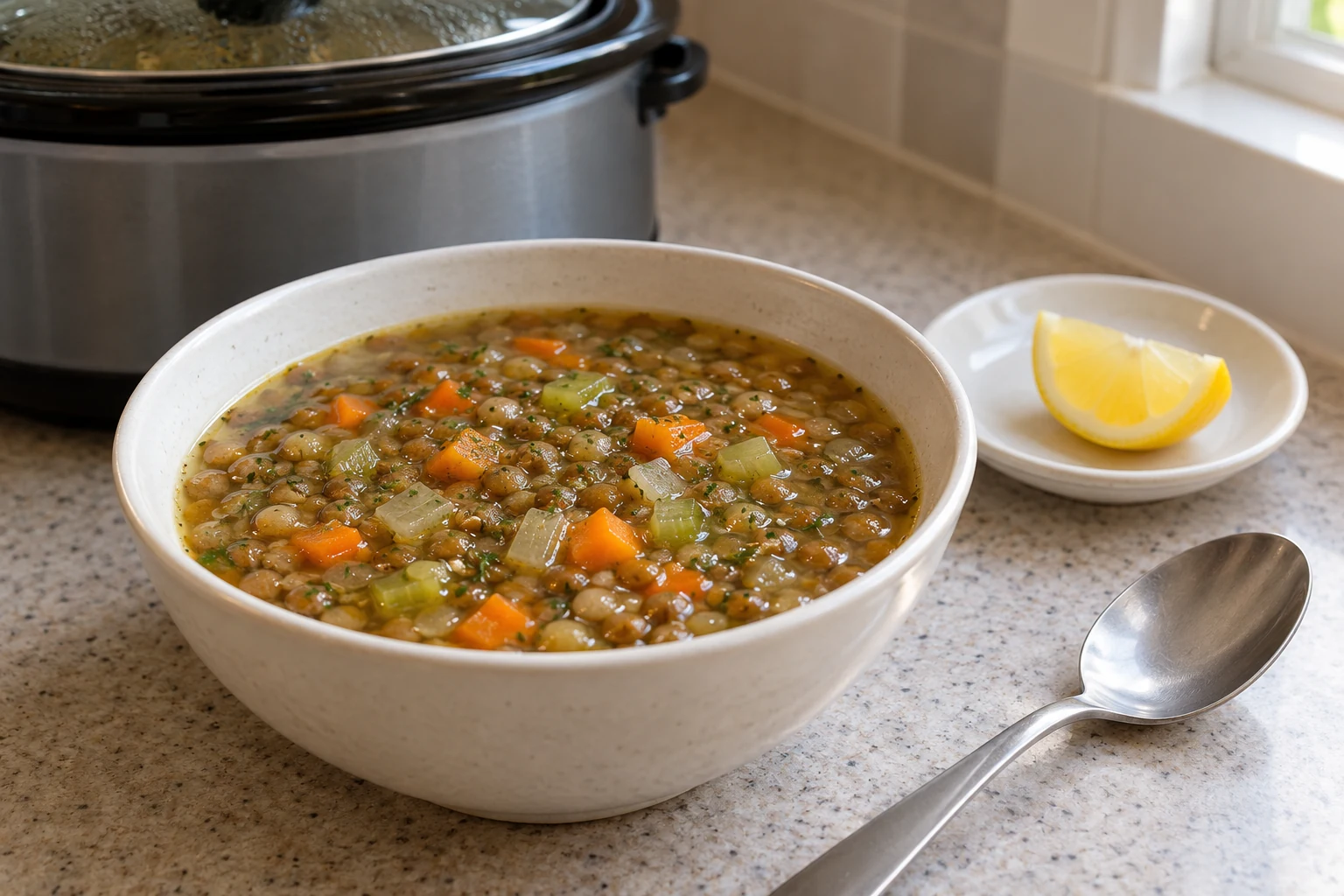
Remove the bay leaf before serving. Taste a cooled spoonful and adjust salt only after considering the broth’s seasoning. Add lemon to one small serving first if you want a brighter finish.
Comparable options, not the exact pictured items. Check the selected variant and current directions.
Fit and buying notes
- Hamilton Beach manual four-quart slow cooker, Brushed Gray: Manual Low, High and Warm dial; no automatic timer or shutoff claimed. At least half full for best results; maker requires two inches of headspace for soups. Check actual load and instructions. Warm does not cook raw ingredients. Do not use this cooker to reheat leftovers.
That small trial protects the rest of the pot from an adjustment you don’t enjoy. Keep it optional for other people sharing the soup. You don’t need cream, a blender or a collection of toppings to finish this version.
For smaller household meals, explore our easy dinner ideas for two. That guide serves a separate planning need. It doesn’t provide timing or substitution evidence for this lentil soup.
12. Cool promptly and reheat somewhere else
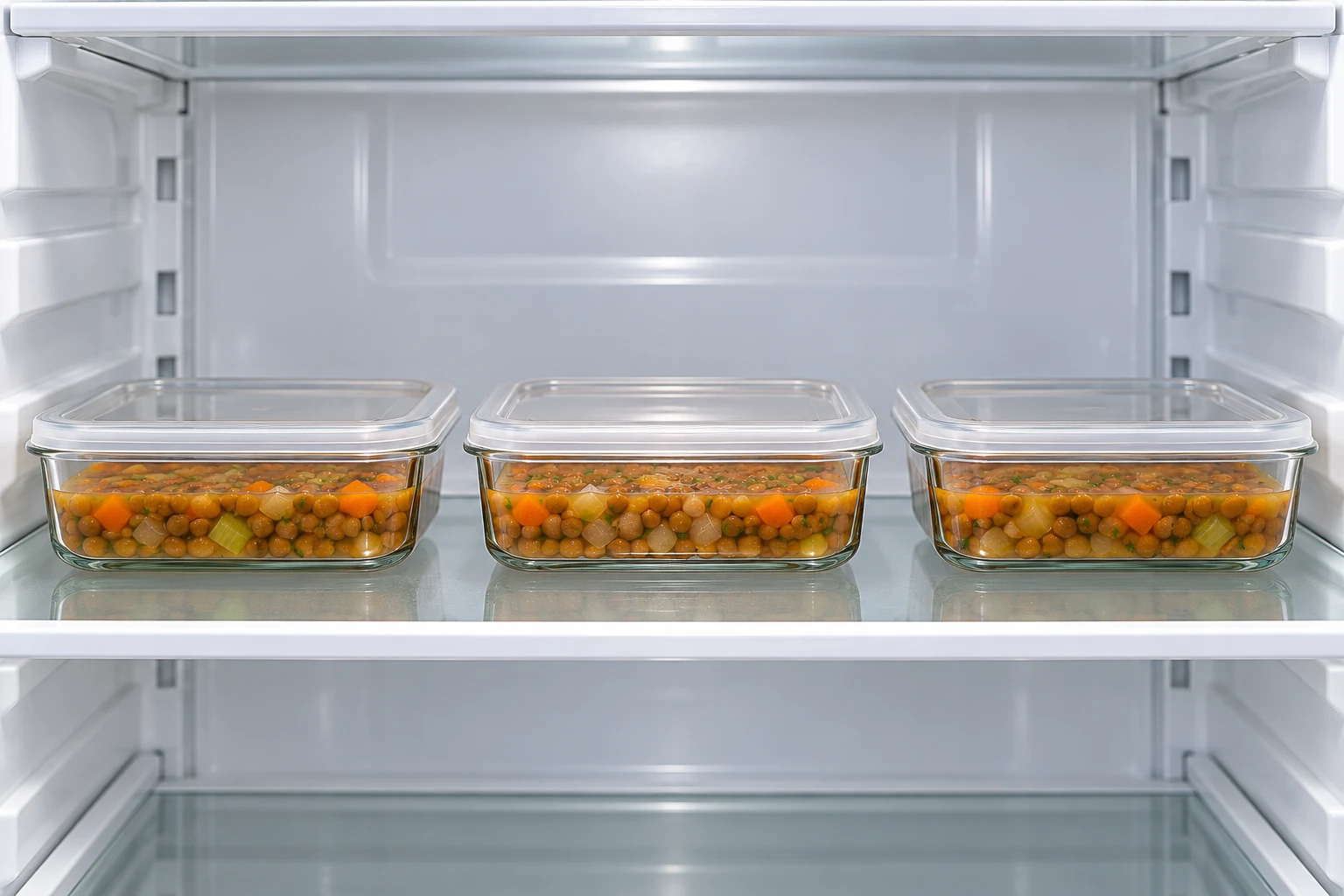
Divide leftovers into small, shallow food-safe containers and refrigerate promptly. Don’t refrigerate the whole hot crock or wait for it to cool completely outside. Refrigerate within two hours, or one hour when temperatures exceed 90 degrees Fahrenheit.
Comparable options, not the exact pictured items. Check the selected variant and current directions.
Fit and buying notes
- TempPro TempSwift TP19H folding food thermometer, Bright-orange: Instant-read folding probe for a brief food-temperature check, not a leave-in cooking probe. Confirm the current manual for use, cleaning and calibration. Merchant overview Oven Safe is not adopted. No independent accuracy or speed testing claimed.
Keep the refrigerator at 40 degrees Fahrenheit or below. Use refrigerated leftovers within three to four days. Freeze suitable portions sooner if you won’t use them within that window. Check your existing containers’ food, temperature and freezer ratings.
Reheat leftovers on the stove or in the microwave, rather than in the slow cooker. Bring reheated soup to a rolling boil and check that it reaches 165 degrees Fahrenheit. A clean instant-read food probe helps check the food without relying on steam alone.
Follow the thermometer’s current instructions for cleaning, placement and calibration. Remove an instant-read probe after checking; don’t leave it cooking in the pot. The original batch’s appearance cannot establish that leftovers were stored or reheated safely.
Visuals are original AI-generated editorial concepts, not photographs of actual products, tested projects, cooked results or real events.