8 Winter Outfit Ideas You Can Wear Beyond the Photograph
Explore the ideas
- 1. Straight jeans, a fine knit and a longer coat
- 2. Tailored trousers with an open cardigan
- 3. A knit dress with a removable middle layer
- 4. An overshirt for a moving-around weekend
- 5. Stay within charcoal and change the texture
- 6. Let a burgundy sweater carry the color
- 7. Pair a winter skirt with grounded boots
- 8. Finish the indoor version on its own
A winter outfit should still make sense when your coat comes off. That sounds obvious until you’re trapped inside a warm cafe wearing your thickest sweater. The looks below start with comfortable indoor clothes, then add what the journey needs.
Each example shows a complete outfit, including shoes and the layers around it. Borrow the proportions or color relationship rather than buying every item you see. These AI-generated styling concepts don’t depict particular products or establish their weather performance.
Everyday commuting and relaxed plans are the focus here. Extreme cold, ice and demanding outdoor activities need clothing chosen for those conditions. Check your route and forecast before treating any attractive outfit as suitable protection.
1. Straight jeans, a fine knit and a longer coat
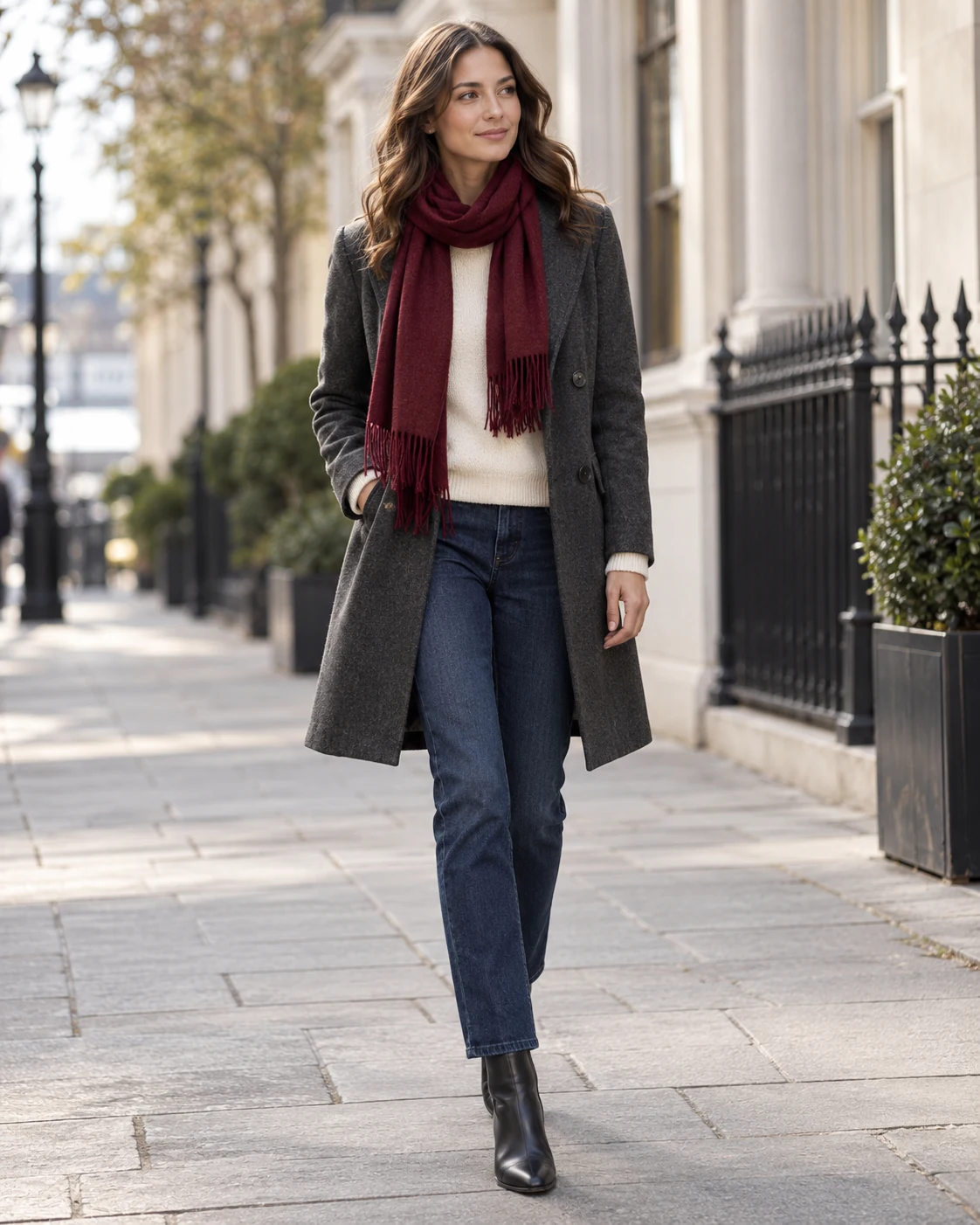
This combination works because the coat supplies the long line. The jeans and sweater underneath can stay simple without looking unfinished. A burgundy scarf adds a small color change beside charcoal, ivory and navy.
Check the jeans with your boots before deciding the hem length. You want fabric that clears the ground during an ordinary walking stride. A cuff that catches beneath your heel will collect moisture and wear differently.
The fine knit matters as much as the coat. It leaves room inside the sleeves and gives you a comfortable indoor version. A much thicker sweater may require different outerwear rather than another layer squeezed on top.
Levi’s Ribcage Straight Ankle jeans offer one reference for the straight shape. Their very high rise won’t suit everyone, and fabric varies between washes. Compare the selected inseam and measurements with jeans you already enjoy wearing.
Keep your existing jeans if they serve the same purpose. The idea depends on a clear hem and balanced layers rather than a label. Try the outfit without the scarf before deciding whether another accessory adds anything.
2. Tailored trousers with an open cardigan
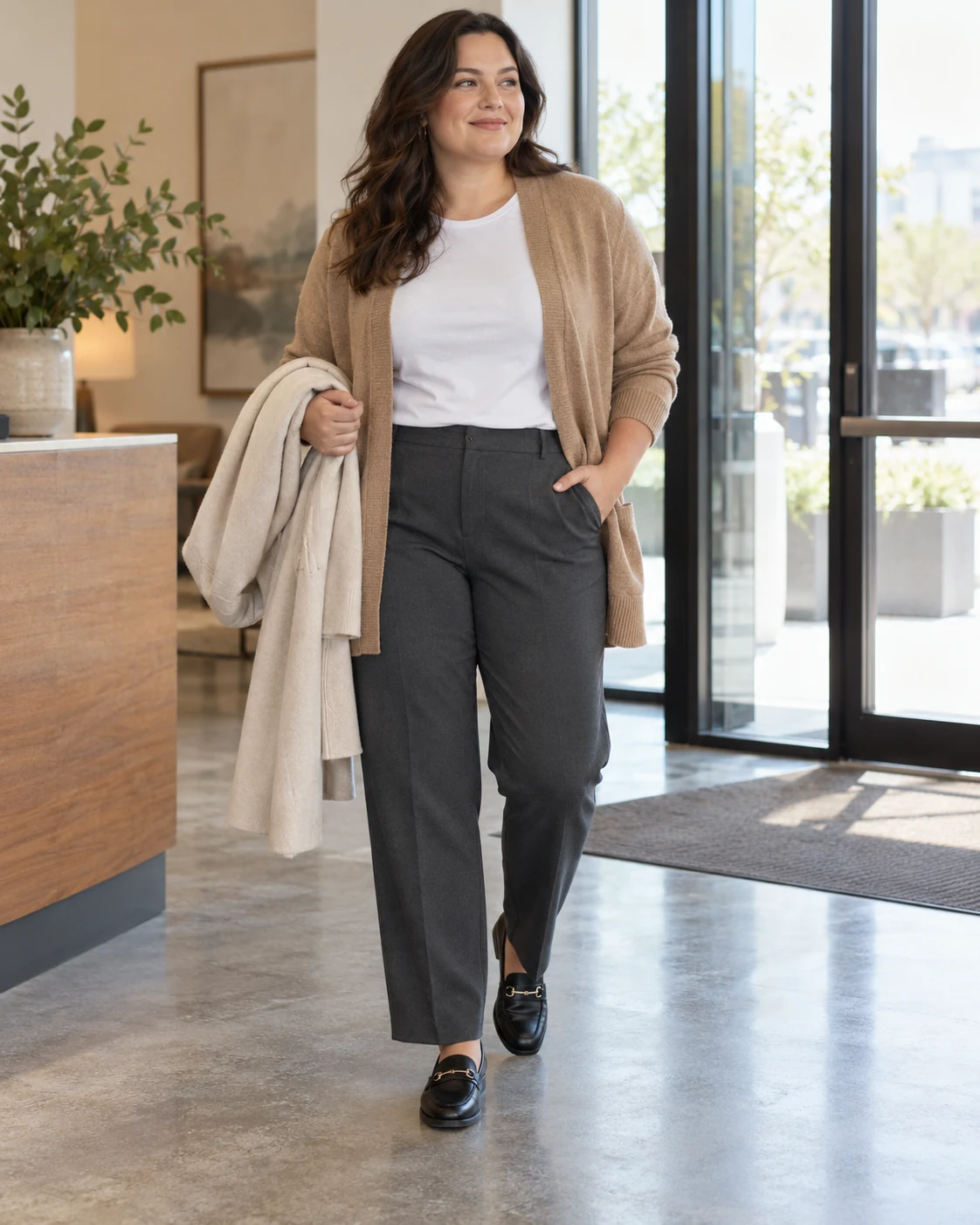
An open cardigan gives a heated workplace a more adjustable outfit. The plain top remains visible, while the darker trousers provide a straightforward base. You can remove the knit without losing the entire color arrangement.
Choose trousers that feel comfortable while sitting as well as standing. A waistband that only works in a mirror won’t improve a long office day. Try them with your actual work shoes before judging the finished length.
The Hanes Perfect T OSL04 is one optional plain tee for this type of indoor base. Its manufacturer describes a slimmer silhouette, while some heather shades use blended fibers. Compare the selected color and size rather than assuming every version feels identical.
That cotton tee isn’t technical winter equipment. Prolonged exposure, strenuous movement and wet conditions call for different fabric decisions. For an ordinary heated room, prioritize the comfort you need after removing your coat.
Test the cardigan beneath your outerwear with both arms reaching forward. Crowded sleeves can make an otherwise useful combination unpleasant during a commute. Change the layer’s shape when necessary instead of forcing everything inside the same coat.
3. A knit dress with a removable middle layer
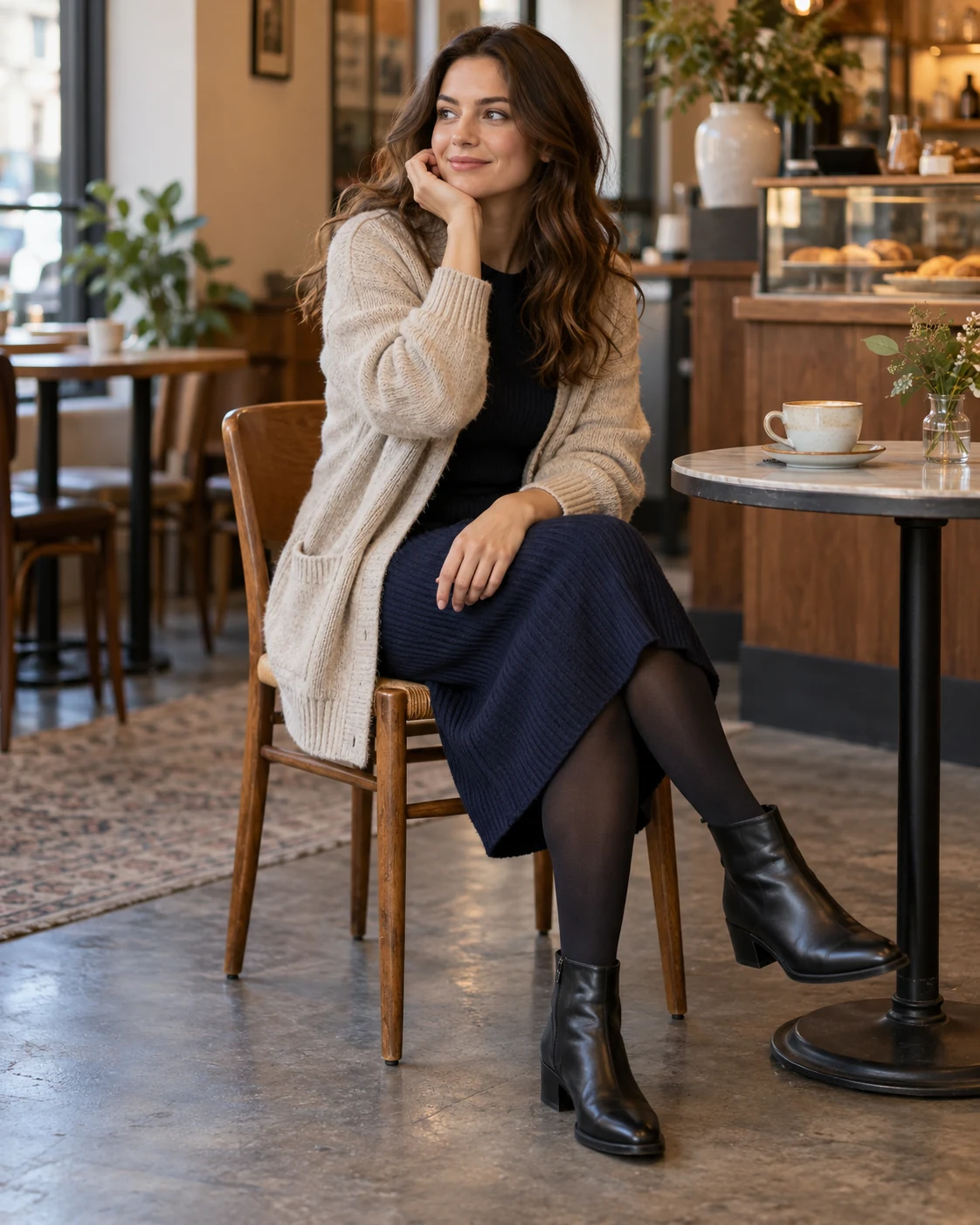
A knit dress reduces the number of garments you need to coordinate. The open cardigan adds texture and another option when the room’s temperature changes. Dark tights and low boots keep the lower half visually uncomplicated.
Look at the dress while seated before deciding it feels comfortable. Knit fabric can move, cling or rise differently from the version you see standing. The useful fit is the one that works through your ordinary day.
Keep the dress reasonably light when the cardigan already provides substantial warmth. Two very thick knits can leave you with fewer adjustments after entering a heated room. You may prefer a finer dress beneath a more substantial outer layer.
Compare the dress and coat lengths together. A clearly shorter dress creates one effect, while a longer visible hem creates another. Nearly matching lengths can look uneven when several edges appear around the knees.
Boots should suit the ground rather than complete a photograph at any cost. A smooth sole doesn’t become appropriate for ice because the outfit looks seasonal. Use the styling idea with footwear that makes sense for your actual route.
4. An overshirt for a moving-around weekend
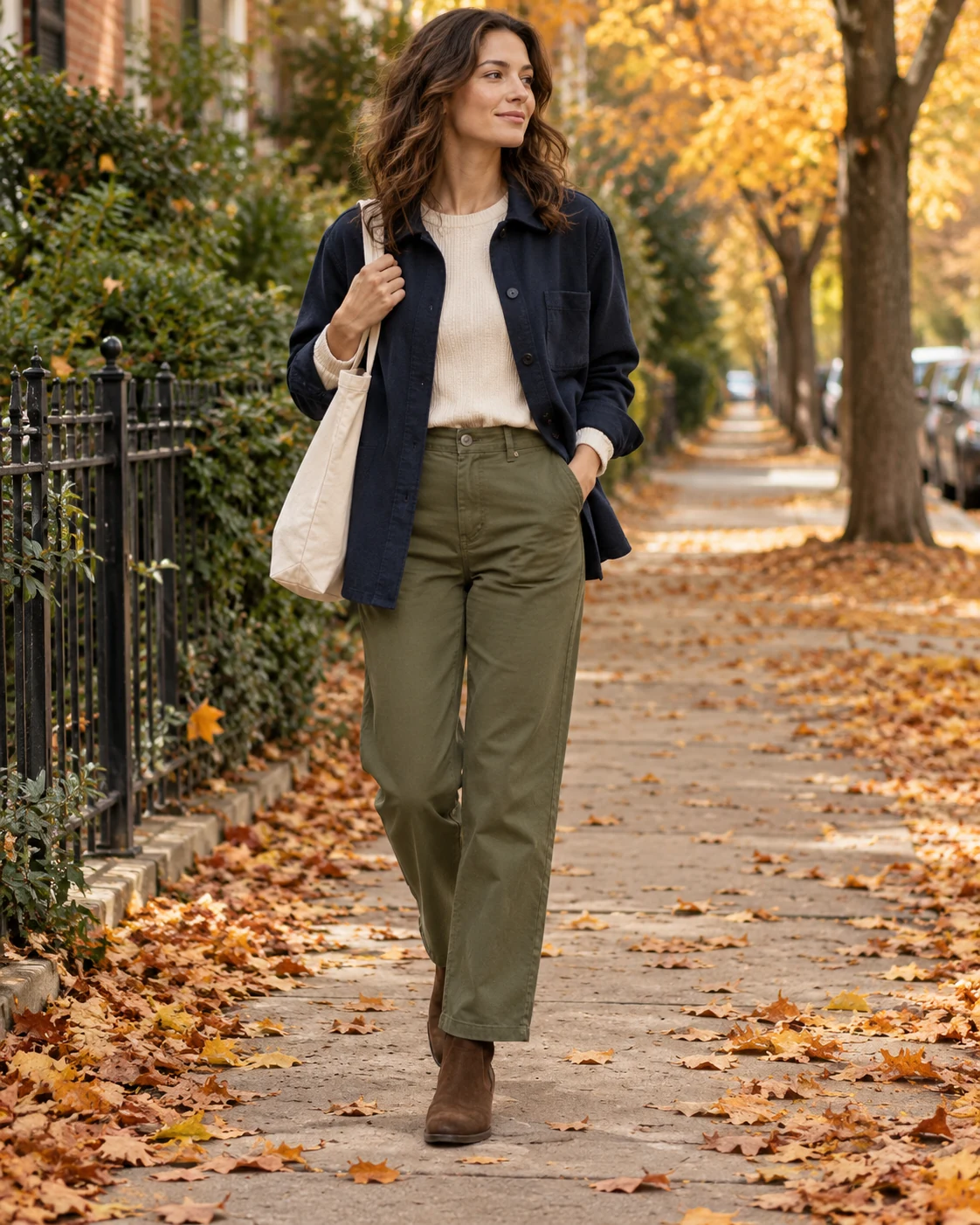
Olive trousers and a navy overshirt make a relaxed alternative to another jeans outfit. The cream top separates the darker colors without introducing a busy pattern. Brown boots repeat the warmer feeling of the clothes.
Choose trousers that allow bending, carrying bags and getting into a car. Weekend plans often involve more movement than an outfit photograph suggests. Sit down in the entire combination before deciding the proportions work.
The overshirt can replace a cardigan for a slightly more structured outline. Leave it open indoors, or close it when you want a different shape. Check that the fabric doesn’t bunch beneath your outer coat’s arms.
Texture supplies most of the interest here. A brushed shirt beside smoother trousers creates enough contrast without extra jewelry or complicated layering. Start with the clothes alone before reaching for another scarf or patterned bag.
If rain enters the forecast, reconsider the outer layer. A casual overshirt doesn’t become waterproof because you add another sweater. Our rainy day outfit guide shows how to separate rain protection from the clothes underneath.
5. Stay within charcoal and change the texture
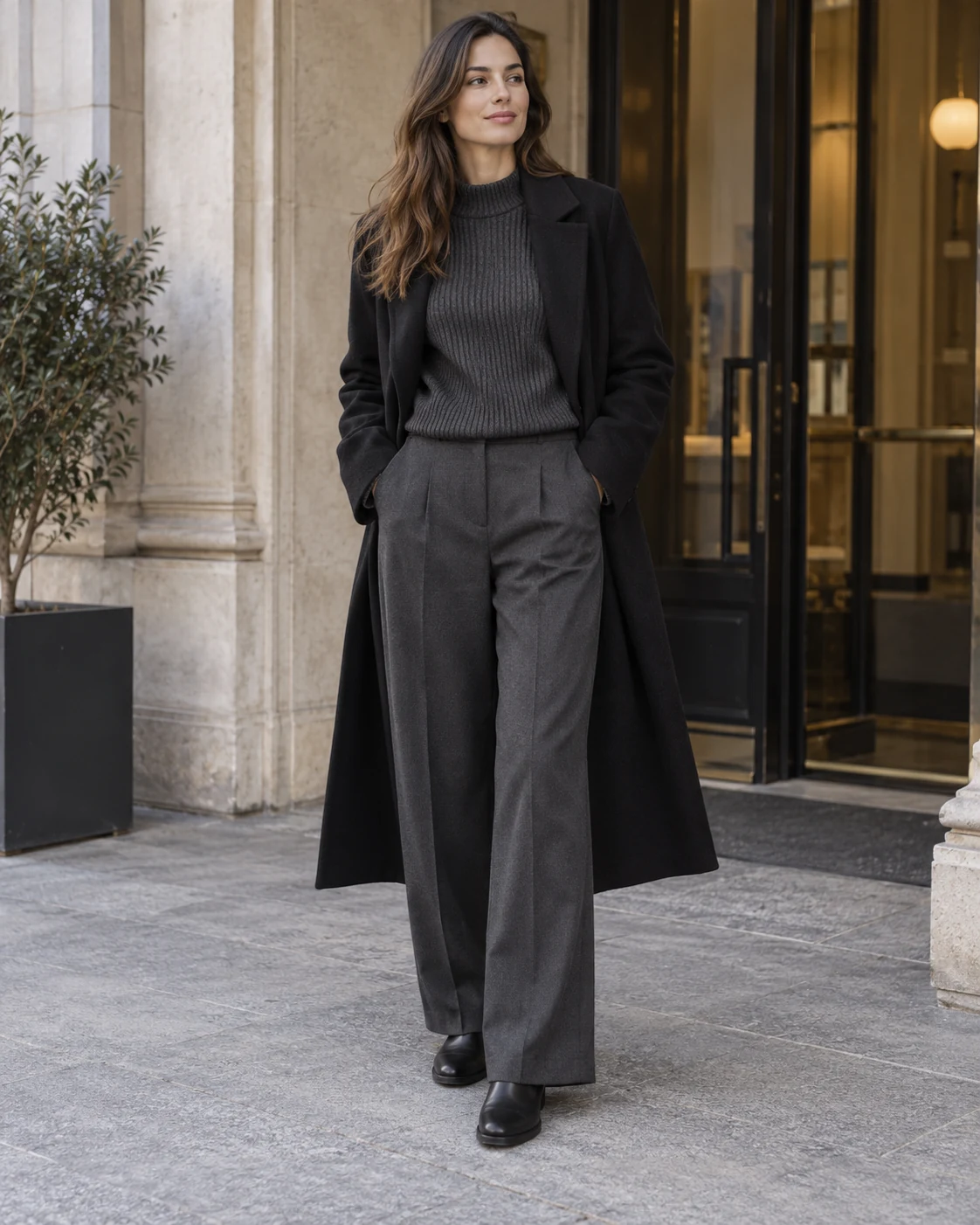
An outfit can feel intentional without several colors. Ribbed knitwear, smooth trousers and a softly structured coat distinguish the pieces in this charcoal combination. The surfaces provide variation while the overall color stays quiet.
Compare dark shades in daylight before wearing them together. One gray may contain a noticeable green or brown undertone beside another. If that relationship bothers you, separate the pieces with an obviously different base color.
The trouser width changes the whole outline. A wider straight leg can balance a substantial coat, while a narrower pair looks more compact. Try both shapes with your existing shoes rather than following a universal proportion rule.
Keep the knit’s thickness compatible with the coat sleeves. A textured sweater can appear modest on a hanger and feel bulky when layered. Reach forward and lift your arms before deciding the combination is finished.
This quieter base is useful when your bag already contains a strong pattern. Let that accessory provide the main contrast if you enjoy it. You don’t need another statement piece simply because most of the clothes are dark.
6. Let a burgundy sweater carry the color
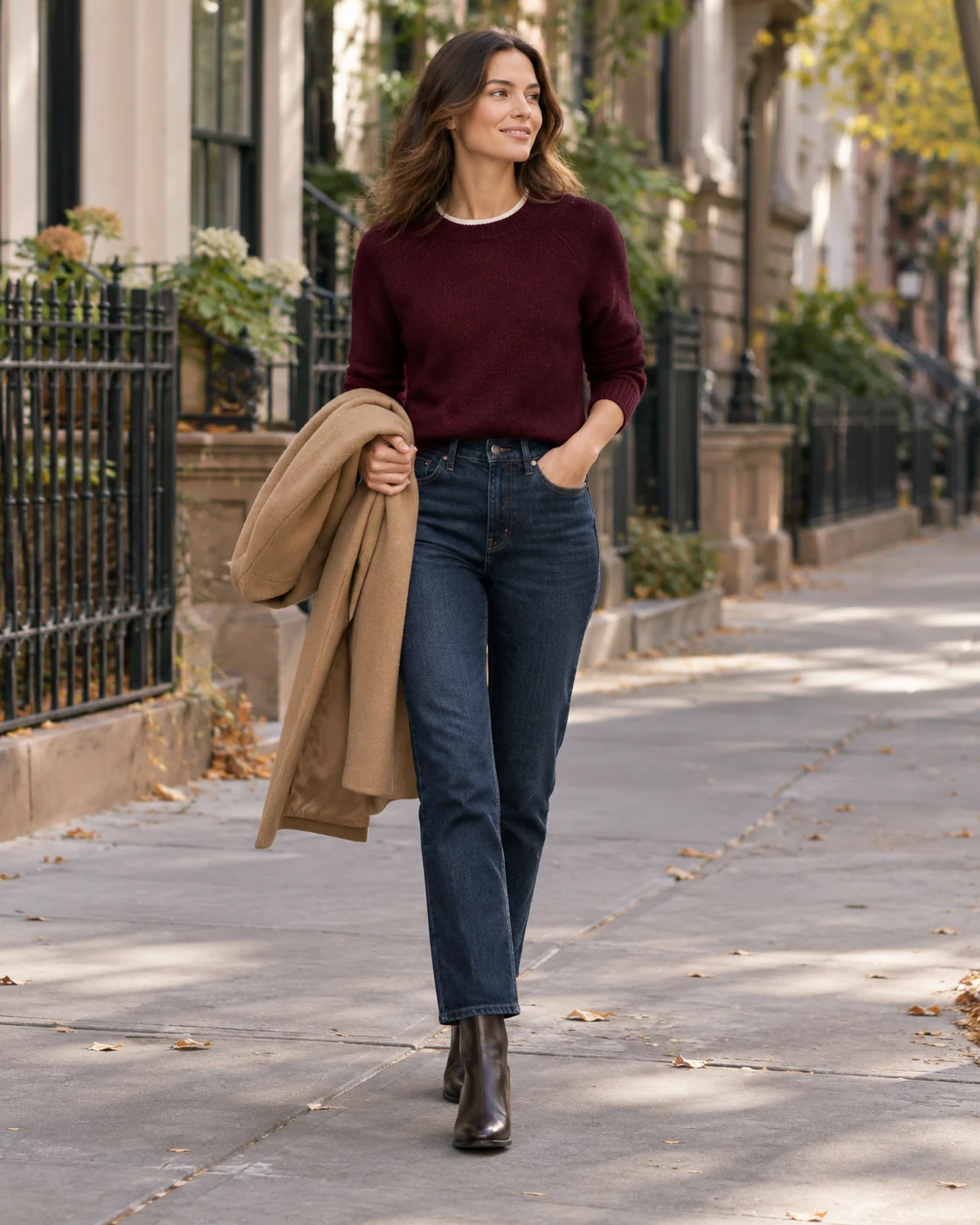
Burgundy gives familiar denim a warmer focal point without needing a patterned knit. The camel coat keeps that color connected to the brown boots. A small glimpse of cream at the neckline lightens the upper half.
Choose the sweater’s shape around how you like wearing your jeans. A shorter hem leaves more waistband visible, while a longer one creates a softer outline. You can compare those effects by trying a loose front tuck.
Avoid adding a thick undershirt solely to recreate the visible neckline. A comfortable fine base can supply the same small edge without extra bulk. Check whether the sweater feels pleasant against the layer you actually need.
The coat doesn’t have to match the boots exactly. Their shared warmth already gives the outfit a useful connection. Slightly different browns usually need less attention than an uncomfortable collar or waistband.
For a casual holiday gathering, this base may already feel festive enough. You could change the bag or add a small reflective detail instead of replacing everything. The Christmas party outfit guide compares several levels of that extra detail.
7. Pair a winter skirt with grounded boots
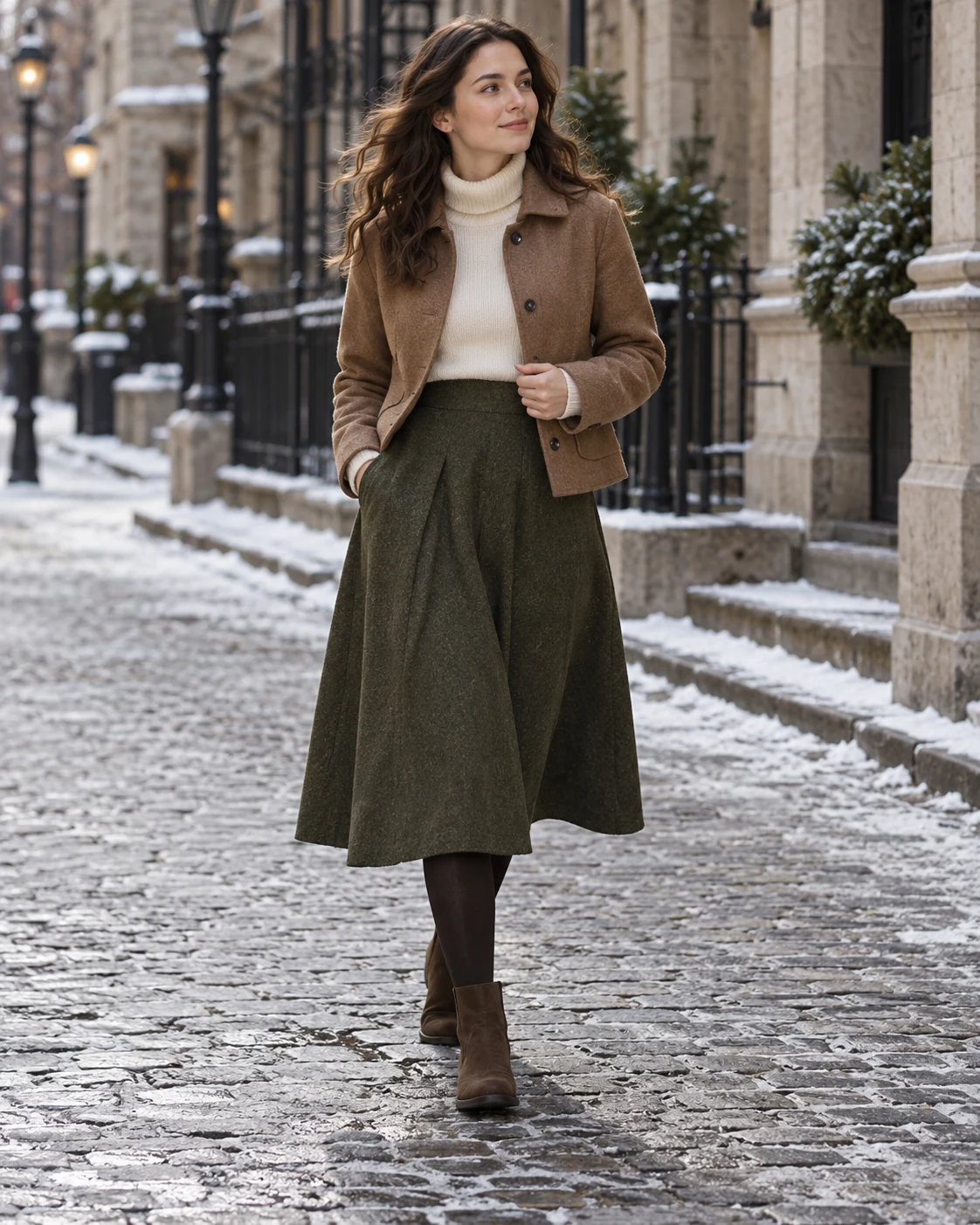
A dark olive skirt gives the wardrobe another shape without demanding a complicated palette. Cream knitwear and a tan jacket keep the upper half lighter. Opaque tights connect the skirt to darker footwear when that feels comfortable.
Check the skirt’s movement while walking and sitting. A narrower cut may look elegant standing still but restrict the stride you need. A fuller shape creates different movement and may require another coat length.
Choose the boots before settling the hem. A visible gap, a close meeting point and an overlapping skirt create distinct proportions. Compare them in a mirror rather than assuming one arrangement works for every height.
The shorter jacket makes the skirt’s length more obvious. If you prefer a longer coat, try that version without changing the entire outfit underneath. The same base can support different outer shapes when the layers remain comfortable.
Consider the practical destination as well as the weather. A skirt suitable for lunch may feel less useful during a long outdoor errand. Build around the actual plan instead of making the day fit the photograph.
8. Finish the indoor version on its own
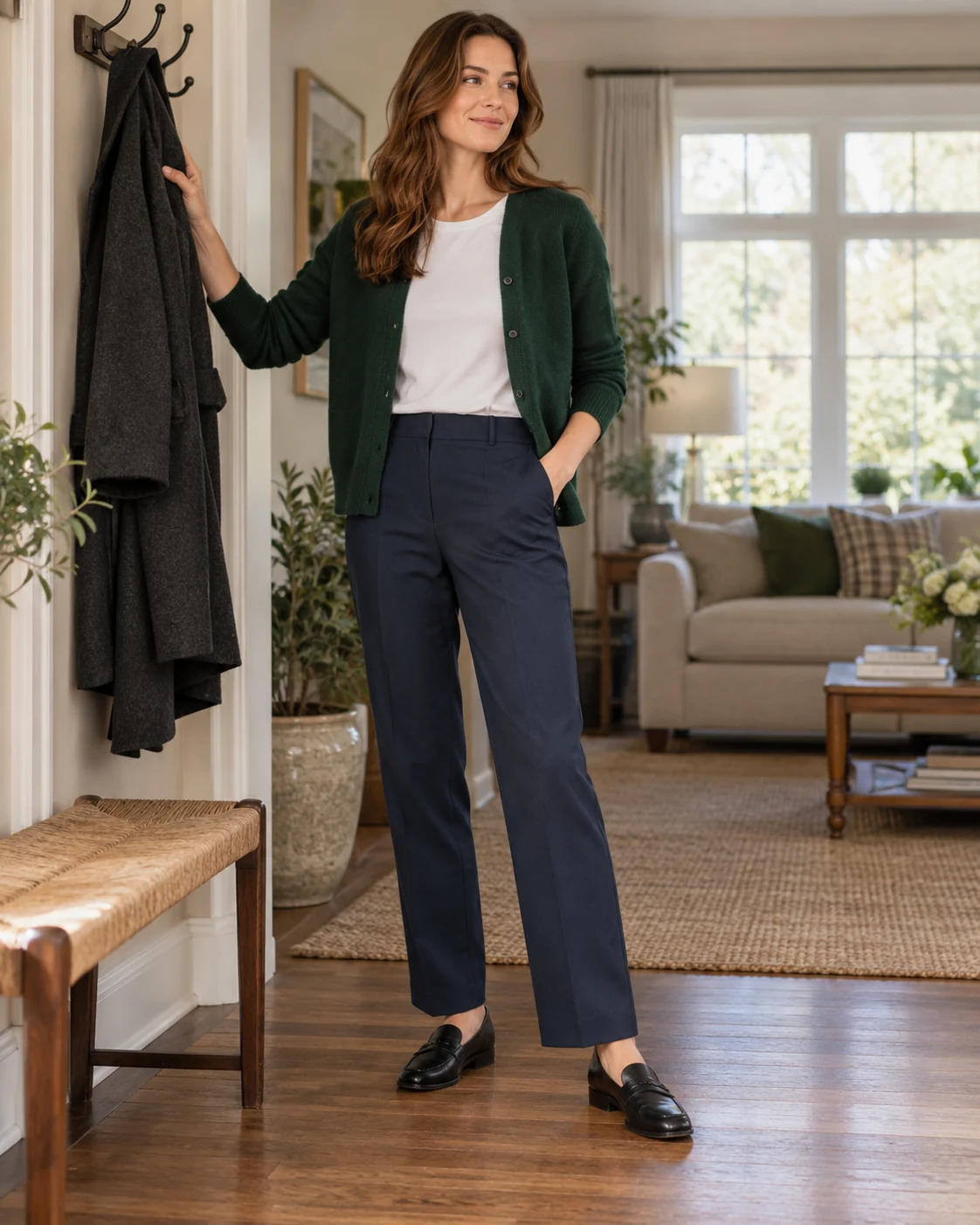
Navy trousers, a white top and a green cardigan create a complete outfit before outerwear appears. That makes the combination useful for offices, libraries and warm homes. The coat becomes a weather decision rather than the only interesting part.
Start with two bottoms and three indoor tops you already like. Add one removable layer that works across several combinations. Photograph the useful arrangements with shoes included, so the finished versions are easy to repeat.
Your laundry rhythm matters more than an arbitrary capsule number. Three tops won’t support a week when their care requirements make washing impractical. Keep a backup for pieces taking longer to dry than expected.
Notice the specific problems during an ordinary day. Record sleeves sliding, a pinching waistband or a hem catching your shoe. Those details identify a genuine wardrobe gap more clearly than deciding nothing you own works.
Buy for the problem that keeps repeating. Another sweater won’t fix wet hems, and another scarf won’t create room inside narrow sleeves. A useful winter outfit earns its place when getting dressed becomes easier to repeat.