Sheet Pan Chicken and Vegetables With a Clear Timing Plan
Explore the guide
- 1. Give the chicken and vegetables their own pans
- 2. Choose one chicken cut for the batch
- 3. Measure the vegetables before coating them
- 4. Finish the vegetable preparation before handling chicken
- 5. Give the potatoes a head start
- 6. Space the chicken on its separate tray
- 7. Add broccoli and pepper to the vegetable pan
- 8. Measure every chicken piece before calling it done
- 9. Let finished components leave the oven separately
- 10. Save leftovers in shallow portions
Sheet pan chicken and vegetables don’t have to finish at exactly the same moment. Potatoes can need longer than a small piece of chicken. Broccoli can brown before either one reaches the texture you want.
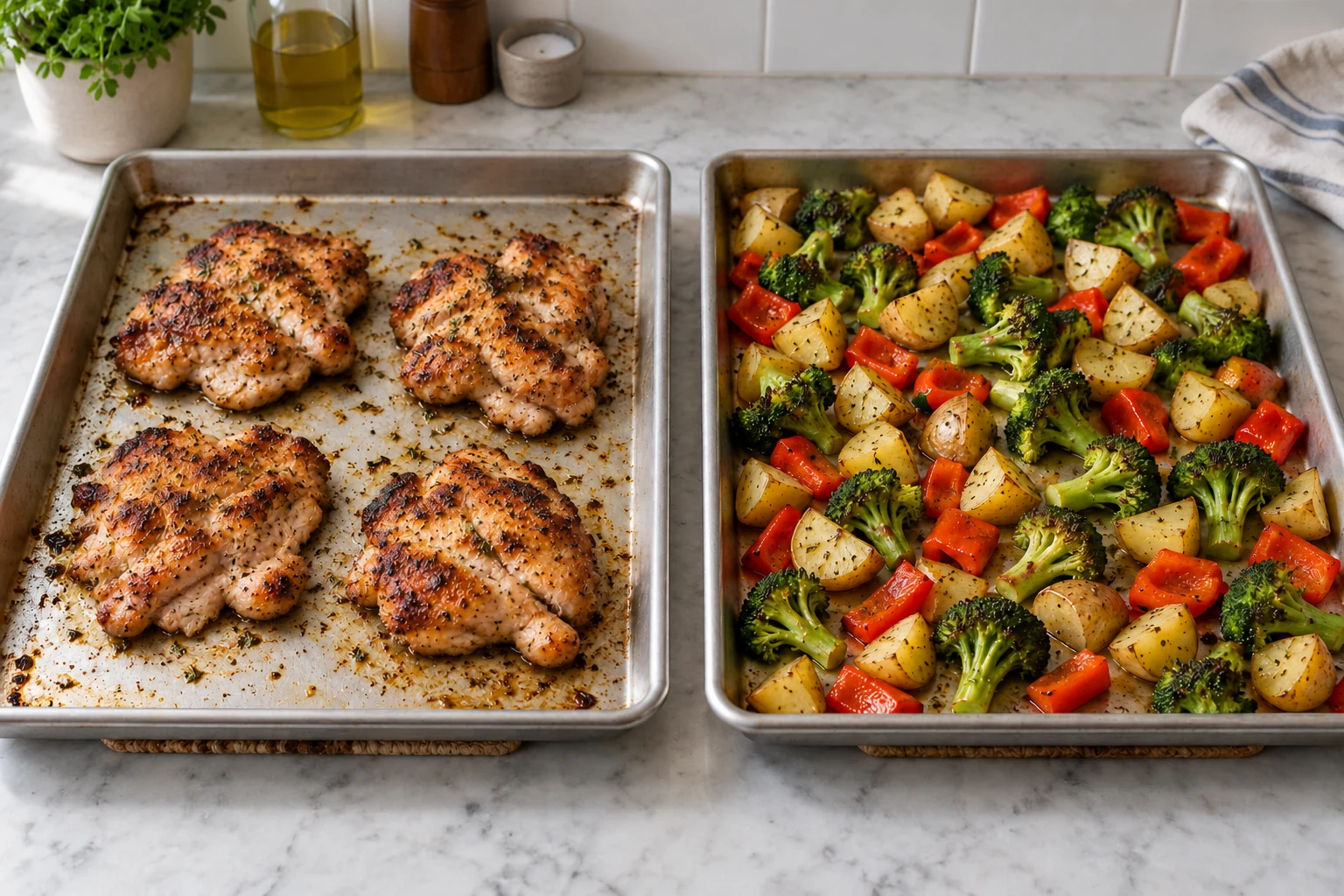
Use two pans to give those components separate space and independent finishing checks. The proposed method below uses boneless chicken thighs, potatoes, broccoli and bell pepper. It includes a potato head start instead of promising everything cooks together in thirty minutes.
This is a researched, explicitly untested guide with proposed quantities and checking points. MerriMuse hasn’t cooked this batch, measured its yield or confirmed a total cooking time. Every illustration is AI-generated, including preparation scenes and the food-thermometer example.
1. Give the chicken and vegetables their own pans
Keeping chicken on one rimmed pan makes its progress easier to assess separately. The other pan holds potatoes and the quicker vegetables. Their different cooking needs don’t require removing half-cooked chicken or accepting hard potato centers.
Comparable options, not the exact pictured items. Check the selected variant and current directions.
Fit and buying notes
- Nordic Ware Naturals half-sheet baking pans, two-pack: Two uncoated aluminum half sheets. Each measures approximately 17.9 by 12.9 by one inch outside. Check your oven, racks and required airflow before buying. Hand wash and dry; follow current temperature limits and avoid prolonged acidic contact.
Separate pans also keep raw poultry juices out of the vegetable tray. Continue using separate utensils for raw chicken and cooked food. Two surfaces alone don’t prevent cross-contamination if you move the same dirty tongs between them.
The selected Nordic Ware option contains two half-sheet pans, rather than smaller quarter sheets. Check their outside dimensions against your actual oven and racks before buying. Leave the air space your oven requires instead of tightly wedging pans beside each other.
2. Choose one chicken cut for the batch
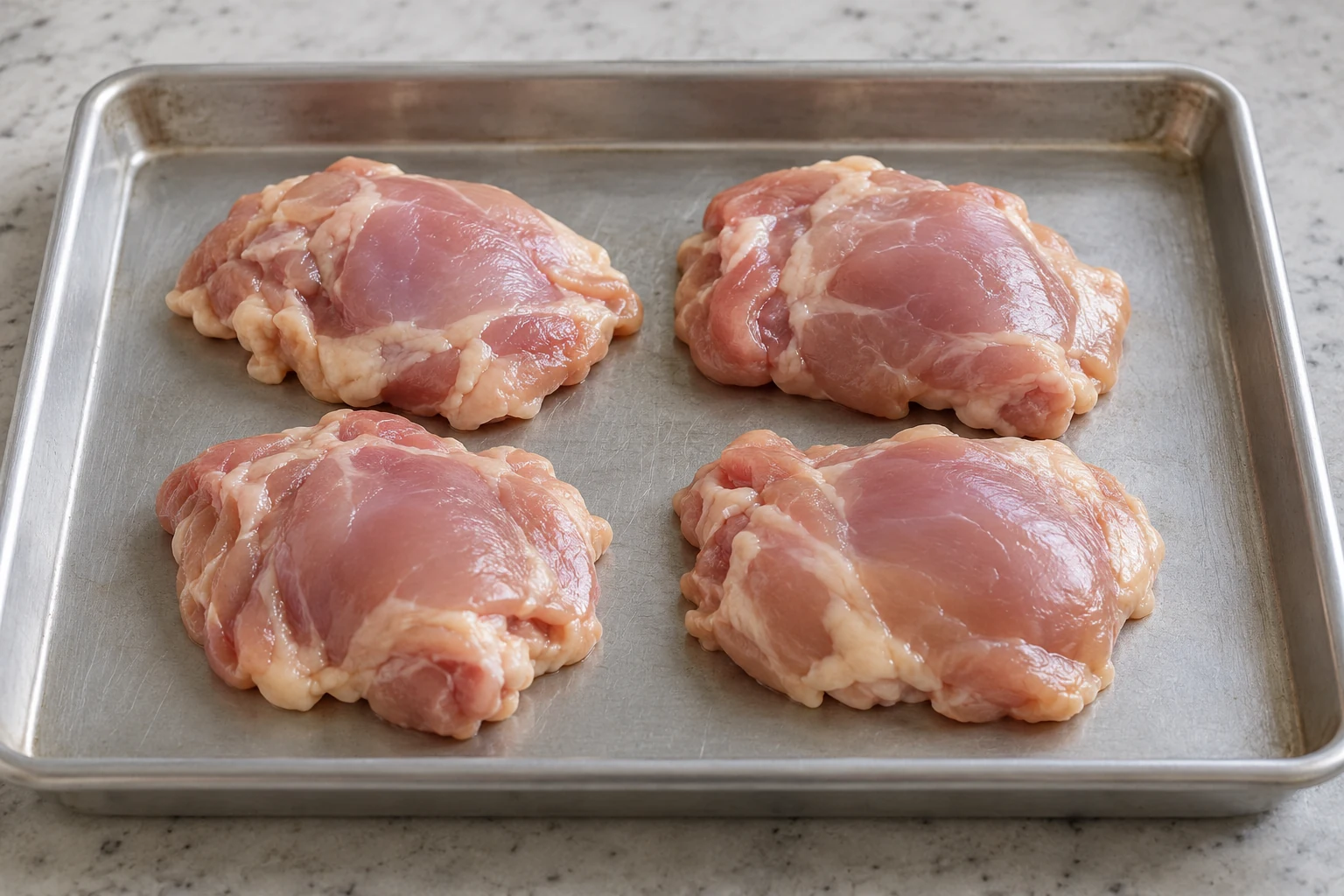
The starting proposal uses one pound of fully thawed boneless, skinless chicken thighs. Choose pieces with broadly comparable thickness when possible. Their total weight doesn’t tell you how quickly the thickest individual piece will cook.
Comparable options, not the exact pictured items. Check the selected variant and current directions.
Fit and buying notes
- Nordic Ware Naturals half-sheet baking pans, two-pack: Two uncoated aluminum half sheets. Each measures approximately 17.9 by 12.9 by one inch outside. Check your oven, racks and required airflow before buying. Hand wash and dry; follow current temperature limits and avoid prolonged acidic contact.
Don’t mix large bone-in pieces with small boneless ones and expect one finish time. A chicken breast substitution also changes the cooking problem. Use a suitable verified method when changing the cut substantially.
Thaw chicken safely in the refrigerator and keep it refrigerated until preparation. Don’t leave it on the counter to thaw or bring it to room temperature. This guide doesn’t cover roasting chicken directly from frozen.
3. Measure the vegetables before coating them
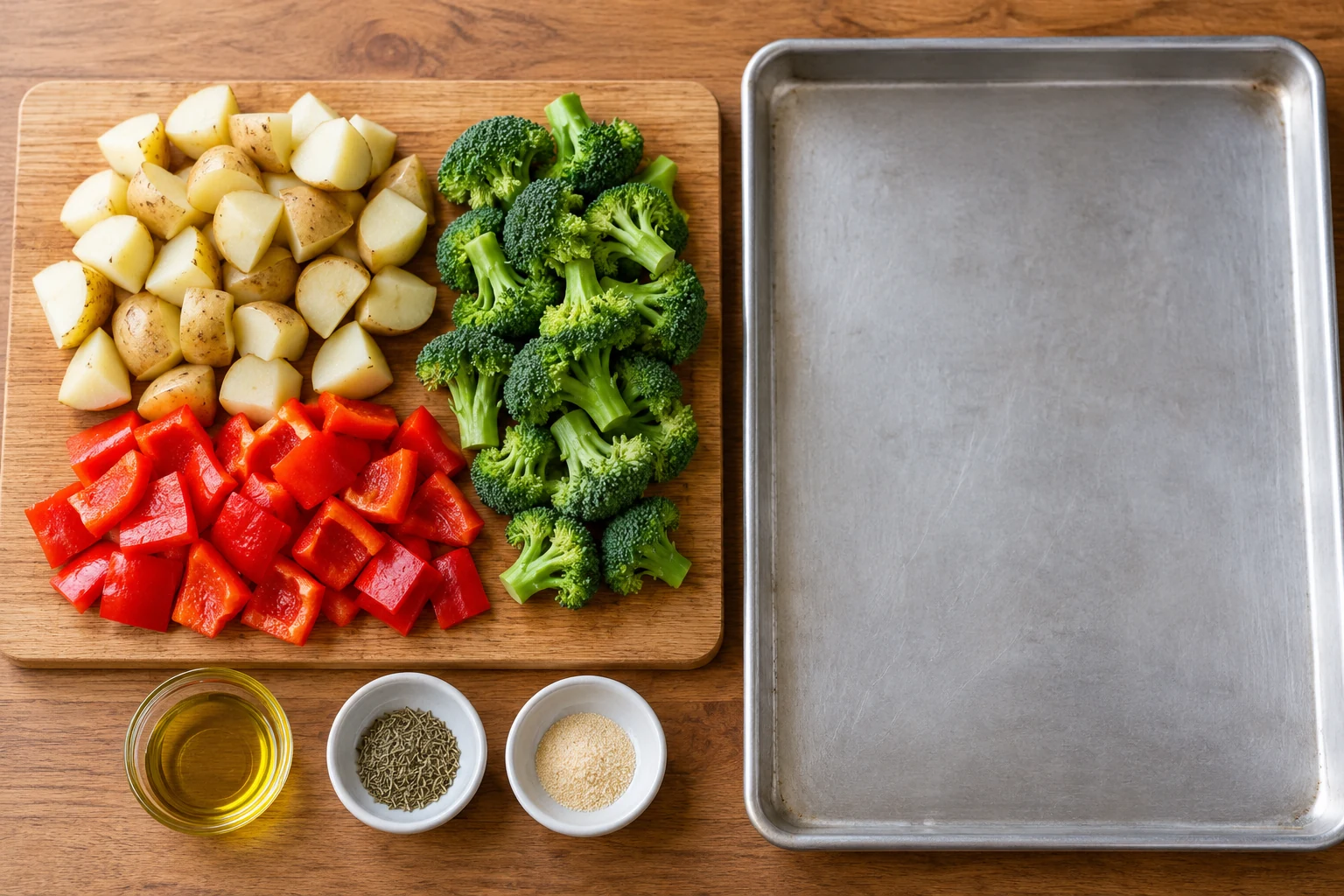
Use one pound of ordinary potatoes cut into roughly three-quarter-inch pieces. Add two cups of broccoli florets and one bell pepper cut into broad pieces. These starting quantities haven’t been cooked or checked for a measured serving count.
Comparable options, not the exact pictured items. Check the selected variant and current directions.
Fit and buying notes
- Nordic Ware Naturals half-sheet baking pans, two-pack: Two uncoated aluminum half sheets. Each measures approximately 17.9 by 12.9 by one inch outside. Check your oven, racks and required airflow before buying. Hand wash and dry; follow current temperature limits and avoid prolonged acidic contact.
Set aside two tablespoons of olive oil to divide among the chicken, potatoes and quicker vegetables. Add one teaspoon dried thyme and half a teaspoon garlic powder across the components. Salt and pepper can remain optional according to your preferences and dietary needs.
Keep the potato pieces reasonably similar instead of mixing tiny scraps with large wedges. Cut the broccoli into manageable florets, keeping their thicker stems in mind. Small differences matter more than making every piece look geometrically identical.
4. Finish the vegetable preparation before handling chicken
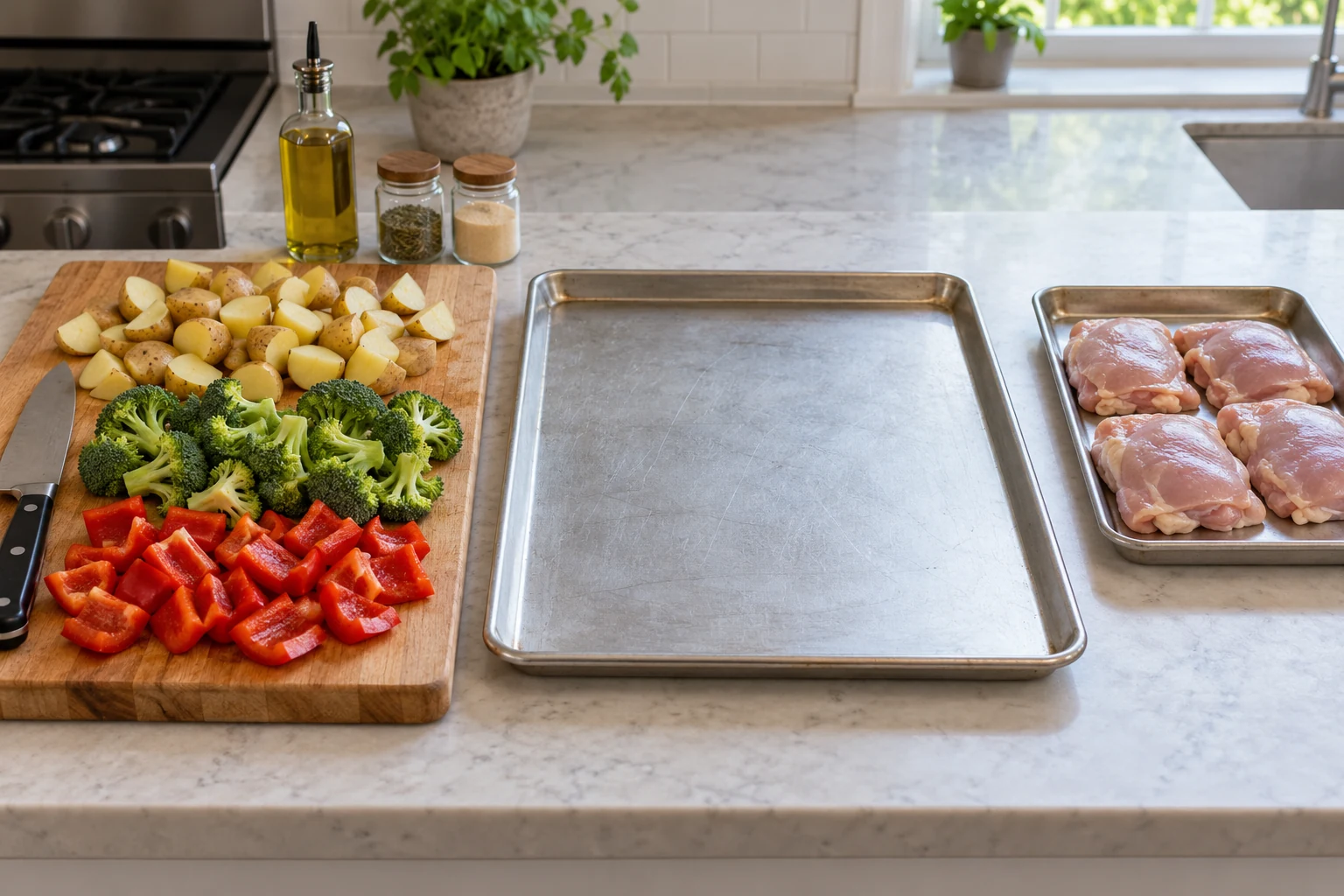
Rinse the vegetables under running water and prepare them on a clean board. Keep raw chicken and its juices away from the vegetables and anything ready to eat. Wash your hands, surfaces and utensils after handling raw poultry.
Comparable options, not the exact pictured items. Check the selected variant and current directions.
Fit and buying notes
- Nordic Ware Naturals half-sheet baking pans, two-pack: Two uncoated aluminum half sheets. Each measures approximately 17.9 by 12.9 by one inch outside. Check your oven, racks and required airflow before buying. Hand wash and dry; follow current temperature limits and avoid prolonged acidic contact.
Don’t rinse the chicken in the sink. Washing can spread raw poultry juices around the kitchen without making the chicken safe. Measured cooking temperature provides the necessary safety check.
Divide the oil and seasonings before anything touches raw chicken. Reserve the vegetables’ portion in a clean bowl. Don’t reach back into shared seasoning containers with hands that have just handled poultry.
Set out a clean serving plate and clean utensils for cooked chicken now. The dish holding raw thighs cannot become that serving plate without proper washing. Make the clean path easy before both pans become hot.
5. Give the potatoes a head start
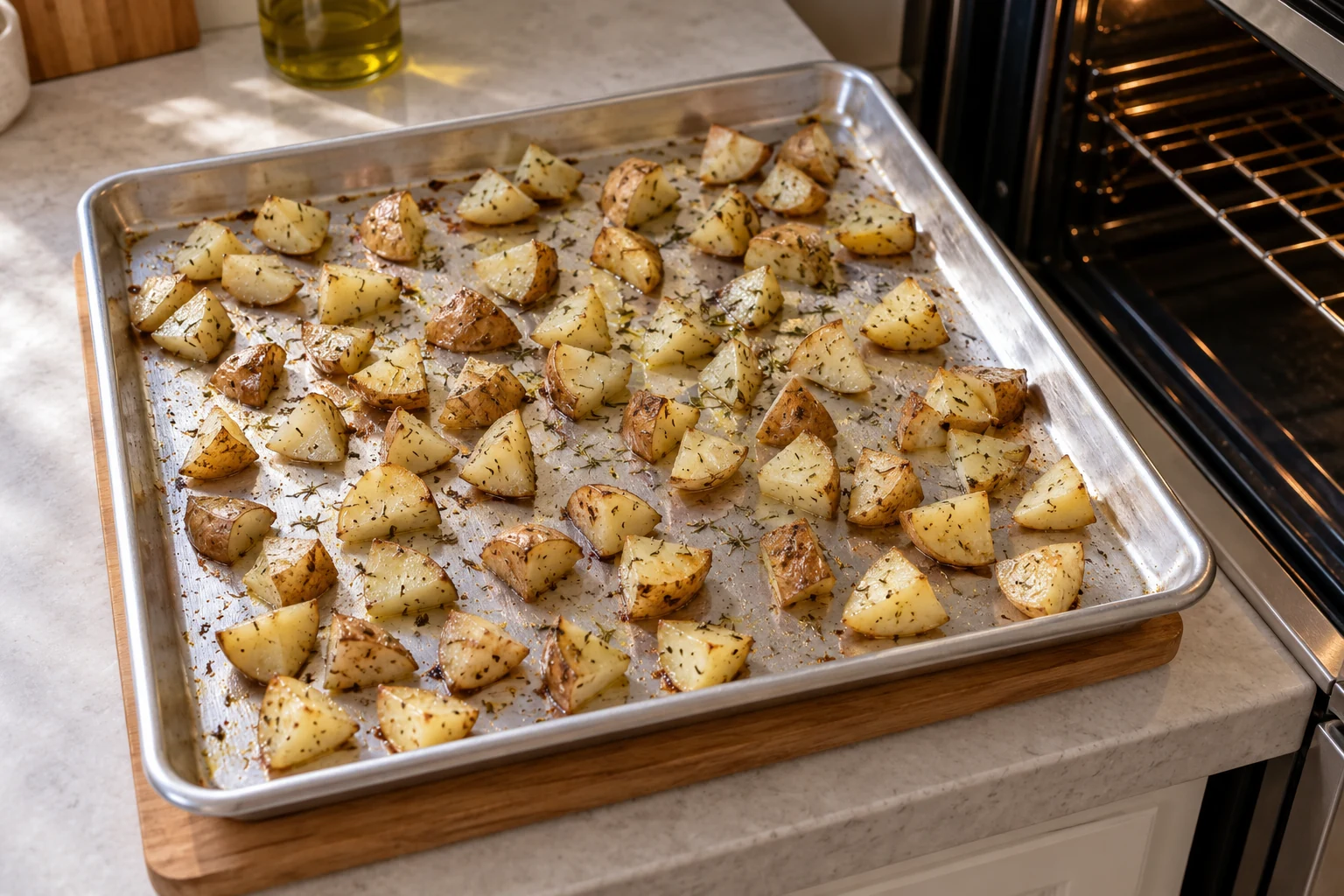
Preheat a conventional oven to 400 degrees Fahrenheit if your oven and pans allow that setting. Coat the potato pieces with their share of oil and seasoning. Spread them across the vegetable pan with space between pieces.
Comparable options, not the exact pictured items. Check the selected variant and current directions.
Fit and buying notes
- Nordic Ware Naturals half-sheet baking pans, two-pack: Two uncoated aluminum half sheets. Each measures approximately 17.9 by 12.9 by one inch outside. Check your oven, racks and required airflow before buying. Hand wash and dry; follow current temperature limits and avoid prolonged acidic contact.
Begin by roasting the potatoes alone, checking their progress around fifteen to twenty minutes. That is a first observation point, rather than a verified head-start duration for every oven. Look for an initial change in tenderness before adding quicker vegetables.
Leave room for the broccoli and pepper you’ll add later. If the combined vegetables would crowd the surface, reduce the batch or use suitable extra space. A deep pile won’t behave like the single layer shown in the illustration.
6. Space the chicken on its separate tray
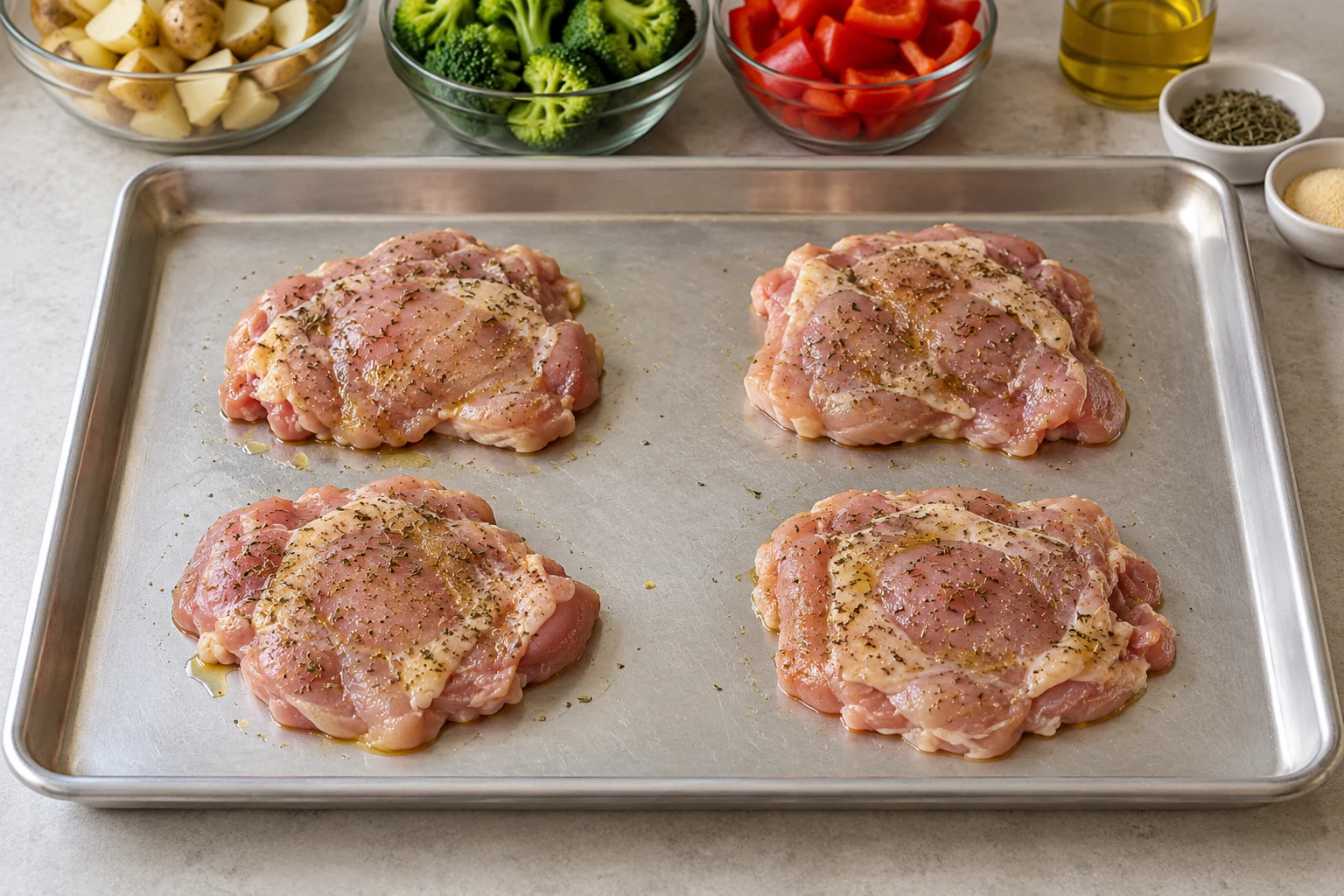
Lightly coat the thighs with their allocated oil and seasoning using utensils reserved for raw chicken. Place them apart on the second rimmed pan. Keep them from hanging over the edge or overlapping one another.
Comparable options, not the exact pictured items. Check the selected variant and current directions.
Fit and buying notes
- Nordic Ware Naturals half-sheet baking pans, two-pack: Two uncoated aluminum half sheets. Each measures approximately 17.9 by 12.9 by one inch outside. Check your oven, racks and required airflow before buying. Hand wash and dry; follow current temperature limits and avoid prolonged acidic contact.
Place the chicken tray so poultry juices cannot drip onto the vegetables or other food. Follow your oven’s directions for rack placement and circulation. Don’t assume an illustration establishes safe rack spacing in your appliance.
Start the chicken after assessing the potatoes’ head start, and note when it enters the oven. Stay available to check progress rather than treating the first timer as a completion alarm. Thickness, oven behavior and actual loading can all change the timing.
7. Add broccoli and pepper to the vegetable pan
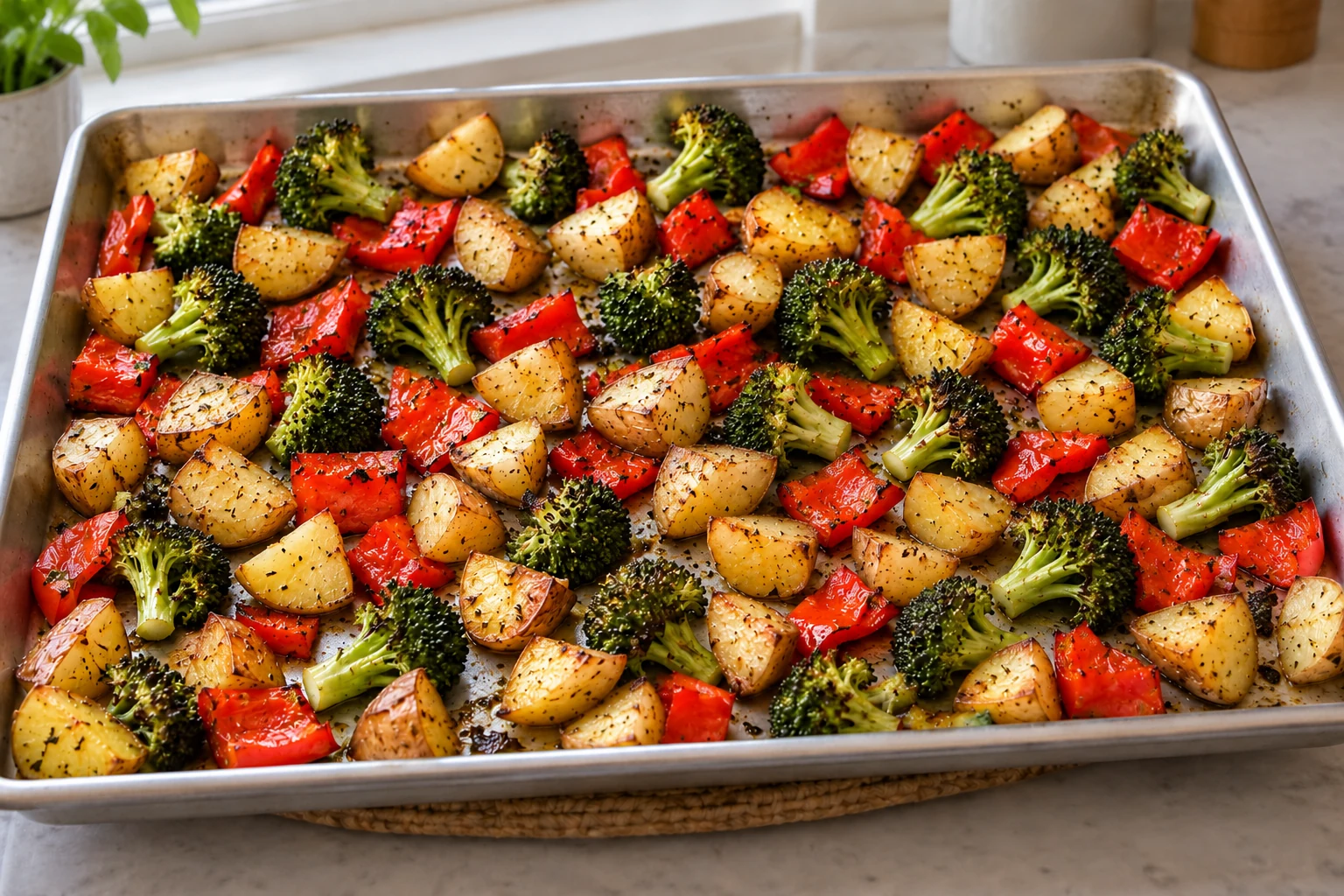
Coat the broccoli and pepper with their reserved oil and seasonings in a clean bowl. Add them to the potatoes when those have begun softening. Handle the hot tray with your usual dry heat protection.
Comparable options, not the exact pictured items. Check the selected variant and current directions.
Fit and buying notes
- Nordic Ware Naturals half-sheet baking pans, two-pack: Two uncoated aluminum half sheets. Each measures approximately 17.9 by 12.9 by one inch outside. Check your oven, racks and required airflow before buying. Hand wash and dry; follow current temperature limits and avoid prolonged acidic contact.
Spread the vegetables back into one layer, then return their tray to the oven. Check both browning and tenderness as roasting continues. A dark floret tip doesn’t prove a thick potato center has softened.
If a vegetable finishes early, move it to a clean suitable dish with a clean utensil. Keep the unfinished vegetables cooking as needed. Don’t use raw-chicken tongs or move vegetables onto the poultry tray to simplify cleanup.
8. Measure every chicken piece before calling it done
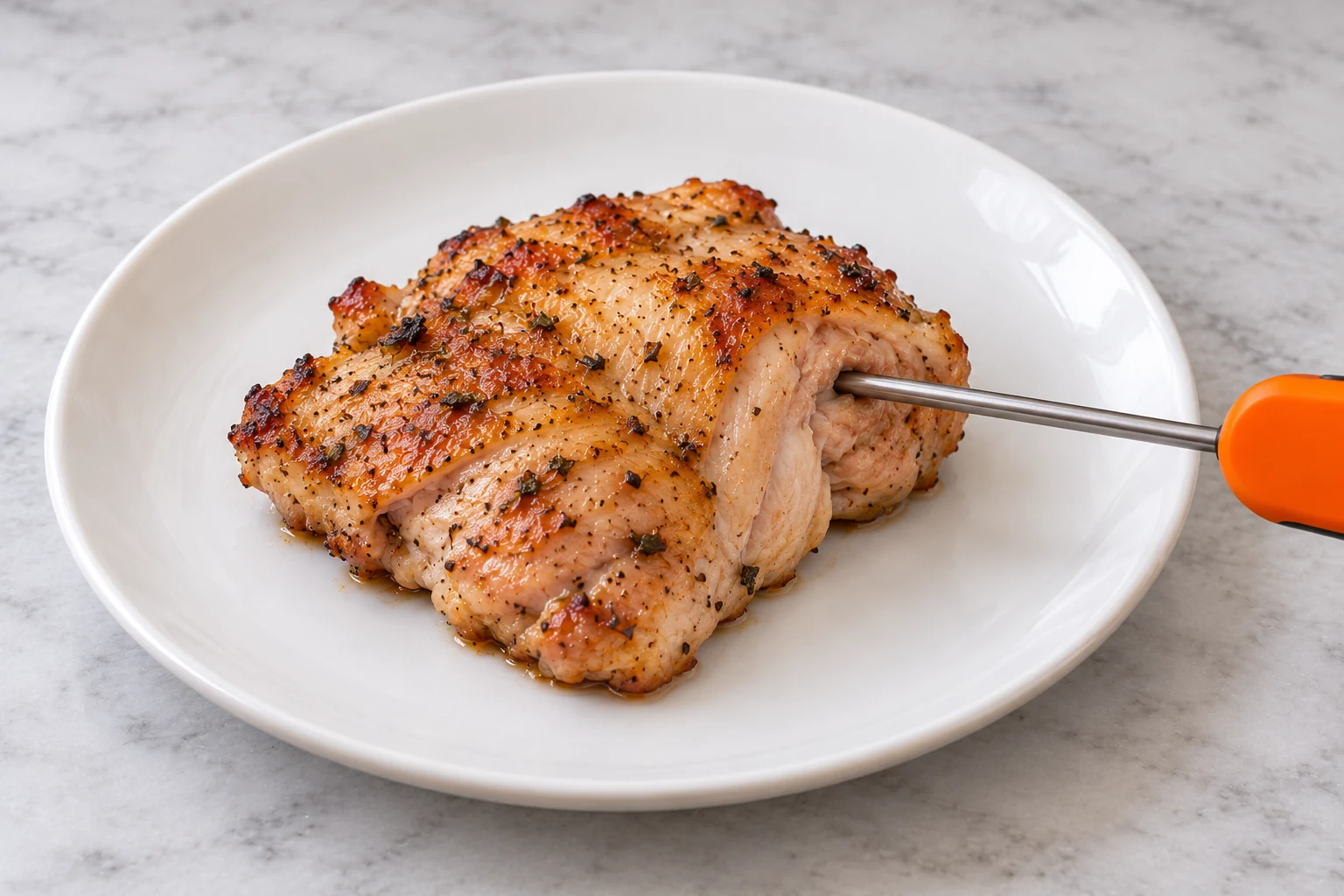
Begin checking the chicken around twenty minutes after it enters the oven. This is an early checking point, not a claim that these thighs finish in twenty minutes. Continue cooking any piece that hasn’t reached the required temperature.
Comparable options, not the exact pictured items. Check the selected variant and current directions.
Fit and buying notes
- TempPro TempSwift TP19H folding food thermometer, Bright-orange: Instant-read folding probe for a brief food-temperature check, not a leave-in cooking probe. Confirm the current manual for use, cleaning and calibration. Merchant overview Oven Safe is not adopted. No independent accuracy or speed testing claimed.
USDA recommends 165 degrees Fahrenheit for poultry, measured with a food thermometer. Check the thickest part of each piece, following the thermometer’s placement instructions. Avoid resting the probe against the pan, which measures the wrong location.
Browned edges, clear juices and the absence of pink aren’t substitutes for that reading. The illustrated probe doesn’t display a verified temperature from a real cook. Take an actual measurement with your own properly used thermometer.
Clean the probe according to its instructions, including between checks after contact with undercooked chicken. An instant-read model is removed after checking, rather than left roasting in the oven. Check its current manual for cleaning and calibration directions.
9. Let finished components leave the oven separately
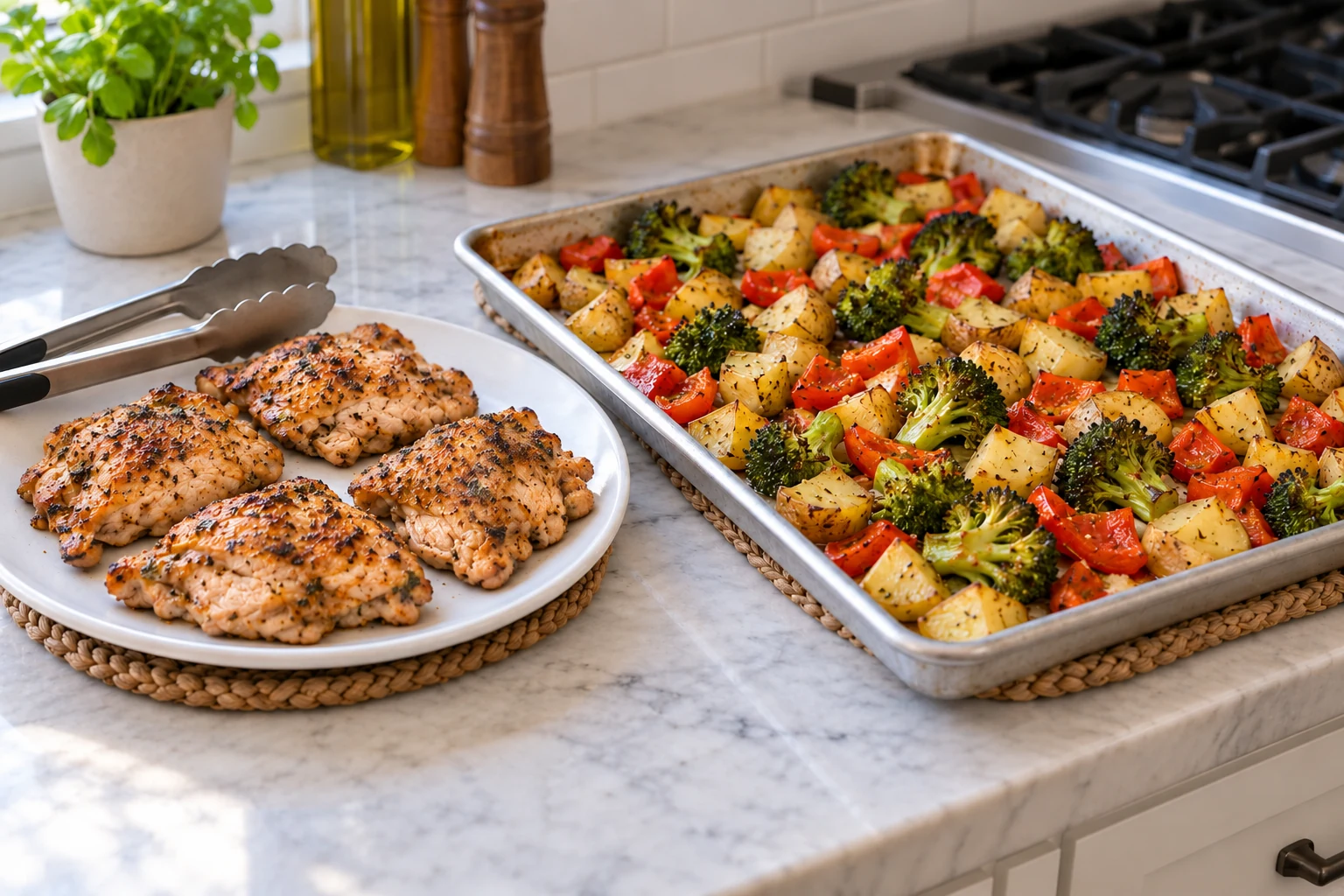
Transfer chicken that has reached 165 degrees Fahrenheit to the clean serving plate. Keep any unfinished pieces cooking until they also reach that temperature. Don’t remove partially cooked chicken for a long pause before finishing it later.
Comparable options, not the exact pictured items. Check the selected variant and current directions.
Fit and buying notes
- Nordic Ware Naturals half-sheet baking pans, two-pack: Two uncoated aluminum half sheets. Each measures approximately 17.9 by 12.9 by one inch outside. Check your oven, racks and required airflow before buying. Hand wash and dry; follow current temperature limits and avoid prolonged acidic contact.
Check potatoes with a clean fork and assess the broccoli and pepper separately. Continue roasting unfinished vegetables as needed. North Carolina State’s sheet-pan guidance also separates chicken temperature from vegetables’ remaining cooking time.
Serve the components together once they’re ready, using clean utensils. If serving is delayed, use a verified hot-holding method instead of leaving food out indefinitely. The two-pan plan offers flexibility, without guaranteeing perfectly synchronized finishes.
For other small-household combinations, see our easy dinner ideas for two. Choose a different plan when your available oven space can’t accommodate this one. Forcing two pans into a small appliance isn’t a useful shortcut.
10. Save leftovers in shallow portions
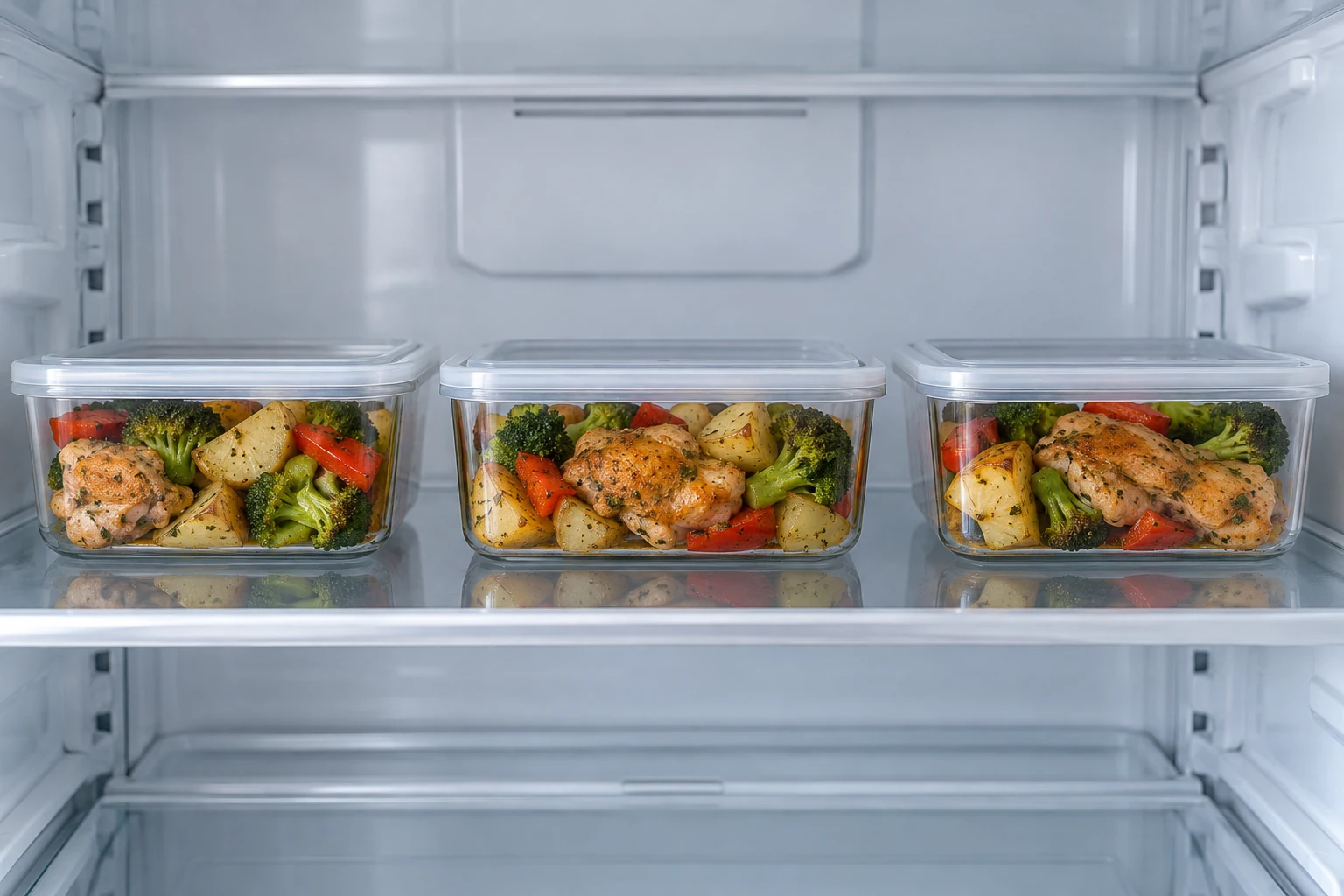
Move leftovers into small, shallow food-safe containers and refrigerate promptly. Don’t wait for a loaded tray to cool completely on the counter. Refrigerate within two hours, or one hour when temperatures exceed 90 degrees Fahrenheit.
Use suitable pieces you already own for this idea.
Maintain a refrigerator temperature of 40 degrees Fahrenheit or below. Use refrigerated leftovers within three to four days, or freeze suitable portions sooner. Follow your existing containers’ temperature and freezer directions.
Reheat leftovers to 165 degrees Fahrenheit, checking the food with a clean thermometer. If reheating in an oven, USDA recommends an oven setting of at least 325 degrees Fahrenheit. Chicken and potatoes can still heat unevenly, so check more than one location.
Write down your actual cut, quantities and timing if you develop the proposal further. Those notes describe your own batch rather than proving every future batch behaves identically. Keep the temperature check even after the timing starts to feel familiar.
Visuals are original AI-generated editorial concepts, not photographs of actual products, tested projects, cooked results or real events.