How to Start a Journal You’ll Actually Open Again
Explore the guide
- 1. Choose something comfortable to write in
- 2. Give this journal one current job
- 3. Decide where private writing belongs
- 4. Make the first entry about something small
- 5. Pick paragraphs or short notes for today
- 6. Attach the attempt to a realistic moment
- 7. Give yourself a small stopping boundary
- 8. Keep entries findable without building a filing project
- 9. Choose whether rereading serves your purpose
- 10. Restart on the next usable page
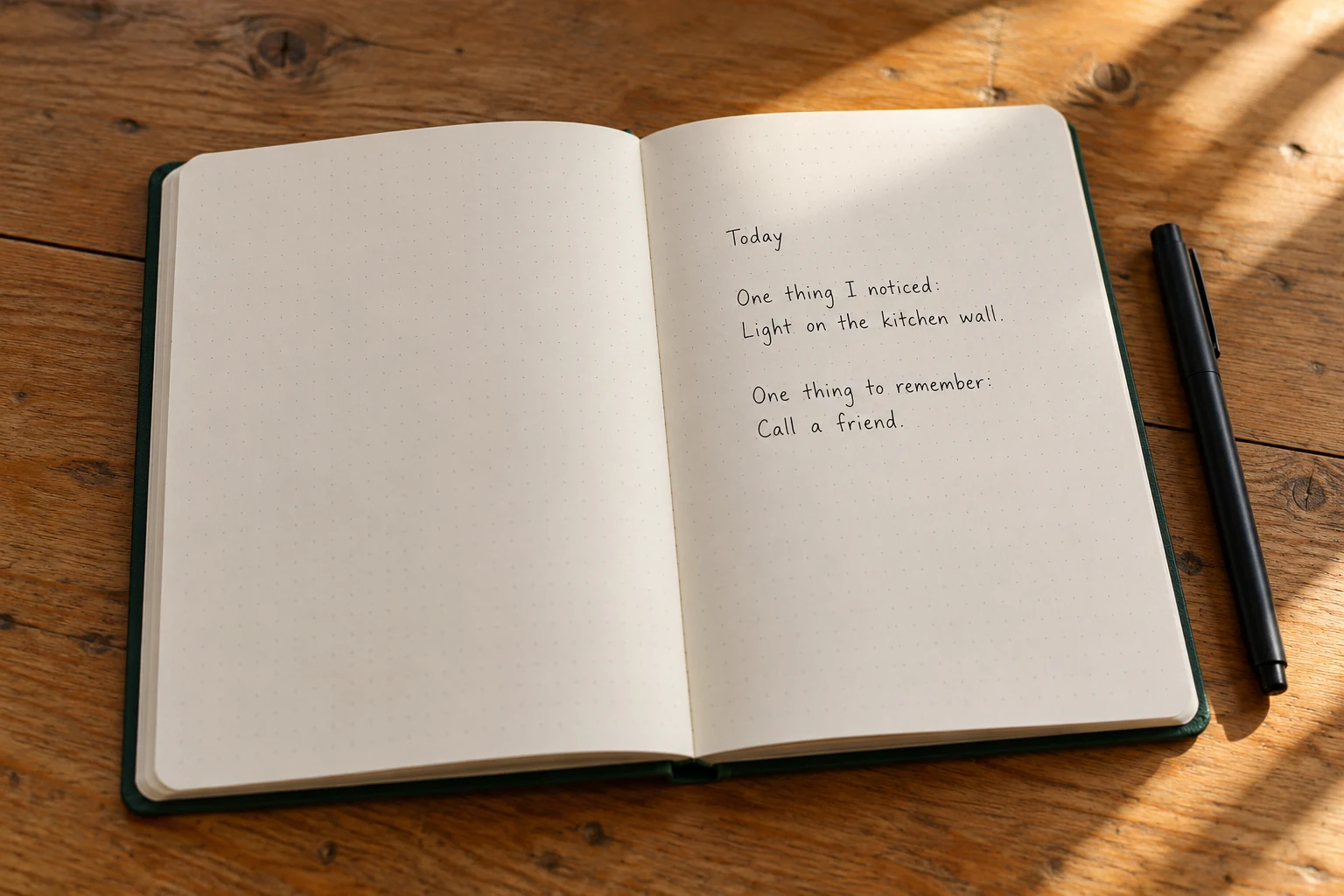
Start with today’s date and one thing you want to remember. Add what you noticed about it, then stop whenever the entry feels complete. You don’t need an impressive opening statement or a notebook reserved for your most interesting days.
A journal can hold ordinary observations, unfinished thoughts or plans you want to examine. Decide which job would be useful right now. That gives the first page a direction without committing every future page to the same format.
The ten choices below help you set up a journal you can return to. Try a few entries before buying more supplies or designing elaborate spreads. The filled examples are suggestions, not rules about what your own life should look like.
1. Choose something comfortable to write in
An unused section of an existing notebook is enough for a first attempt. Choose paper you can read comfortably and a writing tool you already enjoy using. If typing suits you better, start a dated entry in a notes file you already use.
Comparable options, not the exact pictured items. Check the selected variant and current directions.
Fit and buying notes
- LEUCHTTURM1917 A5 dotted notebook: A5 dotted notebook. The illustrated layouts are custom concepts, not preprinted spreads; test pens on the actual paper.
- Sakura Pigma Micron 05 pens: Black Micron 05 pen, approximately 0.45 mm. Test the actual paper first; not a universal no-bleed guarantee.
Check the practical fit before comparing decorative covers. Can the notebook sit comfortably where you’ll write, and can you carry it if needed? Ruled pages guide handwriting, while dots or blank paper leave more room for mixed layouts.
If you need supplies, the selected LEUCHTTURM1917 A5 notebook has undated dotted pages. Its sample layouts here aren’t preprinted inside the book. The optional black Micron 05 pens make a fine line; test your actual paper first.
2. Give this journal one current job
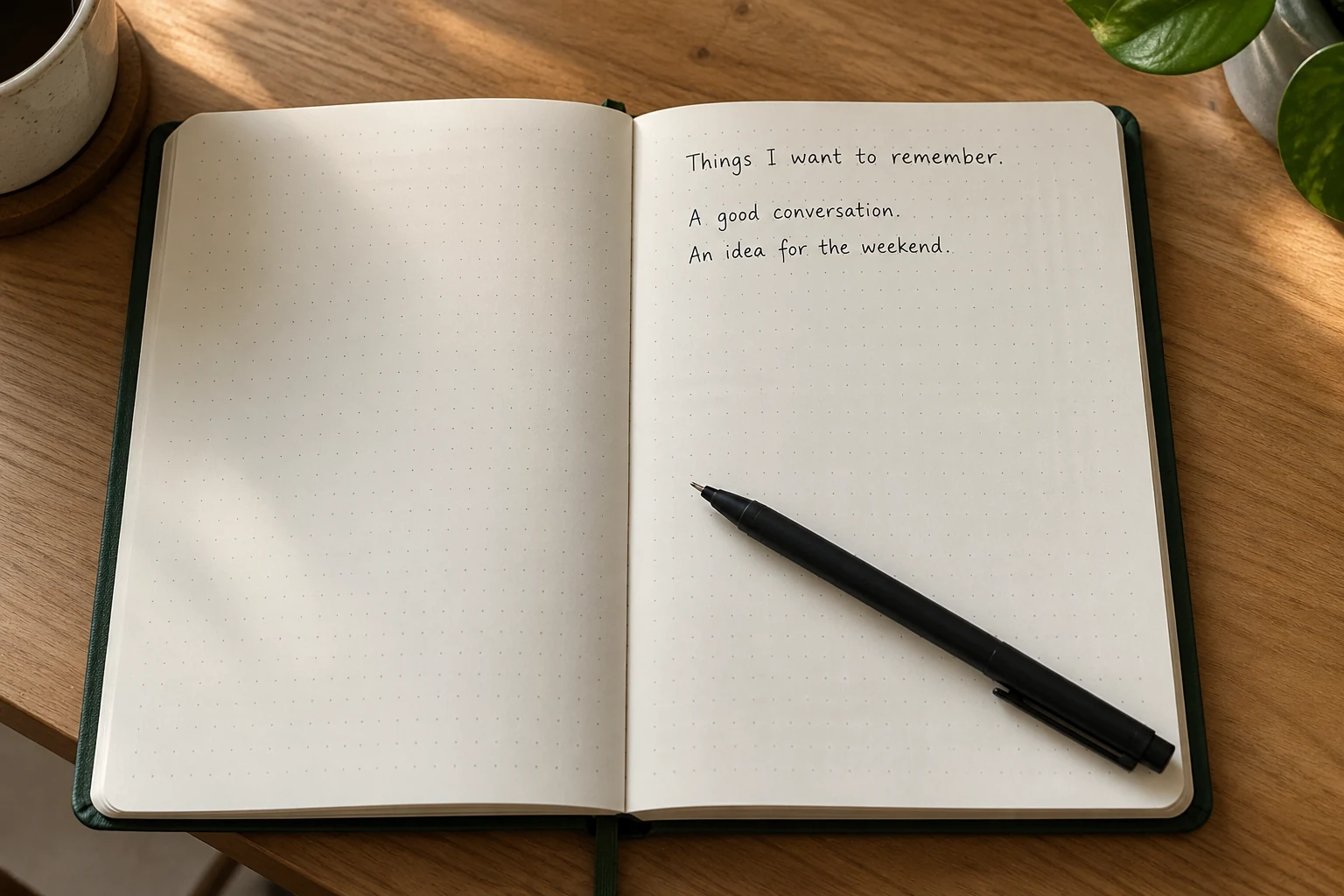
Try a purpose you can recognize in an ordinary week. You might want to remember small moments, untangle a decision or record creative ideas. Choose something specific to write tonight, rather than making a grand promise about personal change.
Comparable options, not the exact pictured items. Check the selected variant and current directions.
Fit and buying notes
- LEUCHTTURM1917 A5 dotted notebook: A5 dotted notebook. The illustrated layouts are custom concepts, not preprinted spreads; test pens on the actual paper.
- Sakura Pigma Micron 05 pens: Black Micron 05 pen, approximately 0.45 mm. Test the actual paper first; not a universal no-bleed guarantee.
Write that purpose in plain language at the top of a page. For example, try recording details you’d otherwise forget by the weekend. You can change the purpose later without replacing the notebook or explaining the change to anyone.
Avoid creating several separate journals before you know what you use. One book can hold different kinds of entries with simple dates or headings. If a starting question helps, our beginner journal prompts offer specific options without prescribing a format.
3. Decide where private writing belongs
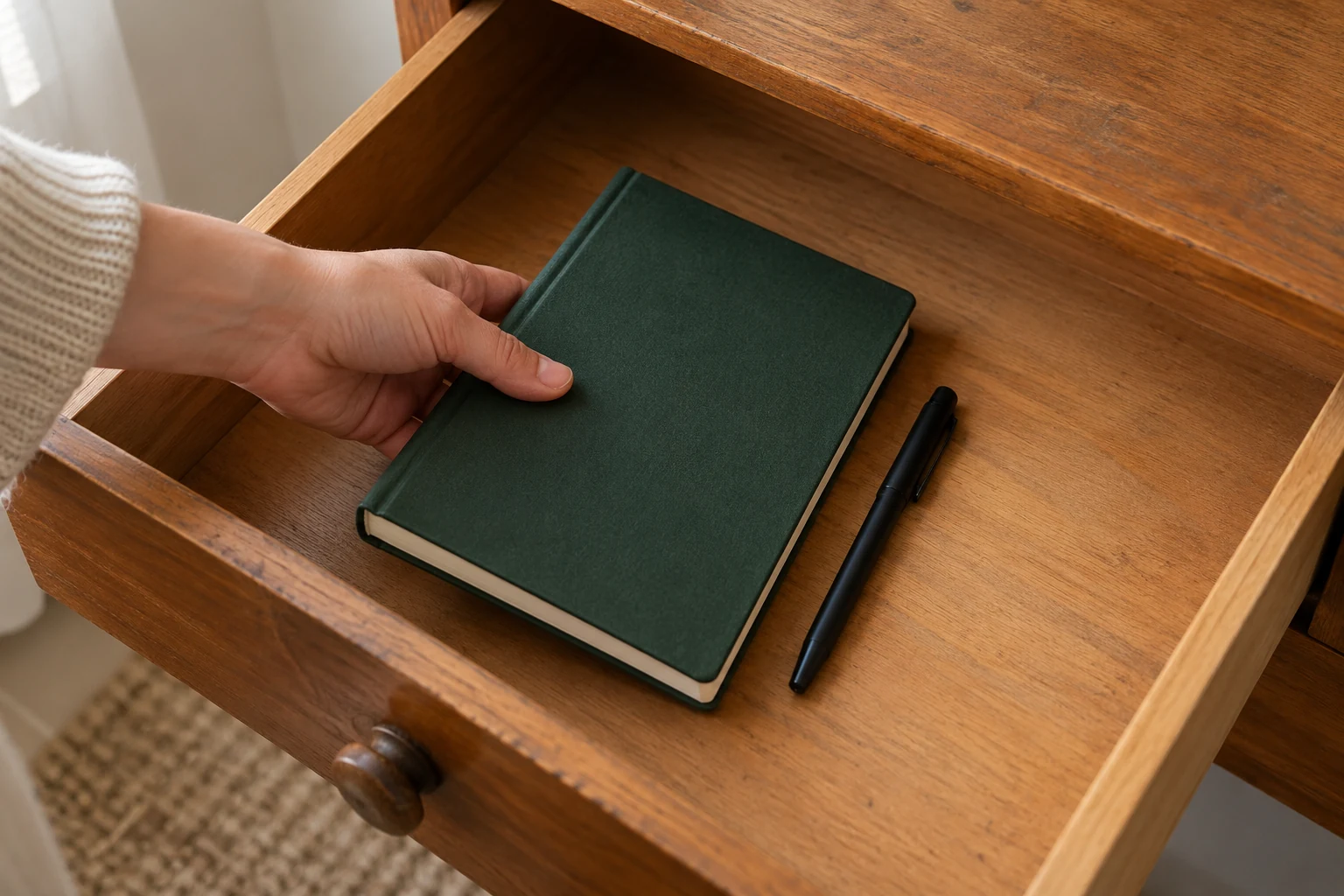
Think about where the journal will live before including details you consider sensitive. An open notebook on a shared desk may be convenient but easily visible. Choose storage and a writing place that fit the people and spaces around you.
Comparable options, not the exact pictured items. Check the selected variant and current directions.
Fit and buying notes
- LEUCHTTURM1917 A5 dotted notebook: A5 dotted notebook. The illustrated layouts are custom concepts, not preprinted spreads; test pens on the actual paper.
- Sakura Pigma Micron 05 pens: Black Micron 05 pen, approximately 0.45 mm. Test the actual paper first; not a universal no-bleed guarantee.
A skipped first page or a vague title doesn’t secure the pages behind it. Similarly, choosing digital writing doesn’t automatically establish privacy. Check the device, account and sharing arrangements you actually use before deciding what belongs there.
You can also leave identifying details out of an entry. Describe a conversation’s effect on your decision without recording someone else’s full personal history. There’s no requirement to write every detail simply because the notebook is yours.
4. Make the first entry about something small
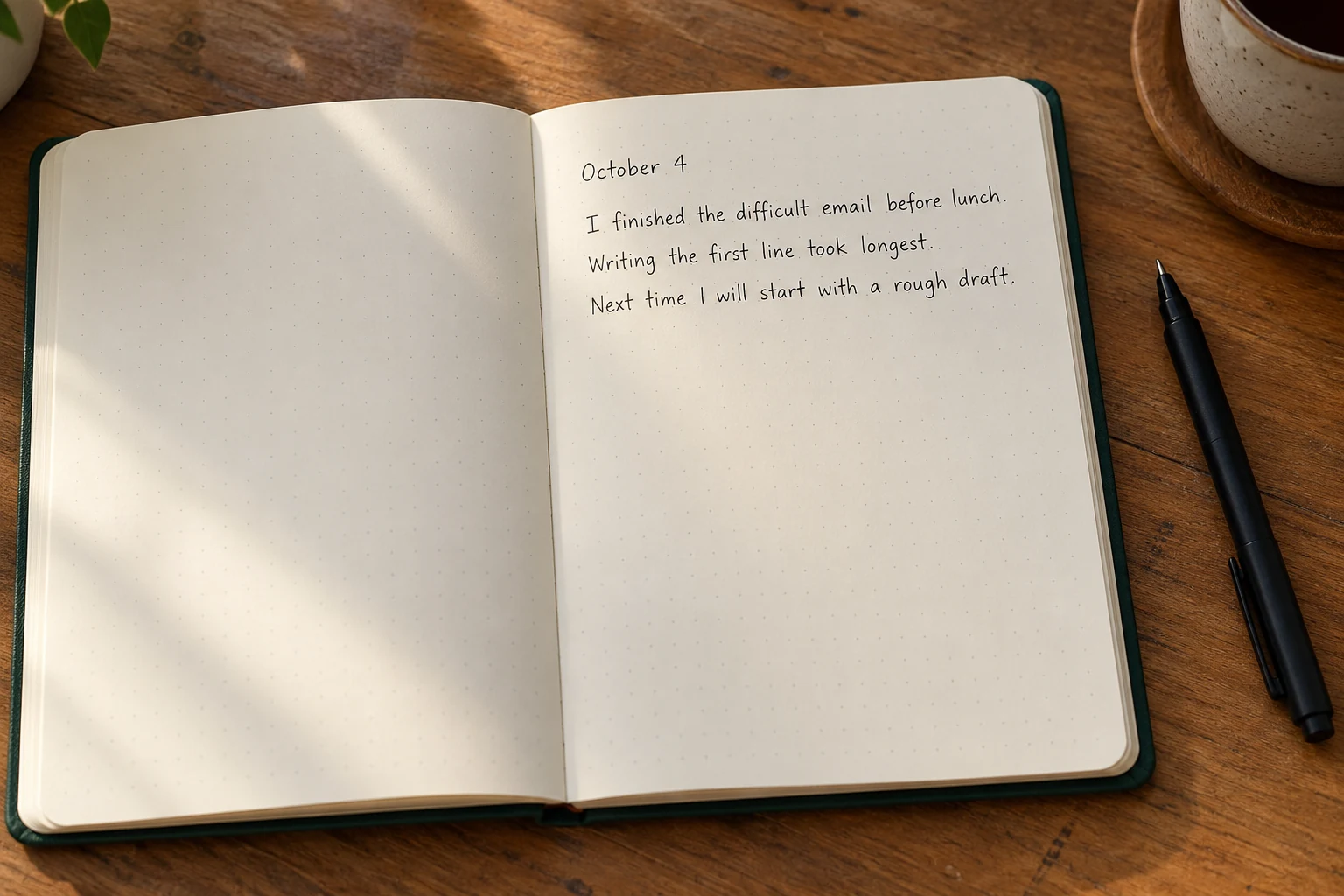
Start with a scene you could describe without much preparation. Perhaps a neighbor returned a borrowed book, or the bus arrived before the rain. Choose one detail you noticed and add why you want to remember it.
Comparable options, not the exact pictured items. Check the selected variant and current directions.
Fit and buying notes
- LEUCHTTURM1917 A5 dotted notebook: A5 dotted notebook. The illustrated layouts are custom concepts, not preprinted spreads; test pens on the actual paper.
- Sakura Pigma Micron 05 pens: Black Micron 05 pen, approximately 0.45 mm. Test the actual paper first; not a universal no-bleed guarantee.
An example entry might describe finishing a difficult email before lunch. The next sentence could explain which part took the most effort. A third could record what you’d try earlier next time, if that question feels useful.
Leave the opening page undecorated if decoration is delaying the entry. You can begin on the next usable page when the binding feels awkward. The first page doesn’t need to explain the whole book before you’ve written any of it.
5. Pick paragraphs or short notes for today
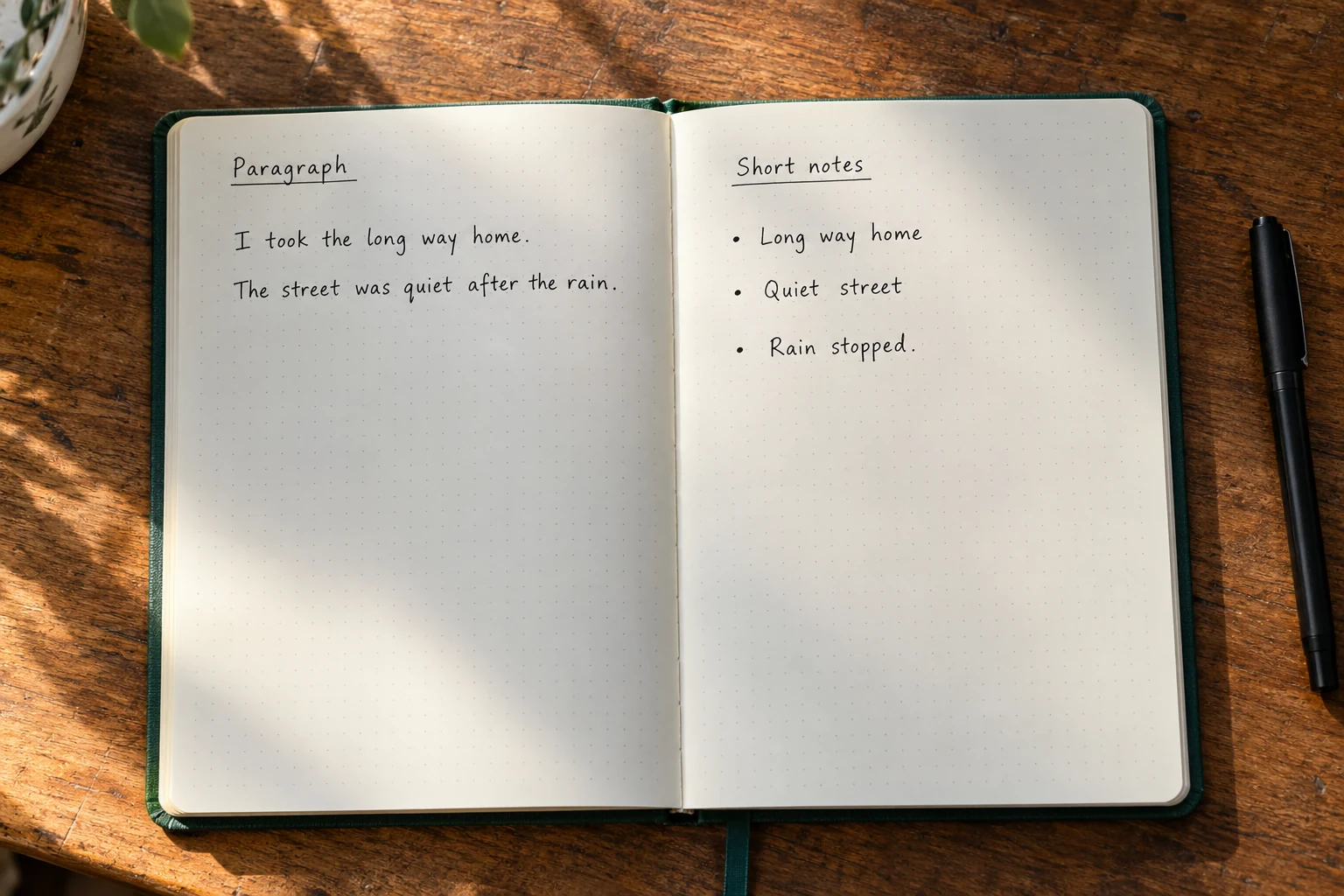
Some thoughts arrive as connected sentences, while others are easier to capture in a short list. Try whichever lets you describe the moment clearly. Switching formats tomorrow doesn’t mean the first choice failed.
Comparable options, not the exact pictured items. Check the selected variant and current directions.
Fit and buying notes
- LEUCHTTURM1917 A5 dotted notebook: A5 dotted notebook. The illustrated layouts are custom concepts, not preprinted spreads; test pens on the actual paper.
- Sakura Pigma Micron 05 pens: Black Micron 05 pen, approximately 0.45 mm. Test the actual paper first; not a universal no-bleed guarantee.
For an ordinary evening entry, a few notes might cover what happened and what remains unfinished. Add a fuller paragraph only where you want more explanation. You don’t need to turn every errand into a reflection or every feeling into an action.
For structured tasks and notes, Ryder Carroll’s Bullet Journal method is another option. Its concise logging approach has its own conventions and resources. You can also keep a plain diary without adopting a named method at all.
6. Attach the attempt to a realistic moment
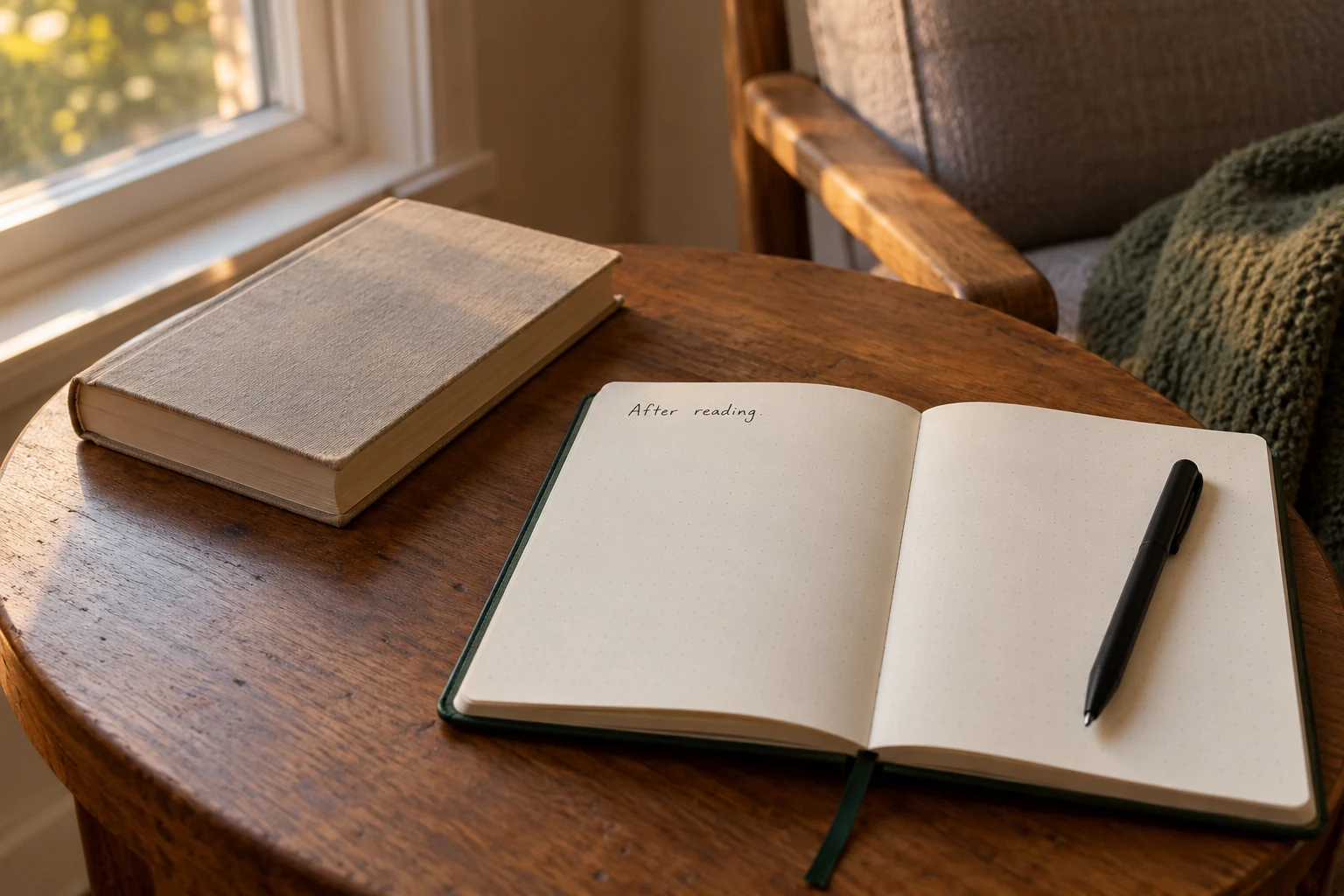
Choose a moment you can actually recognize, rather than an ideal schedule you rarely follow. You might write after putting away lunch dishes or before opening a leisure book. Keep the notebook accessible where that moment happens, provided the location suits your privacy needs.
Comparable options, not the exact pictured items. Check the selected variant and current directions.
Fit and buying notes
- LEUCHTTURM1917 A5 dotted notebook: A5 dotted notebook. The illustrated layouts are custom concepts, not preprinted spreads; test pens on the actual paper.
- Sakura Pigma Micron 05 pens: Black Micron 05 pen, approximately 0.45 mm. Test the actual paper first; not a universal no-bleed guarantee.
Treat the timing as an experiment in convenience. If evenings keep disappearing into other responsibilities, try a different opening instead of adding more reminders. A weekend entry may fit your purpose better than a daily appointment.
Avoid making a promise about never missing a day. Decide when you’ll next try, then see whether that arrangement works. A journal used occasionally can still contain the details or decisions you wanted to keep.
7. Give yourself a small stopping boundary
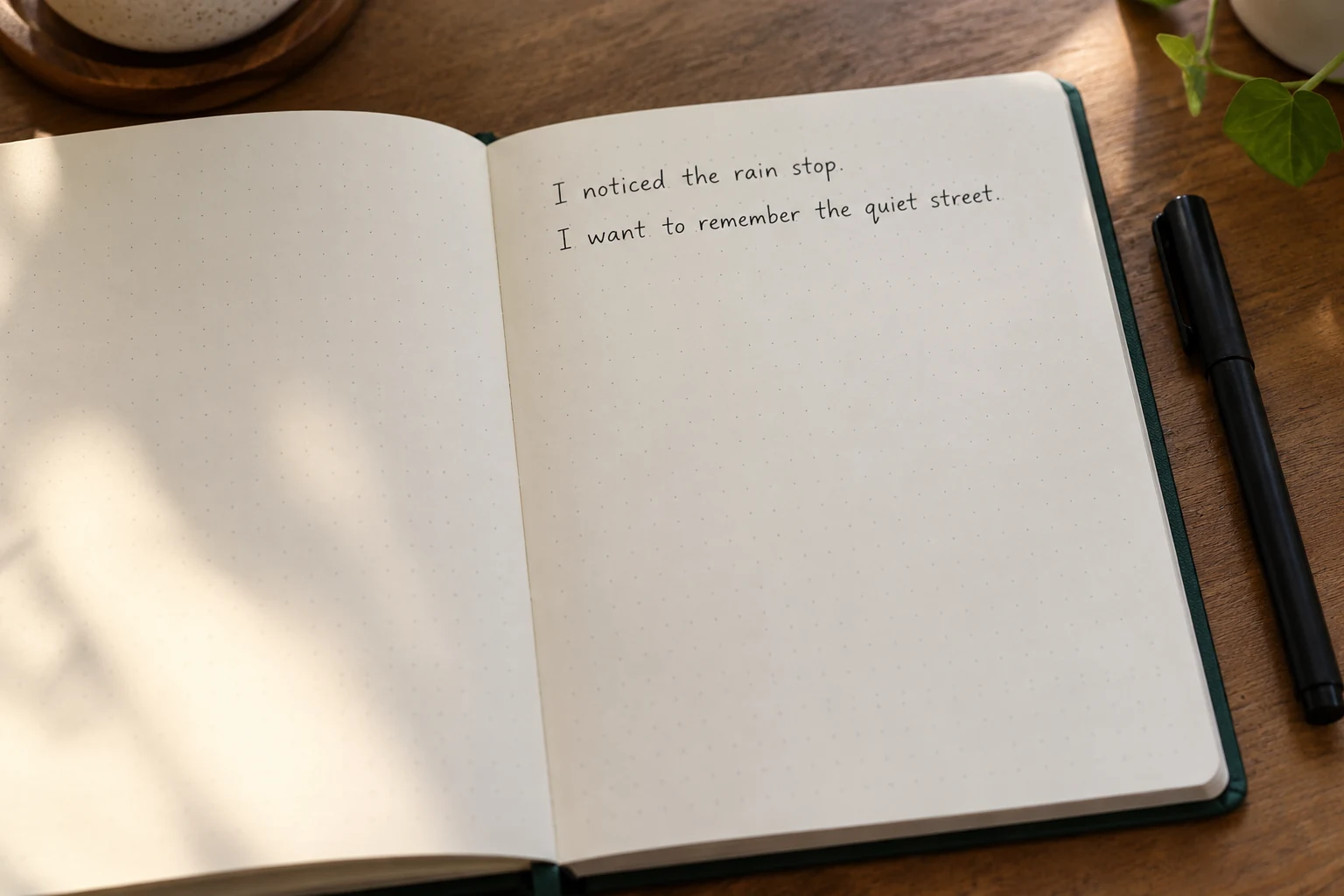
Choose an amount that feels manageable before you begin. That could mean a few sentences, one small section or the time already available. The boundary is permission to finish, rather than a minimum you must satisfy every time.
Comparable options, not the exact pictured items. Check the selected variant and current directions.
Fit and buying notes
- LEUCHTTURM1917 A5 dotted notebook: A5 dotted notebook. The illustrated layouts are custom concepts, not preprinted spreads; test pens on the actual paper.
- Sakura Pigma Micron 05 pens: Black Micron 05 pen, approximately 0.45 mm. Test the actual paper first; not a universal no-bleed guarantee.
When the useful thought is recorded, you can close the book. An unfinished page doesn’t need extra writing to look balanced. Leave room for tomorrow instead of searching for another topic just to reach the bottom.
If a prompt makes the page harder, set it aside. Write about something observable or choose another subject. You don’t owe the journal an intense emotional entry whenever you sit down with it.
8. Keep entries findable without building a filing project
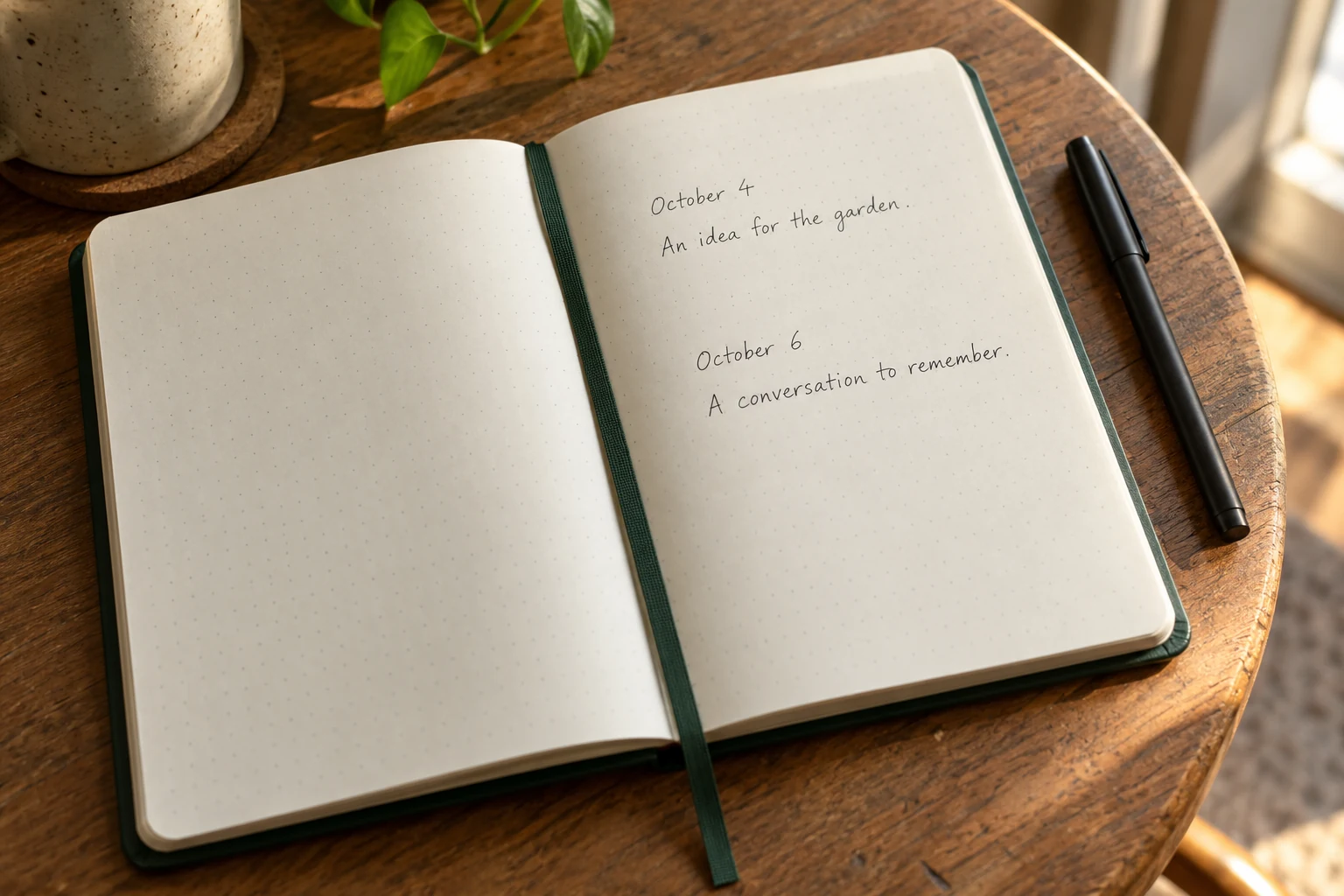
Put the date somewhere you can recognize when looking back. A short heading can distinguish a travel note from a decision or an everyday entry. Use a familiar date format, keeping it consistent enough to find things.
Comparable options, not the exact pictured items. Check the selected variant and current directions.
Fit and buying notes
- LEUCHTTURM1917 A5 dotted notebook: A5 dotted notebook. The illustrated layouts are custom concepts, not preprinted spreads; test pens on the actual paper.
- Sakura Pigma Micron 05 pens: Black Micron 05 pen, approximately 0.45 mm. Test the actual paper first; not a universal no-bleed guarantee.
If you prefer loose notes, decide where finished entries will collect. For digital writing, choose a simple naming convention before creating several nearly identical files. Keep entries findable without remembering which app or notebook you happened to use.
An index is optional for a simple journal. Add one if you repeatedly need to locate particular subjects, rather than preparing elaborate categories. A useful system can grow from what you actually look for.
9. Choose whether rereading serves your purpose

You might enjoy revisiting a small detail after the weekend. Or you may prefer writing an entry and leaving it alone. Neither choice requires grading the quality of your handwriting, vocabulary or emotional insight.
Comparable options, not the exact pictured items. Check the selected variant and current directions.
Fit and buying notes
- LEUCHTTURM1917 A5 dotted notebook: A5 dotted notebook. The illustrated layouts are custom concepts, not preprinted spreads; test pens on the actual paper.
- Sakura Pigma Micron 05 pens: Black Micron 05 pen, approximately 0.45 mm. Test the actual paper first; not a universal no-bleed guarantee.
If you reread, look for the information you originally wanted to keep. A decision journal might help you recall what you knew at the time. An everyday record might simply remind you of a conversation or a meal worth remembering.
You don’t have to photograph or share the page afterward. Keep any display or decoration separate from the reason you started writing. Our self-care ideas without spending offer alternatives if you don’t want to write today.
10. Restart on the next usable page
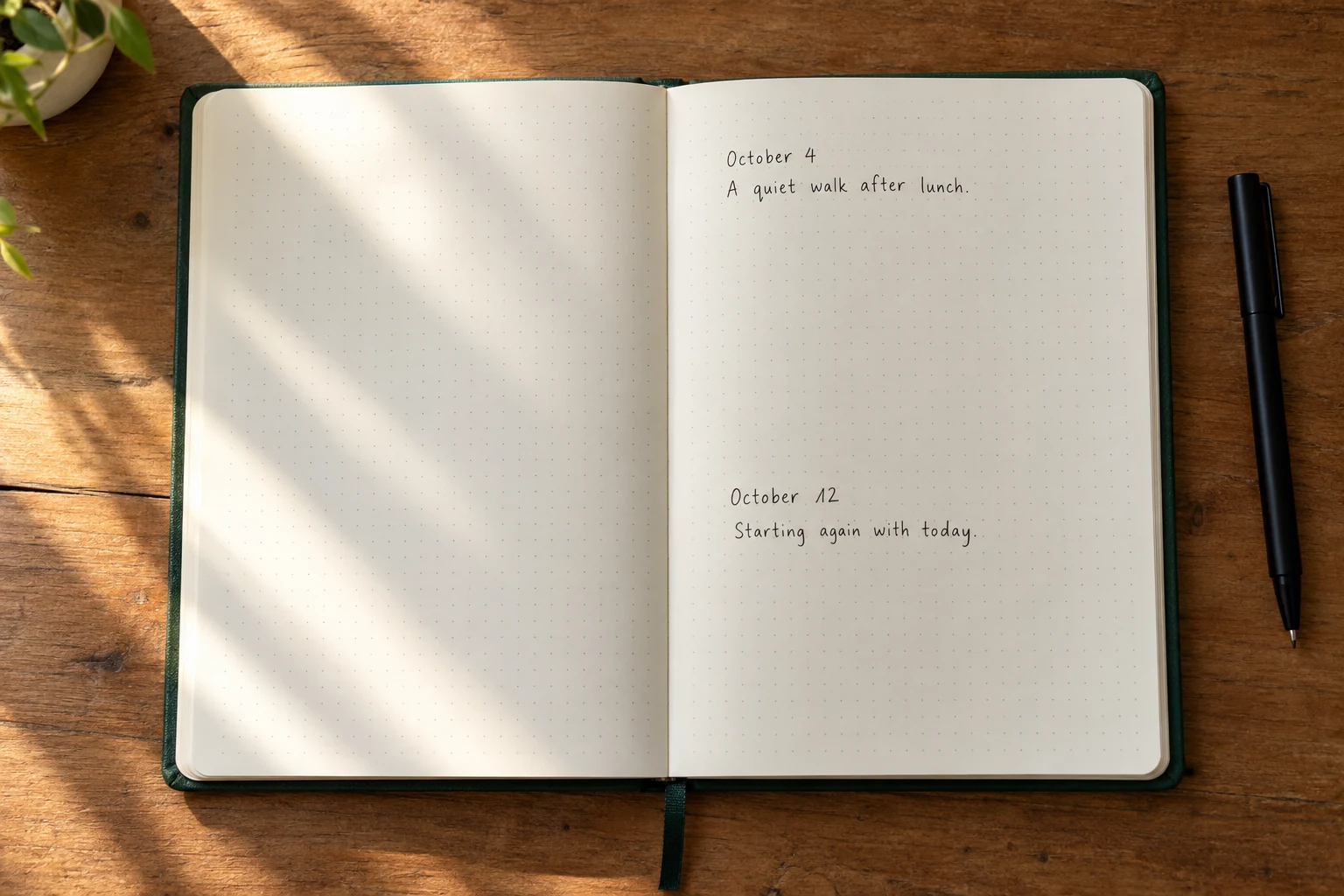
After a gap, begin with the current date rather than recreating every missed entry. Record what’s useful now. You can mention the gap briefly if it matters, but it doesn’t require a formal explanation.
Comparable options, not the exact pictured items. Check the selected variant and current directions.
Fit and buying notes
- LEUCHTTURM1917 A5 dotted notebook: A5 dotted notebook. The illustrated layouts are custom concepts, not preprinted spreads; test pens on the actual paper.
- Sakura Pigma Micron 05 pens: Black Micron 05 pen, approximately 0.45 mm. Test the actual paper first; not a universal no-bleed guarantee.
Notice what made returning inconvenient before changing the whole setup. Perhaps the book stayed in another room, or the expected entry felt too long. Change that particular obstacle and try another ordinary page before buying a replacement journal.
Keep the next beginning small enough to recognize. One dated observation is a complete place to start again. The journal can follow your life without needing a perfect record of every day in it.
Visuals are original AI-generated editorial concepts, not photographs of actual products, tested projects, cooked results or real events.