8 Rainy Day Outfit Ideas, From the Commute to Getting Home
Explore the ideas
- 1. An olive shell with cropped charcoal trousers
- 2. A trench for short, covered stretches
- 3. A midi dress with room above the pavement
- 4. A longer shell over simple slim layers
- 5. Dark denim with an obviously clear hem
- 6. A knee-length skirt with practical boots
- 7. Keep a small dry arrival kit together
- 8. Give wet things an arrival spot
The useful rainy day outfit is the one that survives your actual route. A short walk beneath shop awnings needs different protection from a long exposed commute. Start with that difference before choosing the prettiest coat.
These eight visual examples cover clothing, shoes and the small arrival details people often forget. Use the combinations as starting points around your existing wardrobe. The AI-generated styling concepts illustrate outfits rather than prove particular garments are waterproof.
Rain protection and warmth are separate jobs. A shell can handle weather without providing the insulation needed for colder conditions. Check the selected product’s description, fit and care guidance before relying on it outside.
1. An olive shell with cropped charcoal trousers
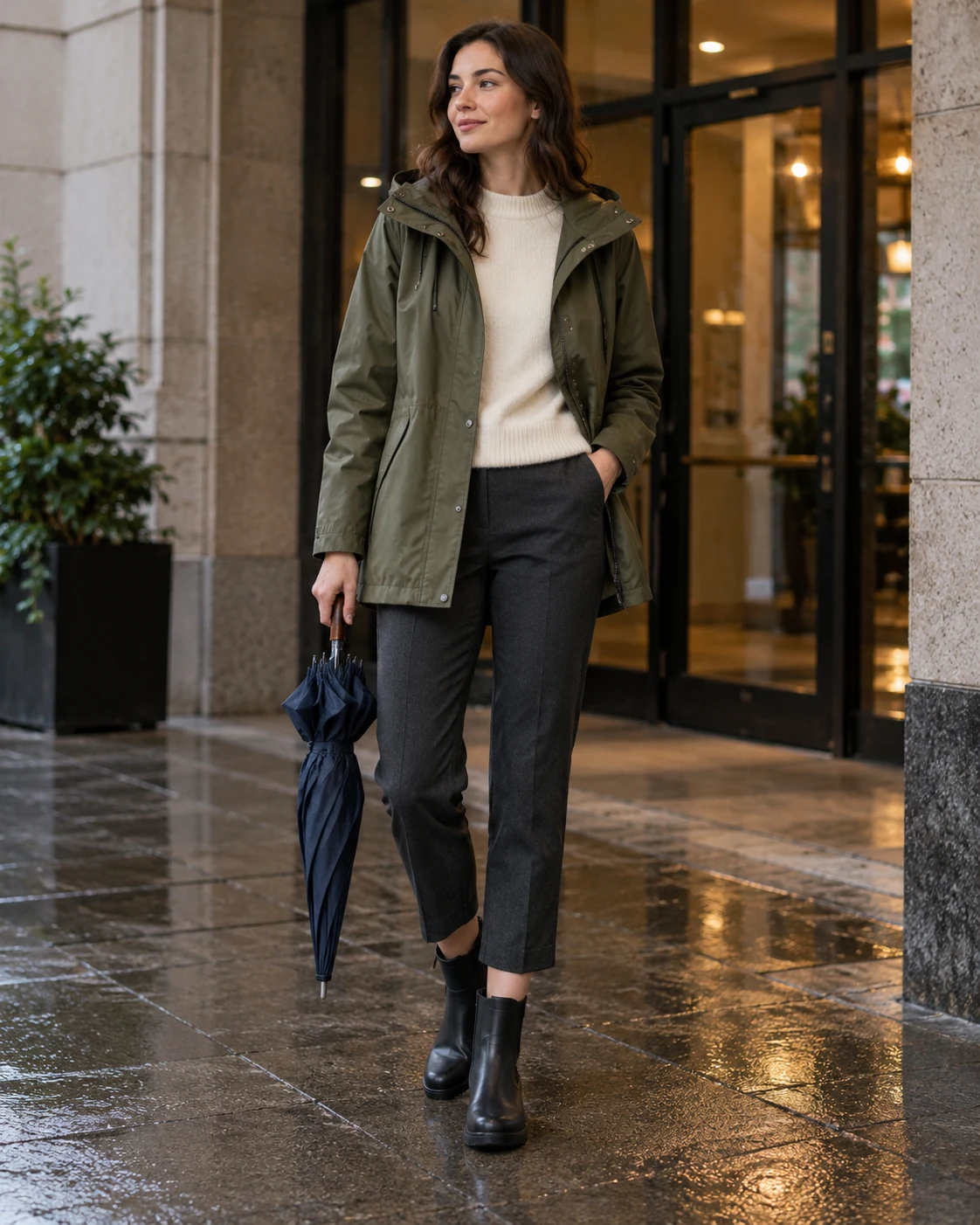
The cropped trouser hem is doing practical work in this outfit. It stays clear of the ground instead of collecting water around the boot. Cream knitwear lightens the olive and charcoal without introducing another busy detail.
Choose the trouser length while wearing the boots you intend to use. A hem that looks cropped barefoot may sit differently above a substantial sole. Walk and sit before deciding the gap feels comfortable.
Columbia’s Women’s Arcadia II Jacket is one optional lightweight shell researched for this guide. Its manufacturer describes waterproof construction, sealed seams and an adjustable hood. It isn’t an insulated winter coat, so your underlying layers still matter.
Check the selected size over your ordinary outfit. A shell that closes over a tee may pull across a thicker sweater. Reach forward, fasten it fully and make sure the hood works without uncomfortable collar pressure.
Keep the bag manageable when an umbrella already occupies one hand. A compact crossbody can leave less loose material to juggle at a doorway. Choose around what you actually carry rather than adding a second bag for the photograph.
2. A trench for short, covered stretches
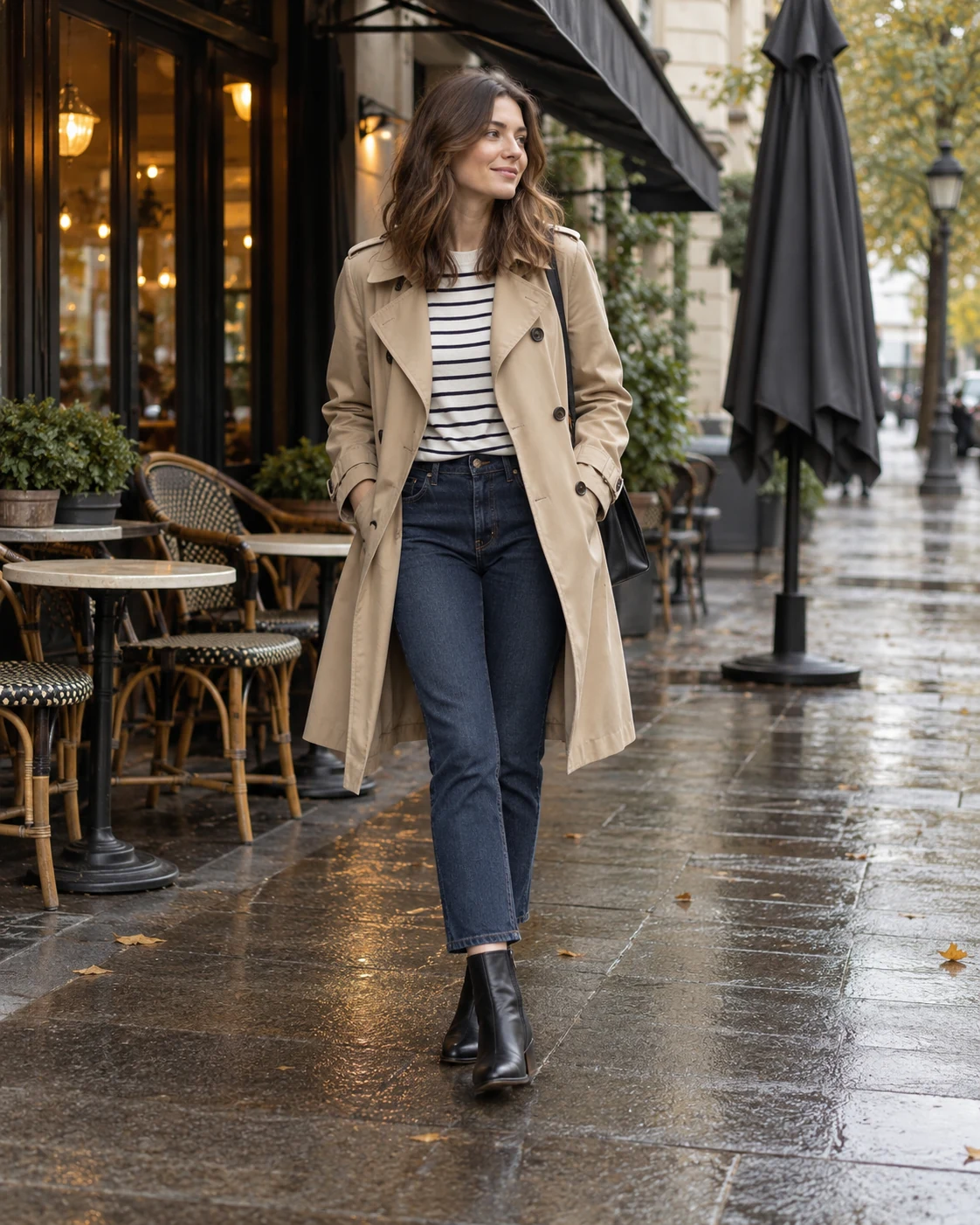
A trench makes a familiar jeans outfit feel more finished for lunch or shopping. The striped top supplies the pattern, while the surrounding clothes remain plain. An ankle-length hem keeps the denim away from the wet pavement.
This example suits a route with shelter and short outdoor stretches. The word trench doesn’t establish a particular coat’s rain performance. Read whether your own version promises water resistance, waterproofing or neither.
An umbrella can help during ordinary rain, but it doesn’t cover every moving part. Sleeves, shoes and the lower legs may still get wet. Plan for those gaps instead of assuming the coat and umbrella protect everything.
Choose a trouser shape that clears the boot comfortably. Tight fabric sitting directly against a wet boot can remain unpleasant after you arrive. A straighter hem may provide an easier transition without dragging on the ground.
The stripe doesn’t need another patterned accessory. A plain dark bag and ordinary boots keep the outfit easy to repeat. If the forecast worsens, change the protective layer rather than defending the original styling choice.
3. A midi dress with room above the pavement
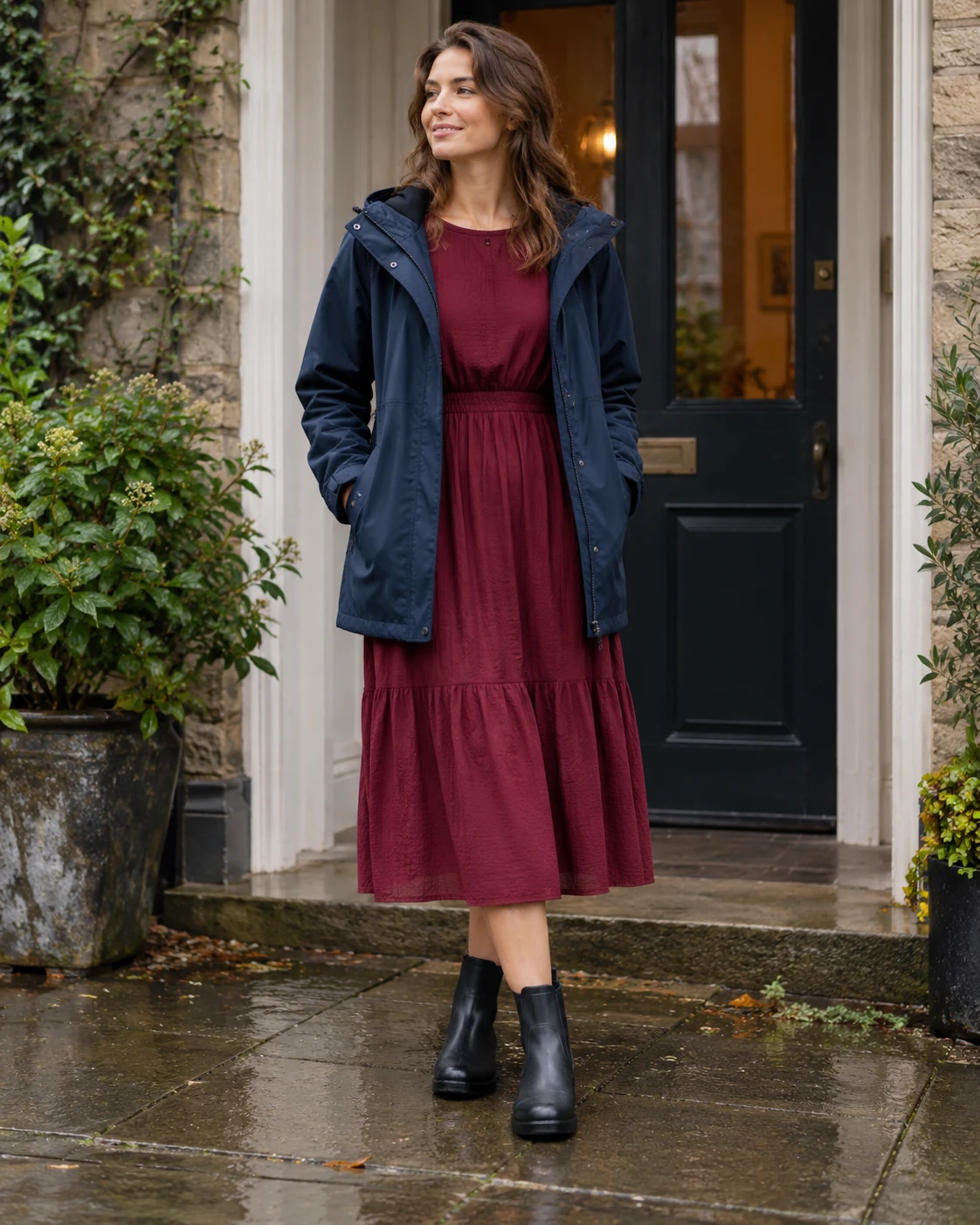
A dress can work on a rainy day when its hem stays clear. Here, burgundy gives the outfit color beneath a quieter navy shell. Dark boots and tights keep the lower half visually connected.
Check the dress during a full walking stride. Fabric can move closer to the ground than it appears while standing still. A narrow cut also changes how easily you manage steps or climb onto a bus.
The outer layer should close without trapping the skirt awkwardly. Try the whole combination at home before leaving in a hurry. If the shell bunches the dress, a different length or shape may feel much easier.
Avoid choosing slippery footwear simply because it looks better with the dress. Rain performance, grip and comfortable fit are separate questions worth checking. An attractive boot photograph doesn’t answer any of them reliably.
Keep the destination in mind too. A lightweight dress can become uncomfortable in a chilly room after the shell comes off. Bring a suitable dry layer when the indoor temperature makes that useful.
4. A longer shell over simple slim layers
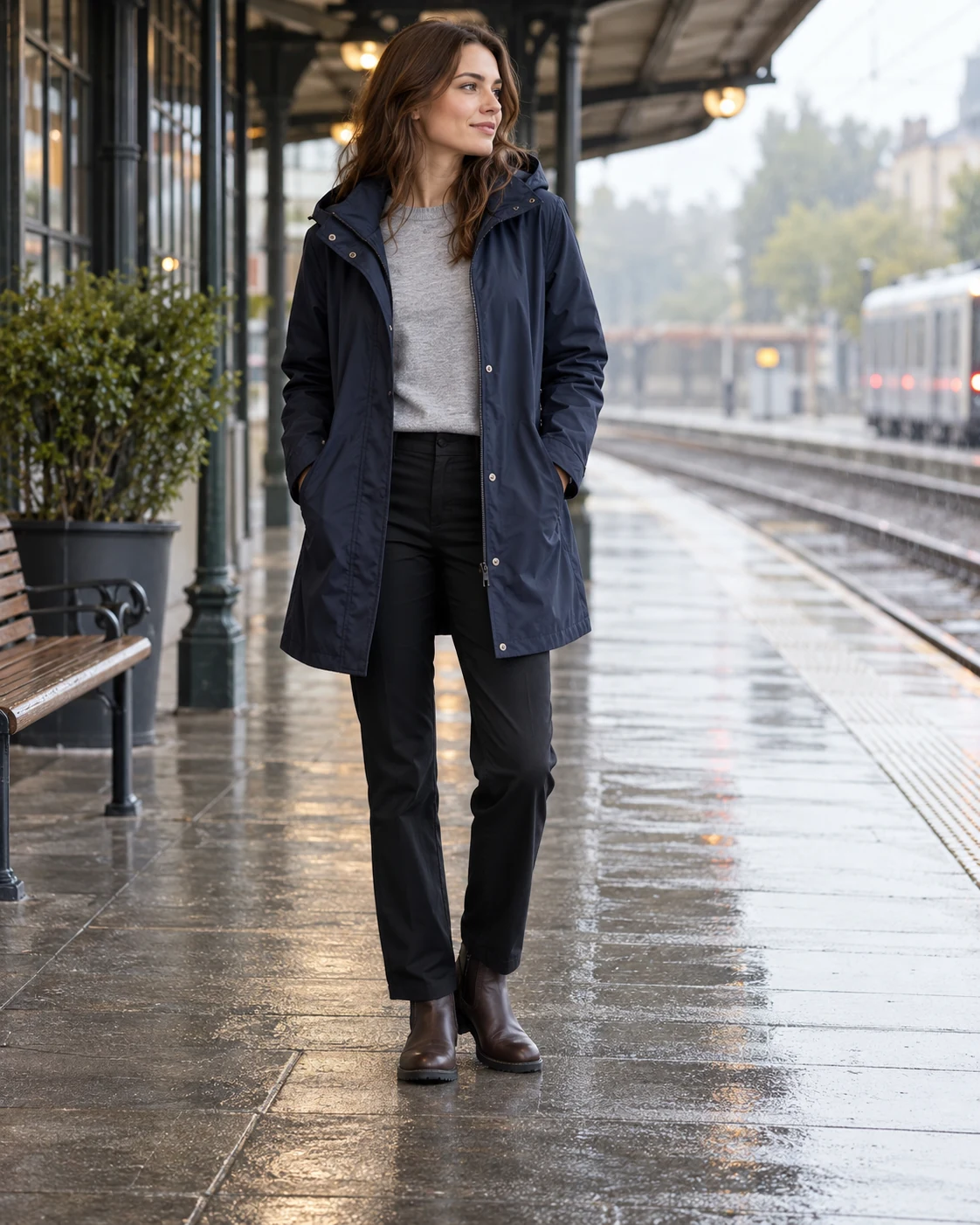
A longer navy shell creates more coverage around a plain top and trousers. The underlying outfit stays quiet, so you aren’t balancing several competing layers. This can feel useful when the journey involves more exposed walking.
Length alone doesn’t prove a coat is suitable for sustained rain. Check its construction and stated use before treating it as protective equipment. The manufacturer’s instructions matter more than how convincing the hood looks in an image.
Make sure the longer hem allows your normal stride. Test steps and sitting as well as standing with the zip closed. A restrictive coat can become annoying even when the weather protection seems appropriate.
Keep bulky bags outside the coat’s fit calculation unless the manufacturer allows otherwise. A narrow shoulder strap can also change how the collar sits. Try the actual bag you intend to carry rather than judging each item separately.
For colder days, revisit the layers beneath the shell. Our winter outfit ideas begin with the comfortable indoor version before adding weather protection. A heavier sweater isn’t automatically the best solution when sleeve space is already limited.
5. Dark denim with an obviously clear hem
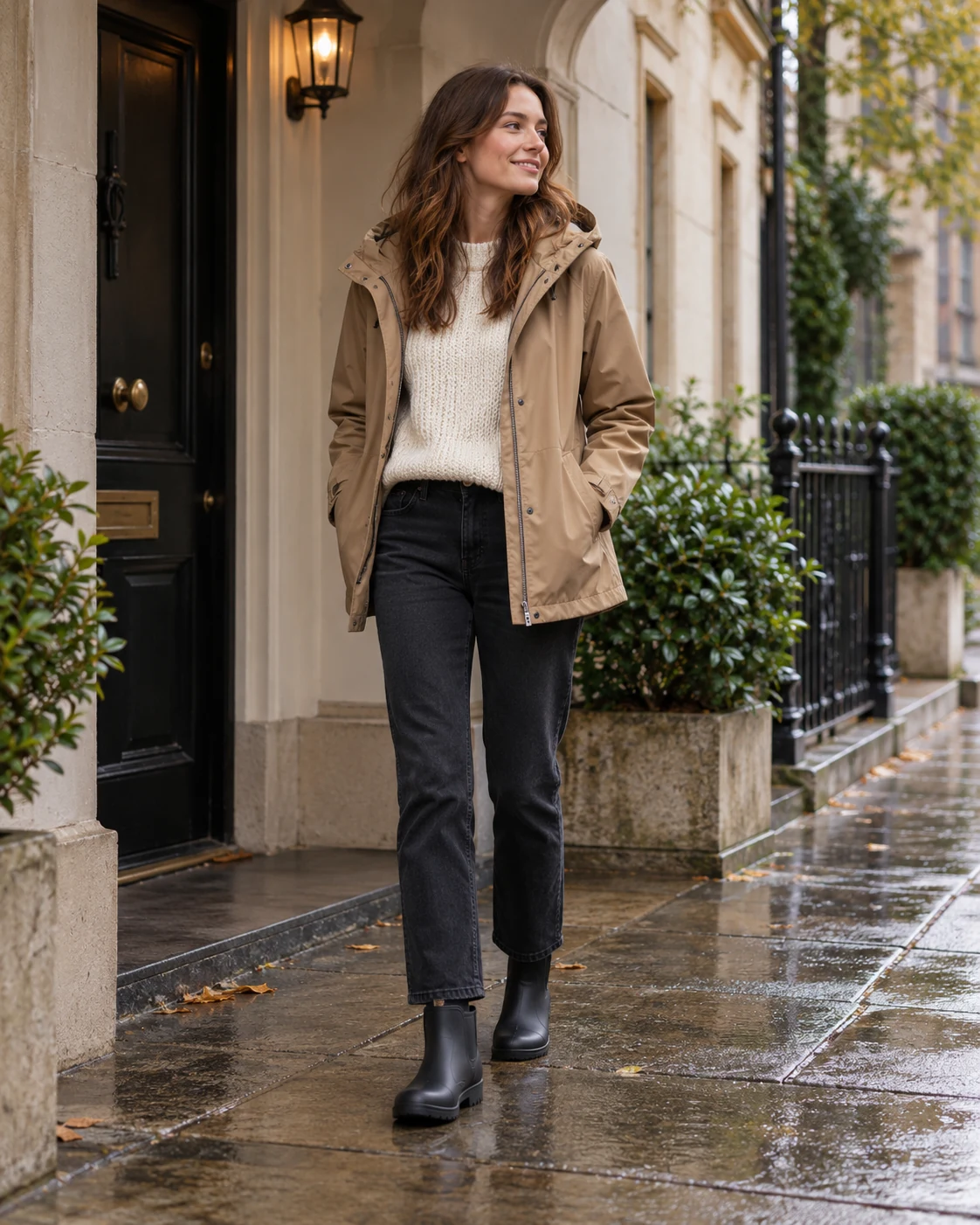
Dark ankle denim offers a familiar base beneath a tan rain layer. The visible space above the boots keeps the hem from becoming a wet cuff. Cream knitwear provides enough contrast without needing several accessories.
Don’t assume dark denim dries quickly because damp patches are less noticeable. The fabric can still feel heavy and cold after exposure. For longer outdoor stretches, choose clothing according to conditions rather than the convenience of the color.
Check whether the jeans gather around the top of the boots. Several compressed folds can catch water and create an uncomfortable band of fabric. A straighter cut or slightly different length may solve that more effectively than another cuff.
Use socks that feel comfortable inside your chosen footwear. A thicker pair can change boots that normally fit well. Test the combination before relying on it during a long day away from home.
Keep a spare pair only when your route makes it worthwhile. Packing for one repeated problem is more useful than filling your bag with imagined emergencies. Remember to remove and dry any damp items afterward.
6. A knee-length skirt with practical boots
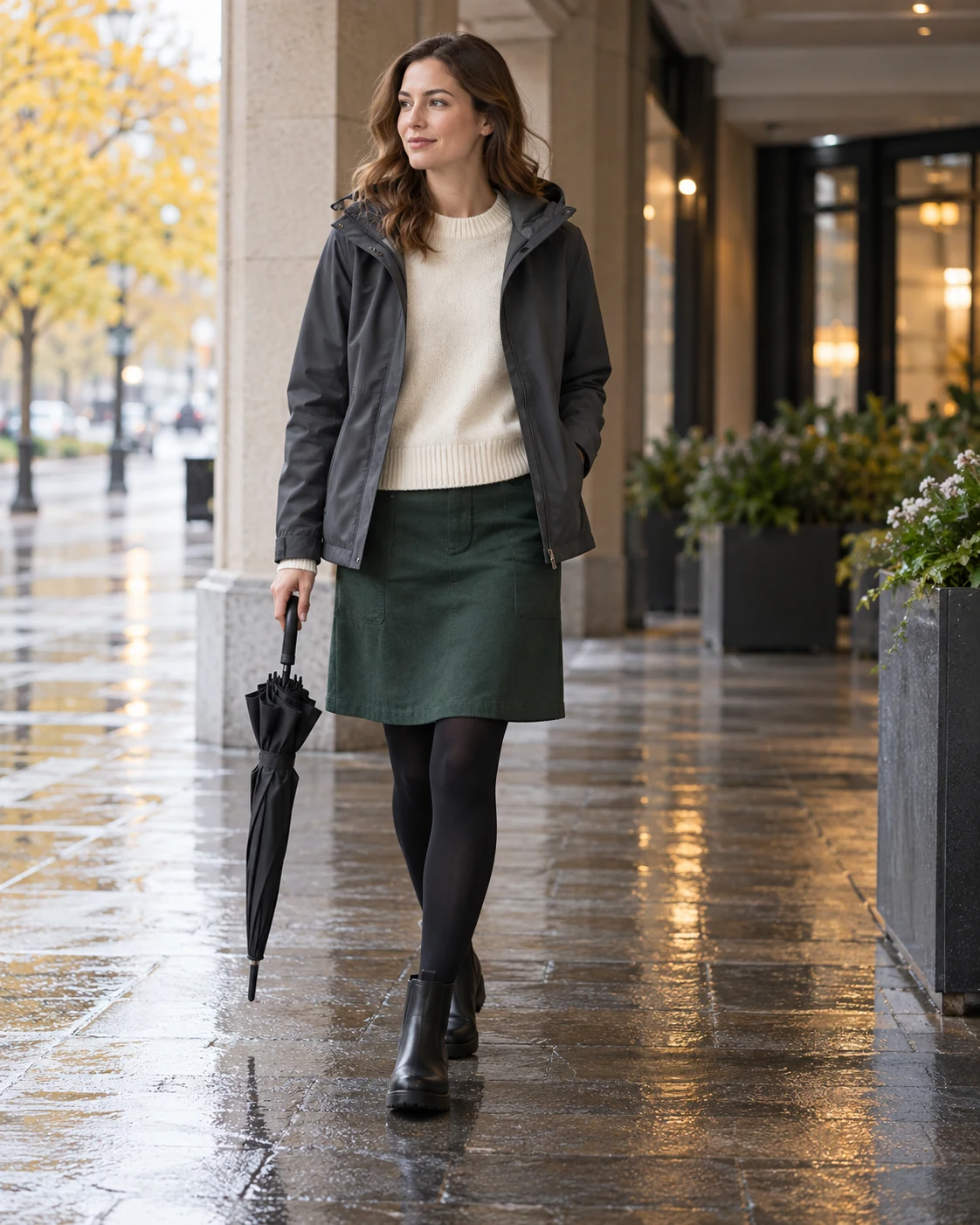
A shorter skirt creates another route away from dragging fabric. The dark green color sits comfortably beside cream knitwear and a charcoal outer layer. Black tights keep the outfit’s lower half visually simple.
Choose the skirt’s movement around the day’s actual tasks. A shape that feels pleasant at lunch may be less useful on a windy platform. Think about the route before deciding that every knee-length skirt behaves the same way.
The boot opening should feel comfortable against your tights or socks. A rubbing edge can become more noticeable while walking in damp conditions. Check the complete outfit during ordinary movement rather than judging only its proportions.
Keep the outer layer separate from the skirt’s styling role. The shell handles weather, while the clothes beneath need to work at your destination. You shouldn’t need to keep a wet coat on to make the outfit feel finished.
For an evening gathering, change a small detail after arriving if that helps. A dry cardigan or simple accessory may do more than another complete outfit. Our casual party outfit ideas offer combinations that still work indoors.
7. Keep a small dry arrival kit together
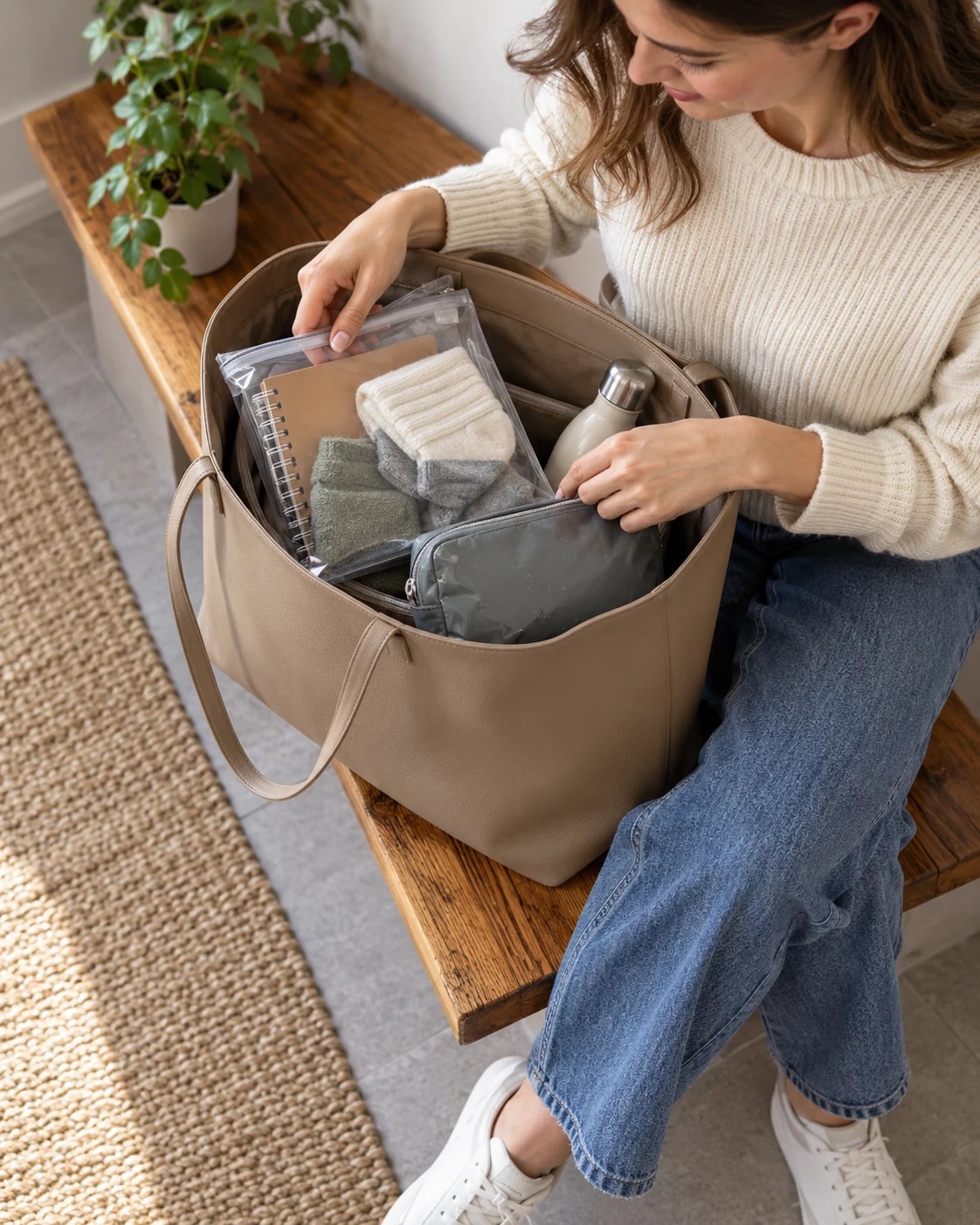
The arrival kit should solve something that actually happens on your journey. Spare socks make sense when footwear repeatedly becomes damp, while paperwork needs suitable protection. A separate pouch keeps those tasks from becoming loose clutter inside the bag.
Choose protection appropriate for what you carry. A fabric tote doesn’t become waterproof because its opening has a zip. Follow the protective pouch’s stated use rather than assuming any clear bag can protect valuable electronics.
Keep the item you’ll need first easy to reach. Digging beneath everything else with wet hands can defeat the point of careful packing. A simple internal arrangement is usually easier to maintain than several overlapping organizers.
Use another washable pouch for damp accessories after changing. Don’t return a wet cloth directly beside clean socks or a notebook. Empty that pouch when you arrive home rather than leaving moisture enclosed until the next outing.
Review the kit after a few ordinary trips. Remove the items you never need and replace only the missing pieces that matter. The goal is an easier arrival rather than a heavier version of your everyday bag.
8. Give wet things an arrival spot
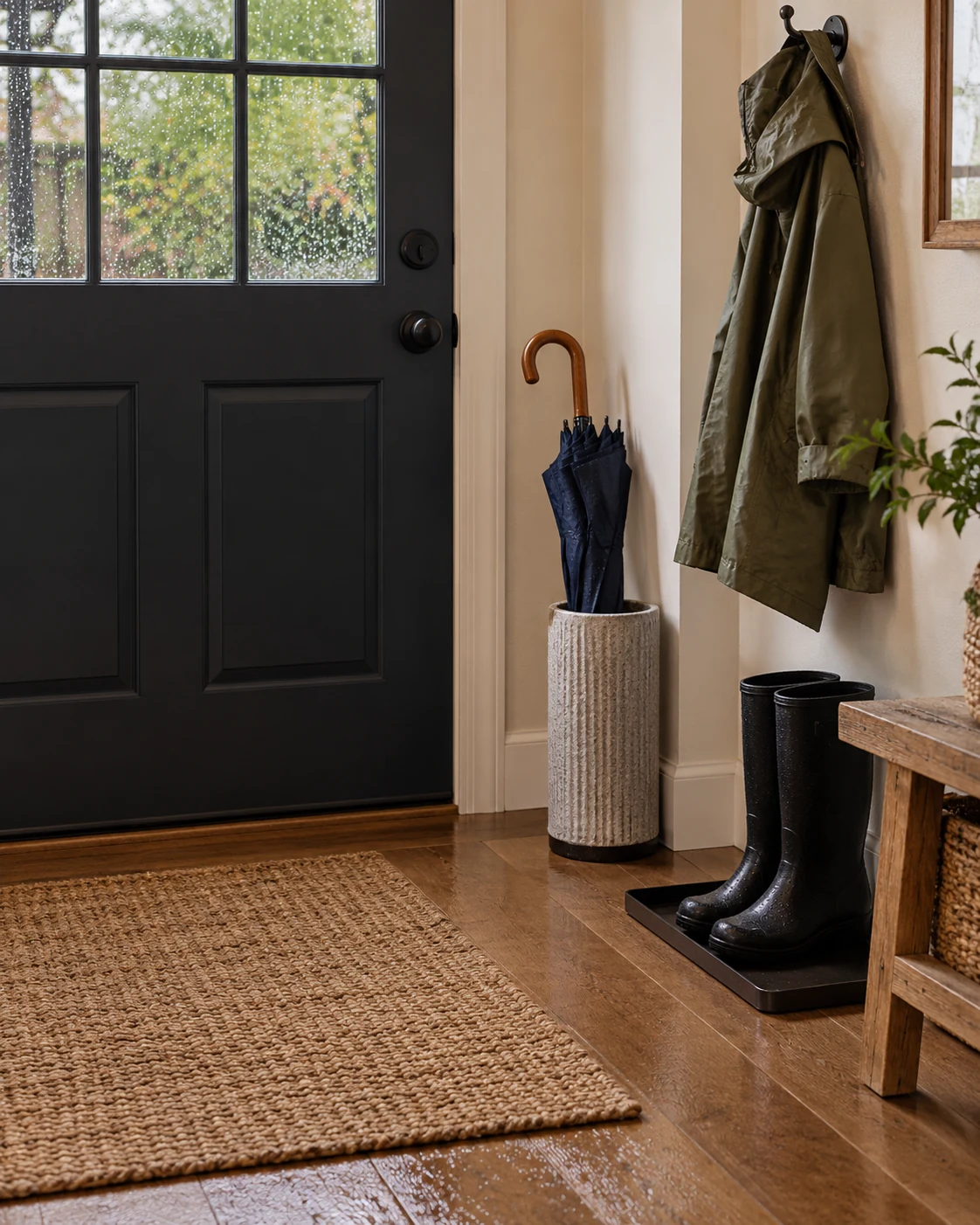
A useful rainy day outfit needs somewhere to finish its journey. An umbrella stand, boot tray and suitable coat hook keep wet belongings together. The entryway still needs enough clear space for people to move through it.
Choose the spot around the door’s full opening. A neat row of boots becomes an obstacle when the door catches them every time. Keep the main walking route clear instead of treating it as spare storage.
Let garments dry according to their care instructions. Leaving everything bundled inside a closed bag can create another problem for the following morning. Check pockets and separate damp textiles before putting the outfit away.
At work or a shared venue, use the arrangement the space provides. Don’t spread wet accessories across spare seats or another person’s desk. Ask where the umbrella belongs when the useful spot isn’t obvious.
Before the next outing, change the detail that caused the most trouble. That might be a dragging hem, crowded bag or uncomfortable boot opening. A practical rainy day outfit improves through those specific decisions, rather than another unnecessary purchase.