10 Pot Drainage and Saucer Setups That Keep Water From Becoming a Problem
Explore the ideas
- 1. Begin with a drainage hole you can actually see
- 2. Pair the growing pot with a removable saucer
- 3. Keep nursery pots and decorative covers separate
- 4. Leave enough visible saucer to check it
- 5. Make emptying runoff part of watering
- 6. Use suitable potting medium without a gravel layer
- 7. Leave the opening open
- 8. Choose support that leaves the saucer accessible
- 9. Protect the surface without hiding the problem
- 10. Plan the watering route before the display
A pot can have drainage holes and still sit in yesterday’s water. The saucer, outer container and surface underneath all affect where that water goes. Good pot drainage means checking the complete setup, beyond a pot’s most promising feature.
Start with the container you already own and an empty sink or outdoor work surface. Find the actual opening through its base before adding growing medium. Then decide how you will catch runoff and remove it during ordinary watering.
The ten setups below show different parts of that decision. They aren’t ten separate products your plant needs. Use the example that explains your own container, then keep the working arrangement simple.
1. Begin with a drainage hole you can actually see
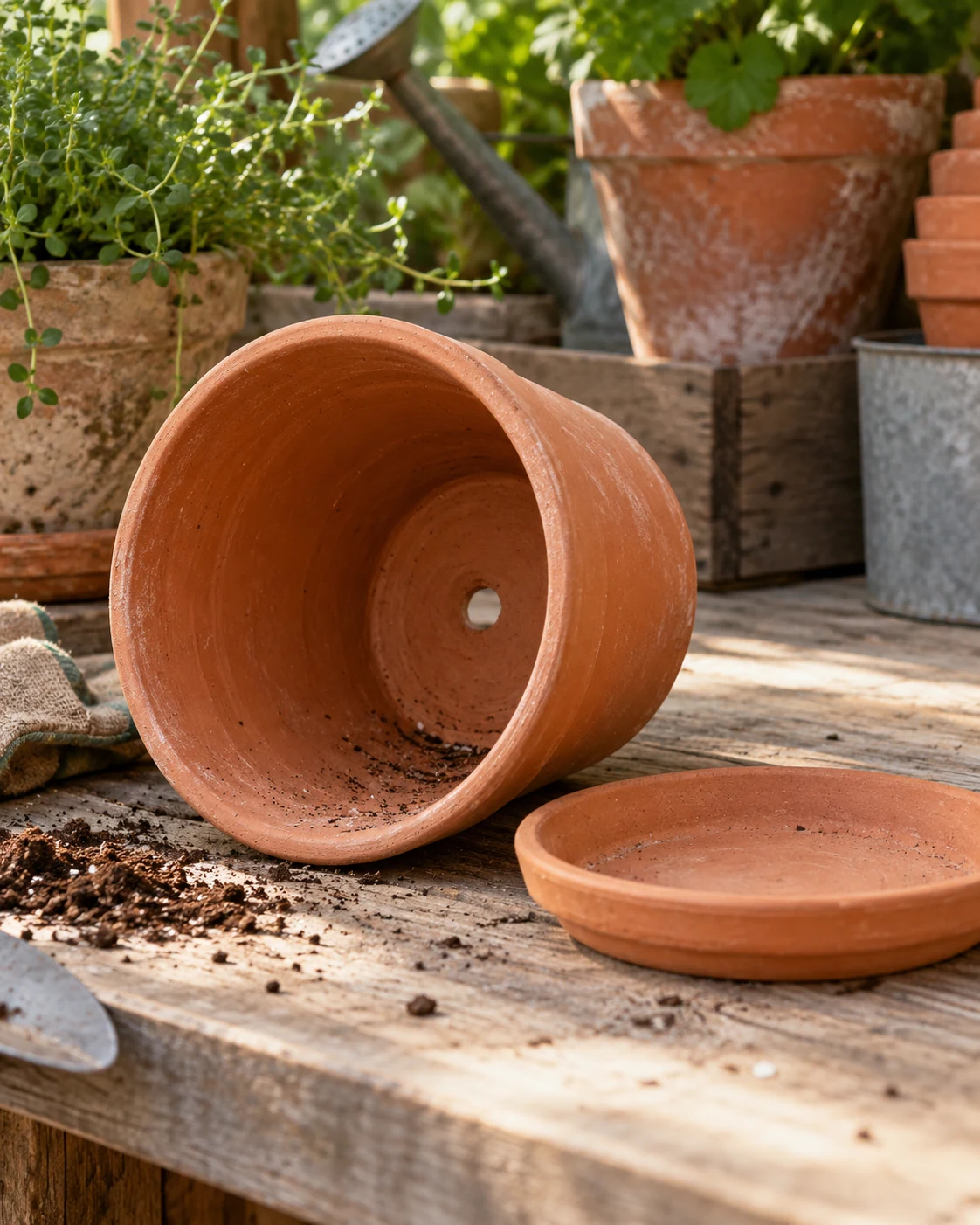
Turn an empty pot sideways and look through its base. A shallow molded circle isn’t necessarily an open drainage hole. Some decorative containers have a solid bottom, even when their shape resembles an ordinary growing pot.
Comparable options, not the exact pictured items. Check the selected color, size and buying notes.
Materials, fit and differences from the concept
- Eight-inch terracotta pots and saucers: Two eight-inch terracotta pots with drainage holes and saucers. Plants and growing medium are separate. Clay can break and may dry faster than plastic; a saucer is not permission to leave roots standing in water.
Check the selected product description as well as the photograph. A matching saucer can hide the base in a shopping image. Our beginner herb containers pair pot choices with the different growing needs of familiar kitchen herbs.
If your existing container has no opening, consider using it as an outer cover instead. Keep a separate growing pot inside that you can remove. Don’t assume a pretty solid container performs the same job as a draining one.
2. Pair the growing pot with a removable saucer
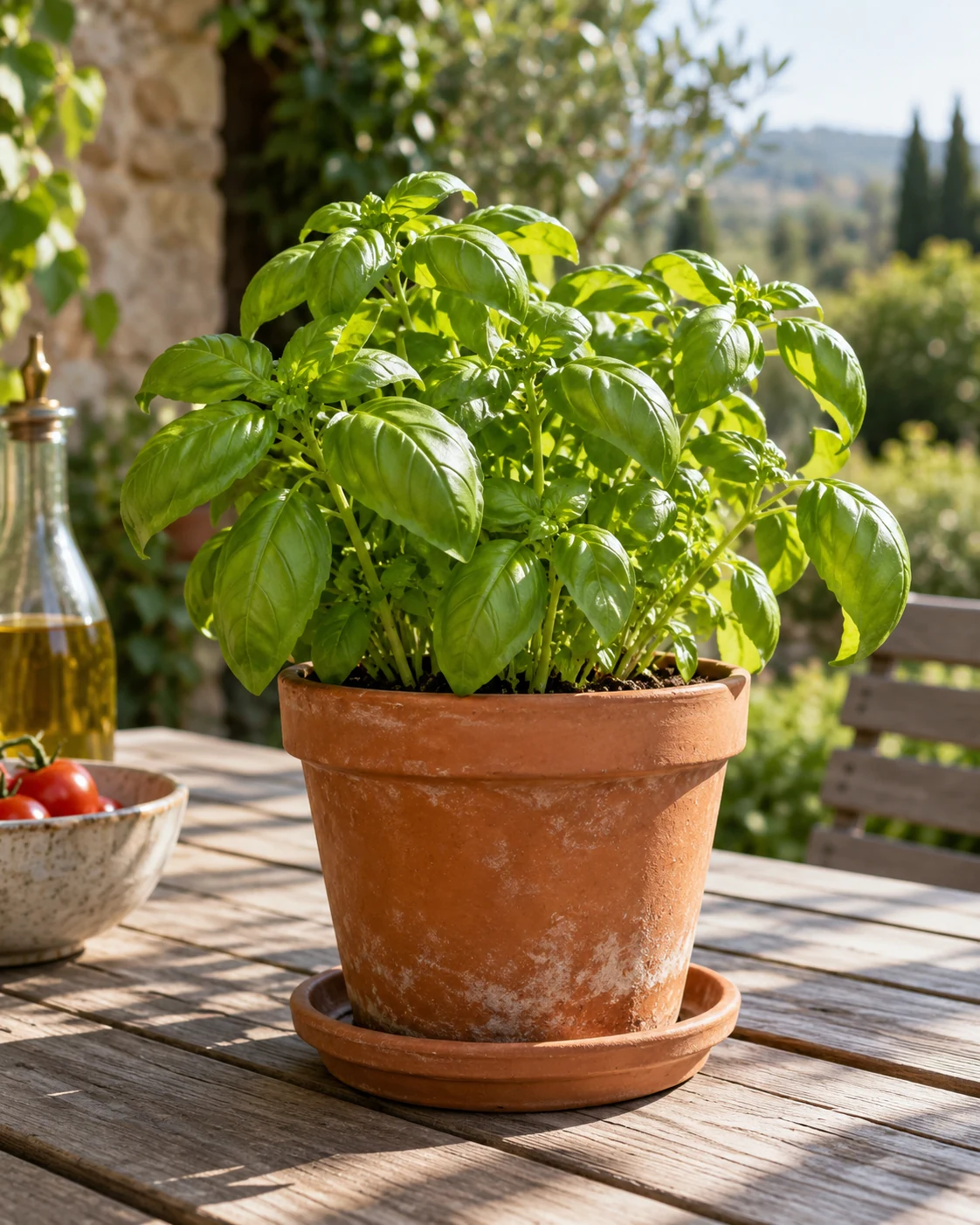
A separate saucer catches water while leaving you access to the pot’s base. Choose one you can reach without dismantling the whole display. A tightly packed row may look organized while making this ordinary task surprisingly awkward.
Comparable options, not the exact pictured items. Check the selected color, size and buying notes.
Materials, fit and differences from the concept
- Eight-inch terracotta pots and saucers: Two eight-inch terracotta pots with drainage holes and saucers. Plants and growing medium are separate. Clay can break and may dry faster than plastic; a saucer is not permission to leave roots standing in water.
- Miracle-Gro outdoor potting mix: Two eight-quart bags of Miracle-Gro outdoor container potting mix, containing plant food. Follow the current bag directions before adding fertilizer. Regional shipping varies; no US-stock or delivery guarantee is made.
Try the lifting movement before filling the pot with heavy, wet growing medium. Include the plant’s eventual spread when checking hand space. Spreading leaves can complicate access later, even when the empty arrangement feels roomy.
The saucer belongs in the watering routine, rather than disappearing beneath the plant indefinitely. Check it after water has drained from the pot. Empty collected runoff instead of letting the container remain standing in it.
3. Keep nursery pots and decorative covers separate
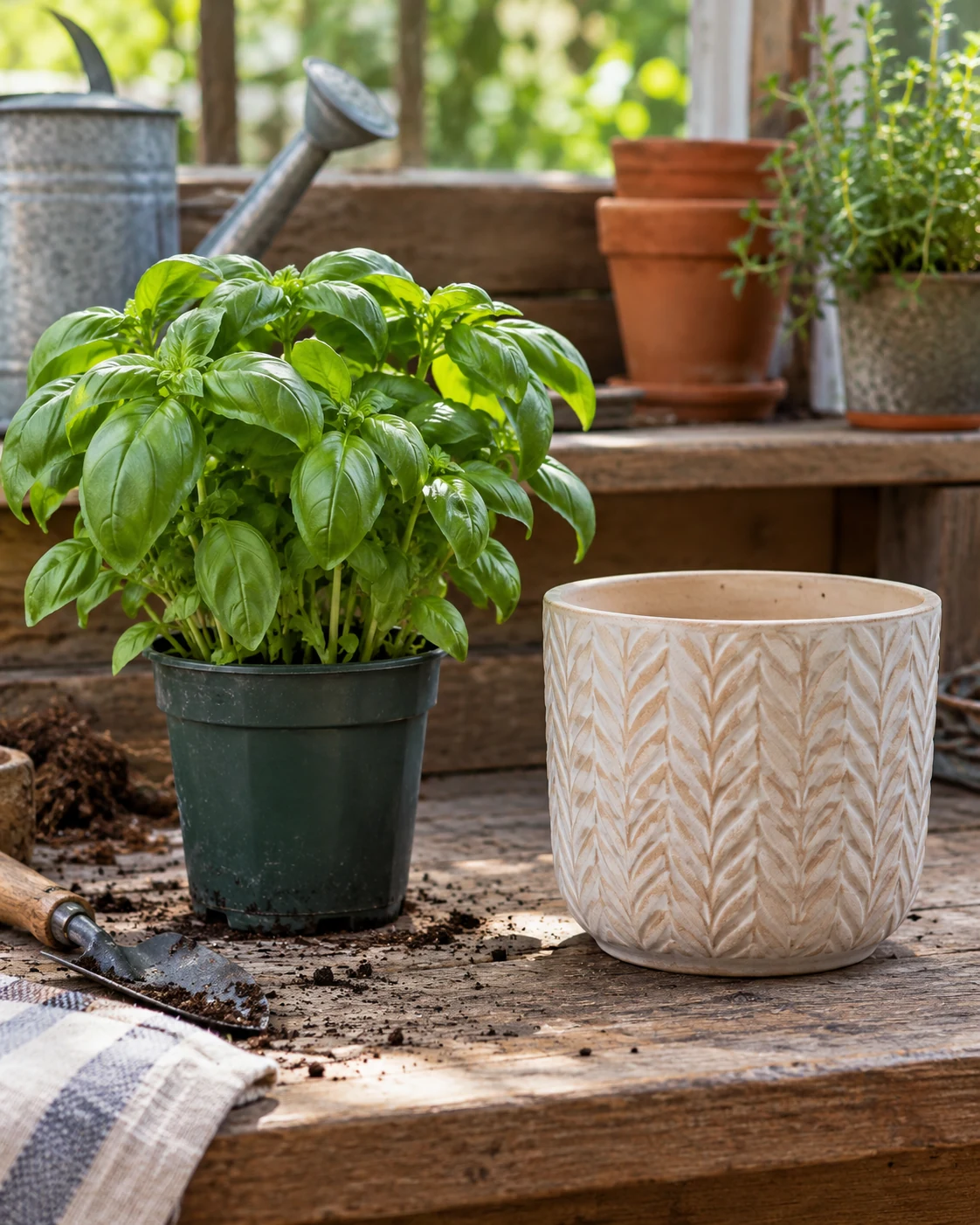
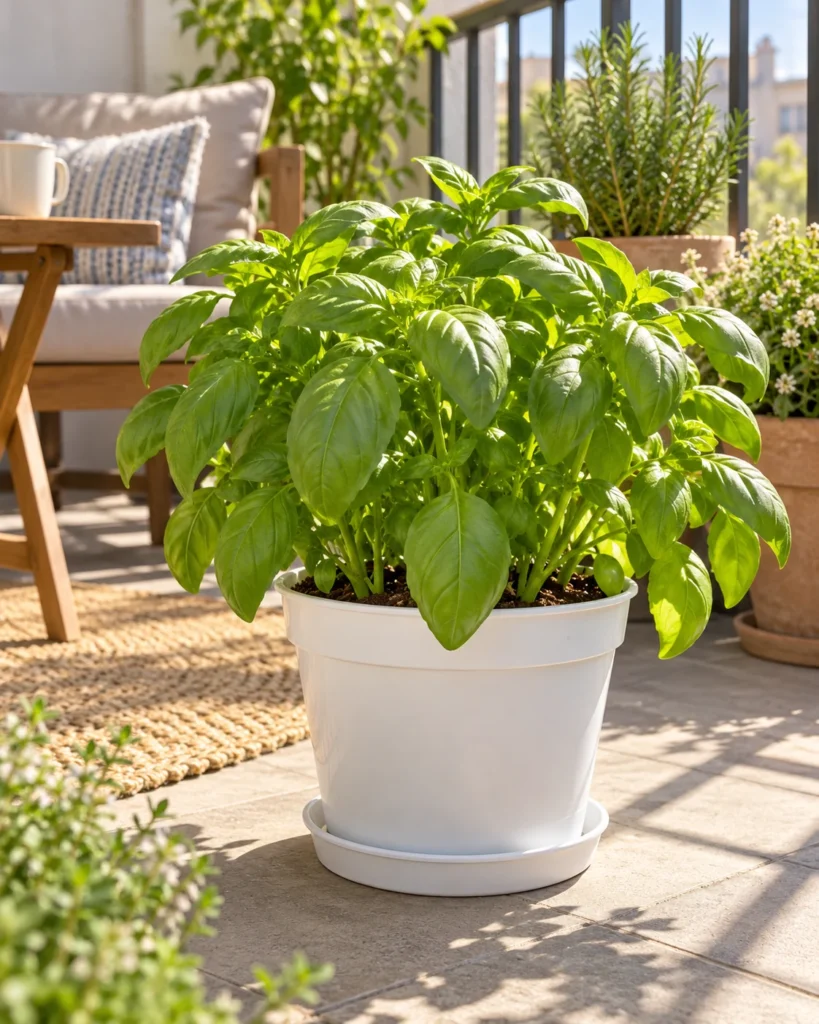
A nursery pot inside a decorative cover gives each piece a different job. The inner container holds the growing medium and provides drainage. The outer piece changes the appearance and may collect water passing through the inner pot.
Comparable options, not the exact pictured items. Check the selected color, size and buying notes.
Materials, fit and differences from the concept
- D’vine Dev ten-inch planter and saucer: D’vine Dev white ten-inch plastic planter with drainage and matching saucer. Select by mature plant needs and usable volume. Wet growing medium adds weight; the empty pot weight does not establish balcony load safety.
Remove the inner pot for watering when that makes the setup easier to manage. Let it drain before returning it to the cover. Check the outer container afterward, particularly when someone else has watered without removing the plant.
Leave enough room to grasp the inner pot without pulling on the plant. If the fit is too tight, choose another cover or another location. A hidden container still needs a practical way to come out.
4. Leave enough visible saucer to check it
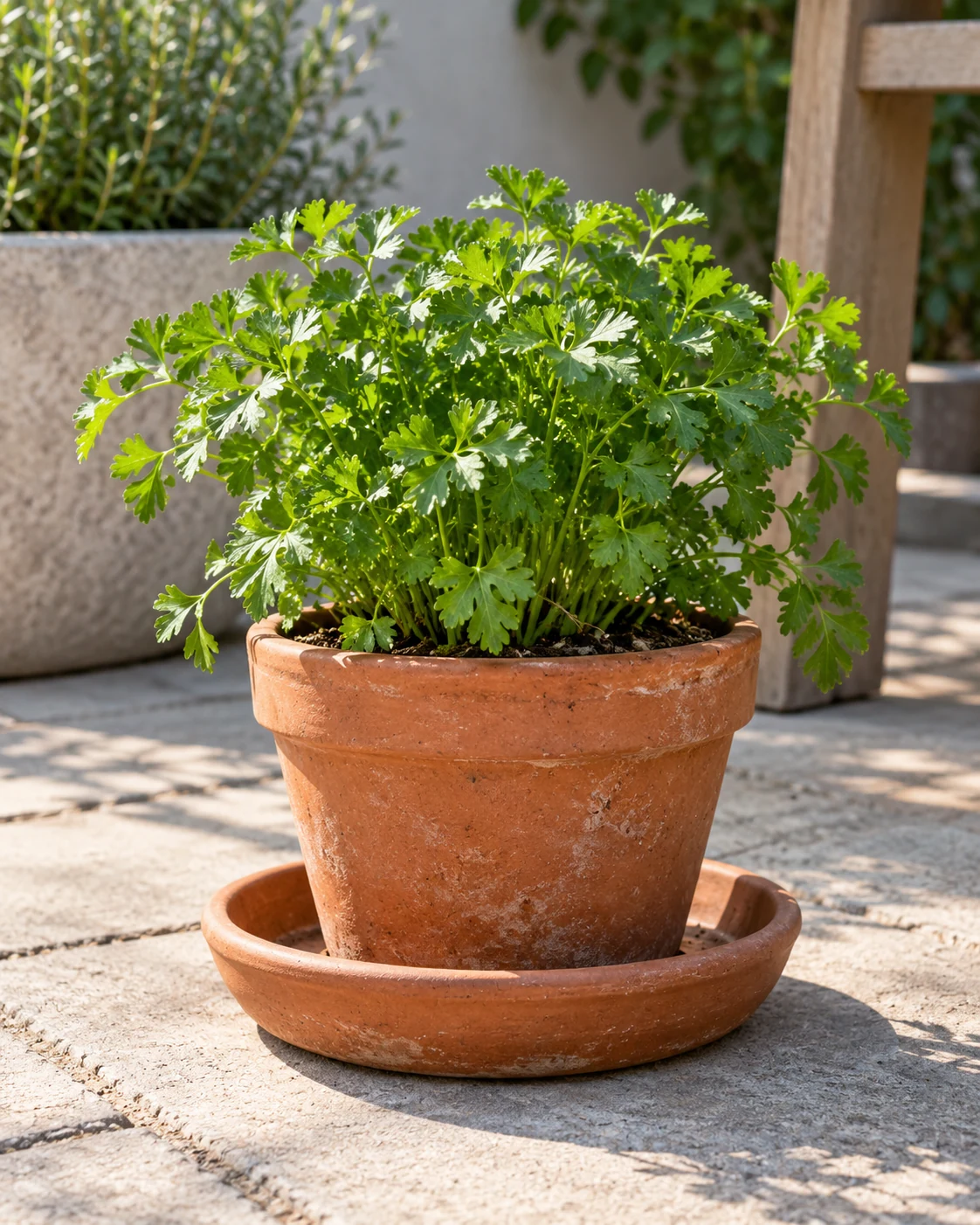
A pot wedged into its saucer can make collected water difficult to notice. Compare the actual base with the saucer’s usable interior. The outside diameter printed in a title may describe a different part of either piece.
Comparable options, not the exact pictured items. Check the selected color, size and buying notes.
Materials, fit and differences from the concept
- Eight-inch terracotta pots and saucers: Two eight-inch terracotta pots with drainage holes and saucers. Plants and growing medium are separate. Clay can break and may dry faster than plastic; a saucer is not permission to leave roots standing in water.
Look for an arrangement you can inspect and handle comfortably. You don’t need a huge decorative dish surrounding a small plant. You need to recognize collected water and reach it without spilling across nearby belongings.
Check the saucer’s condition while the pot is empty. Cracks, chips or an awkward rocking base can change how useful the pairing feels. Replace a damaged catchment before relying on it over a vulnerable surface.
5. Make emptying runoff part of watering
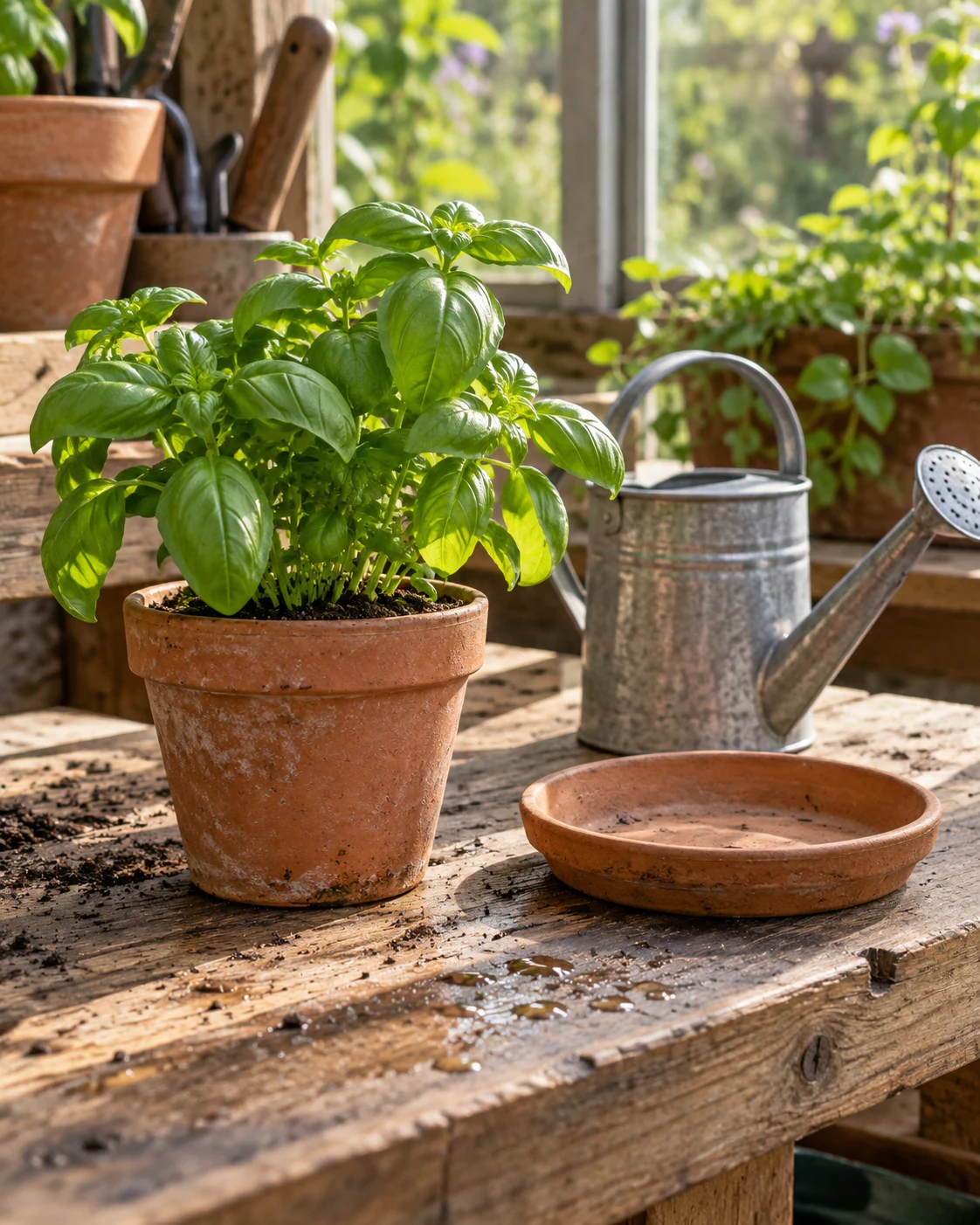
Keep a simple order: water, allow drainage, inspect the catchment, then remove collected water. Choose a location where that sequence is easy to complete. A sink, suitable outdoor work area or accessible table may serve different containers better.
Comparable options, not the exact pictured items. Check the selected color, size and buying notes.
Materials, fit and differences from the concept
- Eight-inch terracotta pots and saucers: Two eight-inch terracotta pots with drainage holes and saucers. Plants and growing medium are separate. Clay can break and may dry faster than plastic; a saucer is not permission to leave roots standing in water.
- Fiskars 40-ounce watering can: Fiskars 40-ounce watering can with a narrow spout. Intended as a small indoor can; it can carry water to a sheltered container setup. Check assembly and store indoors instead of implying outdoor weather resistance.
Avoid carrying an overflowing saucer through the room beneath a heavy pot. Empty it using a manageable arrangement that suits the container. If the movement feels awkward, rethink the location before the plant becomes larger or heavier.
For several pots, finish the first group before starting another. That reduces the chance of forgetting which saucers still need attention. The routine should remain recognizable even when the plants don’t all need watering together.
6. Use suitable potting medium without a gravel layer
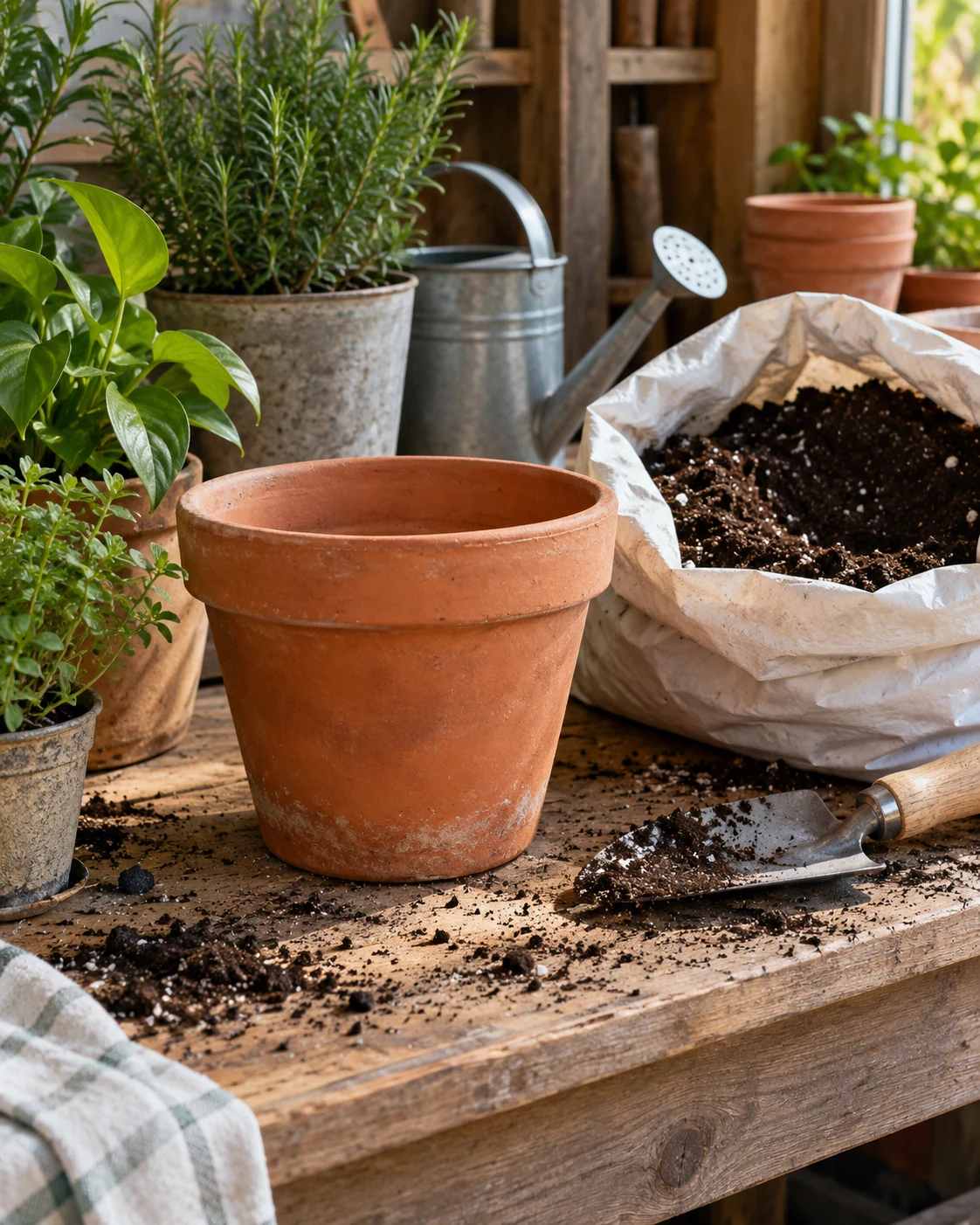
Adding gravel or broken pot pieces does not improve a container’s drainage. Keep that shortcut separate from choosing a suitable growing medium. A small pot contains useful growing volume, rather than space for unnecessary filler.
- Eight-inch terracotta pots and saucersView on Amazon
- Miracle-Gro outdoor potting mixView on Amazon
- Fiskars Ergo garden trowelView on Amazon
Comparable options, not the exact pictured items. Check the selected color, size and buying notes.
Materials, fit and differences from the concept
- Eight-inch terracotta pots and saucers: Two eight-inch terracotta pots with drainage holes and saucers. Plants and growing medium are separate. Clay can break and may dry faster than plastic; a saucer is not permission to leave roots standing in water.
- Miracle-Gro outdoor potting mix: Two eight-quart bags of Miracle-Gro outdoor container potting mix, containing plant food. Follow the current bag directions before adding fertilizer. Regional shipping varies; no US-stock or delivery guarantee is made.
- Fiskars Ergo garden trowel: Fiskars Ergo hand trowel with cast-aluminum head. A potting tool, not a structural installation tool. Keep away from unsupervised children.
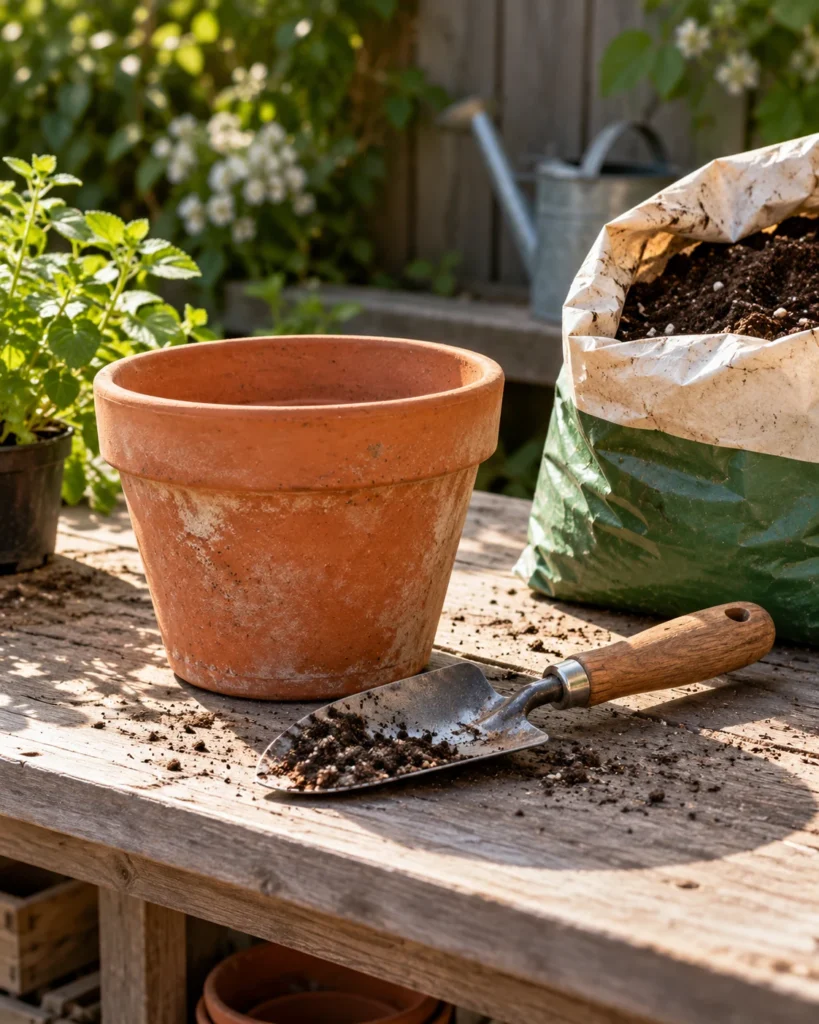
Choose the medium around the plant and the intended container use. A product sold for outdoor containers isn’t automatically the right choice for every indoor plant. Read its ingredients and feeding directions, especially when it already contains fertilizer.
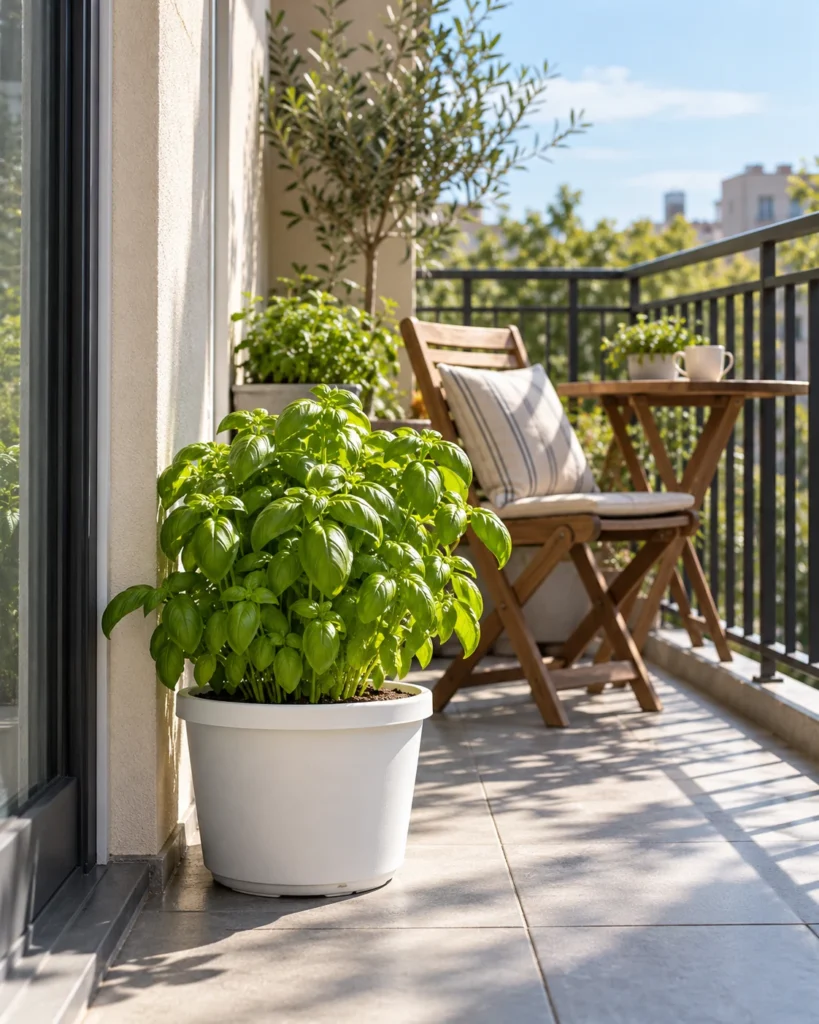
Our small balcony garden layouts also consider watering access and container placement. Those decisions belong alongside the potting medium. One cannot compensate for a layout that makes routine plant care impractical.
7. Leave the opening open
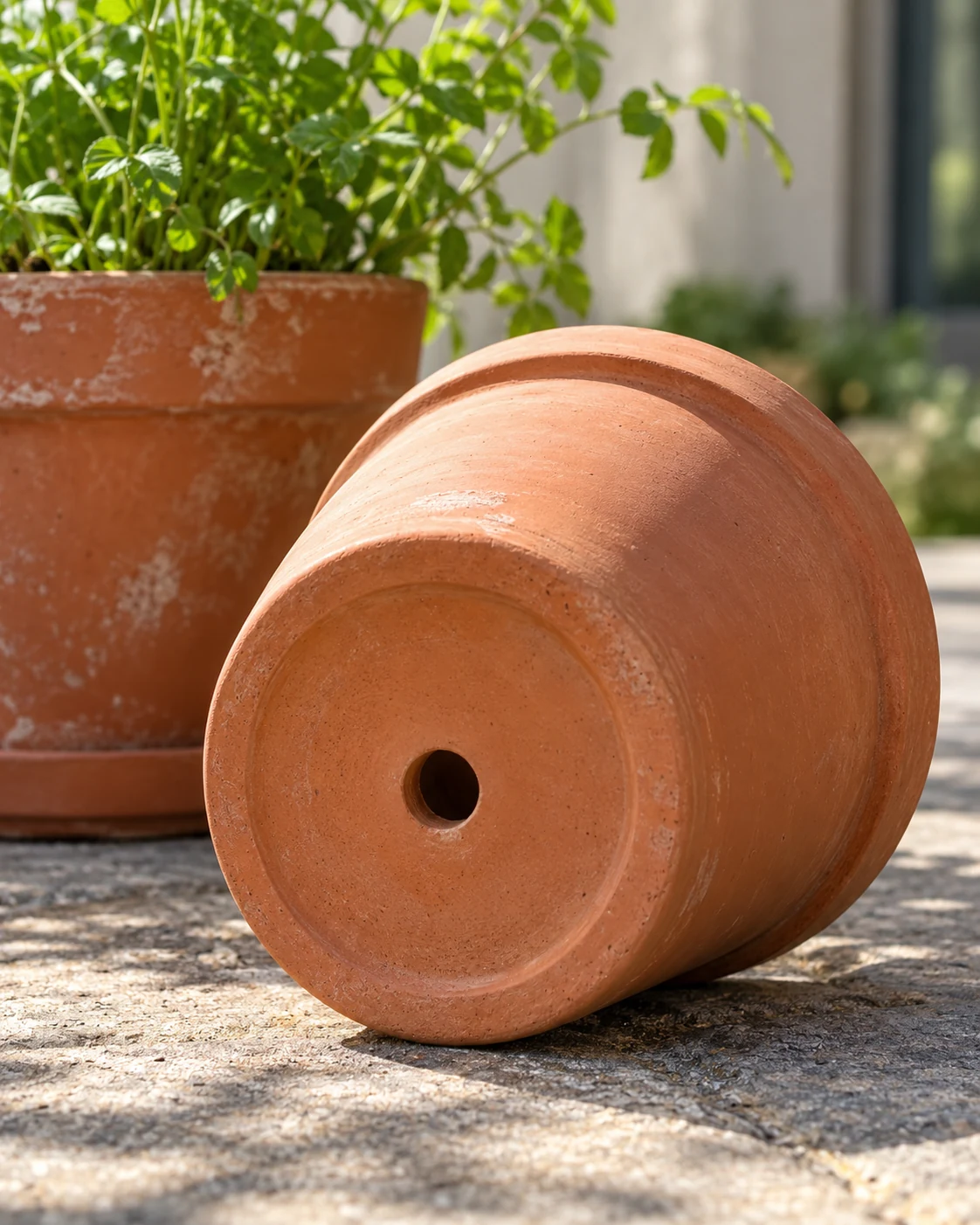
A stone pressed into the hole can turn a useful opening into a blockage. Inspect the base before planting instead of automatically covering it. Check supplied inserts against the pot’s instructions, rather than assuming they all serve the same purpose.
Comparable options, not the exact pictured items. Check the selected color, size and buying notes.
Materials, fit and differences from the concept
- Eight-inch terracotta pots and saucers: Two eight-inch terracotta pots with drainage holes and saucers. Plants and growing medium are separate. Clay can break and may dry faster than plastic; a saucer is not permission to leave roots standing in water.
During repotting, look for compacted debris around the opening. Clear the empty container appropriately before using it again. Don’t push a sharp tool through established roots merely to reproduce the clean photograph.
If water behaves unexpectedly, examine the whole arrangement before adding another accessory. The growing medium, drainage opening and catchment deserve separate attention. A decorative change won’t explain a blocked exit beneath the pot.
8. Choose support that leaves the saucer accessible
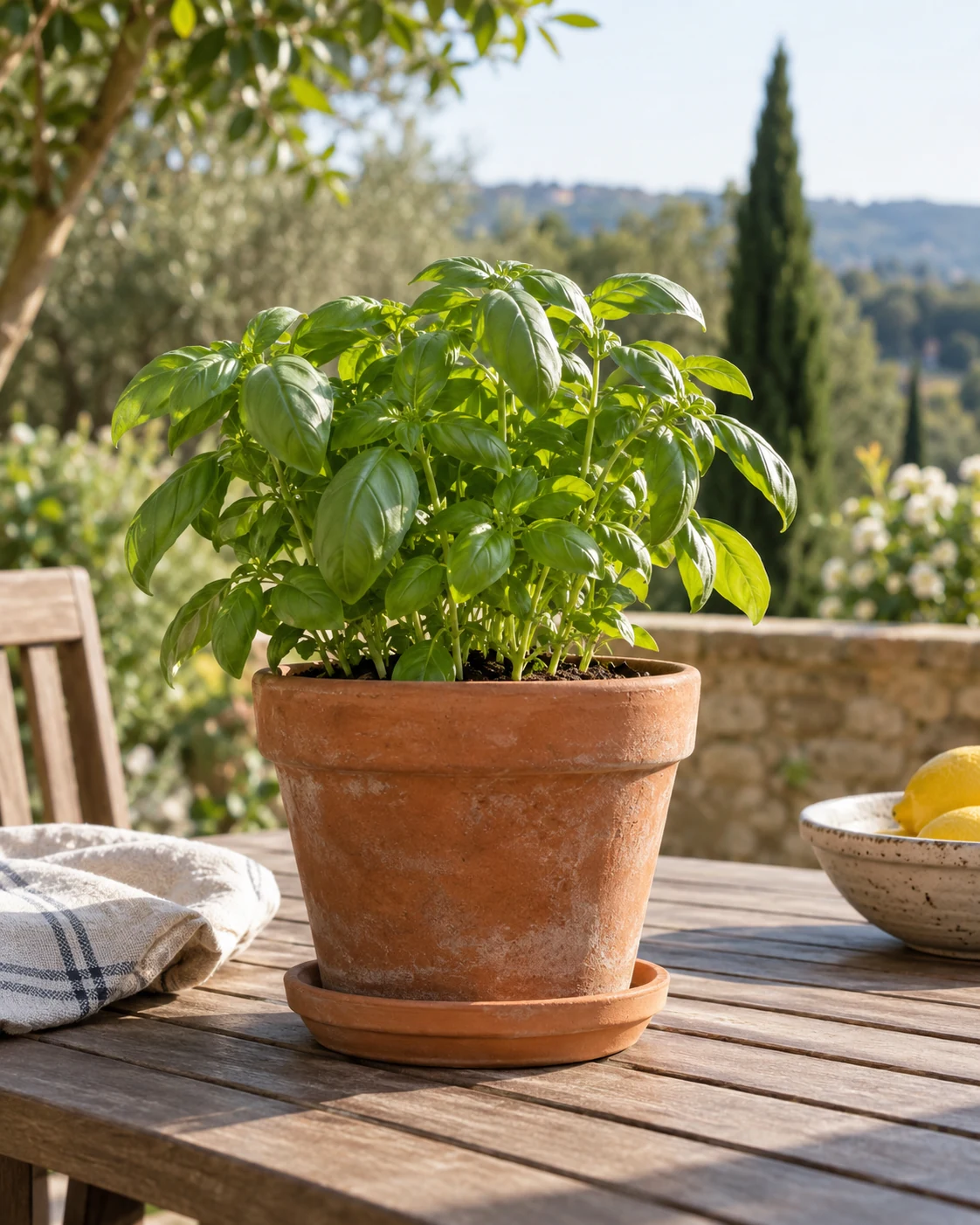
A stable table can make a modest container easier to inspect than a crowded floor corner. Check its suitability for the filled container and ordinary watering. Keep the saucer reachable from the side where you will actually stand.
Comparable options, not the exact pictured items. Check the selected color, size and buying notes.
Materials, fit and differences from the concept
- Eight-inch terracotta pots and saucers: Two eight-inch terracotta pots with drainage holes and saucers. Plants and growing medium are separate. Clay can break and may dry faster than plastic; a saucer is not permission to leave roots standing in water.
Avoid placing a heavy pot high merely to display its trailing leaves. You still need to handle the container safely during care. Keep required routes, door movements and the building’s restrictions in mind when arranging outdoor containers.
The illustrated table is an example of accessible placement, rather than a load rating. Use furniture suited to the intended conditions. Wet growing medium adds weight that an empty-pot photograph cannot establish.
9. Protect the surface without hiding the problem
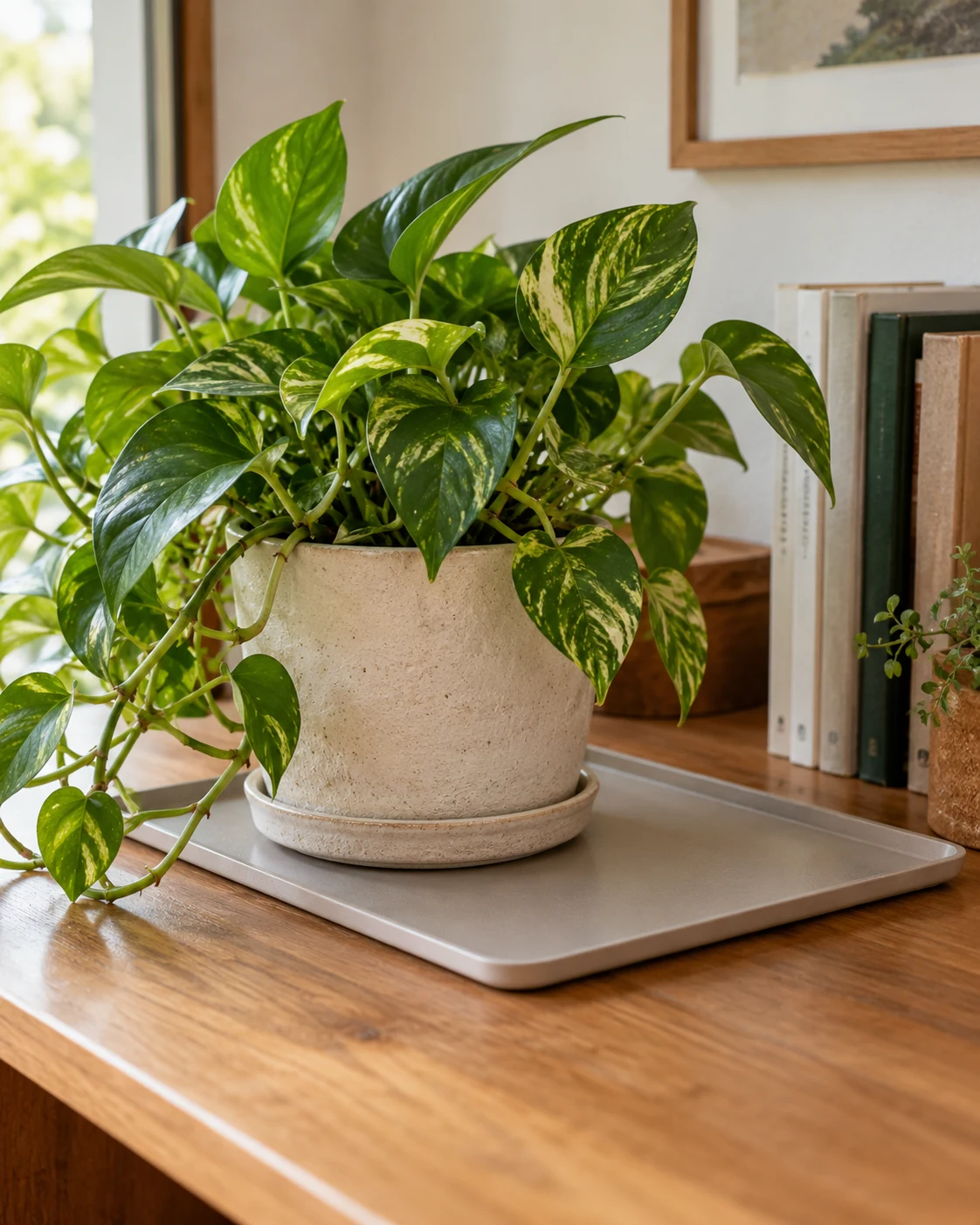
A tray can provide another practical boundary beneath a pot and its saucer. It doesn’t make leaking water harmless to wood, books or electrical belongings. Keep the surface visible enough to inspect rather than covering it with permanent decorative layers.
Comparable options, not the exact pictured items. Check the selected color, size and buying notes.
Materials, fit and differences from the concept
- D’vine Dev ten-inch planter and saucer: D’vine Dev white ten-inch plastic planter with drainage and matching saucer. Select by mature plant needs and usable volume. Wet growing medium adds weight; the empty pot weight does not establish balcony load safety.
- Amazon Basics wood serving tray: Wood tray: hand wash and dry promptly; not dishwasher safe.
Follow the tray’s intended use and care instructions. A wood serving tray is a styling option, not a guaranteed waterproof plant accessory. Use a suitable protective arrangement for your surface and remove spills promptly.
Keep absorbent fabric away from a catchment that may overflow. A wet cloth can hide the very moisture you wanted to notice. Let the planting corner remain easy to wipe and return to use.
10. Plan the watering route before the display
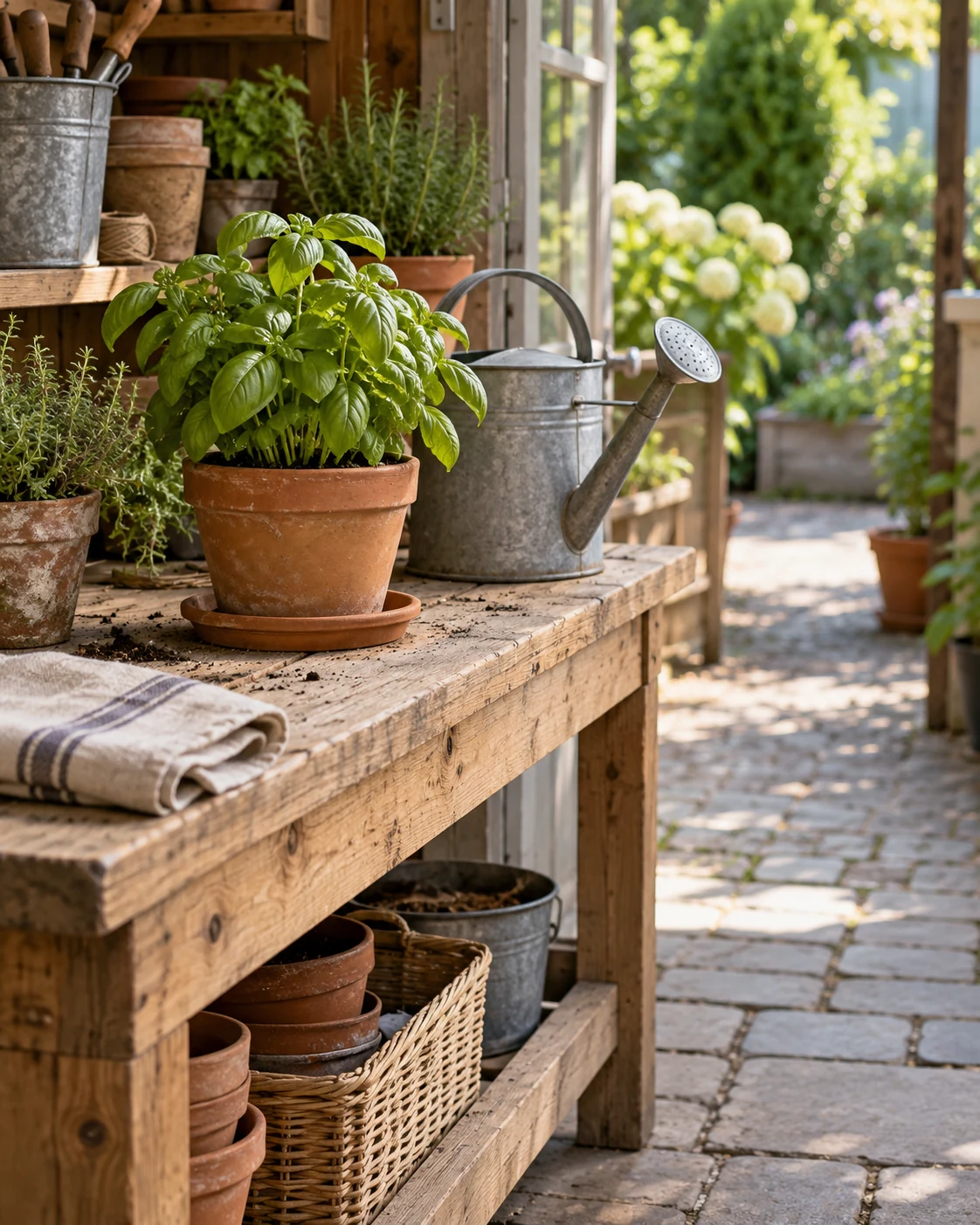
Picture the ordinary trip between the plant and its watering place. Include the door, nearby furniture and somewhere to set the pot down. Choose a route that works with the filled container, rather than only its empty weight.
Comparable options, not the exact pictured items. Check the selected color, size and buying notes.
Materials, fit and differences from the concept
- Eight-inch terracotta pots and saucers: Two eight-inch terracotta pots with drainage holes and saucers. Plants and growing medium are separate. Clay can break and may dry faster than plastic; a saucer is not permission to leave roots standing in water.
- Fiskars 40-ounce watering can: Fiskars 40-ounce watering can with a narrow spout. Intended as a small indoor can; it can carry water to a sheltered container setup. Check assembly and store indoors instead of implying outdoor weather resistance.
Smaller separate pots can offer more flexibility than one large arrangement. They also let you care for plants individually when their needs differ. Keep the watering can accessible without making it another obstacle beside the containers.
Start with one manageable pairing and use it through normal care. Notice whether you can inspect the hole, remove runoff and return the pot comfortably. Those practical details matter more than collecting several accessories before discovering where the difficulty actually sits.
Visuals are original AI-generated editorial concepts, not photographs of actual products, tested projects or hosted events.