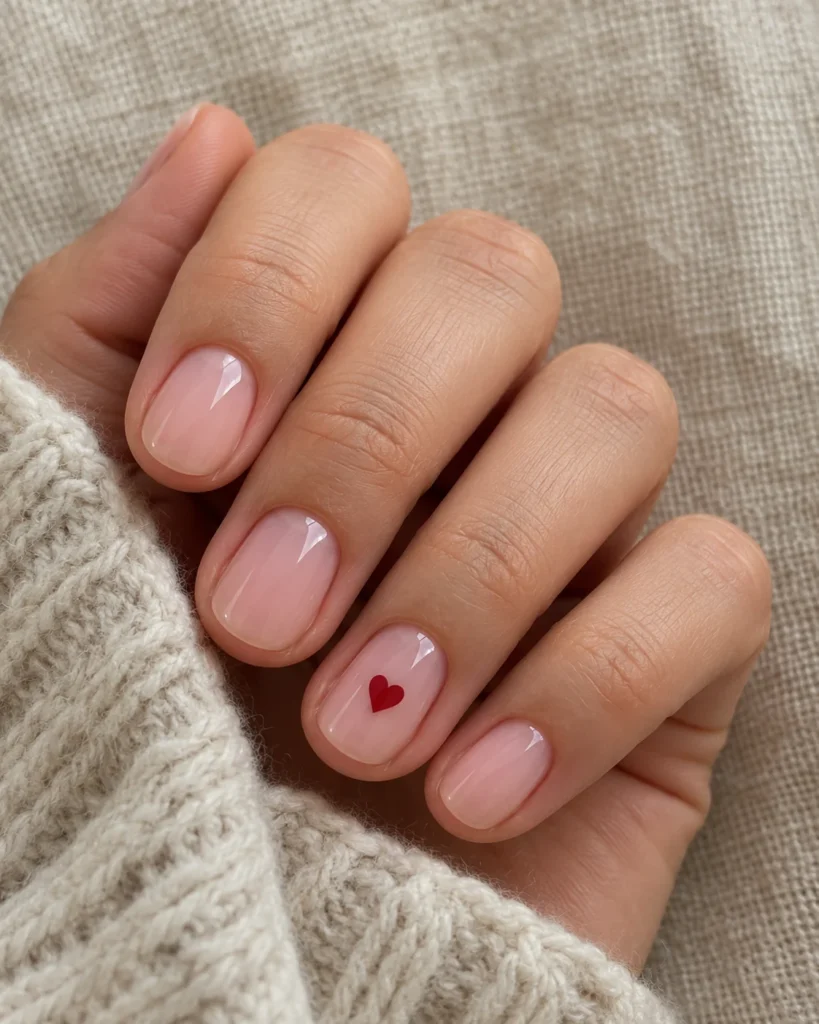
8 Simple Christmas Nail Ideas, Shown Up Close
Explore the ideas
- 1. Glossy red without any extra art
- 2. One red accent among sheer pink nails
- 3. A narrow red French tip
- 4. One green dot on a cream base
- 5. Alternate deep red and forest green
- 6. One short metallic line
- 7. A single small gold star
- 8. One pale nail beside deep green
- Make the reference useful at your appointment
A Christmas manicure doesn’t need a miniature painting on every finger. A red edge, green dot or single gold detail can carry the idea. The trick is leaving enough space around that detail for it to register.
These eight close-up visual concepts show different ways to use festive color on shorter nails. Choose the effect you like before deciding how much art to request. The images are AI-generated manicure concepts, not photographs of tested polish or exact product swatches.
Keep your preferred nail length in mind when choosing a reference. A motif that looks small on a long extension can dominate a shorter surface. Borrow its placement or color relationship rather than copying every detail unchanged.
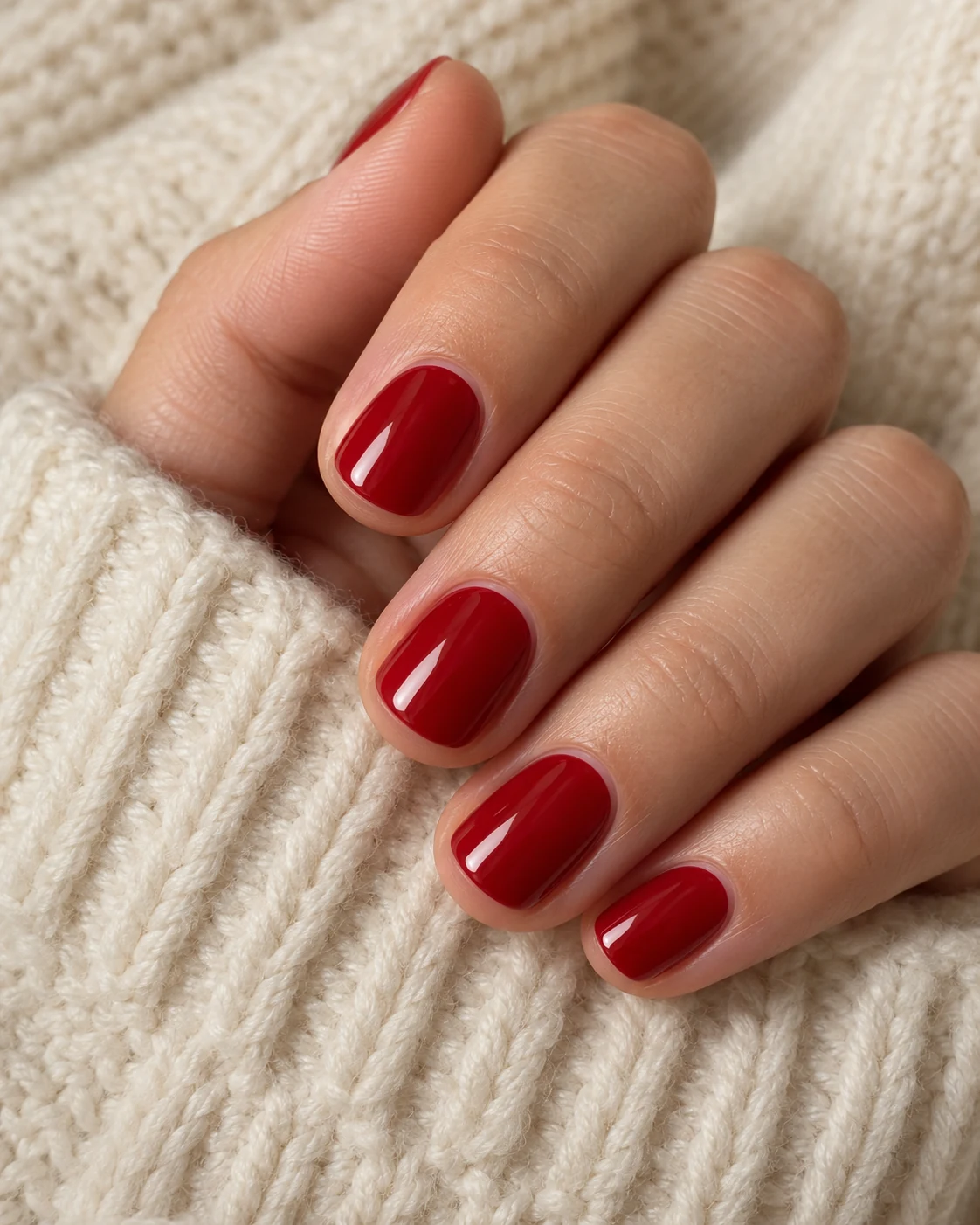
1. Glossy red without any extra art
Plain red gives short nails a clear, confident finish. There are no extra shapes competing with the outline, so the color does the work. A rounded edge keeps the look simple without requiring a particular nail extension.
Compare the red against your skin in ordinary daylight. A cooler cherry and a warmer tomato shade can create noticeably different effects. Choose the relationship you enjoy rather than assuming every bottle labeled red will look similar.
Essie Original Forever Yummy is one researched red cream option. The manufacturer describes an opaque finish, which differs from a translucent red tint. The image illustrates that solid-color idea without claiming to match the bottle precisely.
You don’t need that named shade if you already own a red you enjoy. Check the selected polish’s instructions and use it as directed. For a salon visit, explain that you want plain color without an added accent nail.
2. One red accent among sheer pink nails
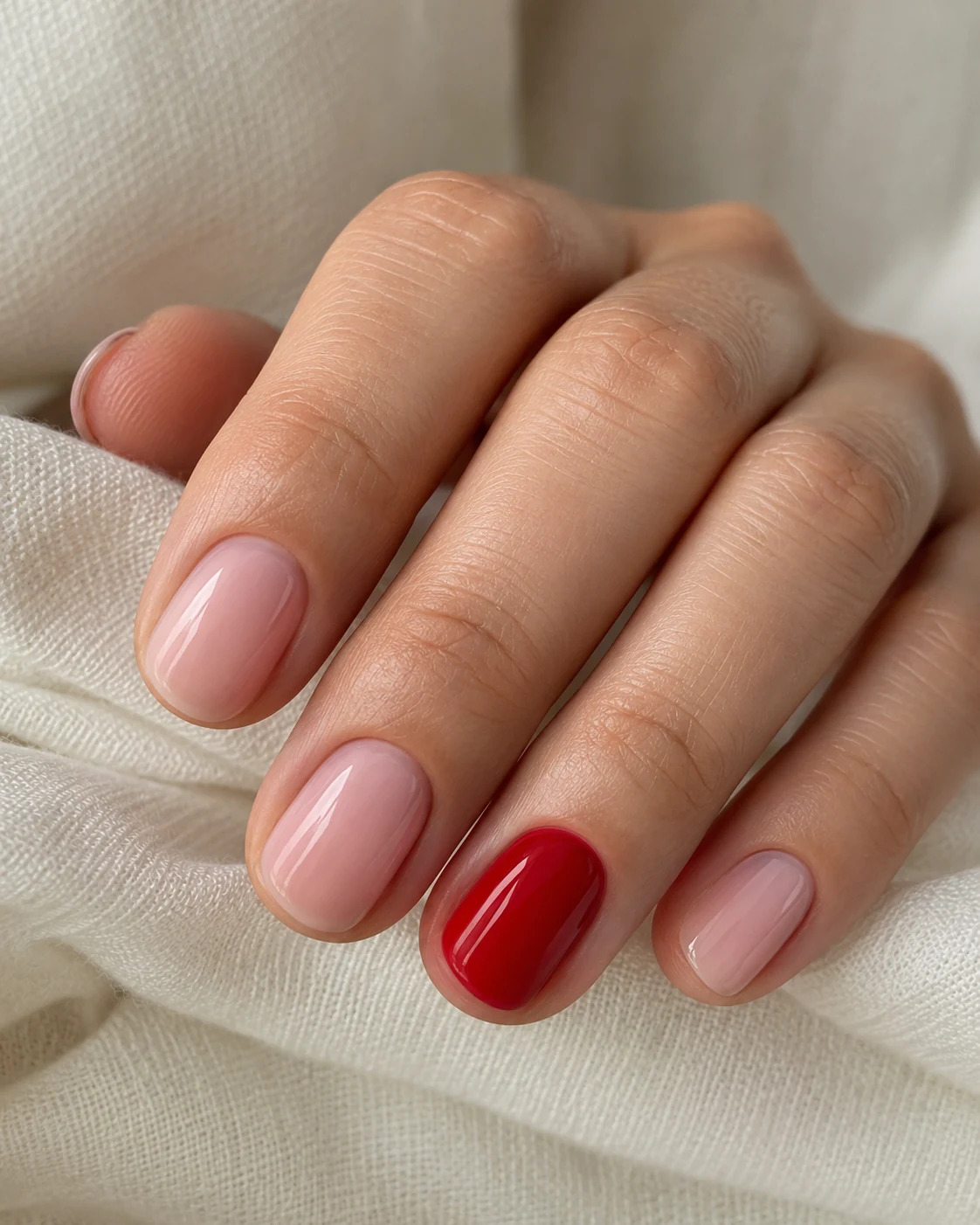
One red nail introduces contrast while leaving most of the manicure quiet. The pale neighbors create a clear background for that single stronger color. It can feel festive without carrying an obvious holiday motif.
Decide which finger receives the accent before the appointment begins. Matching positions across both hands create a more regular arrangement. Moving the accent creates a different rhythm without requiring another color or design.
Sheer pink and opaque pink aren’t interchangeable visually. A sheer finish lets the natural nail remain part of the effect. An opaque pastel creates a more graphic block beside the red.
Essie Original Ballet Slippers is one sheer pink option researched for this guide. Compare the product description with the finish you want before choosing it. Don’t judge opacity from this illustrative image or assume every pale pink behaves identically.
3. A narrow red French tip
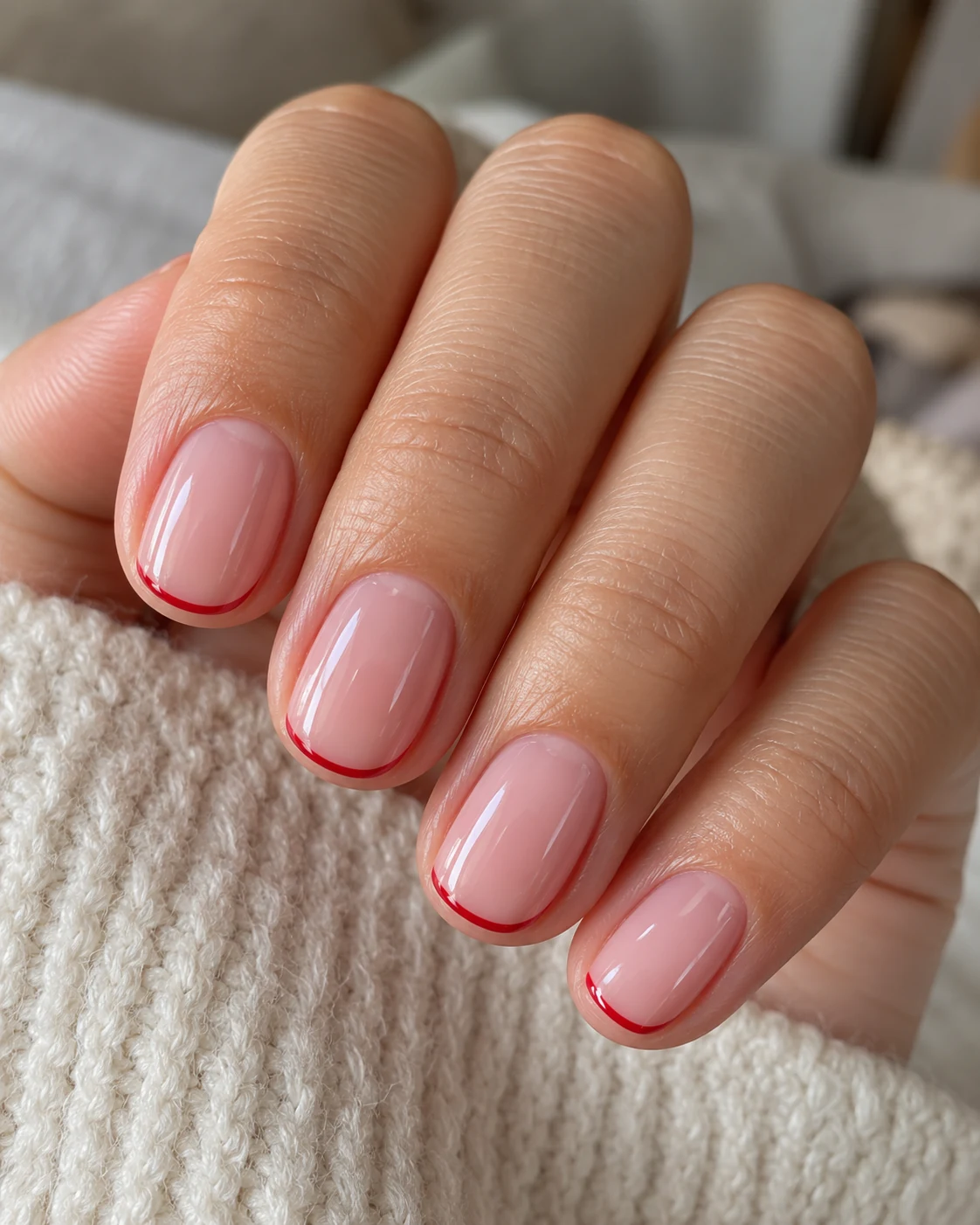
A fine red edge gives the color a smaller role than a complete red nail. Most of the pale base remains visible, which matters on a shorter surface. A wider band would create a much stronger block of color.
Show your technician the width relationship you like rather than asking only for French tips. That phrase can describe several very different bands and curves. Point to the amount of base you want left visible.
Keep the rest of the manicure quiet while judging the first version. A heart, bow or second stripe may compete with an already clear outline. You can always choose a more detailed arrangement another time.
If a precise edge doesn’t appeal, try the single red accent instead. It keeps the pink and red relationship without requiring a narrow line. The useful choice is a design you’ll enjoy wearing, rather than the most intricate reference.
4. One green dot on a cream base
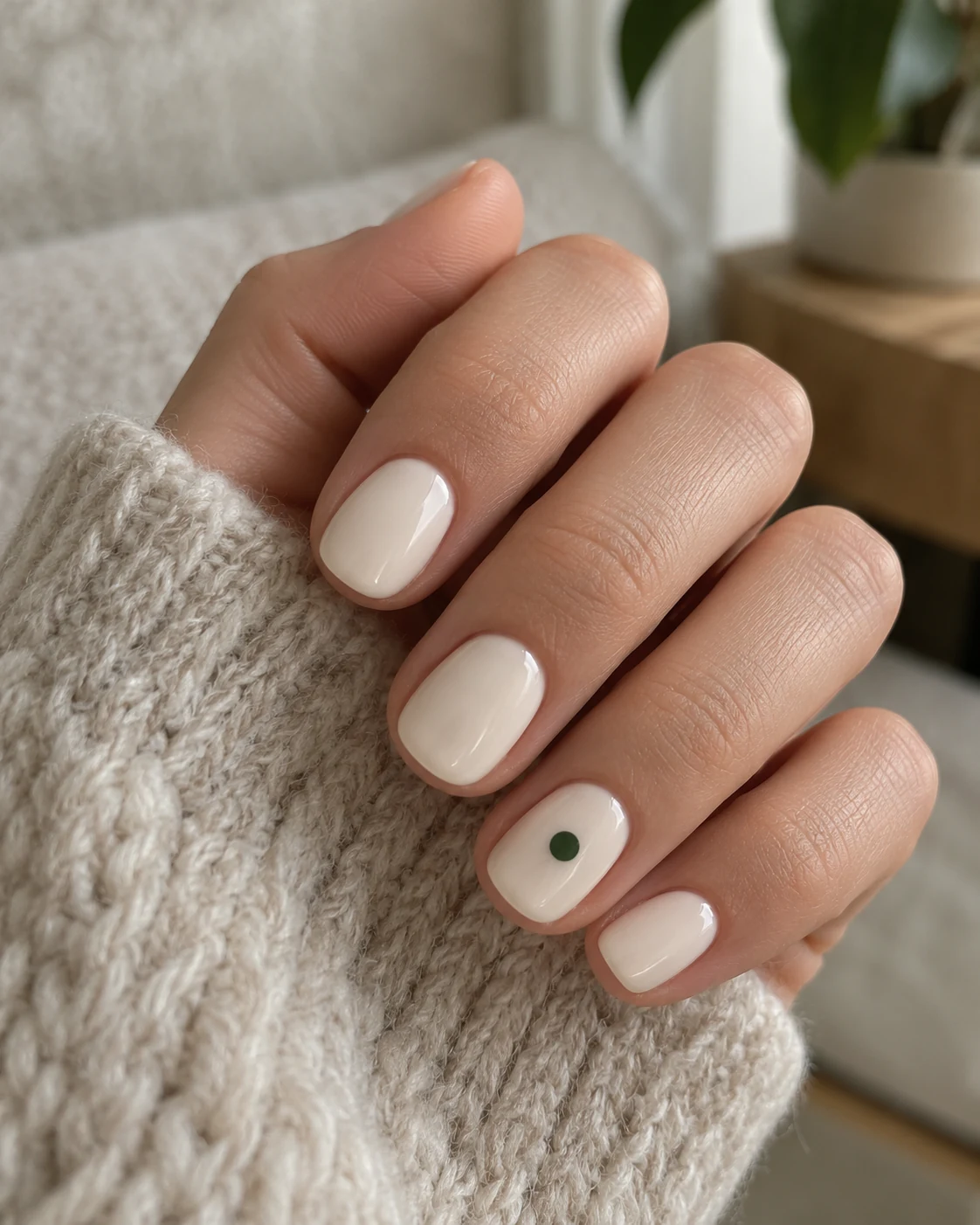
A single green dot gives cream nails a small seasonal reference. The unused space makes that simple mark easy to recognize. Adding several more dots would create a different pattern rather than automatically improving this one.
Place the accent where it remains separate from the surrounding edges. On a very short nail, a crowded corner can make the dot look accidental. Its position matters as much as its size.
Choose a darker green when you want a clear contrast against cream. A pale green can produce a gentler effect, but may disappear from farther away. Compare the relationship before asking for another layer of decoration.
The cream base doesn’t have to match a sweater or party outfit exactly. This small palette can work independently of the rest of your clothes. Keep the motif on one nail if you prefer a quieter overall manicure.
5. Alternate deep red and forest green
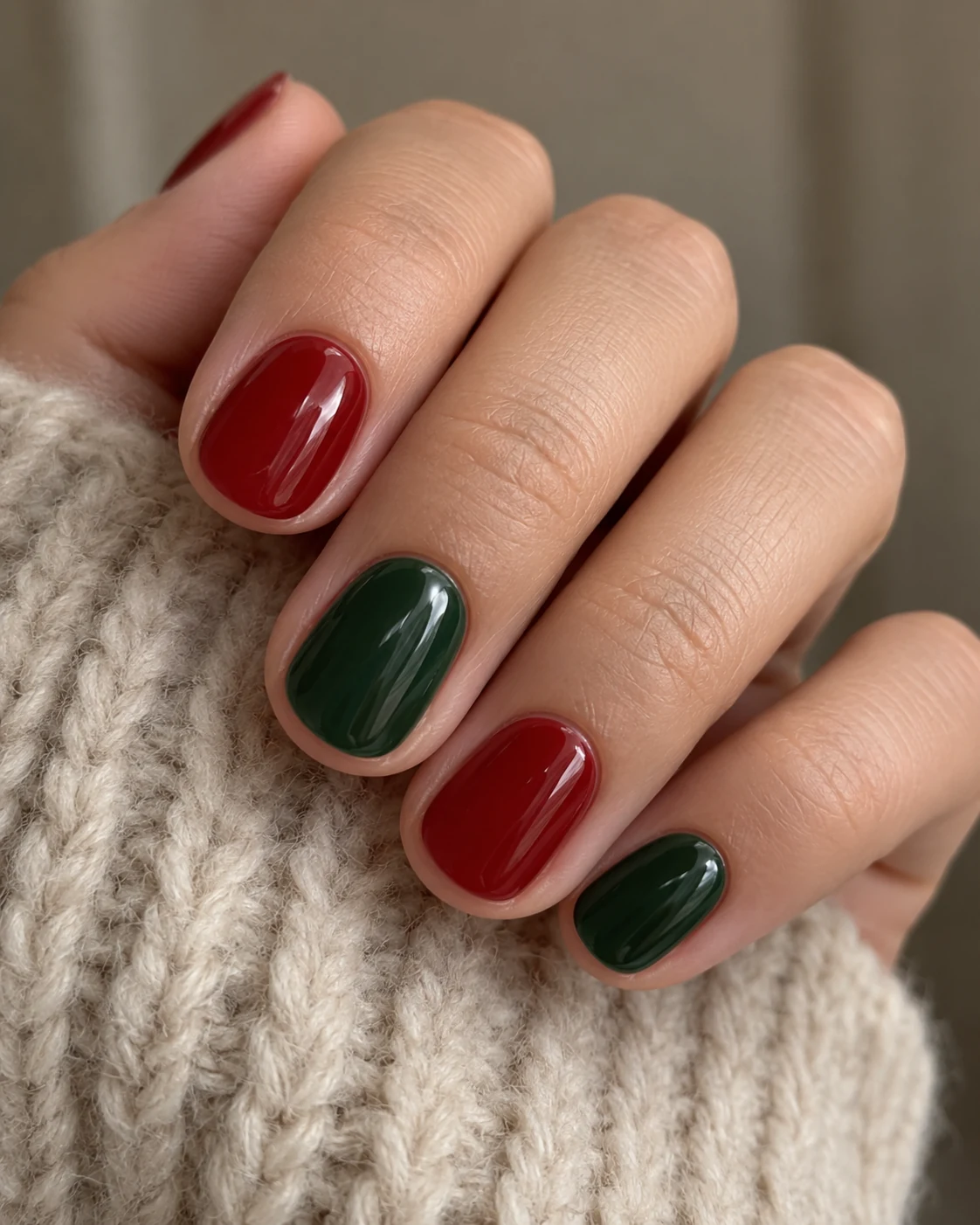
Two solid colors can provide the entire Christmas reference. Alternating them gives each nail a simple job without tiny illustrations or lettering. Deep shades make the contrast feel more restrained than a very bright pairing.
Plan the sequence across both hands before beginning. You might mirror the arrangement or let one color appear more often. That choice changes the balance even though the same two bottles are involved.
Check the shades beside one another rather than judging them separately. A brownish red and blue-leaning green create a different relationship from warmer versions. There isn’t one compulsory combination, so choose the effect you prefer.
You can simplify this idea by making most nails one color. Use the second shade only for an accent when full alternation feels busy. That preserves the palette while changing how strongly the festive reference appears.
6. One short metallic line
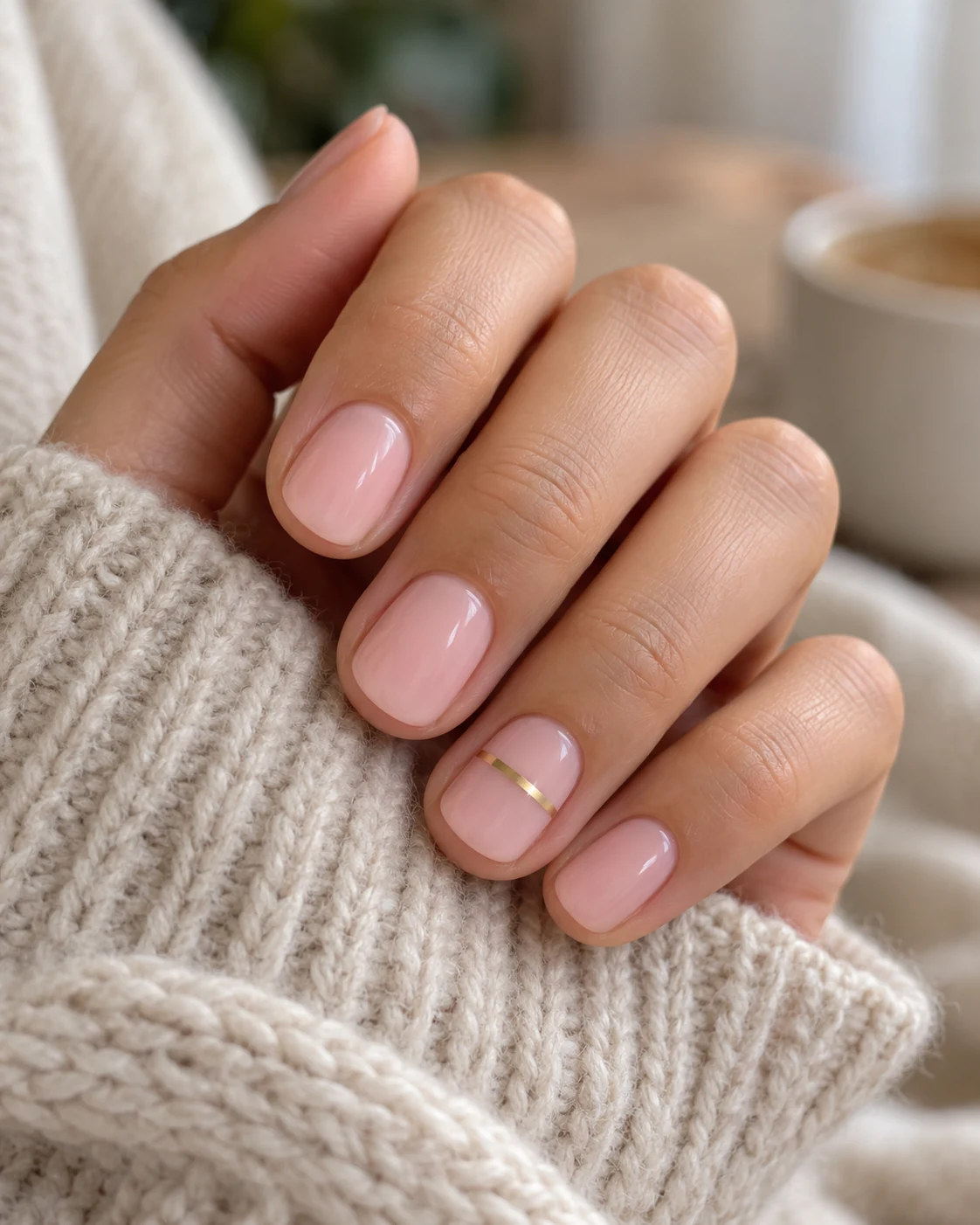
A small gold line introduces a reflective detail without a glitter-covered surface. The pale pink base leaves it enough room to read clearly. Restricting the mark to one nail keeps the rest deliberately quiet.
Decide whether you like a short central stripe or a line reaching farther across. Those versions divide the nail differently, especially on a smaller surface. Show the placement you want instead of assuming metallic line means the same thing everywhere.
Reflective finishes change appearance with the light. A subtle indoor glint may look much brighter beneath direct lighting or a camera flash. Choose the detail for ordinary wear rather than only one photograph.
Check which product or service creates the finish before agreeing to it. Regular polish, foil and other materials involve different application and removal instructions. An attractive image doesn’t identify the system used to achieve a similar effect.
7. A single small gold star
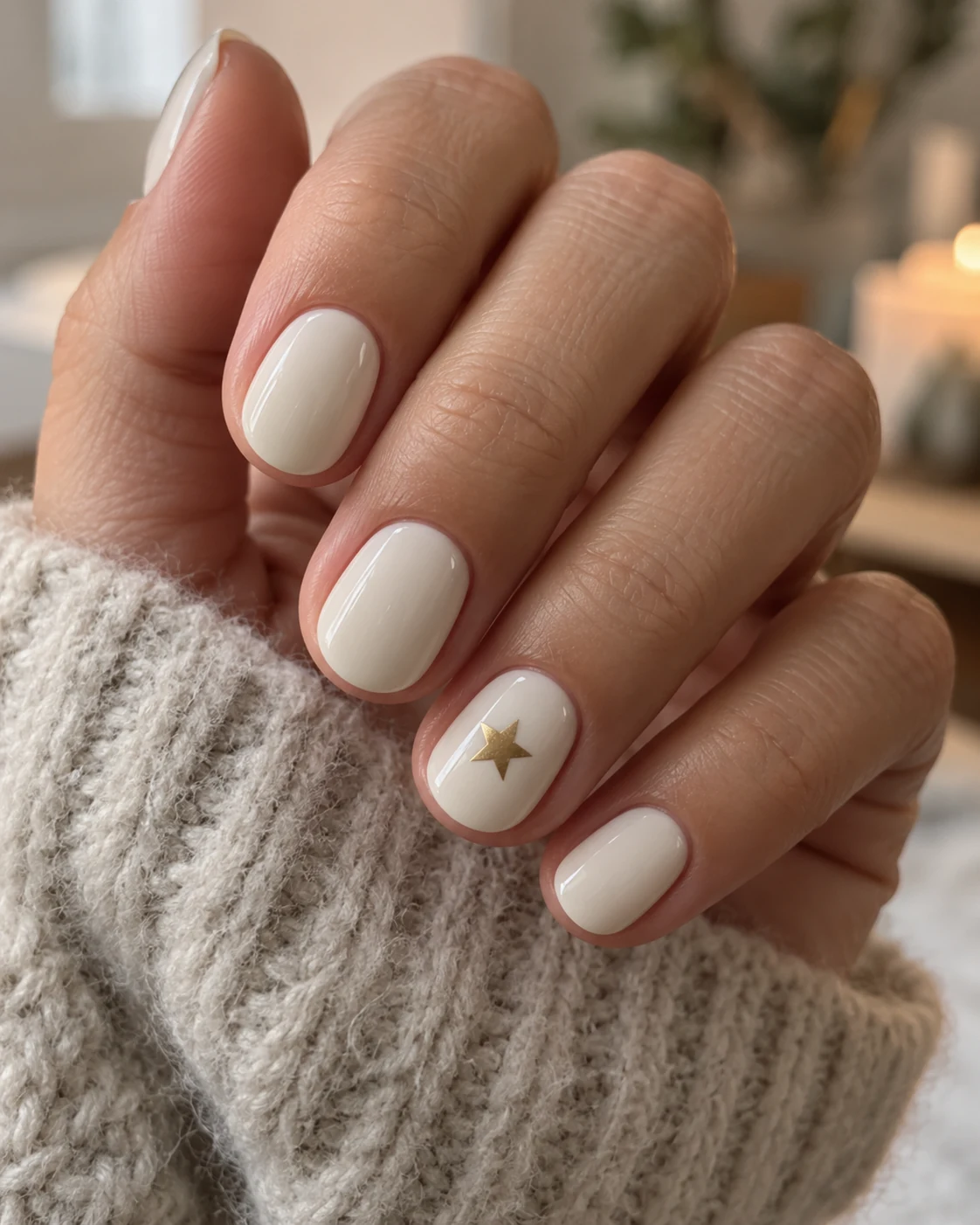
One star creates a recognizable motif while leaving the surrounding cream visible. Its scale needs to suit the nail rather than fill it from edge to edge. The neighboring plain nails give the little shape more presence.
Ask to see the proposed star size against your actual nail. A detail that works on an extension may need simplifying on your current length. Keeping the five-point silhouette readable matters more than adding extra sparkles around it.
For a salon appointment, confirm whether the motif changes the booking or price. A plain color service may not include additional art or materials. Clarifying that early keeps a simple reference from becoming a different appointment than you expected.
If the star feels too detailed, return to a dot or plain gold accent. Those alternatives keep a small reflective focal point without the same silhouette. You can enjoy the idea without treating the most elaborate version as compulsory.
8. One pale nail beside deep green
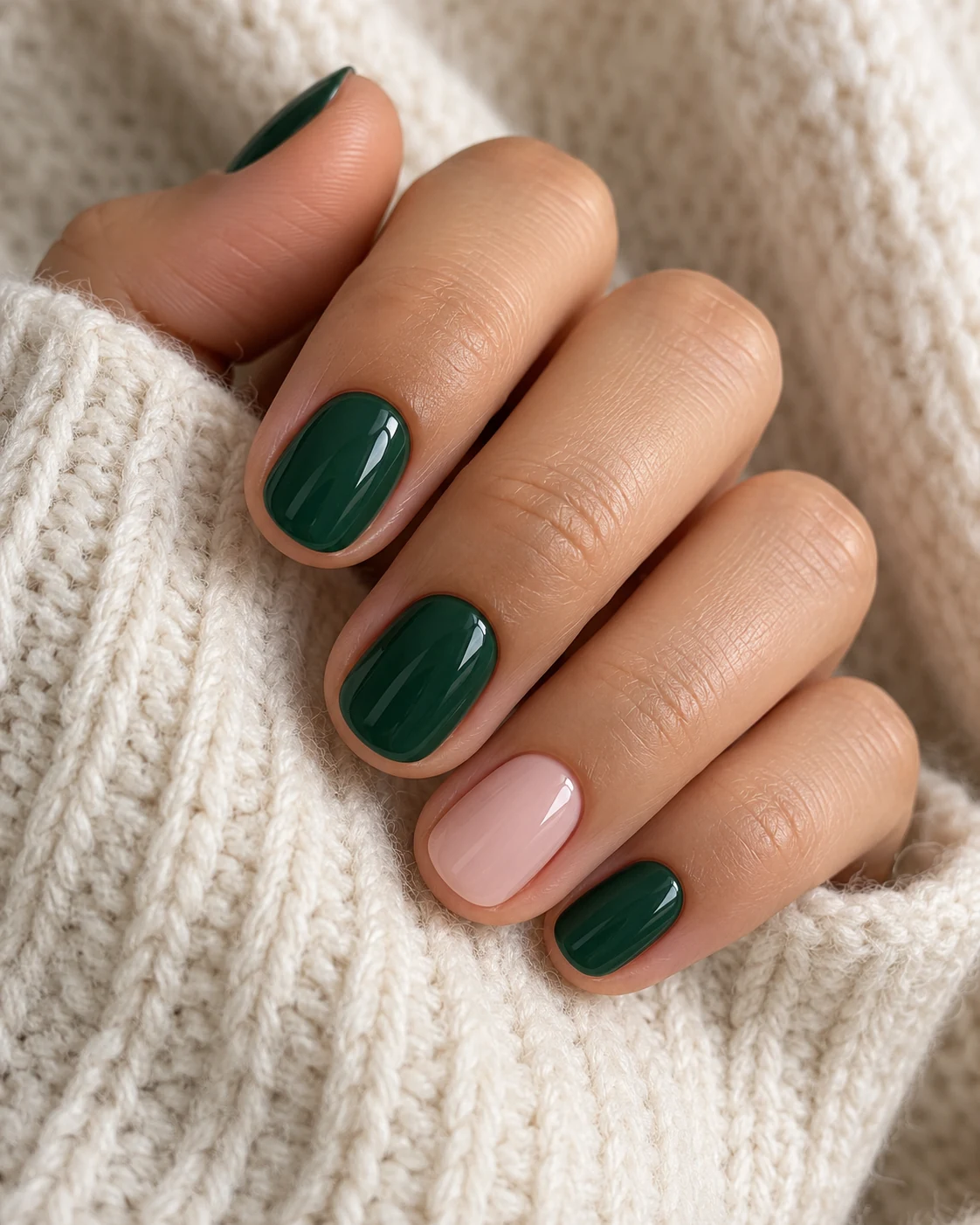
A pale accent can feel more surprising when the surrounding nails are dark. Forest green becomes the main color, while pink provides the small interruption. No drawn motif is needed to make the arrangement deliberate.
Choose whether the pale nail should look sheer or opaque. A sheer version feels lighter and leaves the natural nail visible. An opaque cream creates a stronger contrast beside the darker polish.
Try one accent first rather than scattering several unrelated colors across the hand. That makes it easier to judge whether the original relationship already works. Another detail should contribute something specific instead of filling every available surface.
This combination can continue beyond Christmas if you still like it. The colors don’t require a particular date to look considered. Choose a manicure you want to see during ordinary tasks as well as at a gathering.
Make the reference useful at your appointment
Pick one primary idea and identify the part you actually like. It could be opacity, motif size, position or the amount of pale space. Explaining those separately is more helpful than asking for everything in several competing photographs.
Tell your technician that you want to keep your comfortable nail length. Discuss the chosen polish system and its removal requirements before the service starts. Don’t assume a glossy reference establishes which materials created it.
Check any workplace rules or practical activity requirements before choosing extra materials. A design that looks attractive might still feel inconvenient during your ordinary tasks. Plain color can preserve the palette when another decorative element doesn’t fit your week.
Take your reference into ordinary lighting before making the final color choice. A bright screen can make pale pink appear more opaque than the effect you want. Ask to compare the available shades rather than treating the image as a calibrated swatch.
Keep cuticles intact rather than cutting or forcefully pushing them back for a cleaner photograph. Tools should be clean, and products should be used according to their instructions. Seek appropriate medical advice if a product causes a reaction or a nail changes unexpectedly.
For another small-motif approach, browse our Valentine ideas for short nails. The shapes change, but the need for clear space remains useful. If you’re dressing for a gathering too, the casual Christmas outfits offer several comfortable directions.