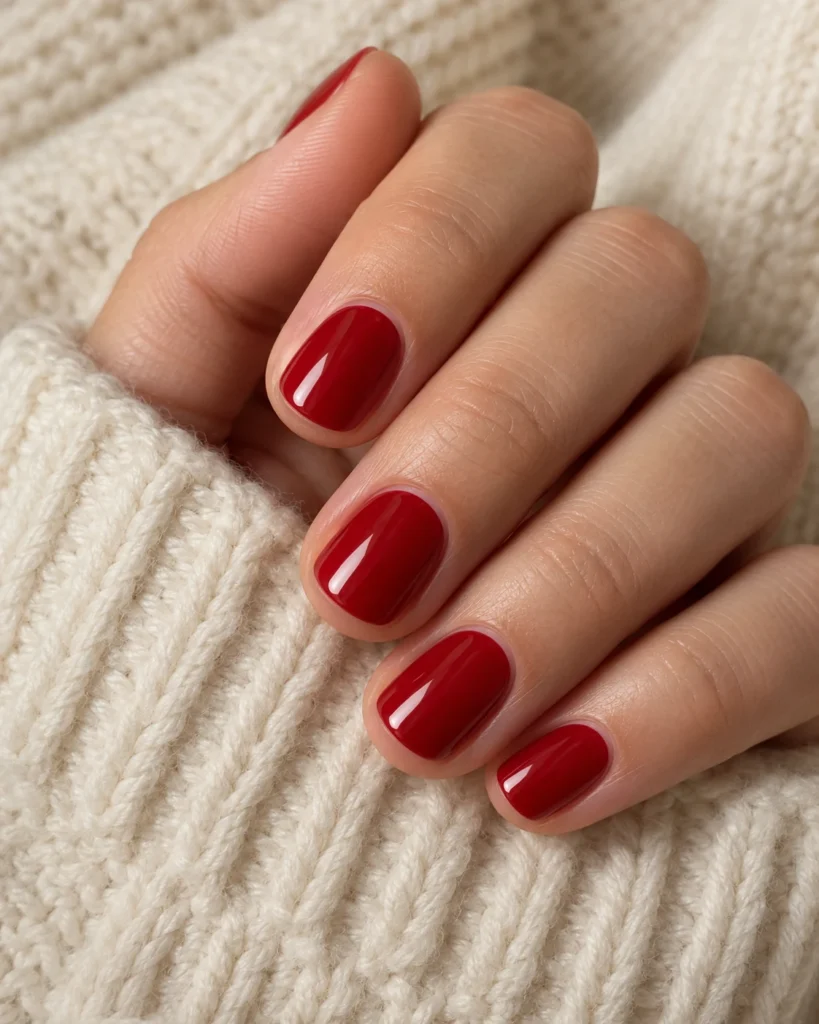
8 Valentine Nail Ideas for Short Nails, With Space Around the Details
Explore the ideas
- 1. One centered heart
- 2. Move a tiny heart slightly off center
- 3. A fine red French edge
- 4. Alternate pink and red without a drawn motif
- 5. Keep a diagonal tip small
- 6. Three small red dots
- 7. Put the heart below an otherwise quiet tip
- 8. Let one hand stay quieter
- Turn the picture into a clear appointment brief
A tiny heart can look charming on a short nail. Several hearts, a bow and a wide tip may become a crowded red patch. These eight visual examples give each detail enough space to remain recognizable.
Start with the nail length you already find comfortable. You can move a motif or choose an accent instead of adding an extension. These AI-generated manicure concepts illustrate arrangements rather than tested services or exact polish swatches.
Look at the available surface before choosing another decoration. Nail width, shape and the visible free edge all affect the final balance. Borrow the idea from a reference without assuming every detail should transfer unchanged.
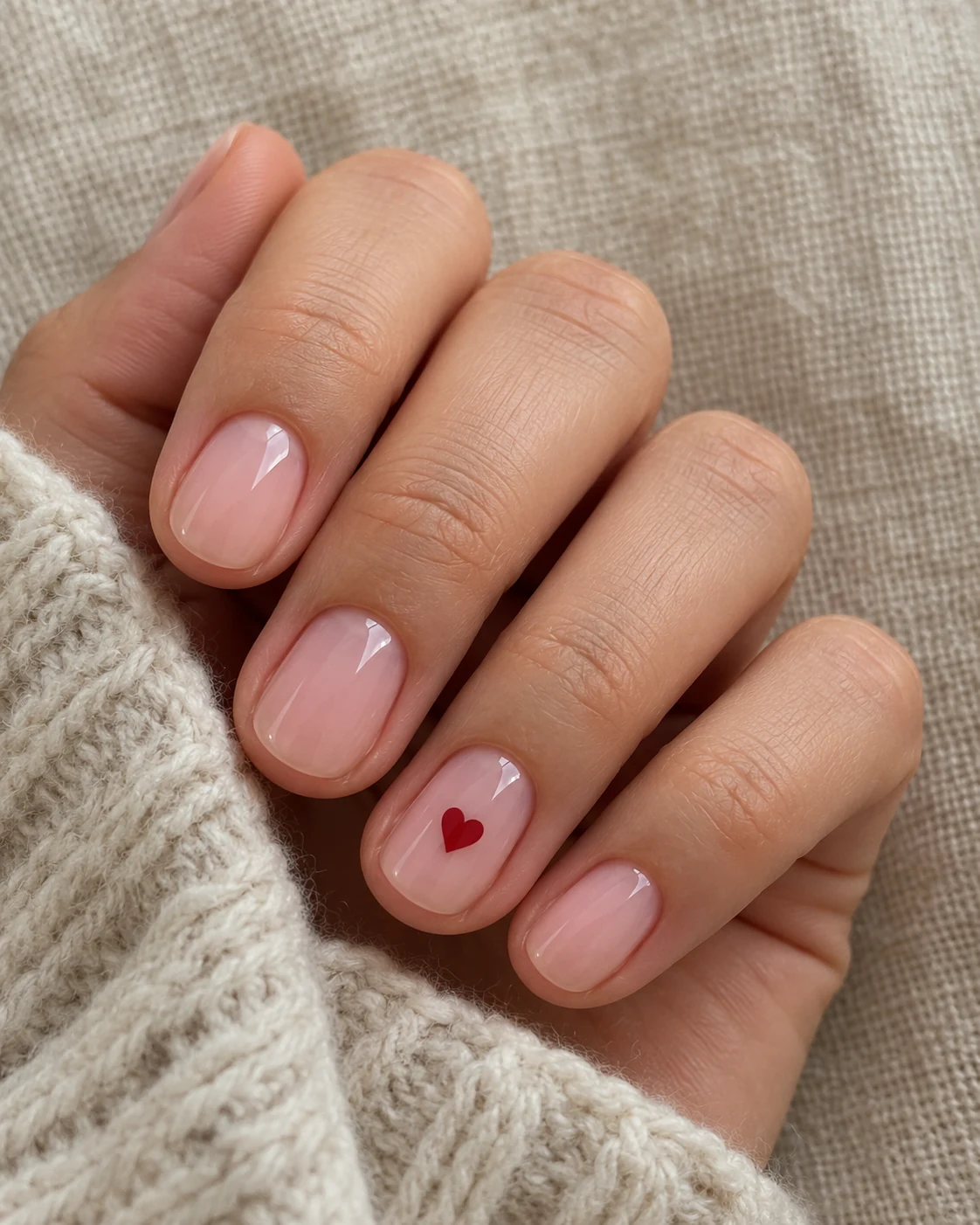
1. One centered heart
A centered heart creates a clear focal point without needing another motif nearby. The neighboring plain nails make that little shape easier to notice. Empty space is part of the arrangement rather than an unfinished area needing more art.
Choose the heart’s size in relation to the nail’s width. A shape stretching almost between both edges can become harder to distinguish. A smaller red mark may remain more readable despite containing less color.
The pink base changes the effect as well. A sheer finish keeps the natural nail visible, while an opaque pastel looks more graphic. Compare that difference before deciding two pale bottles are interchangeable.
Ask for one clean motif before adding another detail. Seeing the quieter version helps you judge whether the manicure already feels complete. You can keep the same color relationship while requesting something more elaborate another time.
2. Move a tiny heart slightly off center
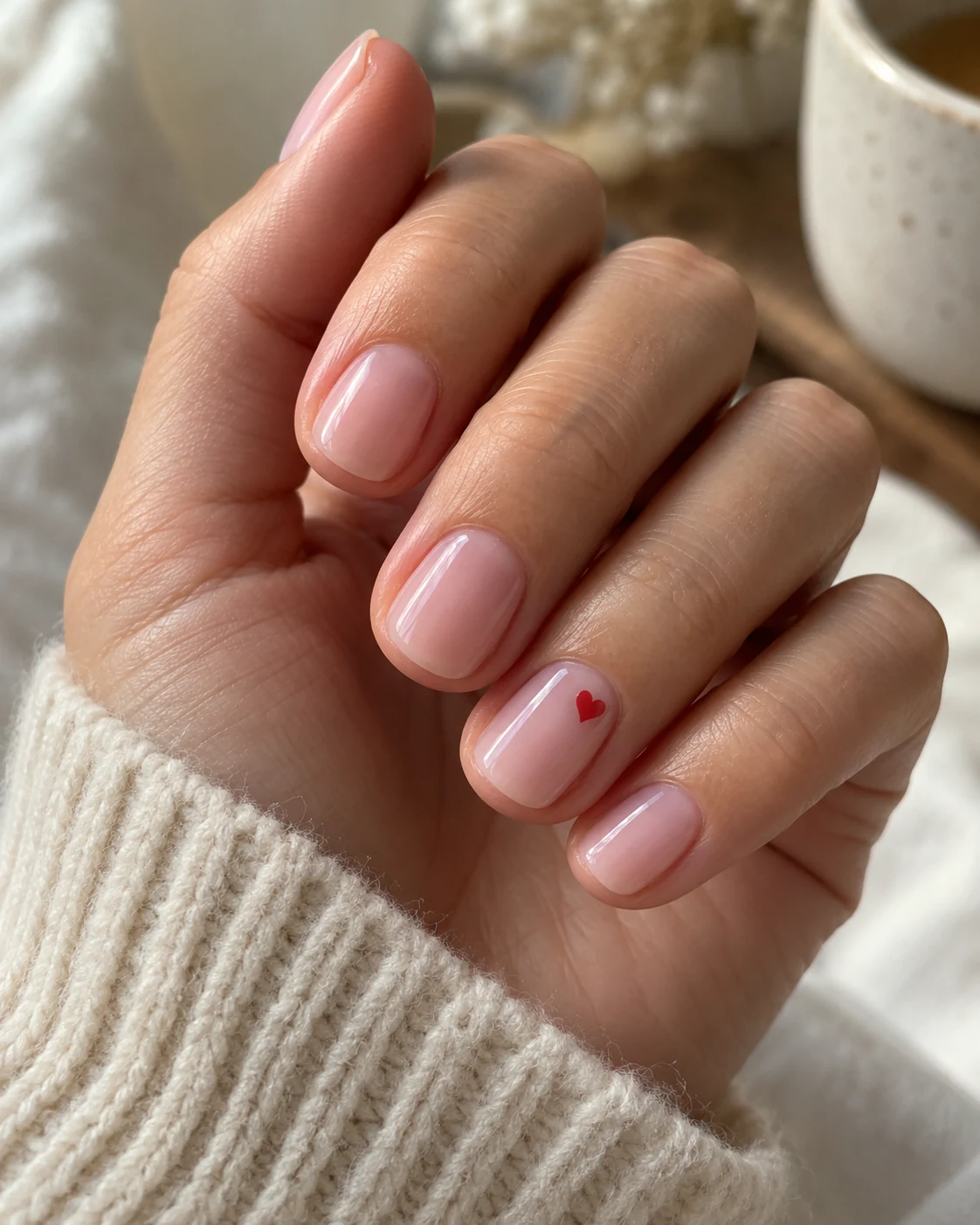
Shifting the heart creates a different rhythm without changing the palette. The larger quiet area across the nail makes the small accent feel less formal. It can work when a centered motif looks too symmetrical for your taste.
Leave a deliberate gap between the shape and the surrounding edges. Crowding the side can make the heart look like an accidental red mark. Show your technician the spacing you like rather than describing only the motif itself.
Decide whether both hands should mirror the position. You could also keep the same corner throughout for a more graphic arrangement. Plan that sequence before starting so the variation feels intentional.
Try the placement on your actual nail width before choosing the heart’s size. A wide reference and a narrow nail provide different amounts of spare room. The useful adjustment preserves the relationship rather than forcing an identical measurement everywhere.
3. A fine red French edge
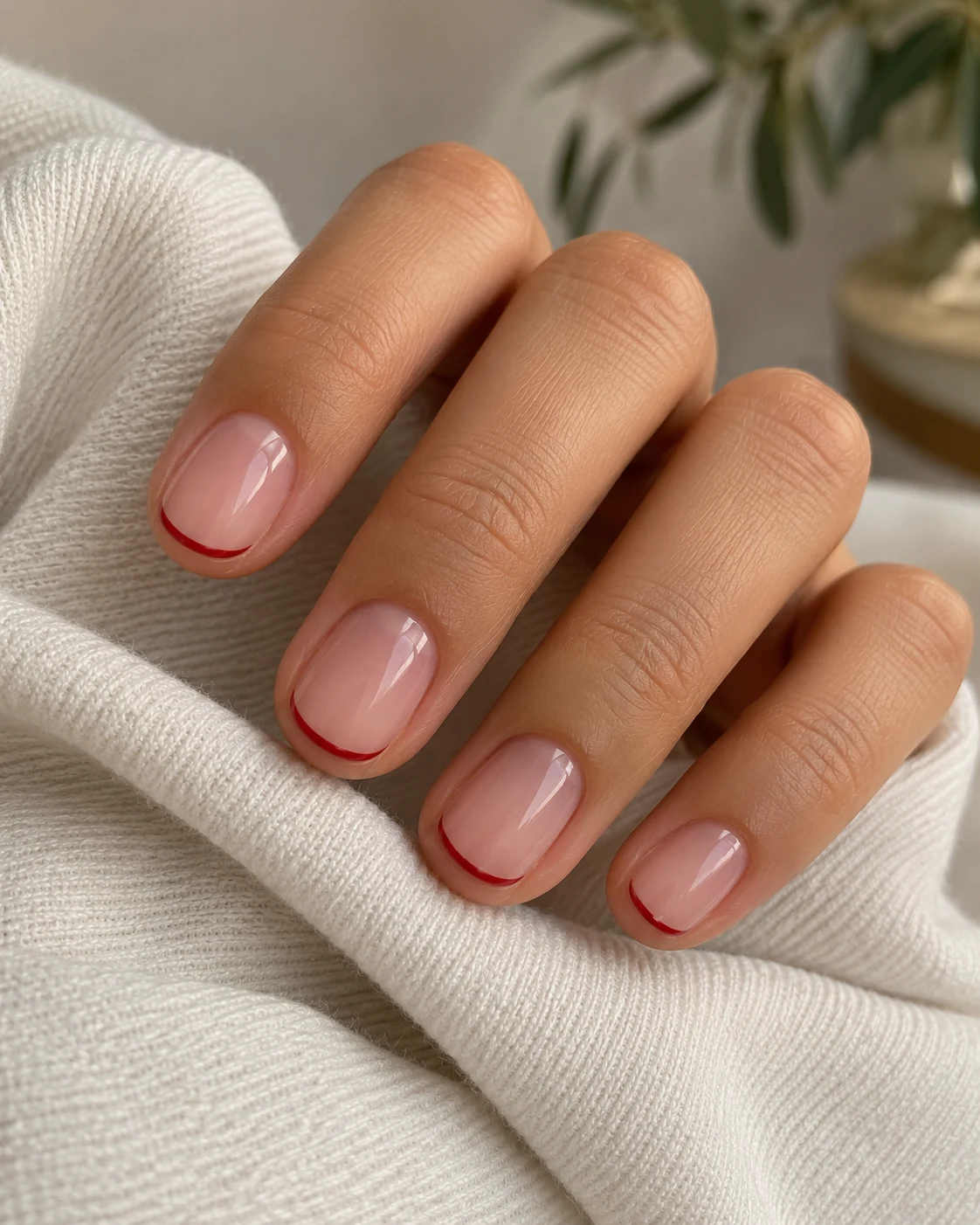
A narrow red edge gives the color a defined but modest role. Most of the pale base remains visible on the shorter nail. Making the band wider changes the balance rather than automatically making the design more festive.
Compare a fine outline with a deeper curve on a reference or display sample. The first emphasizes the edge, while the second introduces more solid color. Choose the effect you prefer instead of assuming every French manicure means the same proportions.
Skip another heart when the tip already provides enough detail. Combining every Valentine reference can make the separate elements compete on a small surface. A single clear idea often reads better from an ordinary viewing distance.
If precise tips don’t appeal, choose one fully red accent nail instead. That keeps the pale pink and red relationship without requiring a narrow line. You can enjoy the palette without choosing its most demanding version.
4. Alternate pink and red without a drawn motif
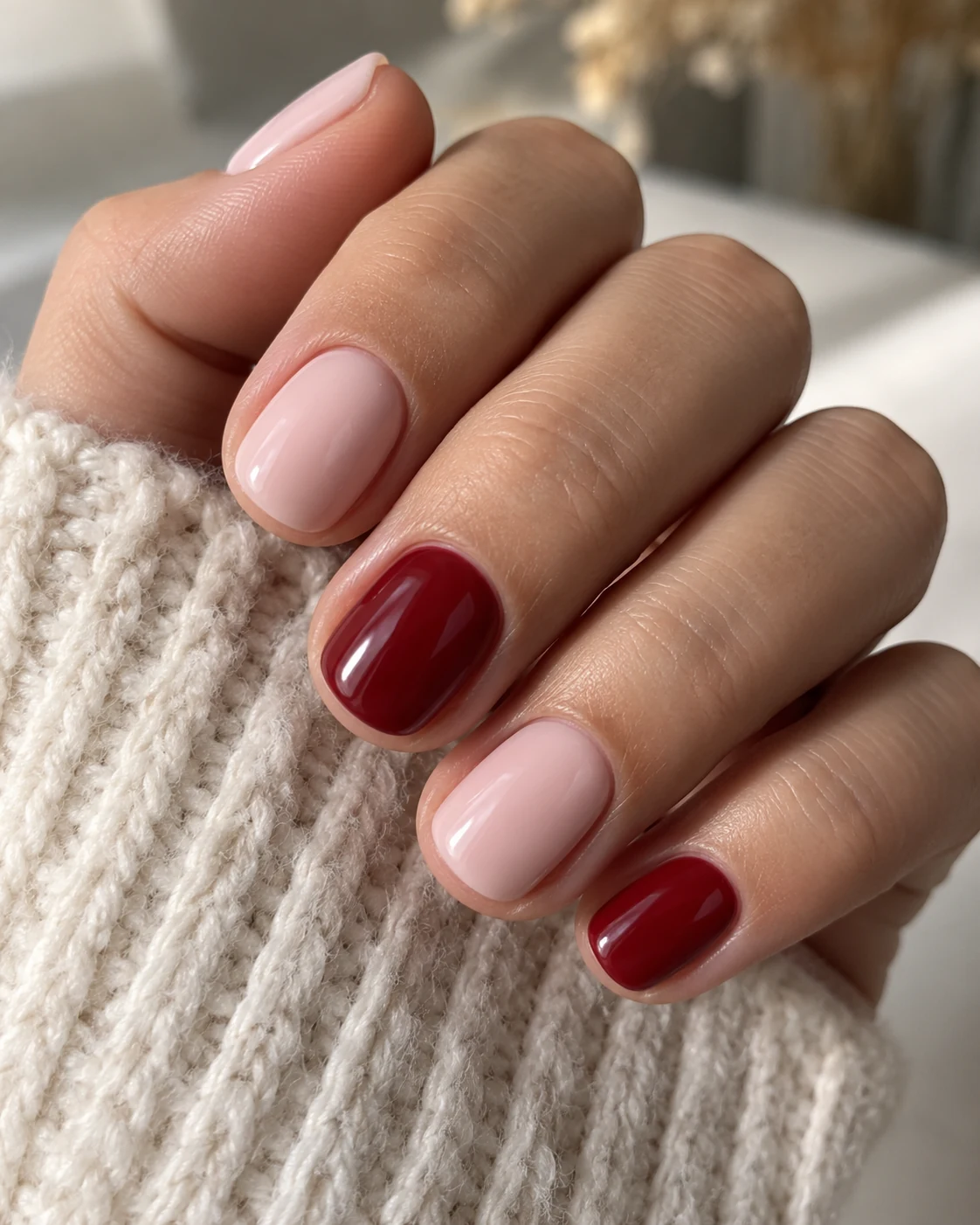
Two plain colors can create the whole Valentine reference. Alternate them across the fingers or let one shade dominate with a single contrast. This is useful when you enjoy color more than tiny illustrations.
Think about finish alongside the hue. Sheer pink beside an opaque red creates a lighter relationship than two solid creams. Both can work, but they won’t produce the same visual effect.
Essie Original Ballet Slippers is one sheer pink option researched for this guide. Forever Yummy offers a contrasting red cream within the brand’s Original range. Check the selected product description because these illustrative images aren’t exact swatches of either polish.
Your existing shades can serve the arrangement instead. A muted rose and darker berry will create a quieter version of the same idea. Compare the two together before deciding the manicure needs a third color.
5. Keep a diagonal tip small
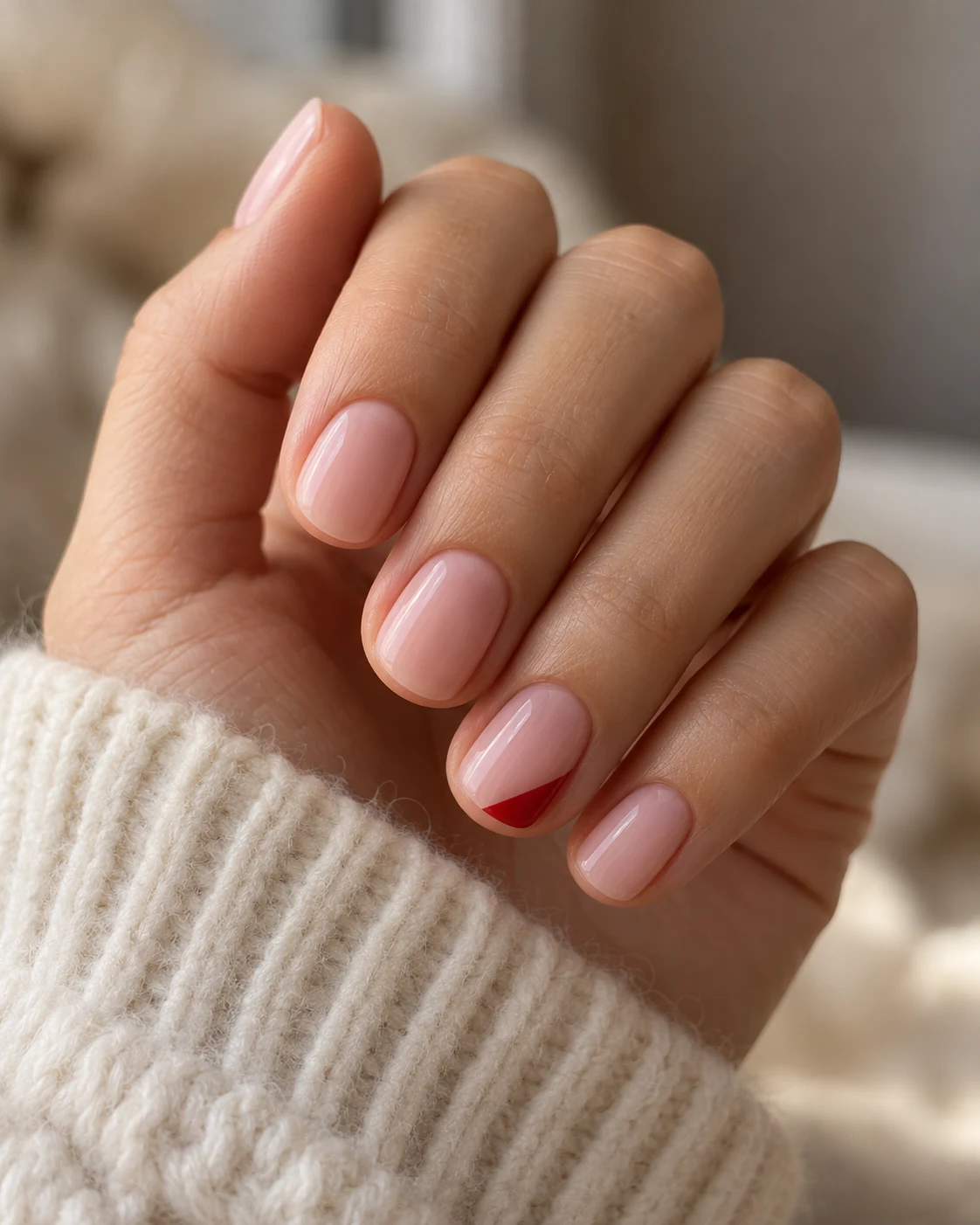
A diagonal patch creates an edge without following a complete curved French line. The exposed pink still needs enough room to register beside the red. Keeping the patch small lets the angle remain the main design choice.
Compare the proposed diagonal against your own nail shape. A steep angle on a wider surface can create a surprisingly large triangular block. A gentler version may preserve more of the base color.
Choose whether the angle repeats or mirrors across the hands. Those arrangements create different patterns even with the same two colors. Explain the direction before the appointment starts rather than correcting it after several nails are finished.
The other nails can stay plain when you want less detail overall. Repeating the diagonal everywhere creates a stronger statement without requiring another motif. Decide that balance before adding glitter, hearts or a second type of line.
6. Three small red dots
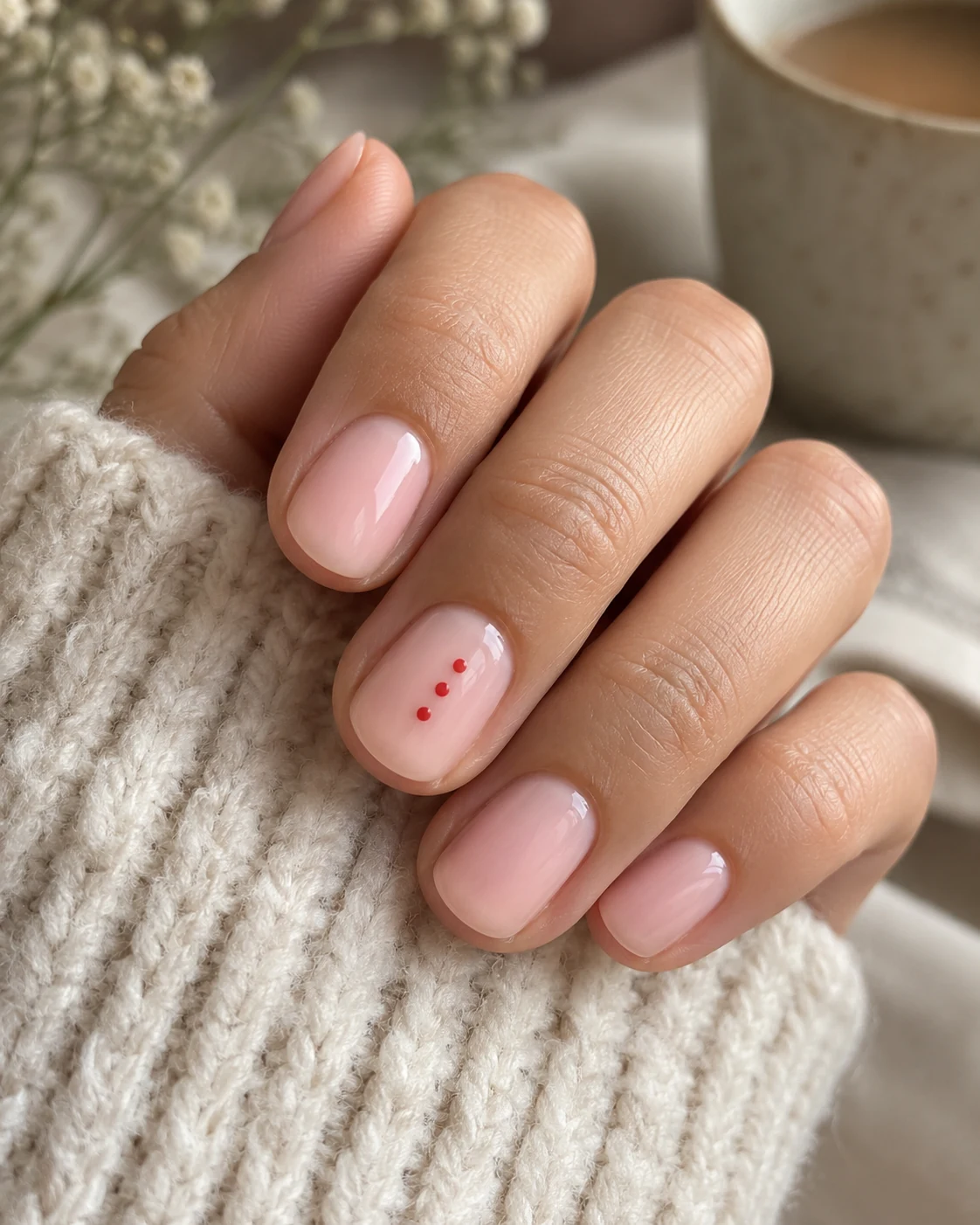
Dots make a playful manicure without needing a recognizable heart outline. A short row provides a clear little pattern with plenty of pale space around it. The spacing matters as much as the size of each mark.
Keep the dots separate enough to read individually. On a very short nail, a crowded line can merge into a single red streak. Ask for fewer dots or a smaller arrangement if the reference feels too compressed.
A centered row creates a more regular effect than a loose cluster. You can compare those versions on paper before choosing the arrangement you like. The point is deciding the pattern before introducing another decorative shape.
Restrict the dots to one or two nails for a quieter result. Repeating them across every finger changes the overall amount of detail. Neither choice needs a heart added simply to explain the occasion.
7. Put the heart below an otherwise quiet tip
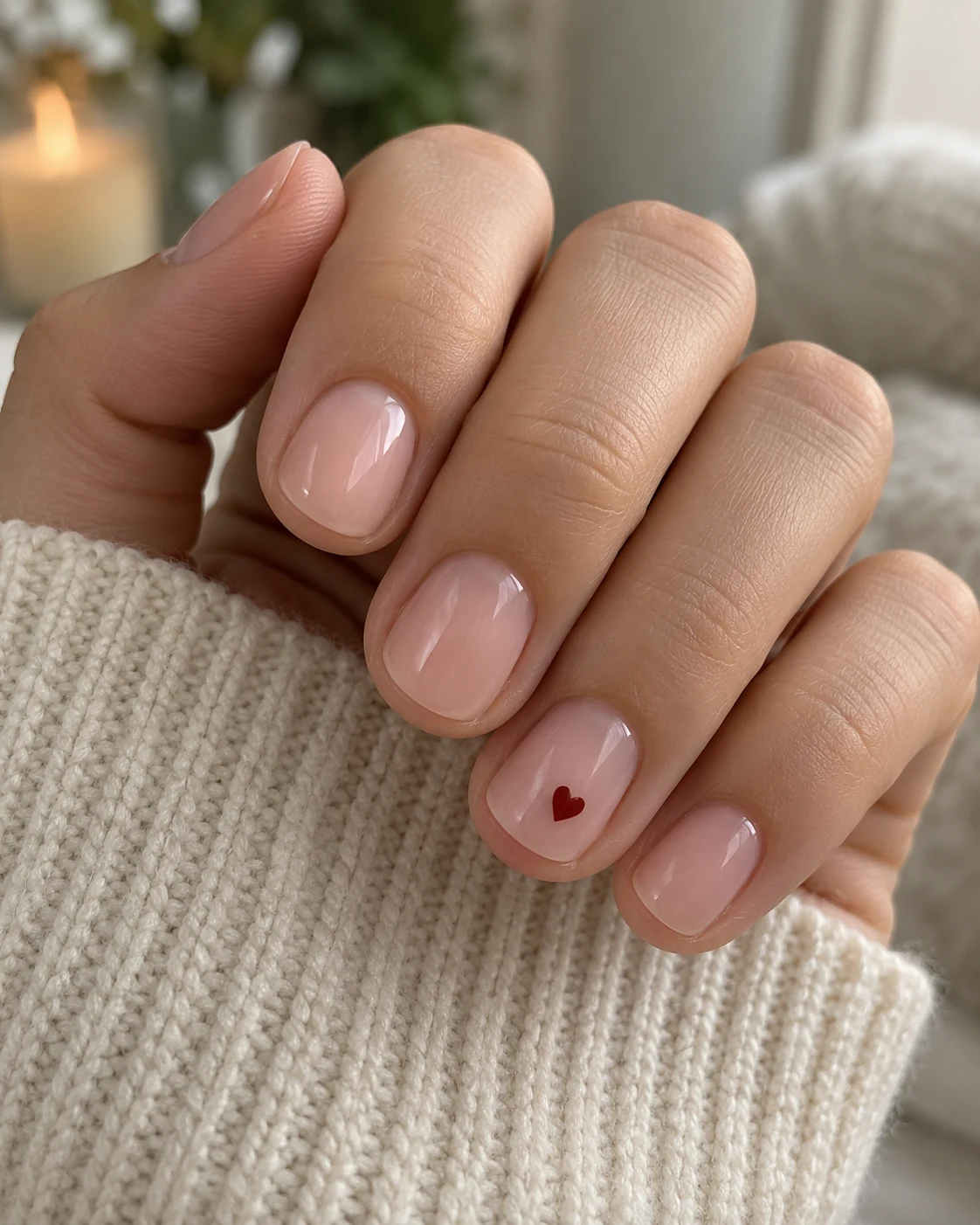
Keeping the heart inside the nail’s main surface leaves the free edge visually open. This avoids squeezing both a motif and a wide tip into limited space. It can suit a short nail with very little visible free edge.
Show the blank area you want preserved as clearly as the heart itself. That tells your technician where the design should stop. Pointing only at the red shape can leave the overall balance open to interpretation.
A sheer base creates a lighter version than an opaque pink. The natural nail remains visible beneath the color instead of becoming a solid graphic block. Compare the effect in ordinary light rather than judging from a bright phone screen alone.
Keep the neighboring nails plain while assessing the first version. Their quiet surfaces give the small heart somewhere to stand out. You may find that another accent would weaken the simple arrangement rather than complete it.
8. Let one hand stay quieter
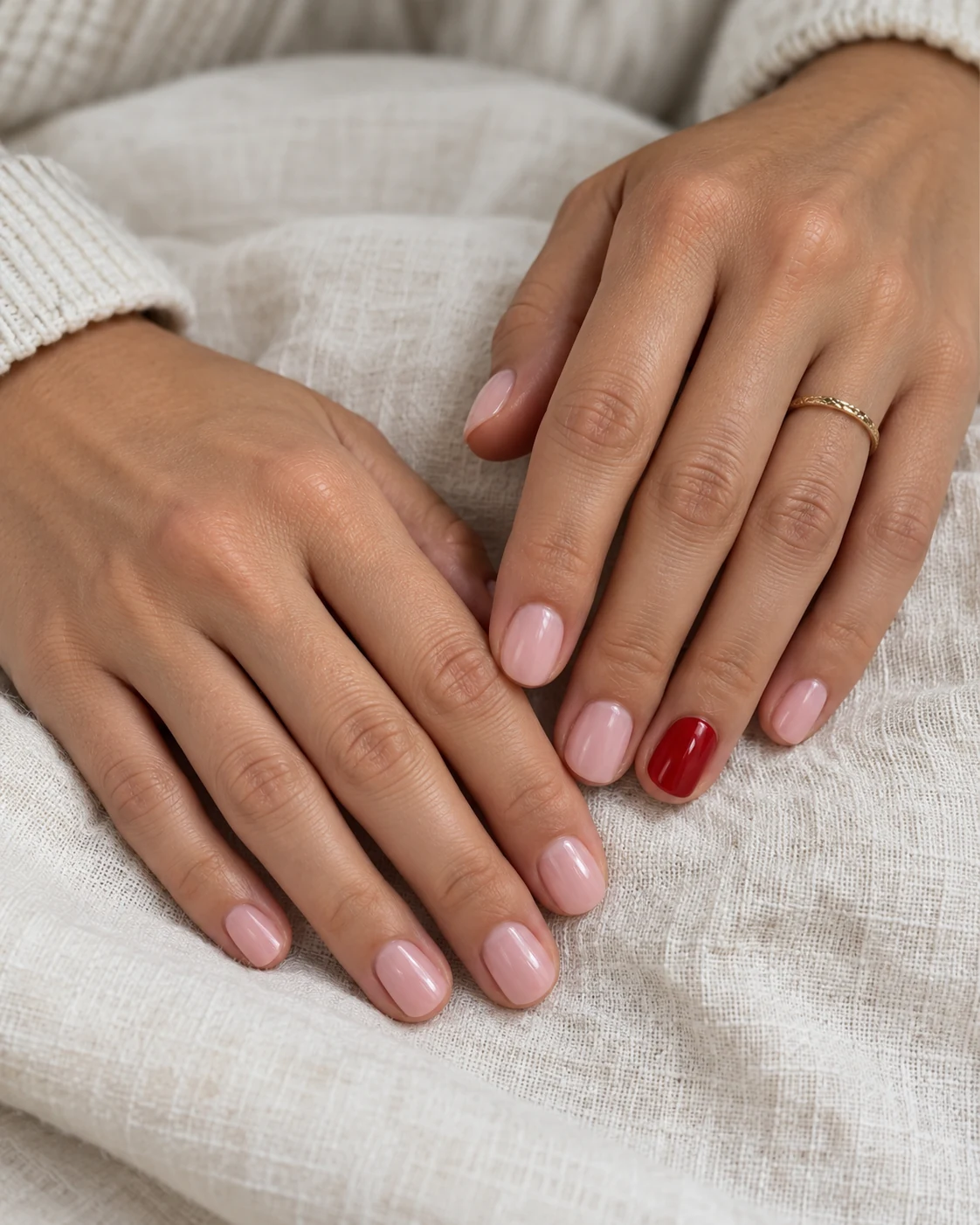
Both hands don’t need identical amounts of detail. Plain pink on one and a red accent on the other create variation with familiar colors. The difference can feel playful without introducing another type of nail art.
Think about how the hands look together during ordinary tasks. A strong contrast between them may feel more noticeable than two mirrored arrangements. Lay out the sequence before deciding how much difference you want.
You can also keep the same palette while moving the accent finger. That creates a smaller change than choosing two completely different designs. It gives the manicure some movement without making the salon brief complicated.
Choose the arrangement you’ll enjoy beyond Valentine’s Day. Pink, red and a small accent don’t require a particular date to make sense. You don’t need to change a comfortable design simply because February has moved on.
Turn the picture into a clear appointment brief
Pick one main reference instead of collecting several competing designs. Identify whether you like its color, opacity, motif size or placement. Explaining those separately is more useful than asking for every detail at once.
Tell your technician that you want to keep your current short length. Ask which version fits the available surface and the service you’ve booked. A detailed reference can require different appointment time from a plain color change.
Discuss the selected polish system and removal instructions before agreeing to the service. Gloss alone doesn’t identify the materials behind a manicure reference. Confirm the complete price before adding extra art, foil or another material.
Check the proposed design against the activities you have planned that week. A raised decoration may feel inconvenient where a flat painted accent would work comfortably. You can preserve the color relationship while asking for a simpler surface.
Use one existing pink and one red when practicing a color arrangement at home. Draw the proposed sequence on paper before opening more bottles. That small comparison helps separate a genuine missing shade from another unnecessary purchase.
Keep cuticles intact rather than cutting or forcefully pushing them back for a cleaner photograph. Use clean tools and follow the selected product’s directions. Seek appropriate medical advice if a product causes a reaction or a nail changes unexpectedly.
Our simple Christmas nail ideas show more ways to balance color and small accents. The same spacing decisions can work with different seasonal colors. Choose the version that remains clear and comfortable on the nails you actually have.