A Cozy Cabin Weekend Packing List in 8 Useful Visual Examples
Explore the ideas
- 1. Pack clothes for the actual two-night plan
- 2. Ask which household supplies are already there
- 3. Give weather layers separate jobs
- 4. Give shared groceries one clear owner
- 5. Keep the first-hour items accessible
- 6. Take a small toiletry kit built around your needs
- 7. Separate the outdoor shoes from the indoor pair
- 8. Leave somewhere for worn clothes
Ask what the cabin provides before filling another bag. Bedding, towels and kitchen equipment can change the packing list more than a decorative travel checklist. A two-night stay becomes easier to organize once you know which things are already there.
These eight visual examples separate clothes, shared supplies and the items needed on arrival. They are AI-generated packing concepts, not photographs of a visited property or tested products. Adjust the quantities around your actual plans, forecast and host’s information.
A furnished weekend cabin is the focus here rather than remote camping. Access, supplies and suitable equipment vary between properties. Don’t infer drinking water, heating or other amenities from a cozy photograph or the word cabin.
1. Pack clothes for the actual two-night plan
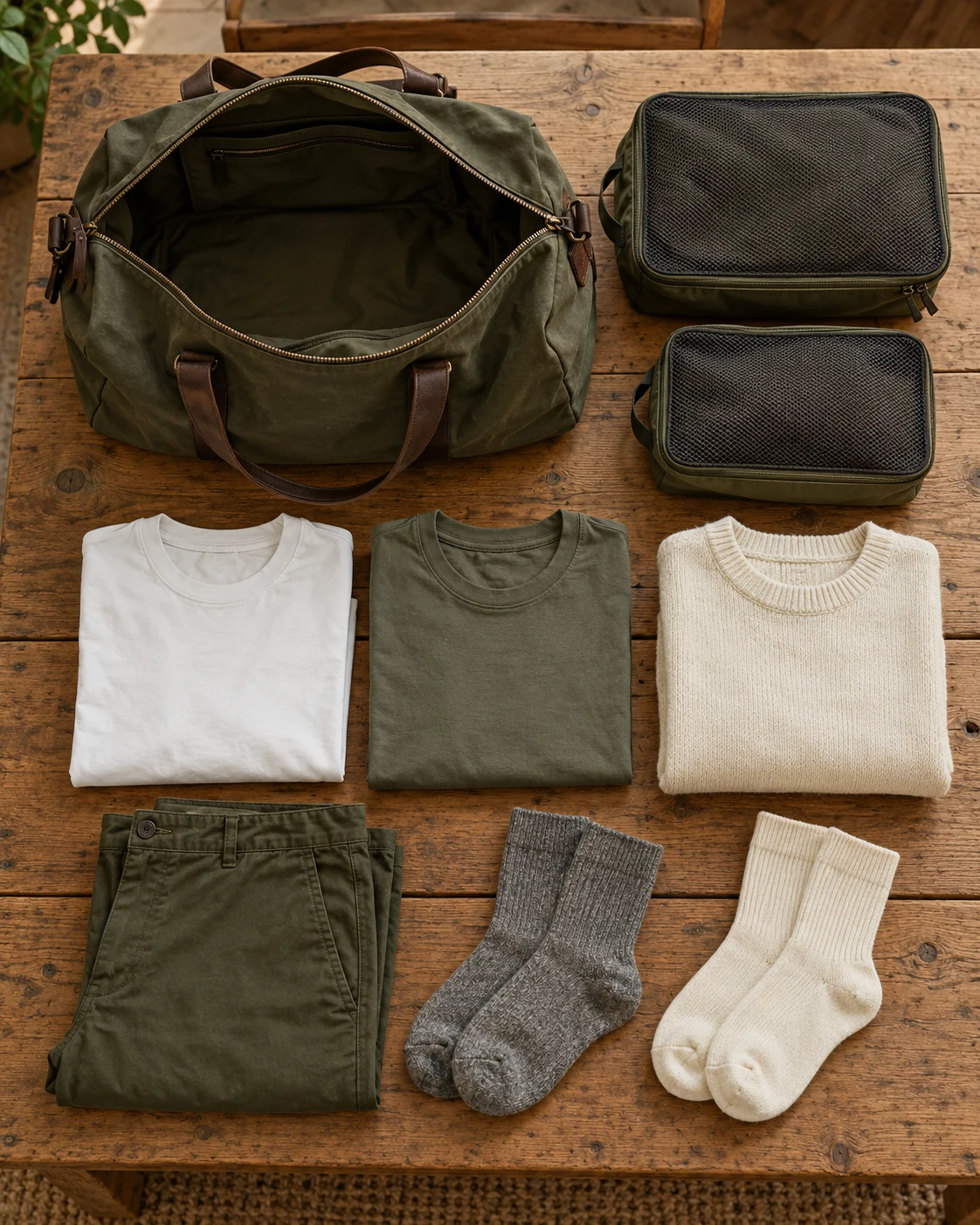
Start with the outfits you’ll need rather than adding a fresh set for every possible mood. Two comfortable tops, suitable bottoms and an adjustable warm layer provide a useful planning example. The right number still depends on your activities and laundry needs.
Lay the clothes out with the shoes before choosing the bag. That exposes combinations that require another bulky item to make sense. You can often remove a duplicate sweater once the complete outfits are visible together.
Packing cubes can separate categories without changing what you actually need. Eagle Creek’s Pack It Reveal Cube Set includes XS, small and medium sizes. Its mesh helps identify contents, but these cubes aren’t a compression system.
Compare the cubes with the inside of your existing duffel. Organizers that fit beautifully on a table may leave awkward gaps inside a narrower bag. You can also separate clothes with suitable pouches you already own.
Leave some space for the return journey. Worn clothing and hurried packing may not recreate the neat arrangement you made at home. A slightly less full bag can be easier to use throughout the stay.
2. Ask which household supplies are already there

The inviting bed and folded towels show the kind of information worth confirming. They don’t establish what your booked property supplies. Ask the host directly rather than treating every furnished cabin listing as the same arrangement.
Confirm bedding, towels and the number of suitable sleeping places for your group. Ask about heating and how it is operated when that matters. A clear answer can prevent both unnecessary duplicates and an uncomfortable missing essential.
Check the kitchen equipment around the meals you actually plan. A kitchen photograph doesn’t prove there is a particular pan, coffee setup or serving dish. You might simplify the menu instead of transporting a second household of equipment.
Ask about drinking water and access information before departure. Keep the instructions somewhere available when phone service or battery power is limited. Don’t rely on remembering which message contained the code while standing outside after dark.
For shared packing, send the confirmed answers to the group. One useful message can stop several people bringing the same bulky item. Name who is handling any genuine missing supplies rather than leaving that responsibility vague.
3. Give weather layers separate jobs
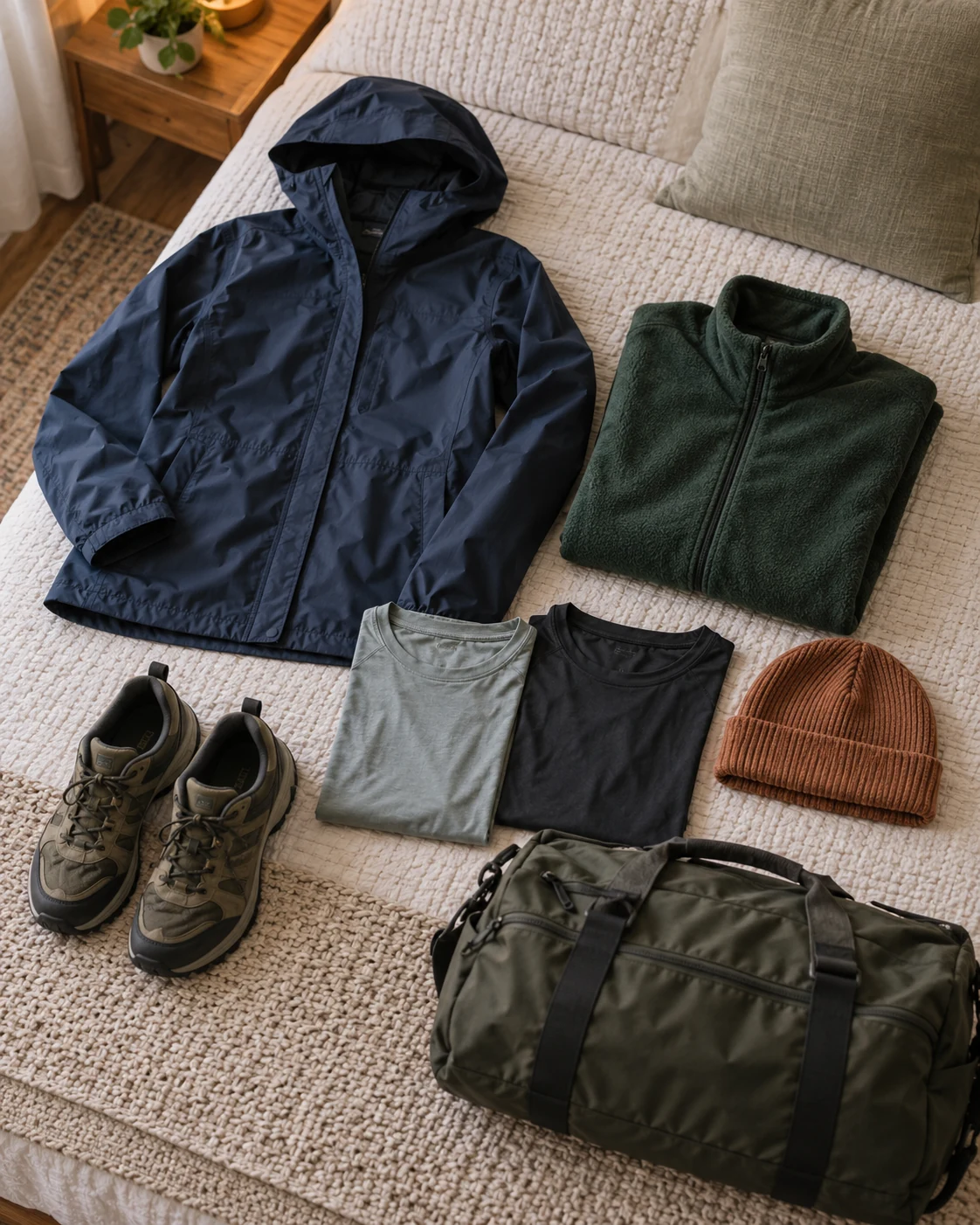
A weather layer, adjustable middle and comfortable base perform different roles. Keeping those jobs separate makes the packing decisions easier to explain. You can change the outer protection without automatically adding several more sweaters.
Check the forecast alongside the activities you expect to do. A short walk from the car differs from a long outdoor outing. The attractive cabin setting shouldn’t persuade you to pack for a different level of exposure.
Try the layers together before putting them in the bag. A shell that fits over a tee may become restrictive above a substantial fleece. Reach forward, close the fastenings and check the sleeves before leaving home.
Our winter outfit ideas start with the comfortable indoor version before adding outerwear. That distinction also helps when a cabin is much warmer inside than outside. Clothing should work after the coat comes off as well as during the journey.
Don’t infer technical performance from these unbranded visual examples. Read your selected garments’ descriptions and care instructions for their intended use. More demanding conditions require equipment chosen for those conditions rather than this general weekend styling guide.
4. Give shared groceries one clear owner
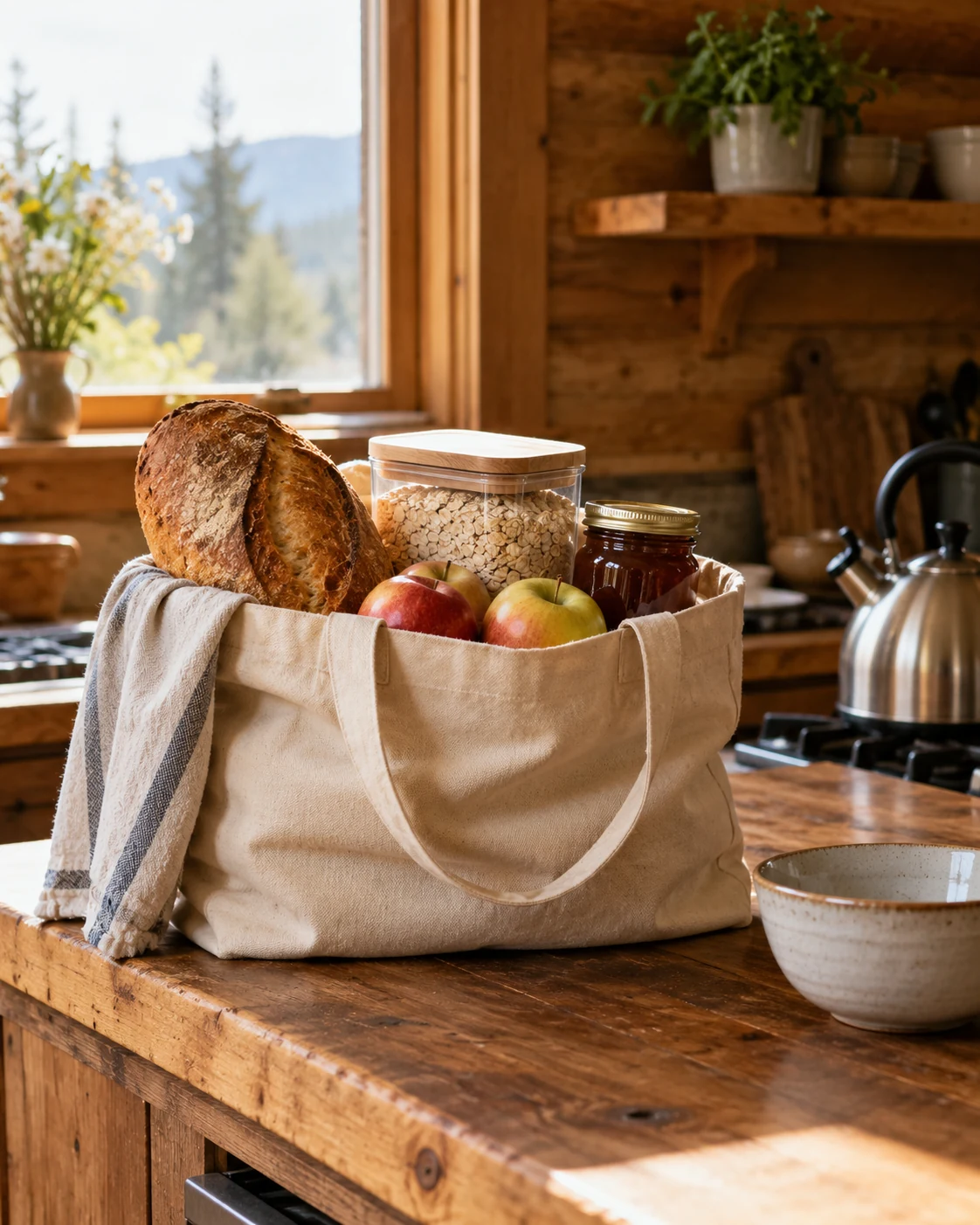
One agreed grocery bag is more useful than several people independently bringing the same basics. Start with the meals the group actually wants to eat. Then compare their needs with the kitchen equipment and supplies the host has confirmed.
Assign specific shared items to named people before shopping. Someone handling breakfast ingredients is a clearer arrangement than everyone bringing a little something. Check dietary requirements directly rather than assuming familiar food works for the whole group.
Consider the journey and suitable storage for what you’re carrying. Food needing temperature control requires an appropriate transport and storage plan. A pleasant-looking grocery bag doesn’t establish that perishable items can safely travel without protection.
Use quantities that make sense for two nights and the confirmed number of guests. A large wholesale pack may leave more waste or return luggage than you want. Choose around realistic meals rather than filling spare bag space.
Check what must leave with you at checkout. Some hosts have specific instructions for rubbish and leftover food. Keep that information alongside the arrival details rather than discovering it after everything else is packed.
5. Keep the first-hour items accessible
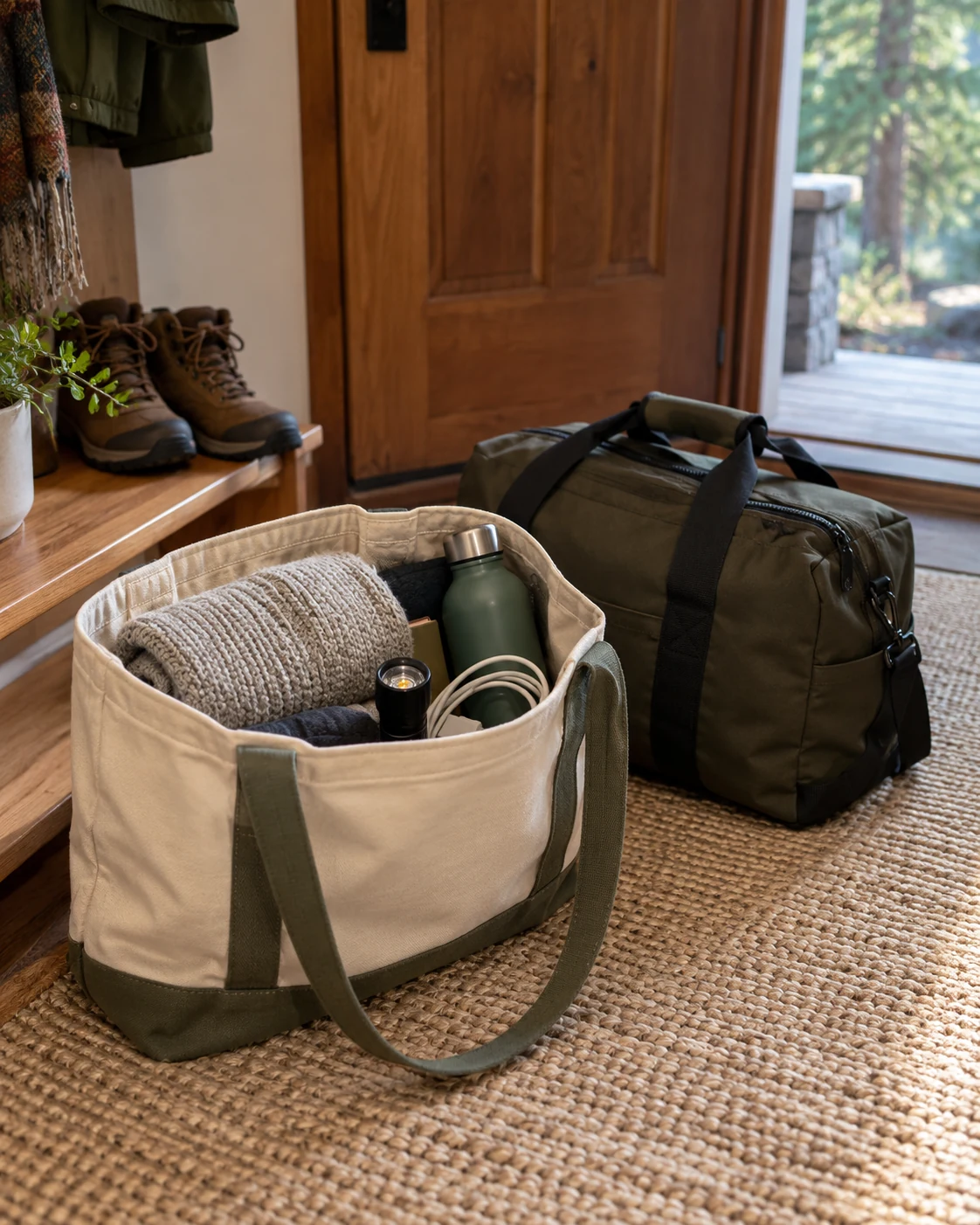
The first-hour bag holds what you need before properly unpacking. Access instructions, a useful layer and essentials for the first meal may belong here. The exact contents depend on arrival time and what the property provides.
Put the charger where you can reach it without opening every clothes cube. Check the actual cable and plug rather than packing a familiar-looking spare. A coiled cable takes less searching than one tangled beneath several toiletries.
A suitable reusable bottle can be useful for the journey. The Nalgene 32-ounce Wide Mouth is one optional model researched for this list. It isn’t an insulated bottle, so don’t choose it expecting temperature control it doesn’t claim.
Fill or use any bottle according to its instructions and the water available. The cabin’s appearance doesn’t establish whether a particular water source is appropriate. Confirm that information before treating a nearby tap or stream as a refill point.
If arrival will be late, agree the first meal before travelling. Keep whatever is needed for it easy to reach. That can be more useful than having every other item perfectly organized inside the main bag.
6. Take a small toiletry kit built around your needs
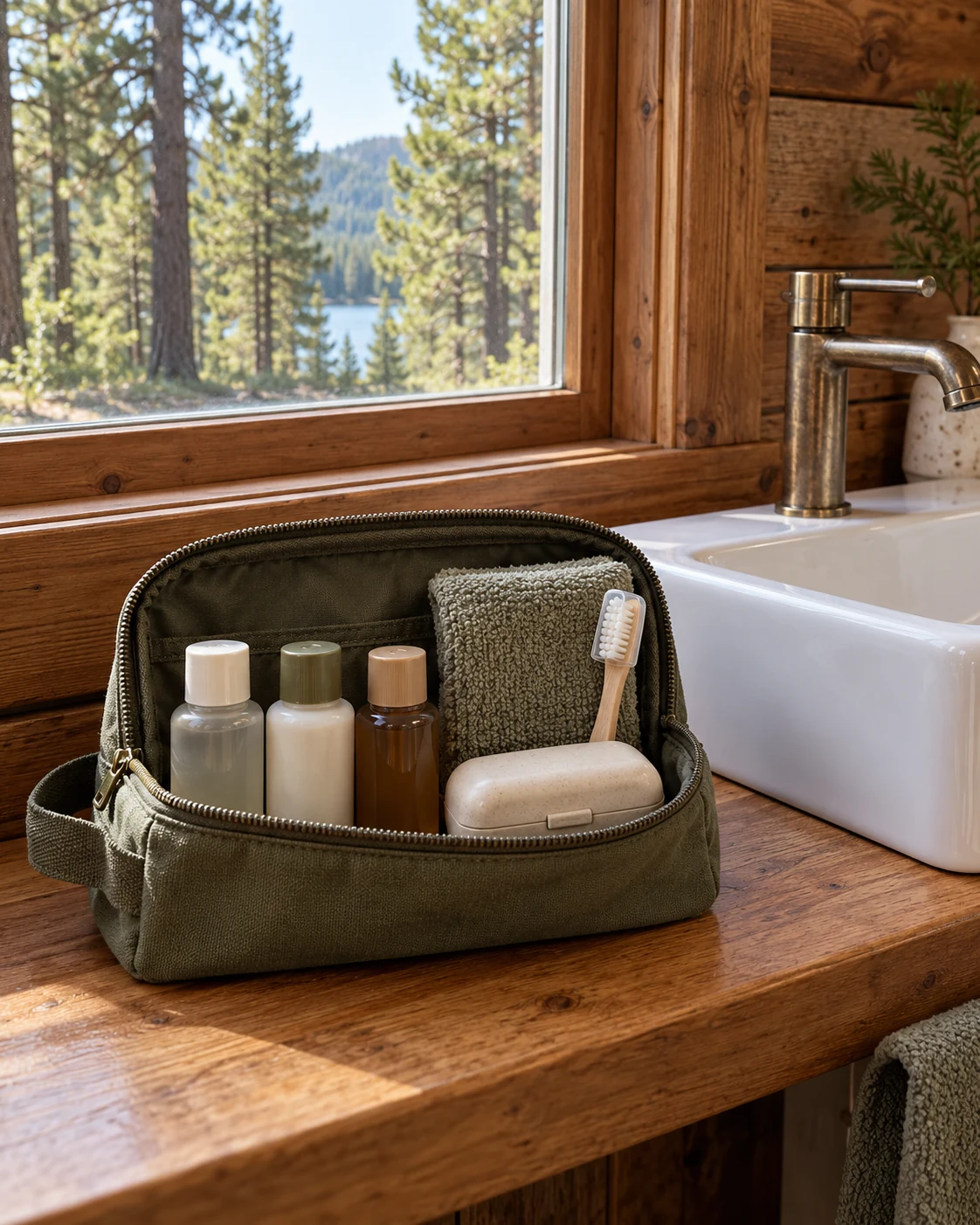
A compact pouch keeps personal basics together without duplicating the bathroom at home. Choose the items you use during an ordinary two-night period. The illustrated bottles are examples rather than a compulsory set of products.
Check closures before placing anything beside clothes. A bottle that normally sits upright on a shelf will move differently inside luggage. Use suitable protection for items that could leak during the journey.
Keep any personally required items on your own list. Don’t assume the host or another guest will provide something important to your routine. Confirm storage needs and follow the product’s instructions rather than copying an attractive travel arrangement.
Leave decorative extras behind when they don’t serve the stay. A matching set of containers isn’t necessary if your existing suitable bottles already work. Clear organization can come from a useful pouch rather than several new accessories.
Before departure, check the bathroom separately from the main room. Toothbrushes and small bottles are easy to leave on a different ledge. A final sweep is more reliable than assuming everything important stayed inside the bag.
7. Separate the outdoor shoes from the indoor pair
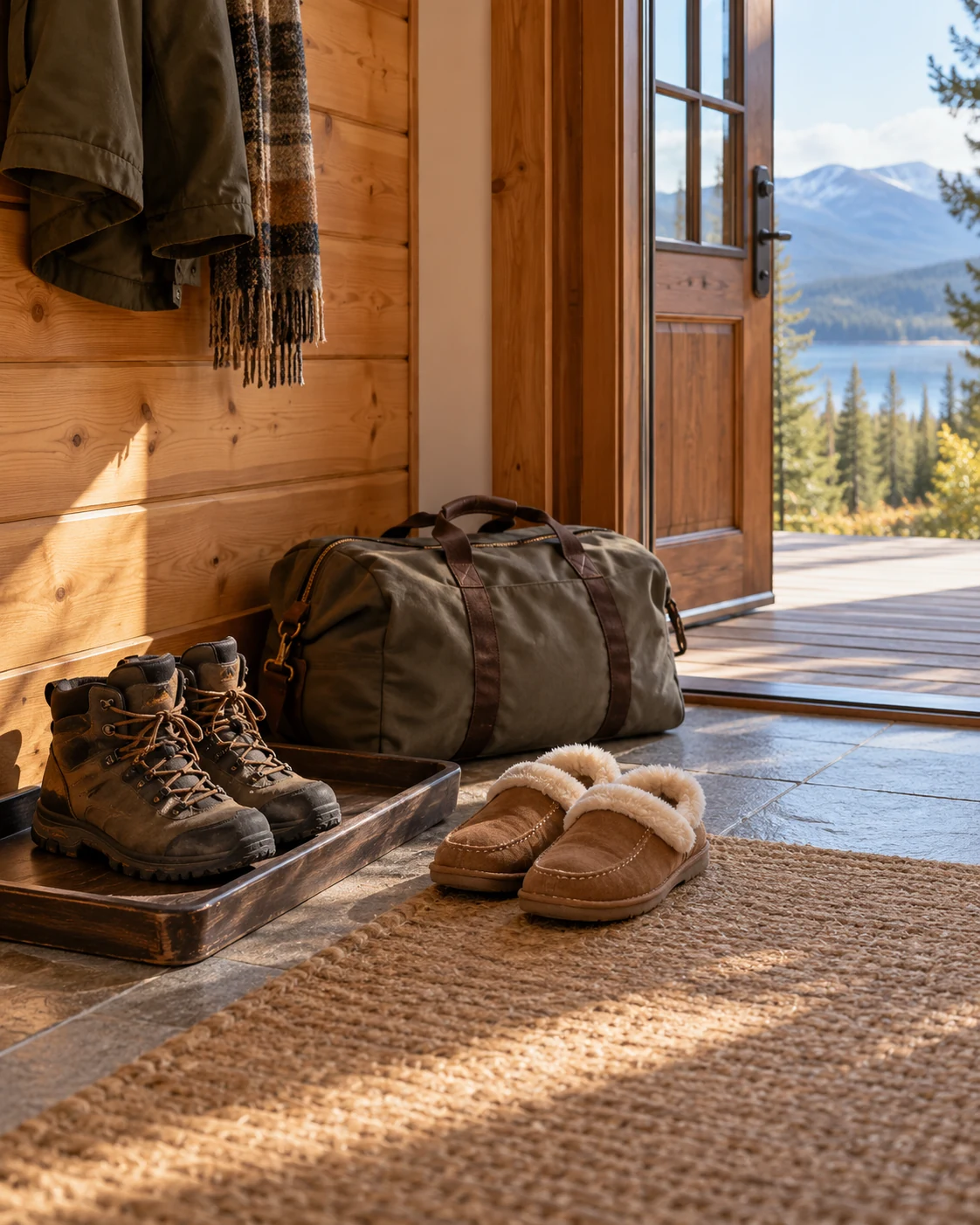
A tray and an indoor pair give wet outdoor footwear a clear destination. That arrangement protects the useful floor space around the entry. It also keeps damp shoes away from the clothing inside your bag.
Check the host’s expectations before deciding what footwear to bring. Some properties have specific rules or suitable places for outdoor shoes. Follow those instructions rather than creating a new storage spot in the doorway.
Choose an indoor pair you actually find comfortable. A picturesque slipper isn’t useful if it feels unstable or unsuitable for your needs. The small weekend bag should still reflect how you ordinarily move around a home.
For an outdoor pair, let the route and planned activities decide. A short gravel path and a demanding walk call for different choices. Don’t treat a styling image as evidence that a particular sole provides suitable grip.
Keep the door’s opening and main route clear after everyone arrives. Several neatly placed pairs can still create an obstacle in a narrow entry. Agree on the storage spot rather than spreading footwear through the cabin.
8. Leave somewhere for worn clothes
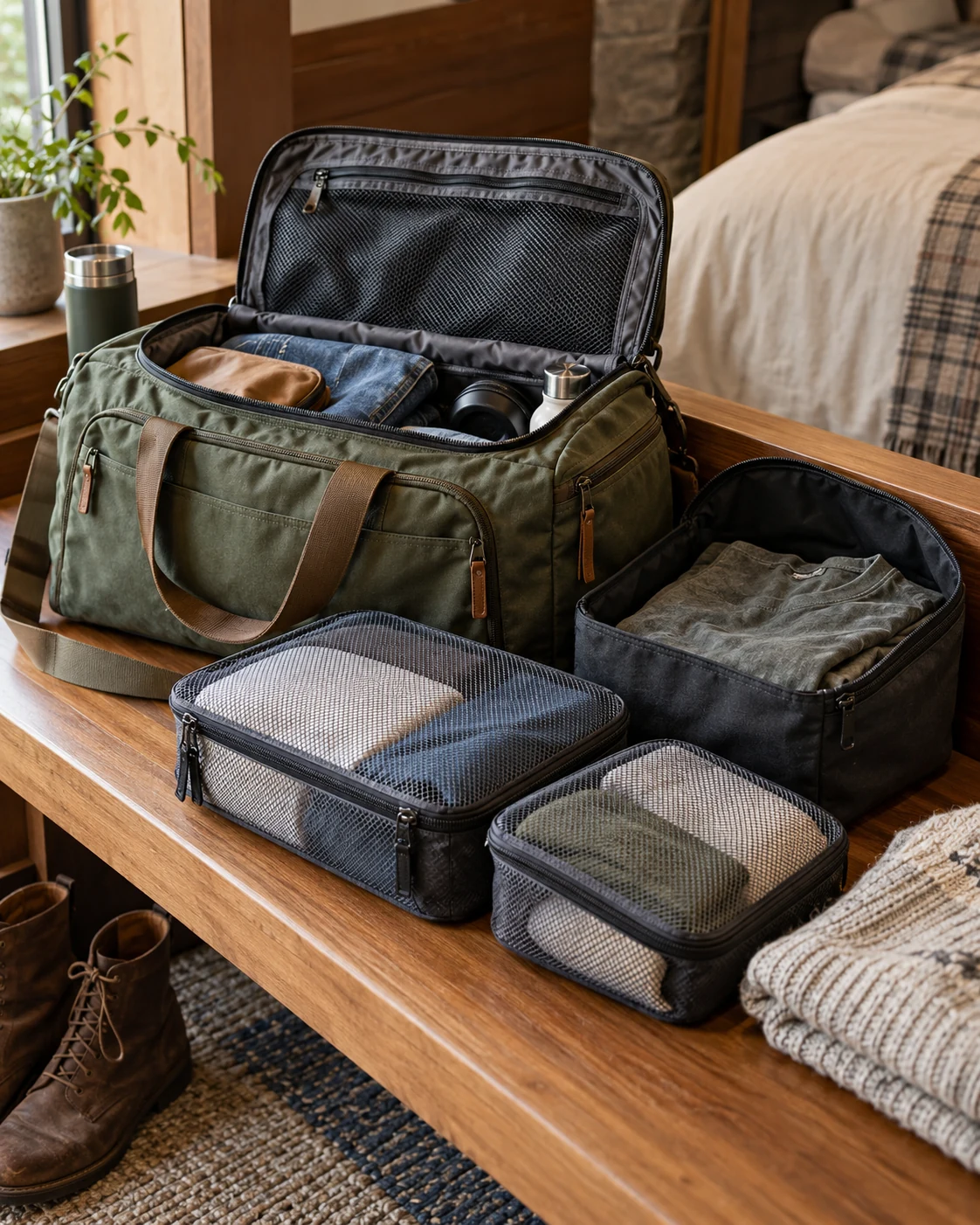
A separate washable pouch can stop worn clothing mixing immediately with clean pieces. It doesn’t need to compress everything or create a perfect packing photograph. Its useful role is keeping categories clear during the return journey.
Don’t leave damp items enclosed longer than necessary. Separate and dry them appropriately instead of forgetting them until the next trip. Follow the clothing and pouch care instructions rather than treating an organizer as moisture protection.
Repack around what you need during the journey home. Keep a comfortable layer and personal essentials reachable without reopening every compartment. A tidy bag isn’t helpful when the useful item sits at the very bottom.
Do a final sweep of outlets, bathroom ledges, bedside areas and storage. Check the host’s departure instructions before loading the last bag. One deliberate pass can catch the charger or small bottle that routine packing missed.
Write down the item you genuinely wished you’d brought. Remove the unused duplicates before repeating the same list next time. A useful packing routine follows real needs rather than growing after every travel photograph.