12 Spice Storage Ideas That Work With Your Existing Bottles
Explore the guide
- 1. Choose the location before the organizer
- 2. Keep useful original bottles
- 3. Lay labels upward in a shallow drawer
- 4. Read lids in a deeper drawer
- 5. Gather bottles in one existing bin
- 6. Consider a measured rotating tray
- 7. Bring everyday seasonings forward
- 8. Make whole and ground forms distinct
- 9. Keep sealed refill packets together
- 10. Retain the original package information
- 11. Leave room for dry measuring
- 12. Try taking one bottle out and back
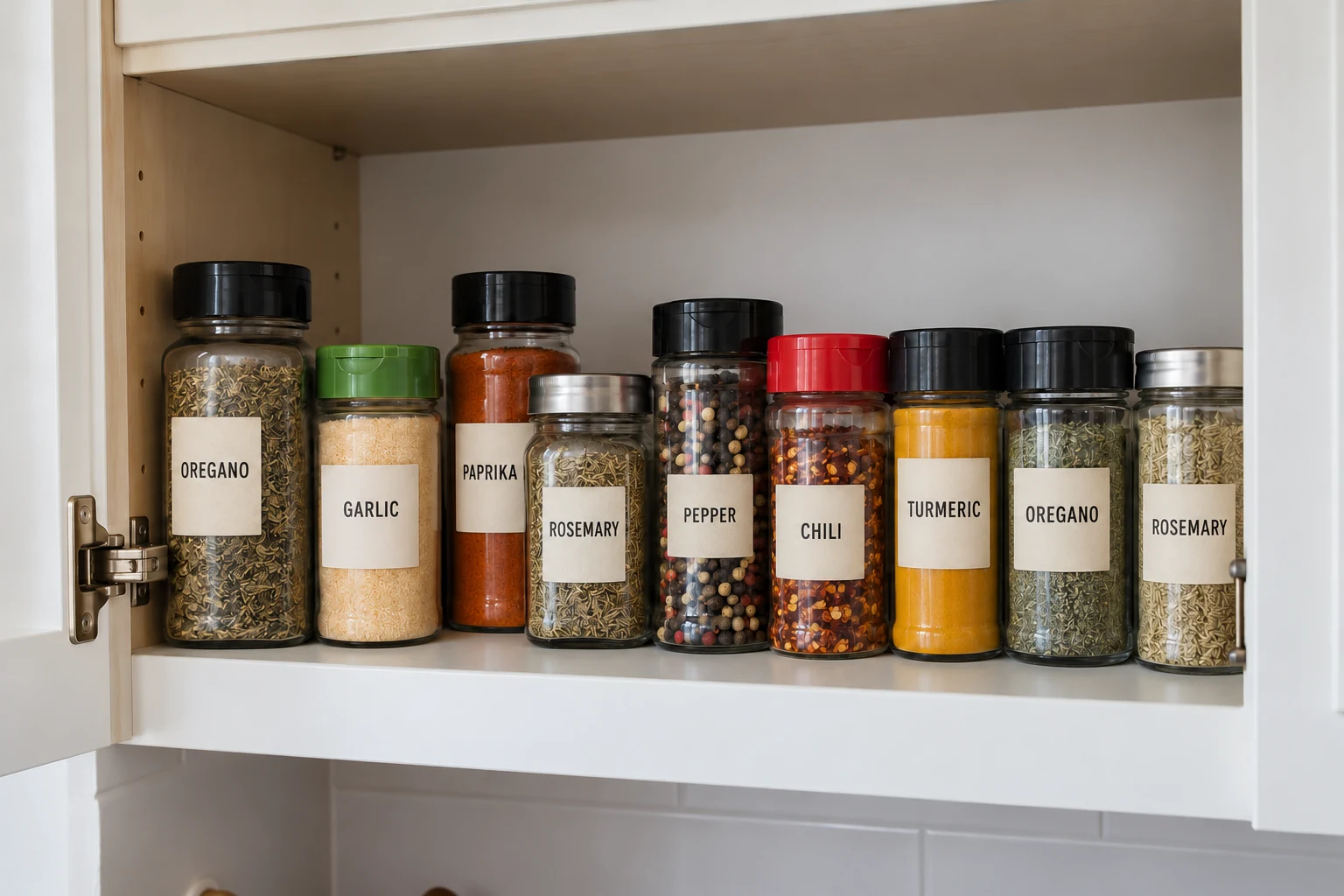
Choose spice storage around your actual bottles, including the awkward tall jar and refill packet. Matching containers aren’t the starting requirement. A useful arrangement lets you identify the right seasoning, take it out and return it easily.
First choose a cool, dry location protected from direct sunlight and cooking steam. Then look at the available drawer or shelf from your ordinary viewing angle. That combination matters more than recreating a photographed kitchen with different cabinets and spices.
These twelve ideas include existing-package options and one optional rotating organizer. The scenes illustrate arrangements rather than completed organizing projects or exact products. You can combine the ideas that fit your kitchen without buying a whole new container system.
1. Choose the location before the organizer
A convenient spot above a steaming pan isn’t a good default home for dried seasonings. Keep containers away from heat, moisture and direct sunlight. Look for a closed cabinet or drawer you can access without stretching across the cooking area.
Use suitable pieces you already own for this idea.
Notice the surrounding appliances when comparing possible locations. A windowsill or space above a dishwasher may look convenient while exposing bottles to unsuitable conditions. Check the actual kitchen rather than assuming every cupboard stays equally cool and dry.
Choose a location you can use consistently. Moving a few everyday seasonings may be enough to improve the routine. You don’t have to reorganize every cupboard before establishing a better home for the spices.
2. Keep useful original bottles

Keep an original container when its closure works and its information remains readable. Different shapes can coexist on a shelf without making the system unsuccessful. You can arrange them by height or use without transferring everything into identical glass jars.
Use suitable pieces you already own for this idea.
Check each closure before returning the bottle to storage. Retain ingredient details, product identification and the manufacturer’s date information. A fresh decorative label doesn’t replace those records or establish that the contents remain suitable.
Don’t buy matching jars to remove a visual difference you rarely notice inside a closed cupboard. Begin with the access problem that actually needs solving. The right next change may be a new position for one bottle.
3. Lay labels upward in a shallow drawer
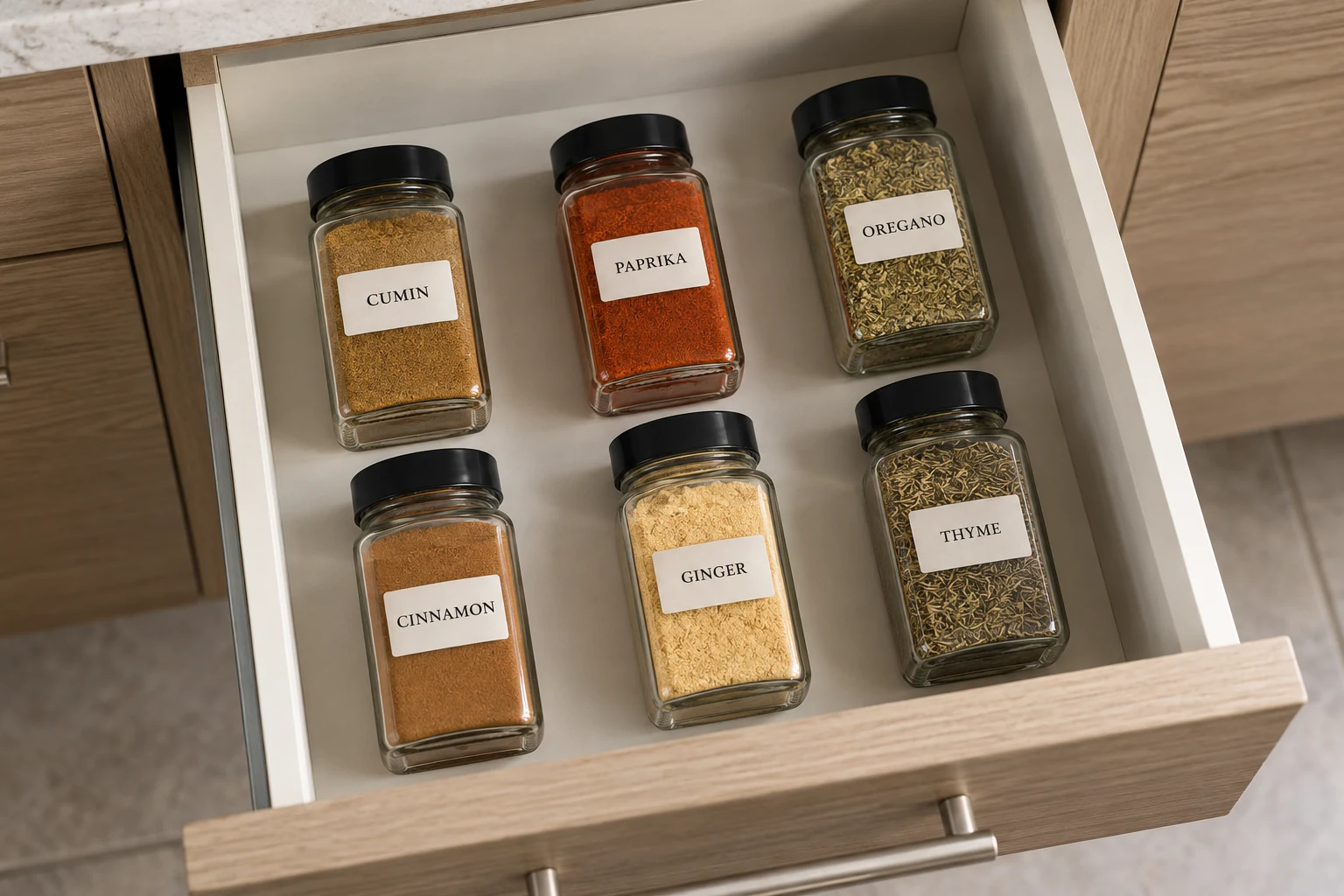
If a drawer is too shallow for standing bottles, try laying closed containers with labels upward. Check whether round bottles roll when the drawer moves. A stable arrangement should let you identify each container without lifting several neighbors.
Use suitable pieces you already own for this idea.
Leave enough clearance for the drawer to close without scraping lids or labels. Include its frame and opening, rather than measuring only the drawer box. Keep heavy or fragile containers away from a crowded edge where they could be knocked together.
You don’t need to install an angled rack before trying the available space. Our small kitchen drawer ideas explain the measurements that affect organizer fit. Use a purchased insert only after identifying what your current arrangement cannot do.
4. Read lids in a deeper drawer
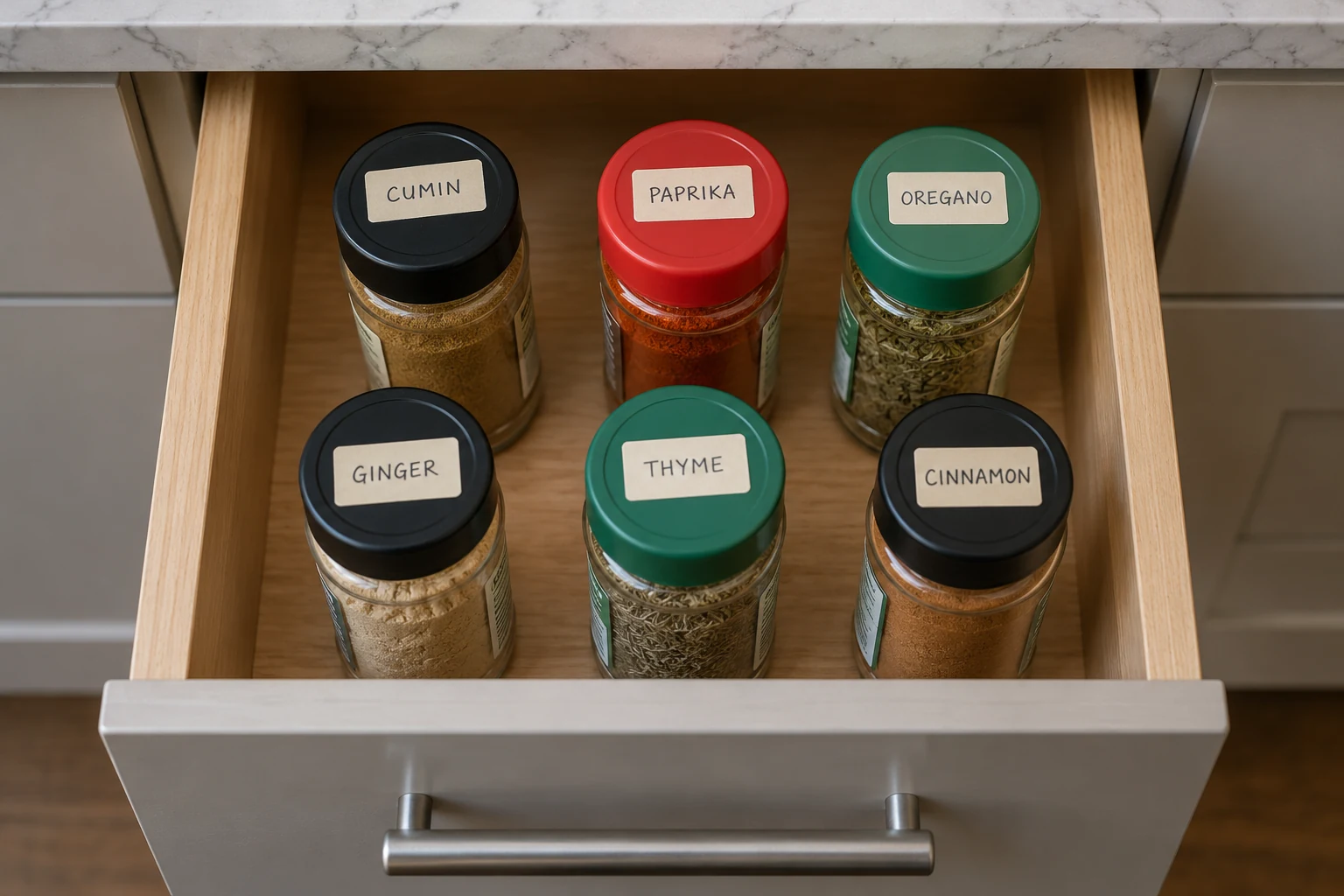
A deeper drawer may let you stand bottles and read them from above. Where needed, add a short name using a household labeling method you already have. Keep the original label visible too, especially where similar seasonings contain different ingredients.
Use suitable pieces you already own for this idea.
Check the full bottle height beneath the frame before filling the drawer. Leave room to grip a lid without pinching another container between your fingers. A bottle that fits tightly into an opening may still be awkward to retrieve.
Use names you recognize while cooking rather than abbreviations you must decode. If someone else shares the kitchen, check that those names make sense to them. Clear labels help only when the arrangement is understandable in ordinary use.
5. Gather bottles in one existing bin
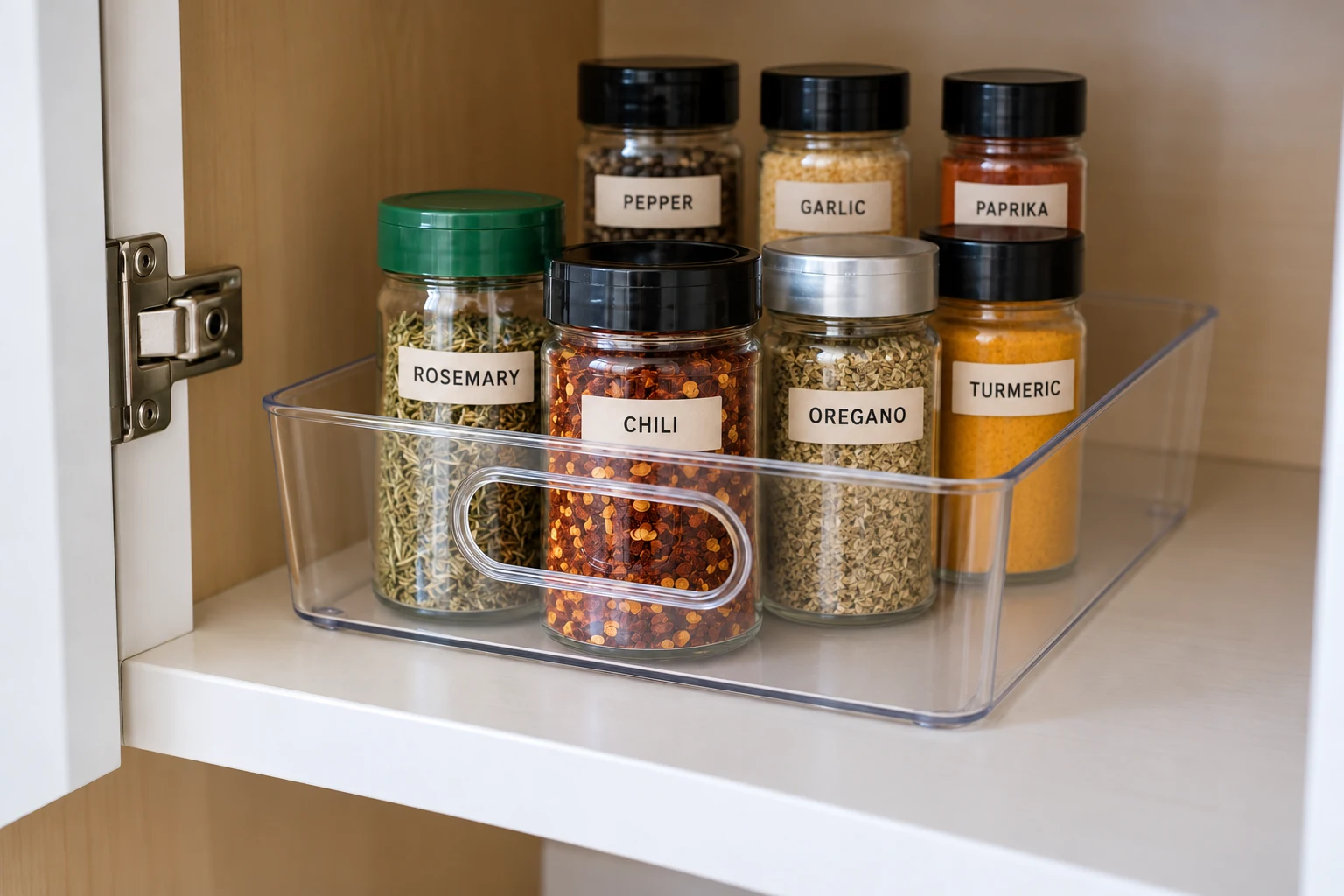
Try a clean existing bin when loose bottles keep disappearing behind larger pantry packages. Keep the seasonings sealed inside their original containers. The bin groups the bottles; it doesn’t replace the closures protecting their contents.
Use suitable pieces you already own for this idea.
Measure the bin and its handle against the cabinet opening before filling it. Leave room to lift it without striking the shelf above. Check its weight with the actual bottles, rather than packing it until every empty corner disappears.
A smaller group may be more manageable than one heavy collection. Use an existing smooth container only where its shape and condition suit the job. No particular bin size works for every kitchen shelf or person’s lifting needs.
6. Consider a measured rotating tray
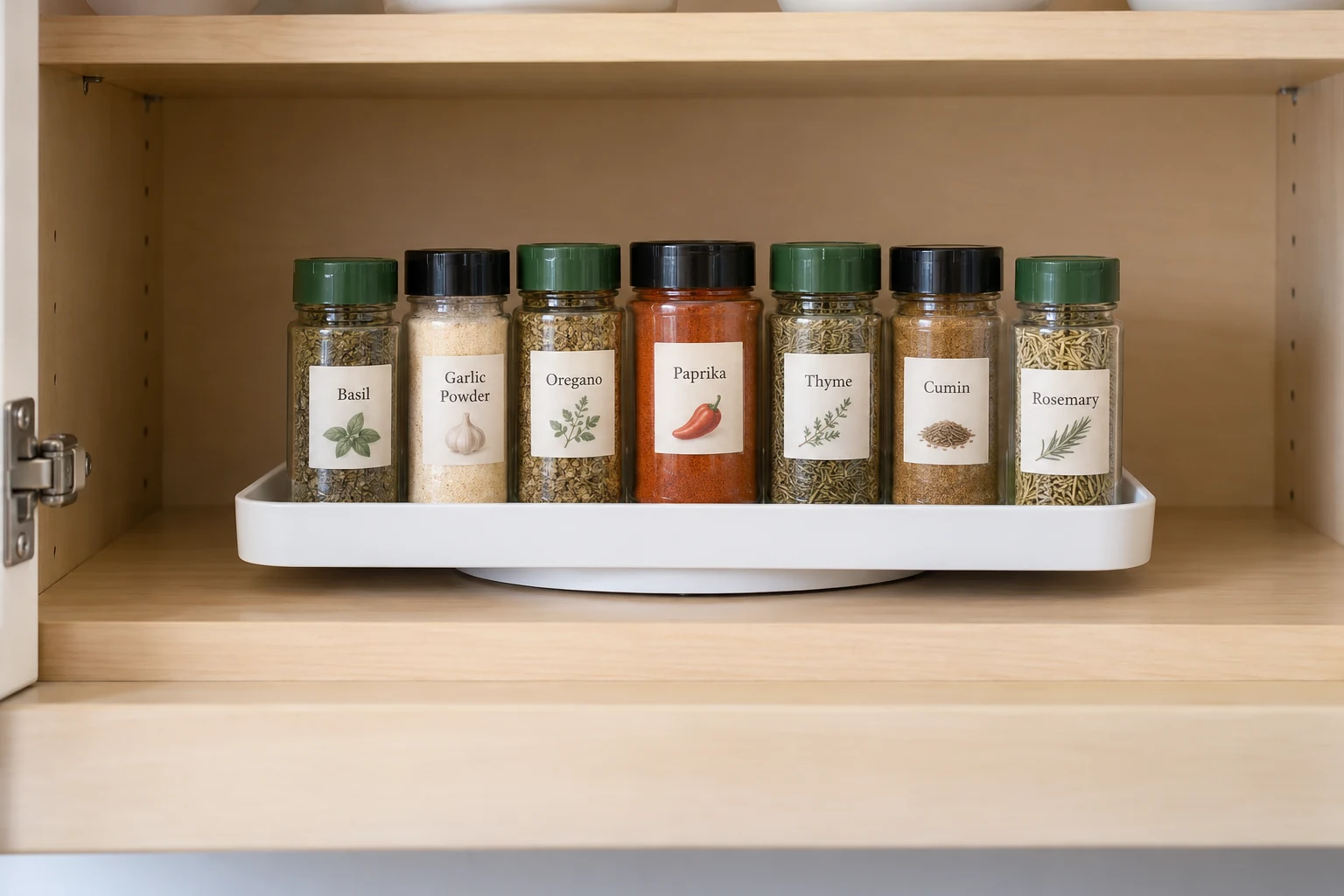
A rotating tray can bring rear bottles forward when the cabinet gives it enough moving room. The selected YouCopia MagicTrack option is a single-level rectangular tray. It differs from the brand’s separate two-tier spice model and version supplied with bins.
Comparable options, not the exact pictured items. Check the selected variant and current directions.
Fit and buying notes
- YouCopia MagicTrack rectangle turntable: Single-level rectangular MagicTrack tray, measuring 10.2 by 12.5 inches and 1.5 inches high. Allow approximately three-quarter-inch clearance on each side for rotation. Check bottle clearance throughout movement. Load evenly, turn gently and hand wash; glass bottles can slide.
Its listed footprint is 10.2 by 12.5 inches, with a 1.5-inch height. The maker also calls for approximately three-quarter-inch clearance on each side for rotation. Check the current diagram, bottle heights and cabinet opening before ordering.
Don’t judge fit from the stationary rectangle alone. The contents need clearance through the whole movement. Rotate gently and load evenly; glass jars can slide, and no organizer guarantees they’ll remain fixed.
7. Bring everyday seasonings forward
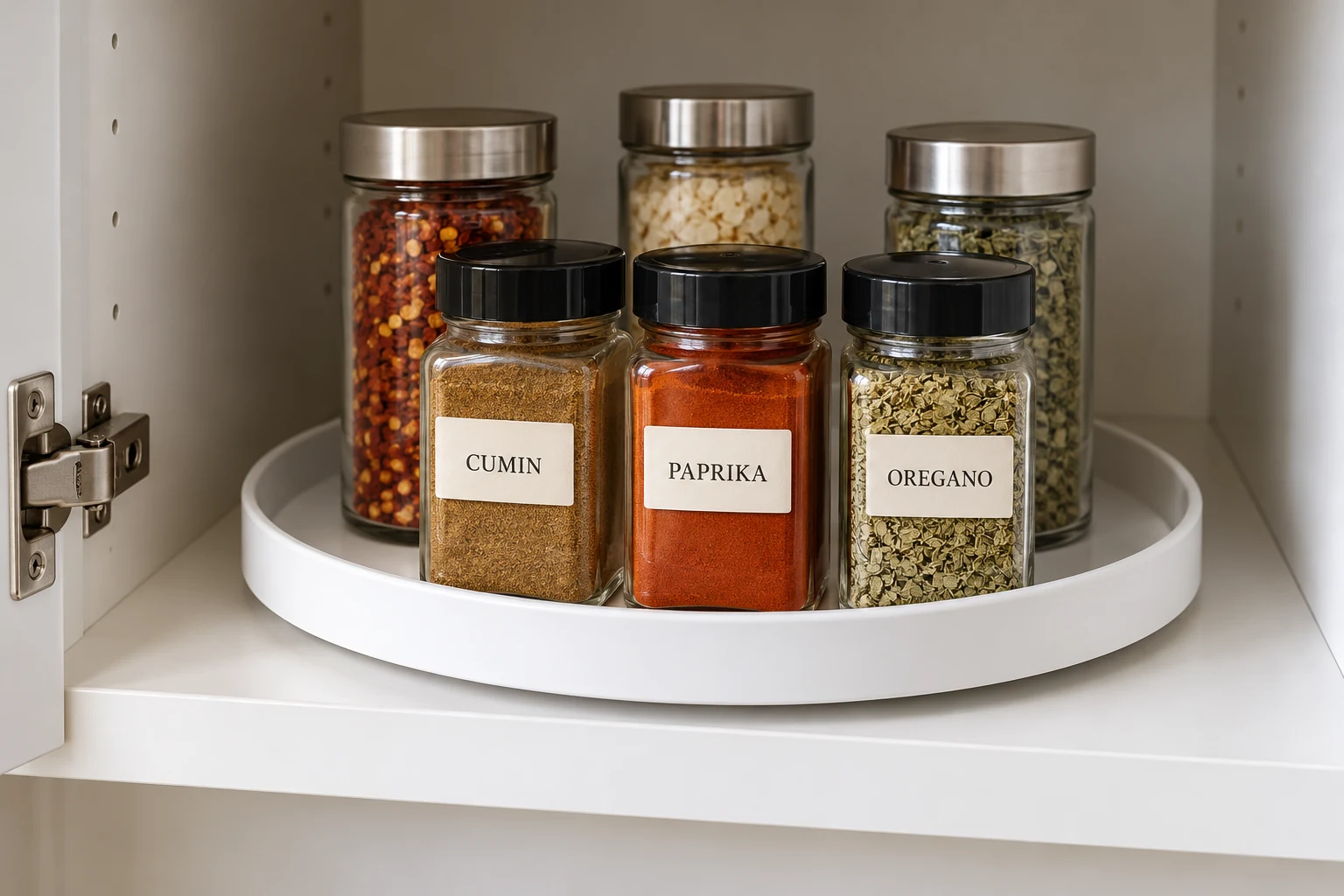
Place the few seasonings you reach for regularly where their names are easiest to see. That could be the front of a shelf or an accessible part of a drawer. Keep the less frequently used group visible enough that it doesn’t become forgotten stock.
Comparable options, not the exact pictured items. Check the selected variant and current directions.
Fit and buying notes
- YouCopia MagicTrack rectangle turntable: Single-level rectangular MagicTrack tray, measuring 10.2 by 12.5 inches and 1.5 inches high. Allow approximately three-quarter-inch clearance on each side for rotation. Check bottle clearance throughout movement. Load evenly, turn gently and hand wash; glass bottles can slide.
If you use the selected rotating tray, avoid hiding everyday bottles behind taller containers. Check whether turning it actually improves access in your cabinet. A stationary front row may already serve a small collection just as well.
Choose an order that follows your cooking rather than an imagined perfect alphabet. Alphabetical storage is useful when it helps you locate ingredients. Grouping a few commonly used bottles together can also work when everybody understands where they belong.
8. Make whole and ground forms distinct
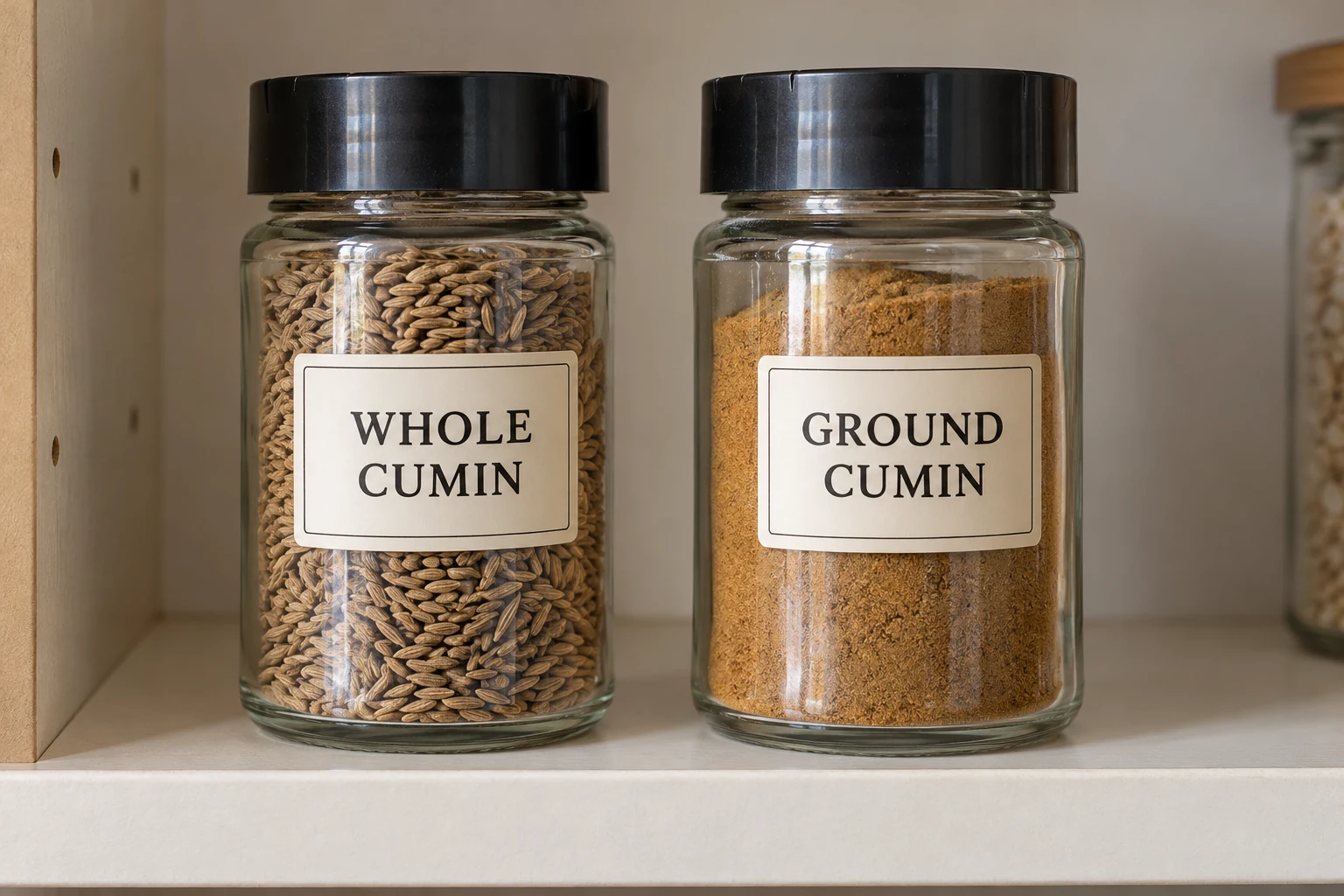
Keep similar names readable when both whole and ground versions share your storage area. Whole cumin and ground cumin shouldn’t require opening jars to distinguish them. Position the part of the original label showing the form toward your viewing direction.
Use suitable pieces you already own for this idea.
Avoid treating visually similar powders as interchangeable because their colors look close. The package name and ingredients provide the useful identification. If a label becomes unreadable, identify the contents before returning the container to the everyday group.
This small change can work without another divider or container. Rearrange the existing bottles so their differences remain visible. Leave enough space that a neighboring jar doesn’t cover the important part of the label.
9. Keep sealed refill packets together
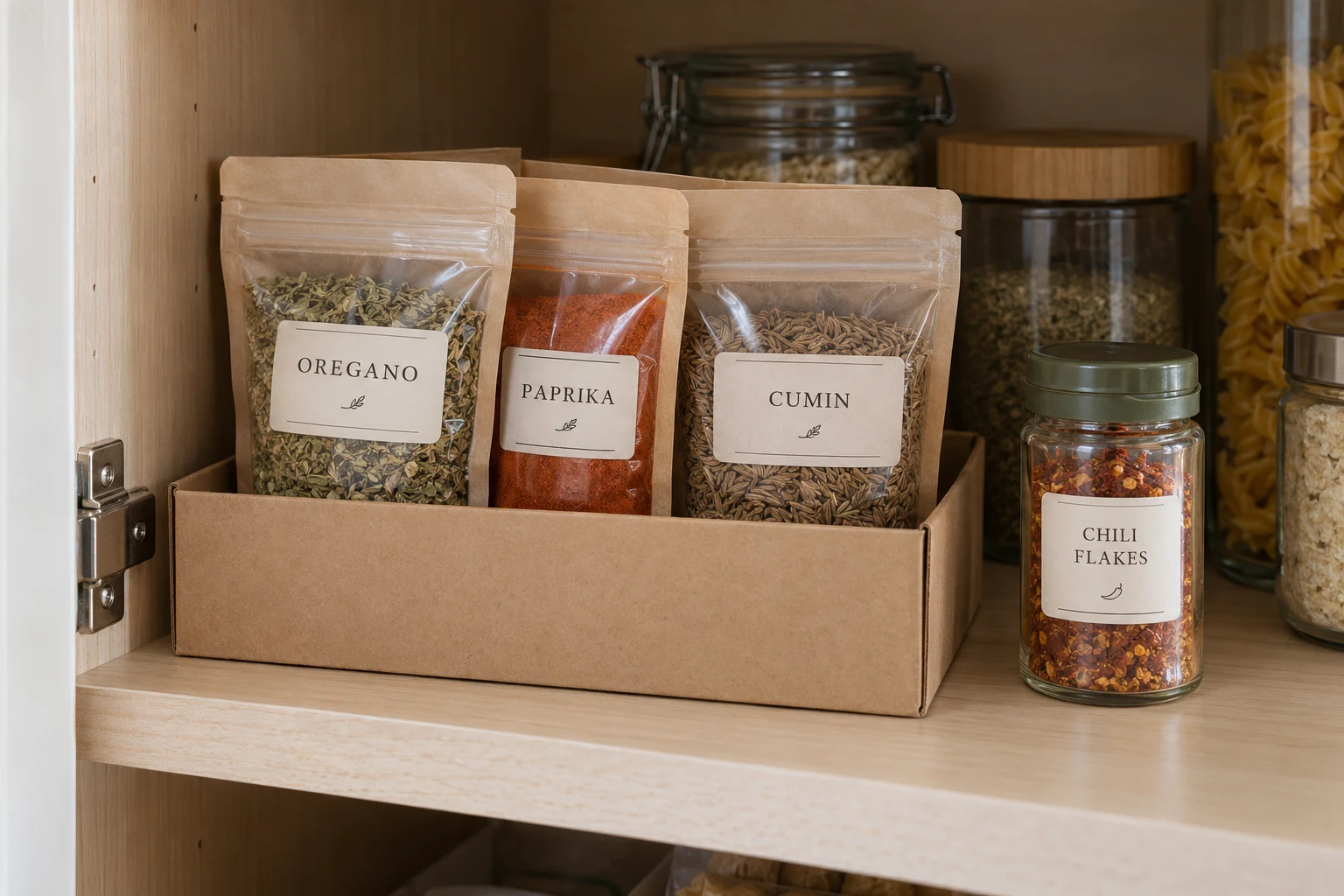
Give unopened refills and properly closed packets an identifiable reserve area. An existing small bin or shelf section may already provide enough separation. Follow each package’s storage and closure directions rather than assuming every pouch seals the same way.
Use suitable pieces you already own for this idea.
Check that reserve before putting a familiar spice on the shopping list. A second packet can disappear behind a taller box while the open bottle appears nearly empty. Grouping reserves makes that check easier without requiring a larger collection.
Don’t empty unrelated packets together to save a few inches. Preserve their identification and original information. Our small pantry organization guide covers grouping ordinary groceries while keeping their practical differences visible.
10. Retain the original package information
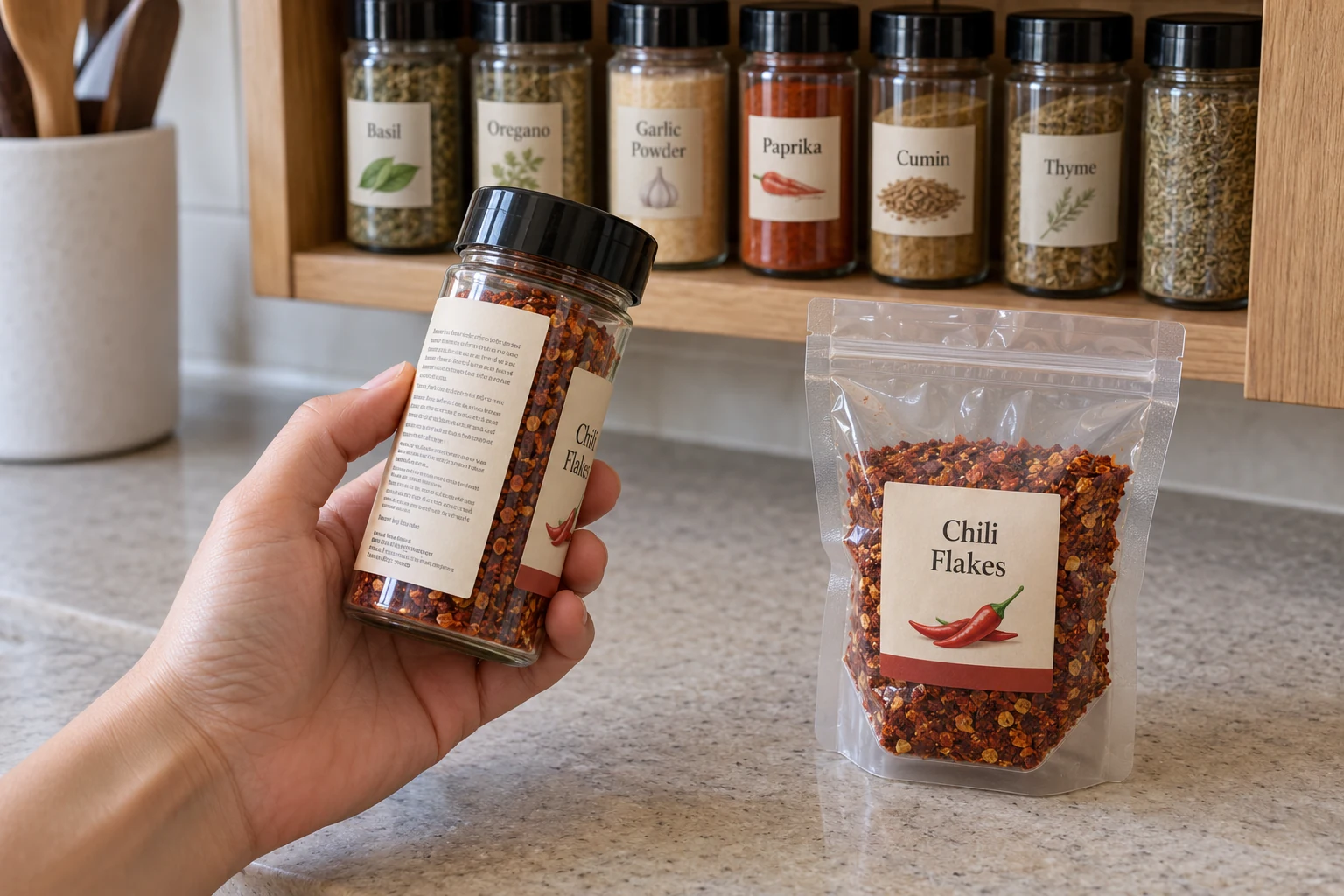
Keep the manufacturer’s date, ingredients and storage directions available, including on reserve packages. If you transfer an ingredient, retain enough original information to identify it properly. A blank jar with a handwritten name doesn’t preserve every detail from its packaging.
Use suitable pieces you already own for this idea.
Follow the guidance for the particular product rather than assigning one lifetime to every seasoning. Best-by dates and quality guidance can differ across products. Don’t replace the original product date with the date a new container was filled.
Check existing supplies before deciding what to replace. Organization can reveal an old package without proving whether its contents are suitable. When condition or identity is uncertain, seek manufacturer guidance instead of guessing from an attractive arrangement.
11. Leave room for dry measuring
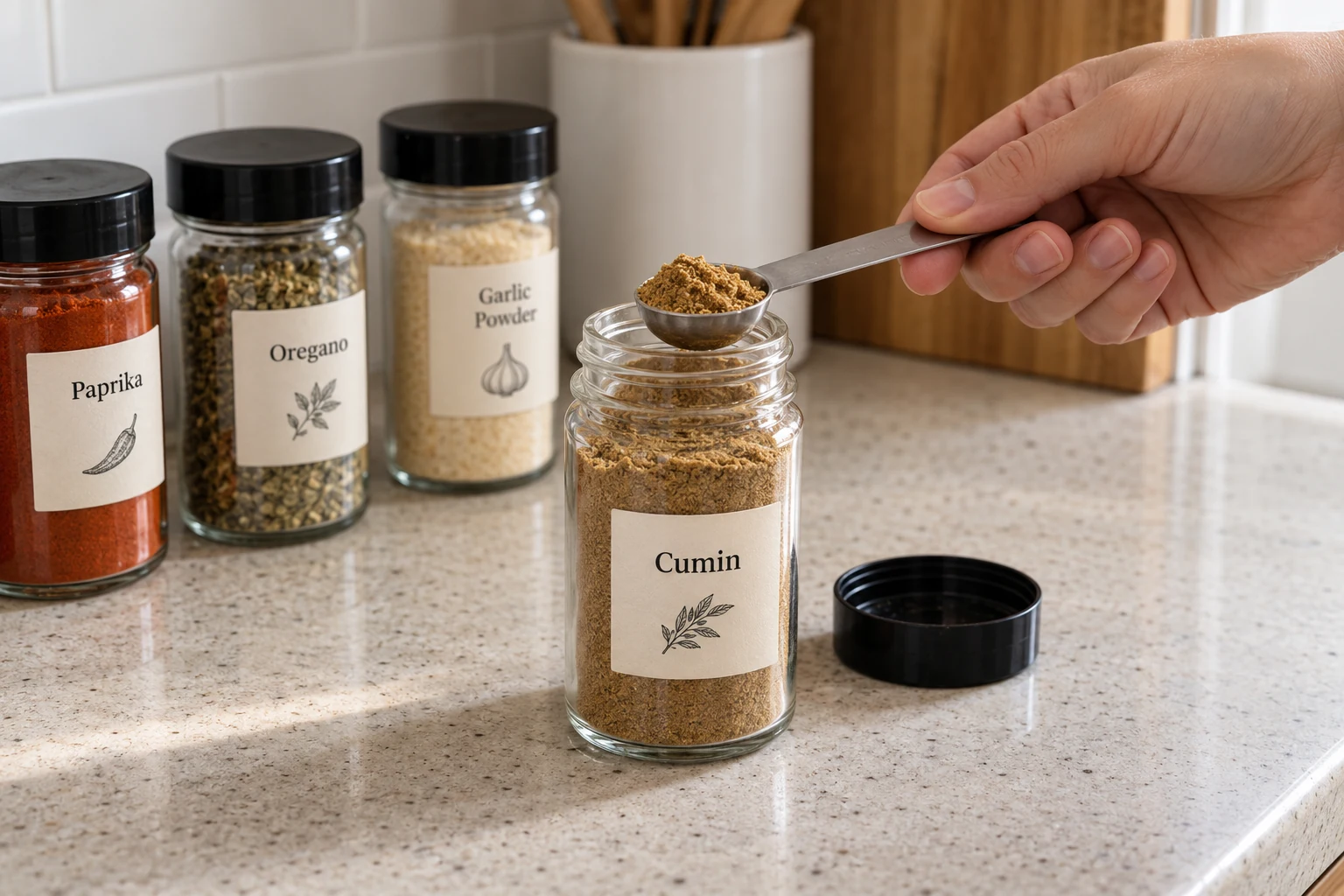
Bring the closed bottle to a dry preparation area before measuring. Use a clean, dry spoon and keep the open container away from cooking steam. Avoid shaking it directly above a steaming pot, where moisture can enter the container.
Use suitable pieces you already own for this idea.
Return the closure promptly after taking the amount you need. Keep the storage position clear enough that replacing the bottle doesn’t become another balancing task. You don’t need a new spoon collection or dedicated display tray for this step.
Check the routine from storage through measuring and back again. A shelf may look accessible until another appliance occupies the preparation space. Adjust the location around the work you actually do while cooking.
12. Try taking one bottle out and back
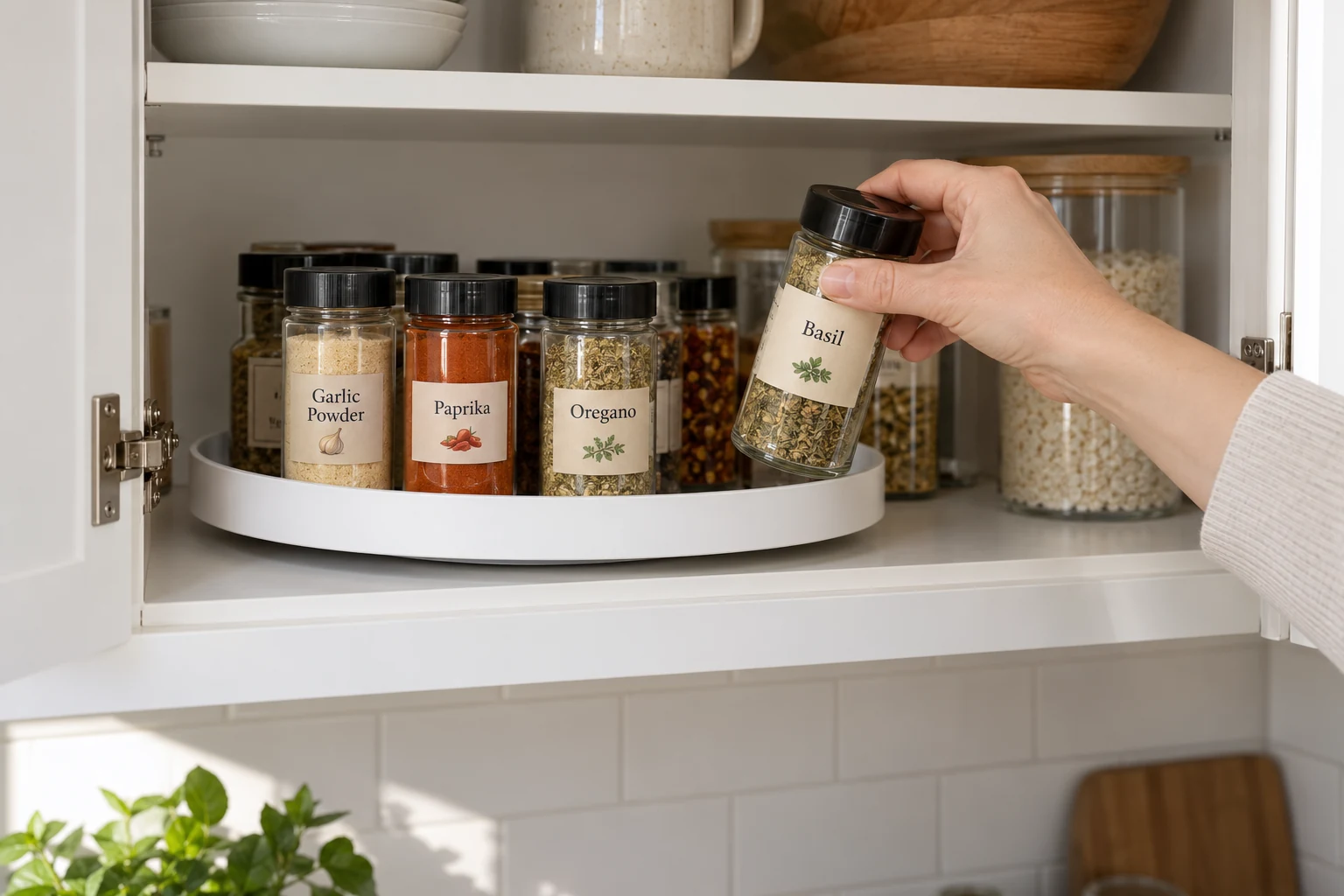
Choose a bottle from the back of the arrangement and retrieve it normally. Notice whether you must remove other items, lift a heavy bin or reach awkwardly. Return it and check whether its name remains visible afterward.
Comparable options, not the exact pictured items. Check the selected variant and current directions.
Fit and buying notes
- YouCopia MagicTrack rectangle turntable: Single-level rectangular MagicTrack tray, measuring 10.2 by 12.5 inches and 1.5 inches high. Allow approximately three-quarter-inch clearance on each side for rotation. Check bottle clearance throughout movement. Load evenly, turn gently and hand wash; glass bottles can slide.
For the optional rotating tray, check the full motion slowly with the actual bottles in place. Don’t force a turn when a lid or neighboring package catches. The tray should solve a particular access problem before it earns space in the cabinet.
Keep the successful parts and change the step that still feels awkward. You can have useful spice storage with mixed bottles and a modest collection. Aim for clear identification and easy returns, even when the cabinet isn’t perfectly arranged.
Visuals are original AI-generated editorial concepts, not photographs of actual products, tested projects, cooked results or real events.