How to Plan a Two-Night Getaway Without Overbooking It

Explore the guide
- 1. Write down the complete time window
- 2. Compare the whole journey
- 3. Choose one base that supports the reason for going
- 4. Add the costs that sit outside the room rate
- 5. Verify the anchor activity before arranging everything around it
- 6. Check booking dependencies before committing
- 7. Give the arrival evening a modest job
- 8. Leave space around Saturday's main plan
- 9. Pack for the confirmed plan
- 10. Choose a workable weather alternative
- 11. Plan Sunday backward from home
- 12. Keep the useful details together
A two-night getaway gives you fewer usable hours than three calendar dates suggest. Start with when you can leave and when you need to return. Then choose a destination and one main experience that fit inside that window.
Think of the first evening as arrival time, rather than a second full sightseeing day. Your last morning also has a departure deadline. Protecting those edges leaves Saturday room to feel different from an ordinary day of appointments.
The twelve decisions below turn that approach into a practical plan. The times are fictional examples, not current journey estimates or promises about a particular destination. Replace them with the routes, opening hours and personal needs that apply to your trip.
1. Write down the complete time window
Record the earliest departure you can realistically manage and your latest comfortable return. Include responsibilities at home that affect those times. Leaving work at five doesn’t mean you can already be several towns away at five.
Use suitable pieces you already own for this idea.
In a fictional example, Friday at five to Sunday at five provides forty-eight hours away. That number includes everything, not just exploring. Put those two boundaries on your calendar before choosing a hotel or saving attractions.
Check that everyone traveling agrees on the same window. A Sunday evening commitment can matter more than an appealing late checkout. Resolve that difference while changing the destination is still easy.
2. Compare the whole journey

A short flight isn’t the same as a short trip from your door to the accommodation. Include getting to the terminal, required arrival time and the onward journey. For driving, consider conditions, stops and arrival arrangements instead of using an optimistic map estimate.
Use suitable pieces you already own for this idea.
In the example, three hours each way consumes six of the forty-eight hours. Two eight-hour sleeping periods leave twenty-six hours before meals, check-in and local movement. This calculation illustrates the tradeoff; your travel and rest needs may differ.
Compare complete travel options using the same start and finish points. A route that looks slower on one segment may require fewer transfers overall. Choose based on the journey you will actually make.
3. Choose one base that supports the reason for going

Name the part of the getaway you most want to enjoy. That might be a particular museum, a quiet waterfront or time with someone nearby. Choose a base that makes that experience manageable within your available hours.
Use suitable pieces you already own for this idea.
Compare accommodation locations against the actual route, rather than a broad neighborhood description. Check walking conditions, transit options or parking where they matter to you. A lower nightly price can lose its appeal if it adds repeated inconvenient journeys.
Keeping one base also avoids another round of packing and checking in. You don’t have to visit another town simply because it appears close on a map. Save it for another visit when moving would consume the time you wanted there.
4. Add the costs that sit outside the room rate

Build a simple total using the actual accommodation quote and transportation option. Add the applicable taxes, booking charges, parking, local travel, meals and activity costs. Note which amounts are confirmed and which remain estimates.
Use suitable pieces you already own for this idea.
Keep a little room for ordinary changes instead of assigning every available dollar to reservations. The appropriate margin depends on your own budget and plans. Don’t rely on an unverified discount, assumed free parking or an attraction’s old admission price.
Compare alternatives using the same number of travelers and nights. A room total and a per-person package price aren’t directly comparable until adjusted. Write down what each includes before treating one as the cheaper option.
5. Verify the anchor activity before arranging everything around it

Choose one experience you would be disappointed to miss. Check its current operating hours, admission process and availability for your actual dates. A Saturday reservation or seasonal closure can change the shape of the whole weekend.
Use suitable pieces you already own for this idea.
For a park visit, check required reservations and current access on its official page. For another attraction, use its own current booking information. A general destination guide is useful discovery, but it doesn’t establish that your preferred slot exists.
Identify any practical needs before paying for surrounding plans. These might include step-free access, suitable seating or the length of an activity. Ask the provider directly when the published information doesn’t answer your question.
6. Check booking dependencies before committing
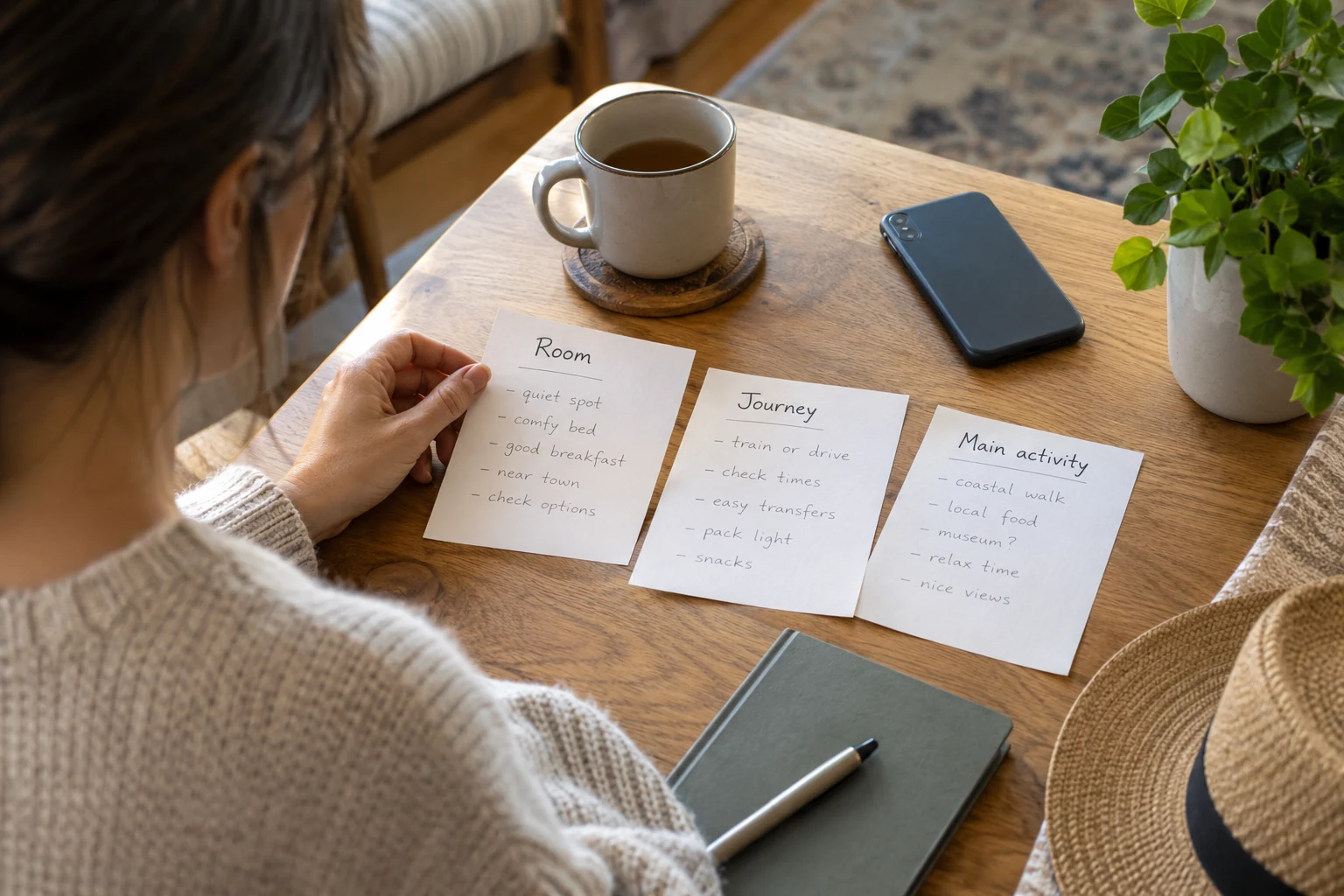
Make sure the room, journey and main activity work together before confirming restrictive bookings. A suitable activity ticket isn’t enough if the available train arrives afterward. Equally, convenient transportation doesn’t establish that the accommodation can receive you at that hour.
Use suitable pieces you already own for this idea.
Read cancellation and change conditions for each booking separately. Similar words on different websites may describe different deadlines or charges. Record the relevant terms, rather than assuming the whole trip has one shared refund policy.
Confirm check-in arrangements if arrival could be late. Keep the provider’s instructions somewhere you can access during the journey. Don’t leave that question until you’re standing outside after reception has closed.
7. Give the arrival evening a modest job

Plan to arrive, settle in and find an appropriate meal nearby. Check whether the food option will still be operating around your likely arrival. You don’t need an elaborate reservation that becomes stressful after a routine delay.
Use suitable pieces you already own for this idea.
If dinner is important, choose a time with realistic arrival room or move it to Saturday. A flexible first evening protects the rest of the visit. Avoid adding a distant viewpoint simply because the itinerary currently has an empty line.
8. Leave space around Saturday's main plan

Place the confirmed activity on Saturday, then leave time to reach it and eat. Add another stop only if it fits comfortably nearby. You can keep appealing extras as possibilities rather than appointments you must complete.
Use suitable pieces you already own for this idea.
Include the rest you want, whether that means an unhurried breakfast or a quiet afternoon break. Different travelers need different pacing. Discuss that before interpreting someone’s wish to sit down as a problem with the trip.
When something runs longer than expected, remove an optional stop before squeezing every remaining transition. The original purpose should guide that choice. You can enjoy a place without working through every saved recommendation.
9. Pack for the confirmed plan

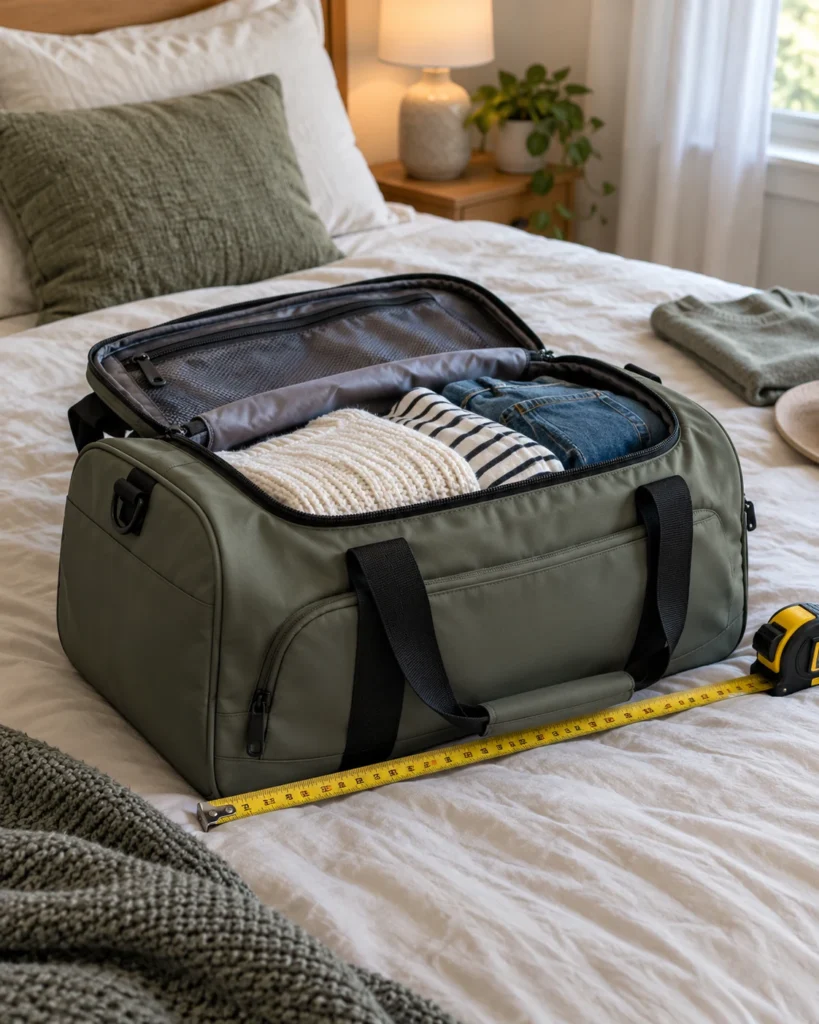
Check the forecast and planned activities before choosing what goes in your existing bag. Include the essentials you personally need, then reconsider items for activities you never booked. Our cabin weekend packing guide covers that more specific kind of stay.
- Optional four medium packing cubesView on Amazon
- Optional larger separate toiletry pouchView on Amazon
Comparable options, not the exact pictured items. Check the selected variant and current directions.
Fit and buying notes
- Amazon Essentials packing cubes: Four medium organizers; compare each cube with your luggage interior.
- BAGSMART toiletry bag: A larger pouch option; compare dimensions with your weekend bag.
Packing cubes are optional organizers, not a requirement for a short trip. The selected Amazon Essentials set contains four medium cubes, so compare each with your bag’s interior. They organize clothing without establishing extra luggage allowance or providing compression.
A separate toiletry pouch can help keep your usual items together. The selected BAGSMART option is relatively large, so check whether its size suits this particular bag. It isn’t a substitute for checking your transport provider’s current liquid or baggage rules.
10. Choose a workable weather alternative

Look at conditions for the actual destination close to departure. An outdoor plan may need changing when access, weather or local guidance makes it unsuitable. Keep one nearby indoor alternative that everyone would still enjoy.
Use suitable pieces you already own for this idea.
Check that alternative’s hours and booking requirements too. It isn’t much help to discover your backup closes before you arrive. If both options become impractical, simplify the plan instead of adding a long unplanned journey.
11. Plan Sunday backward from home

Start with your agreed return time and work backward through the actual journey. Include collecting bags, checkout and reaching the departure point. Leave the amount of margin appropriate to the transport and conditions you’re relying on.
Use suitable pieces you already own for this idea.
In the example, traveling three hours means leaving at two to reach home at five. That doesn’t make a last-minute attraction visit automatically feasible. Choose a nearby final activity only after accounting for its duration and your other departure tasks.
12. Keep the useful details together

Save confirmed booking details, addresses and provider instructions somewhere accessible to the people who need them. Include the return plan and any important access arrangements. Check what remains available without a connection if parts of your route have unreliable service.
Use suitable pieces you already own for this idea.
Separate confirmed commitments from optional suggestions in those notes. That makes changing the afternoon easier without losing track of a paid reservation. Our first city-break planning guide adds detail for navigating an unfamiliar urban destination.
Before leaving, remove one optional stop that only fits under ideal conditions. Keep the experience you chose the destination for, plus room for ordinary travel friction. A short getaway works better when the plan leaves you enough time to be there.
Visuals are original AI-generated editorial concepts, not photographs of actual products, tested projects, cooked results or real events.