Potting Mix or Garden Soil for Your Containers
Explore the guide
- 1. Turn the bag around before comparing brands
- 2. Understand why loose garden soil changes inside a pot
- 3. Let the plant narrow the choice
- 4. Notice what's already in the mixture
- 5. Separate fertilizer questions from texture questions
- 6. Check the container before blaming the medium
- 7. Follow the bag's instructions when handling dry mix
- 8. Compare usable volume instead of bag height
- 9. Evaluate used medium before topping it up
- 10. Correct a mistaken purchase before planting
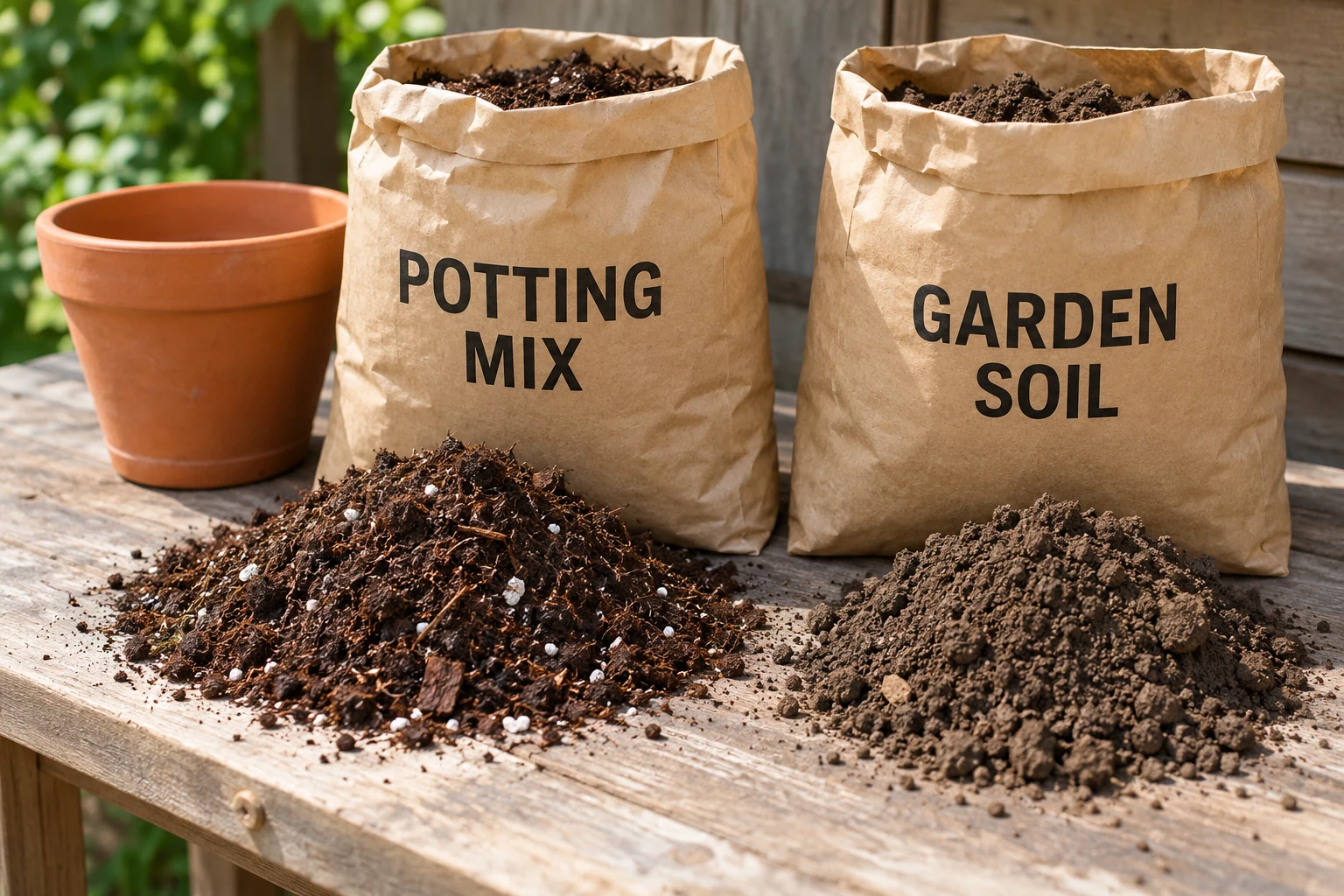
For most ordinary containers, start with a mix specifically labeled for pots. Garden soil alone can compact inside that limited space, leaving roots without enough air. A bag’s intended use tells you more than its reassuring photograph of healthy plants.
The confusing part is the wording. Some bags say potting soil, while others say potting mix or planting mix. Those names aren’t a reliable shortcut around reading the directions and checking your plant’s needs.
You don’t need to assemble a collection of amendments before planting one container. First match the growing medium, plant and pot. These ten checks help you make that choice without treating every bag as interchangeable.
1. Turn the bag around before comparing brands
Look for an explicit statement about use in pots or containers. Then check whether the directions describe outdoor plants, houseplants or a more specialized situation. A large flower photograph doesn’t establish suitability for every plant pictured in your own home.
Comparable options, not the exact pictured items. Check the selected variant and current directions.
Fit and buying notes
- Miracle-Gro Potting Mix,16-quart single bag: One 16-quart bag of general container mix with added plant food. Check your plant’s requirements and the current feeding directions. Choose a specialty formula when your plant needs one.
Compare the actual selected variant when shopping online. One listing can contain several sizes or related formulas under similar photographs. Save the directions for the bag you receive, rather than relying on a different product’s instructions.
The selected Miracle-Gro Potting Mix is one container option, supplied in a sixteen-quart bag. It already contains plant food, so check its current feeding directions before adding more. Confirm delivery availability for your address and compare local bag sizes before buying.
2. Understand why loose garden soil changes inside a pot
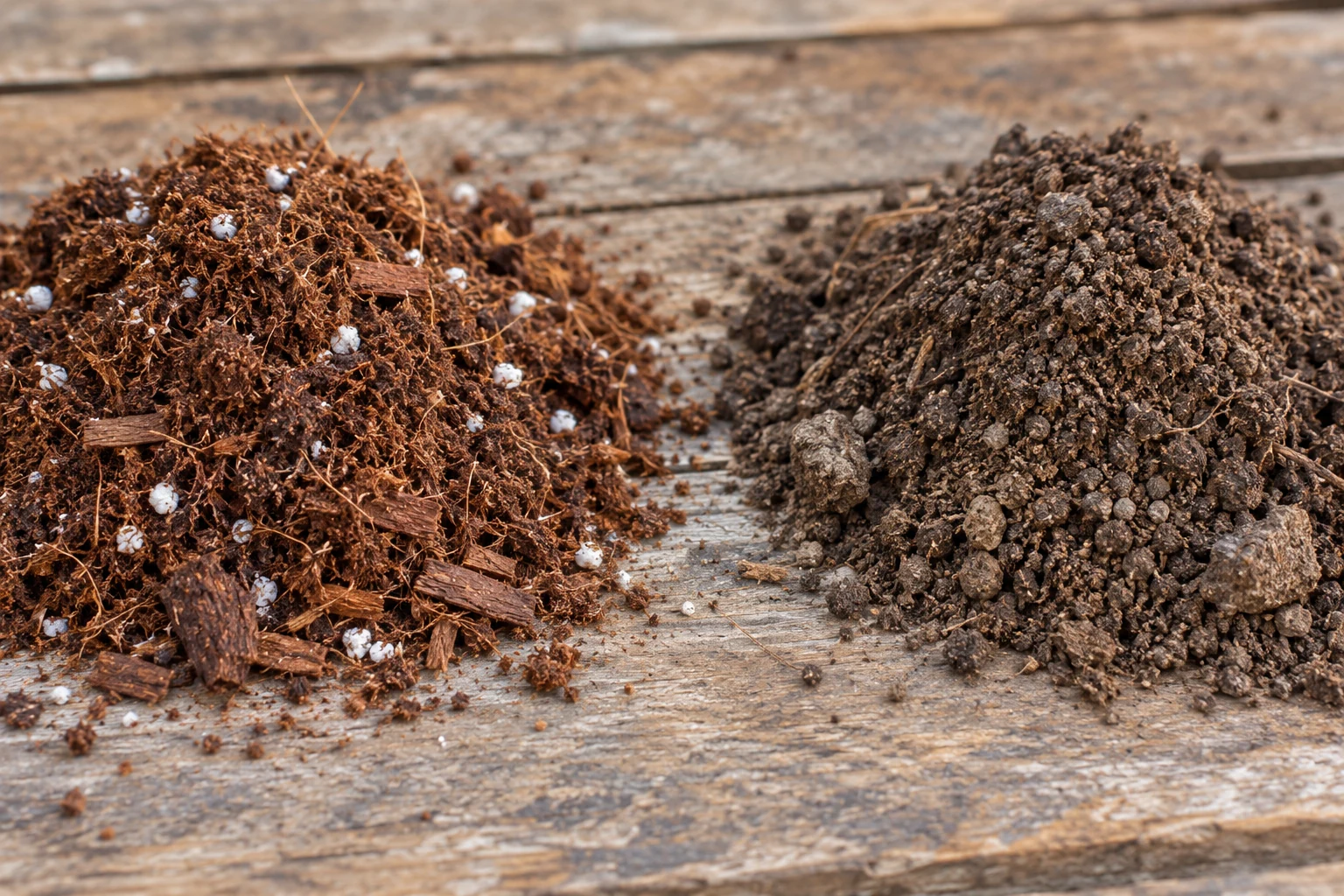
Soil that supports plants in a garden bed doesn’t automatically behave well in a container. Roots occupy a smaller, bounded space with different drainage conditions. Mineral garden soil alone can become compacted and poorly aerated there.
Use suitable pieces you already own for this idea.
That doesn’t mean the soil in your yard is worthless. It means moving it into a pot changes the job you’re asking it to perform. Buying a suitable finished mix avoids guessing how much another ingredient might compensate.
Don’t use color as your only quality check. A dark material isn’t necessarily a suitable container medium, and visible fibers aren’t automatically a defect. Consider the intended use and texture together, rather than judging one handful against a marketing photograph.
3. Let the plant narrow the choice
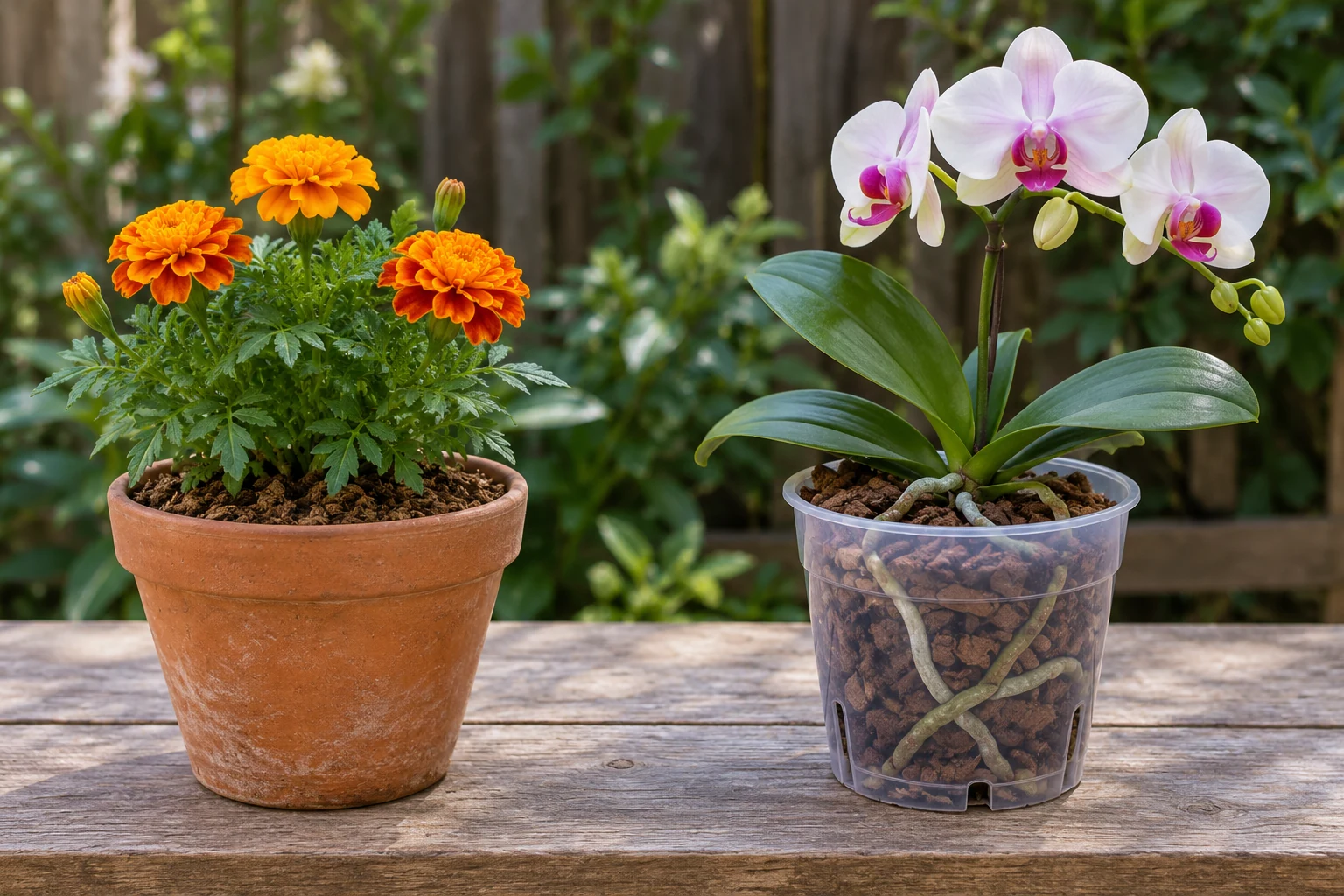
An outdoor annual, an orchid and a cactus don’t necessarily need the same growing medium. Identify the plant before choosing the bag. If its care guidance specifies a specialty mix, a general outdoor formula isn’t an automatic substitute.
Use suitable pieces you already own for this idea.
Separate seed starting from filling containers for established plants. A bag suited to ordinary transplanting may have different ingredients or fertilizer than seedling guidance recommends. Follow the plant’s propagation instructions instead of assuming smaller plants simply need less of everything.
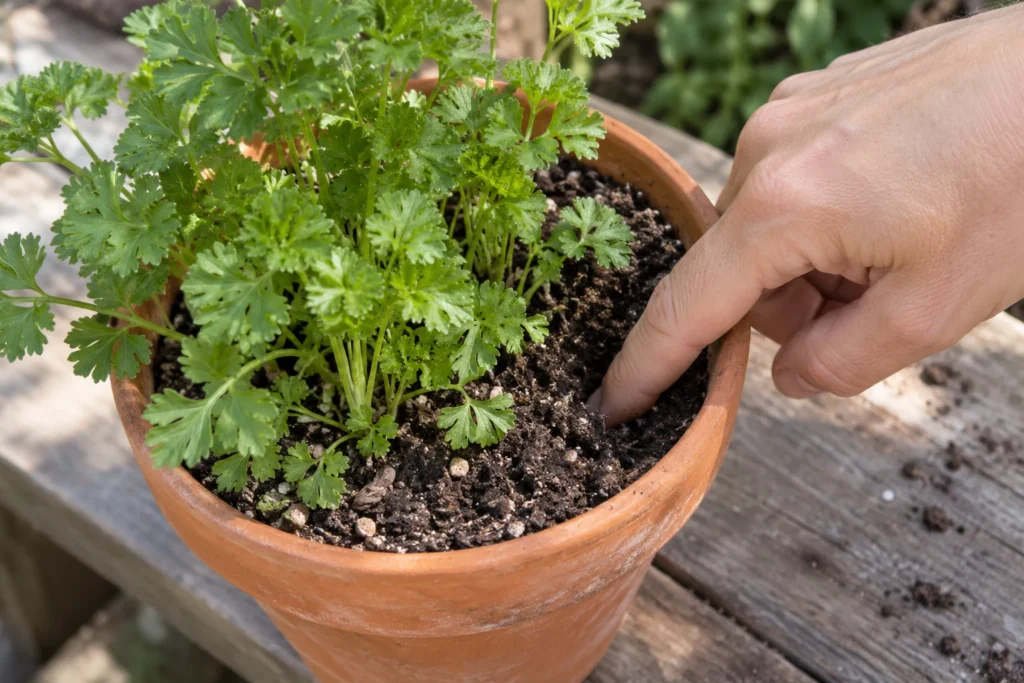
For a mixed herb display, check each herb’s growing conditions before sharing a container. Similar kitchen uses don’t establish identical care needs. Our beginner herb container ideas explain useful distinctions before you combine plants.
4. Notice what's already in the mixture
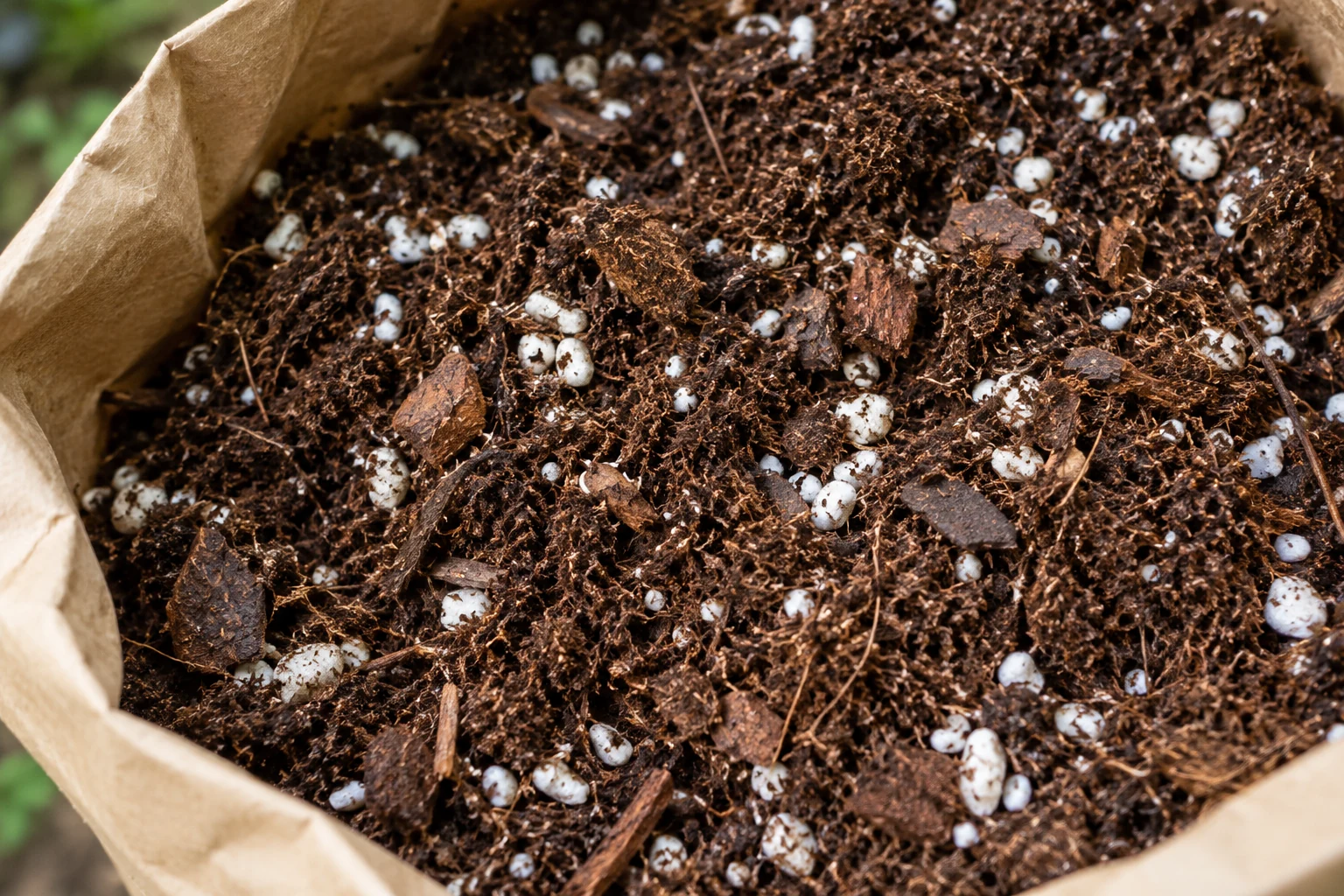
Finished mixes can combine peat, coir, bark, perlite or other ingredients. Each mixture has its own proportions and intended application. Recognizing those components helps you avoid purchasing something the bag already includes.
Use suitable pieces you already own for this idea.
Perlite supports aeration, while vermiculite increases moisture and nutrient retention. Their names don’t describe interchangeable jobs. Adding either automatically can move a finished formulation away from the conditions your particular plant needs.
Read the complete ingredient information before following a generic online recipe. A suggestion written for a different starting material may not apply to your bag. If you need a specialty adjustment, use guidance that identifies both the plant and starting medium.
5. Separate fertilizer questions from texture questions
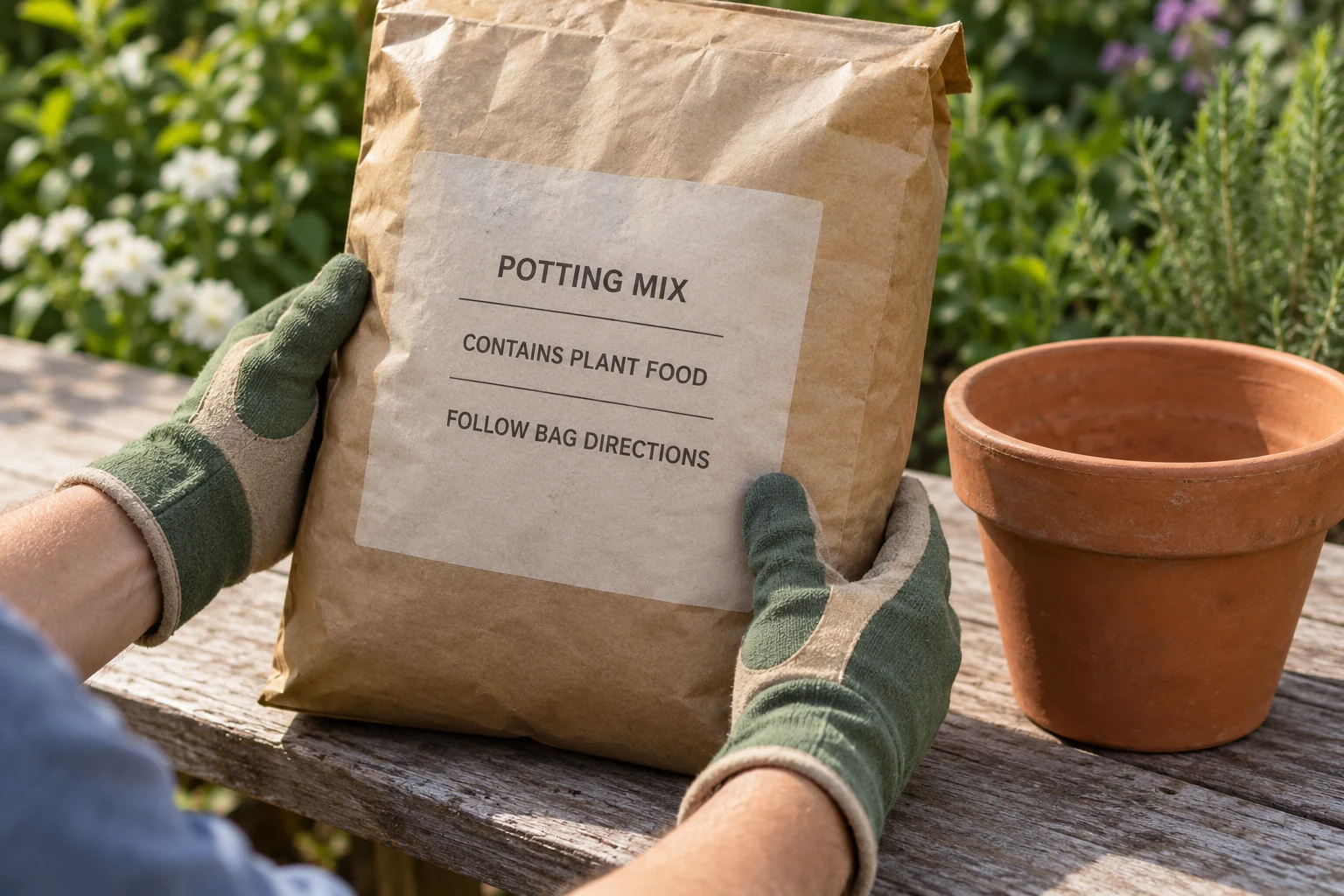
A mixture can feel loose while containing fertilizer you haven’t noticed. Look for wording about added plant food, a starter charge or controlled release feeding. These descriptions affect later care, even when the material looks similar to another bag.
Use suitable pieces you already own for this idea.
Don’t combine several feeding products simply because each promises vigorous growth. Begin with the current mix directions and your plant’s requirements. A stated feeding period isn’t a guarantee that every container behaves identically throughout every season.
Keep the bag label or photograph it before discarding the packaging. Include the product name and selected formula in that record. Later, you’ll have a useful reference when deciding whether additional feeding is appropriate.
6. Check the container before blaming the medium
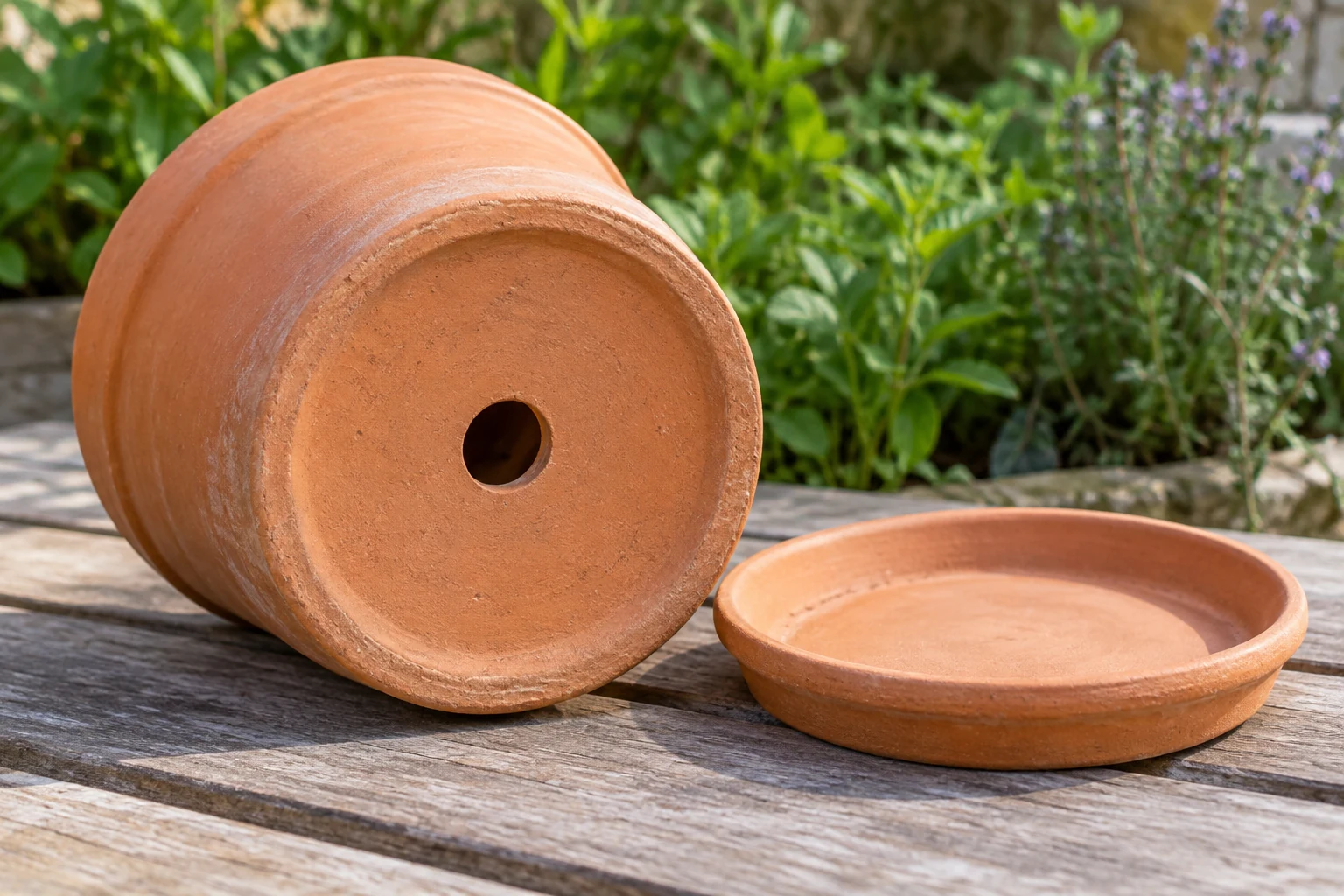
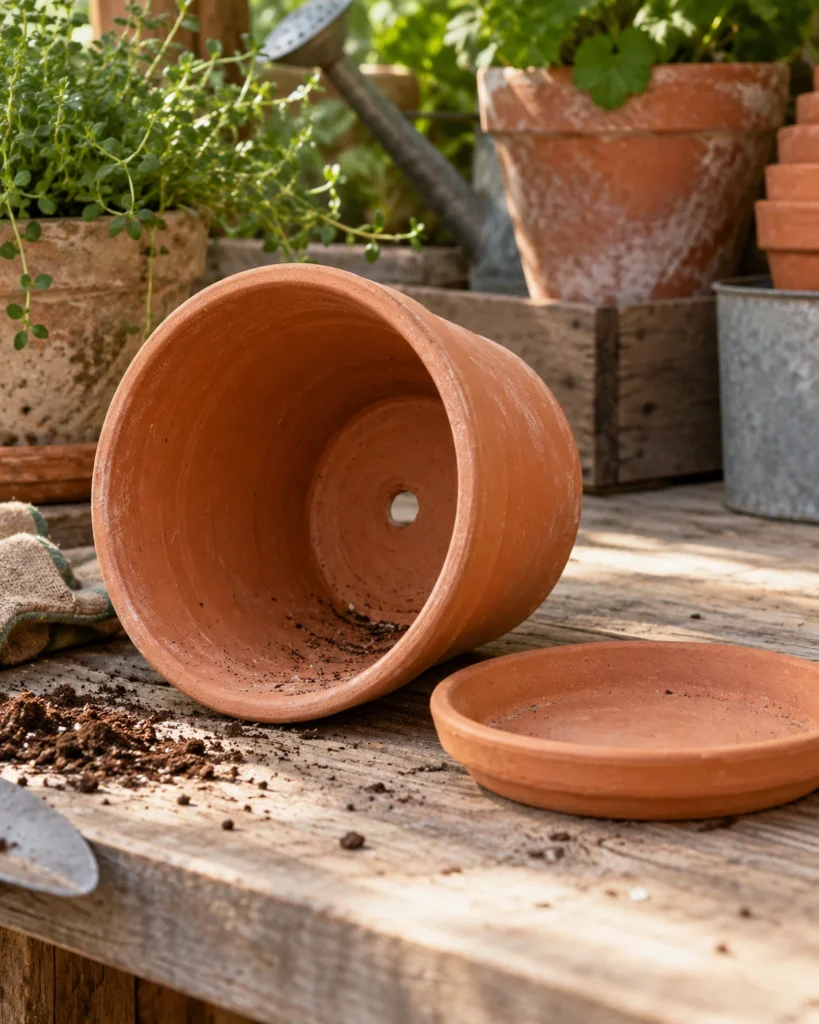
A suitable mix still needs an appropriate container arrangement. Find the actual drainage opening in the empty pot and check where runoff will collect. A decorative outer cover can conceal water beneath an otherwise suitable growing pot.
Use suitable pieces you already own for this idea.
Don’t add a gravel layer underneath the mix as a drainage repair. Water can collect above that layer instead of escaping as expected. Use the growing medium appropriately and address the container’s drainage directly.
Check whether you can lift the inner pot or empty its catchment comfortably. That practical movement matters after planting, too. Our pot drainage and saucer setups show arrangements you can inspect without dismantling the whole display.
7. Follow the bag's instructions when handling dry mix
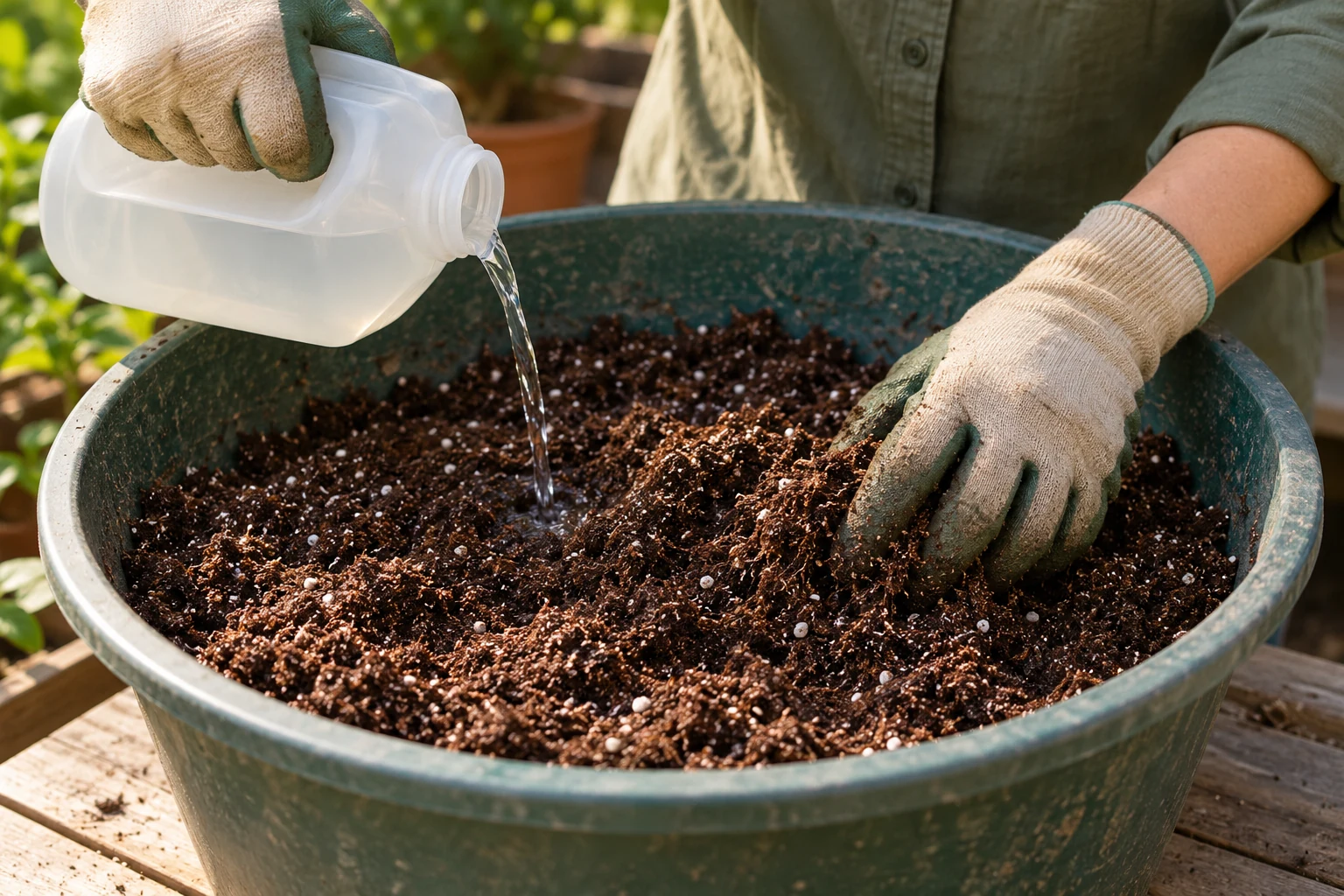
Very dry peat-containing material can be difficult to wet evenly. If the directions call for moistening before planting, do that before filling around the roots. Follow the handling precautions on the actual package, including any dust or protective-equipment guidance.
Use suitable pieces you already own for this idea.
Use an existing suitable container for preparation instead of spreading loose material across a living area. Add water gradually as the instructions require. A saturated puddle isn’t the goal, and a photograph can’t tell you the correct amount.
Allow yourself room to work without crushing the plant against the container edge. Position it according to its planting instructions before finishing the fill. Avoid changing its planting depth merely to use up the last handful of mix.
8. Compare usable volume instead of bag height
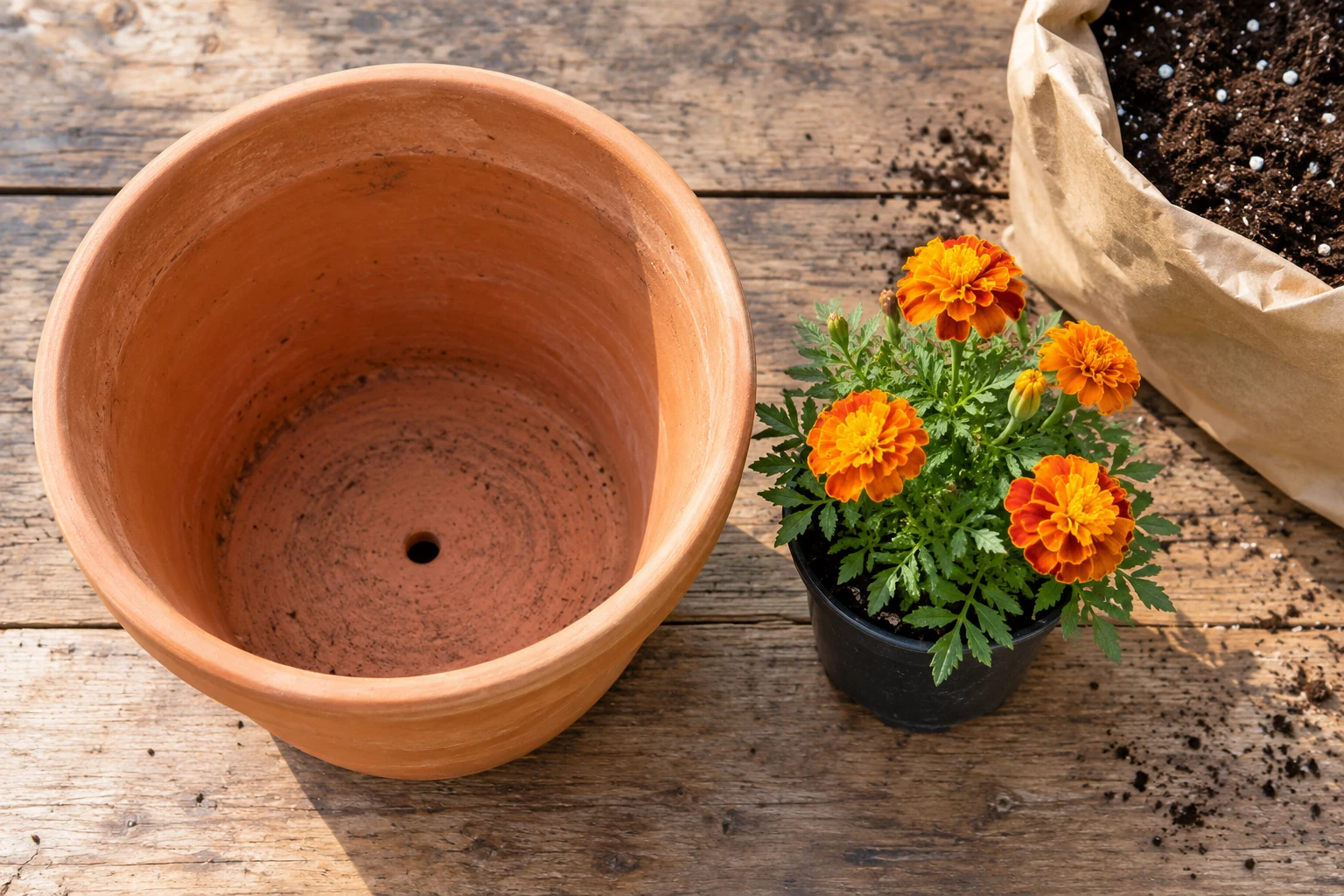
Check the quantity printed on the package and the space available around your plant’s root ball. Container shape changes how much medium that space holds. Two pots with similar rim widths can require noticeably different amounts.
Use suitable pieces you already own for this idea.
Treat a bag’s example coverage as an estimate. Your container’s taper, planting depth and existing root ball affect the actual requirement. Don’t fill a decorative outer cover when an inner growing pot already does that job.
Plan the purchase around the containers you’re actually planting. Buying several extra amendments can complicate storage without improving the original choice. Keep any remaining product according to its package directions, with its identity still readable.
9. Evaluate used medium before topping it up
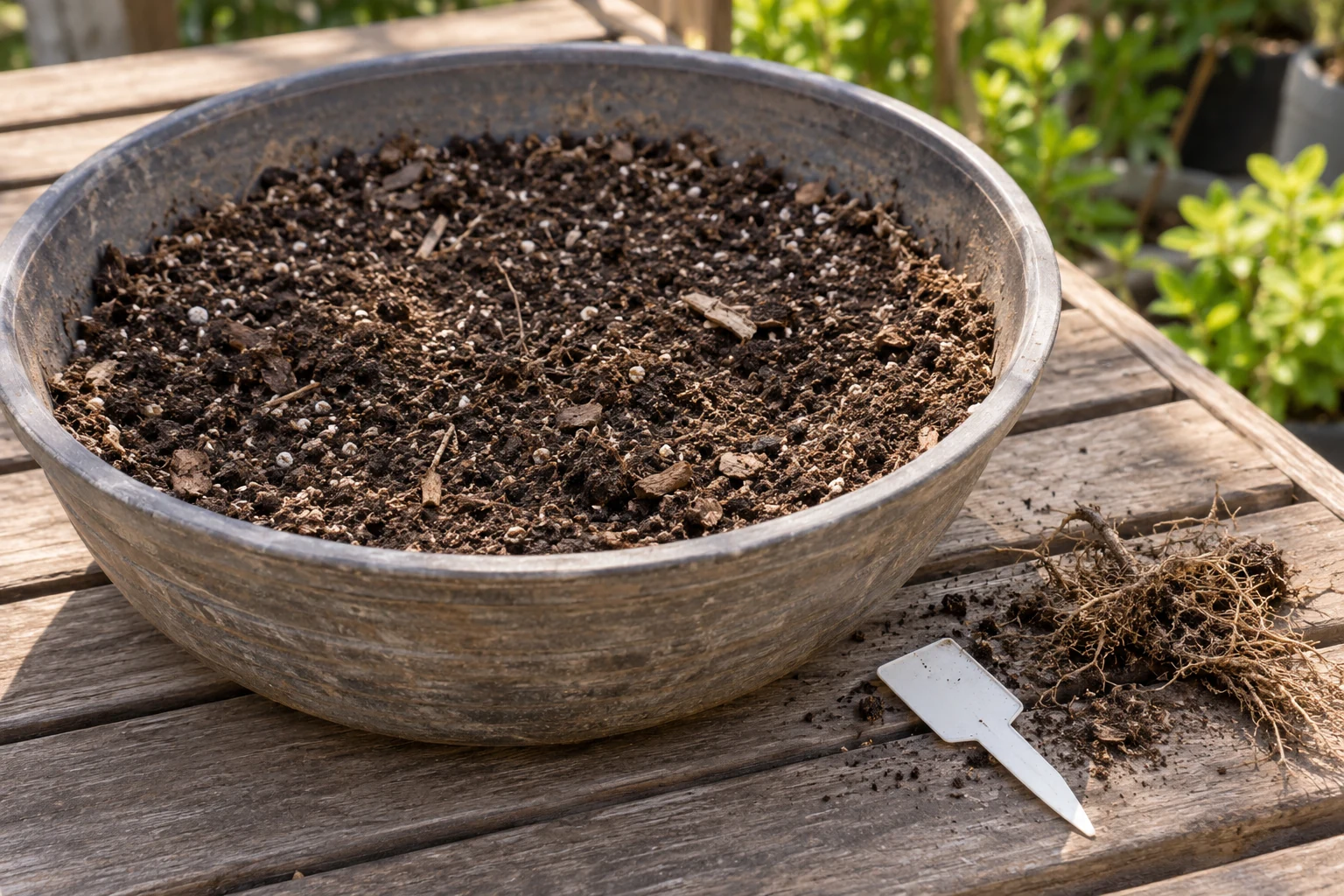
Previously used potting medium isn’t automatically identical to fresh material from the same brand. Its structure and available nutrients change over time. Remove old roots and debris before deciding whether reuse makes sense for your next planting.
Use suitable pieces you already own for this idea.
Don’t save medium from plants with known root disease for another container. Seek local extension guidance when the problem remains uncertain. A new layer across the top doesn’t establish that the material underneath is suitable or healthy.
Avoid a universal refresh recipe assembled from conflicting online ratios. The old mixture, its condition and the next plant all matter. If you can’t identify what you’re starting with, a suitable fresh formulation offers a clearer baseline.
10. Correct a mistaken purchase before planting
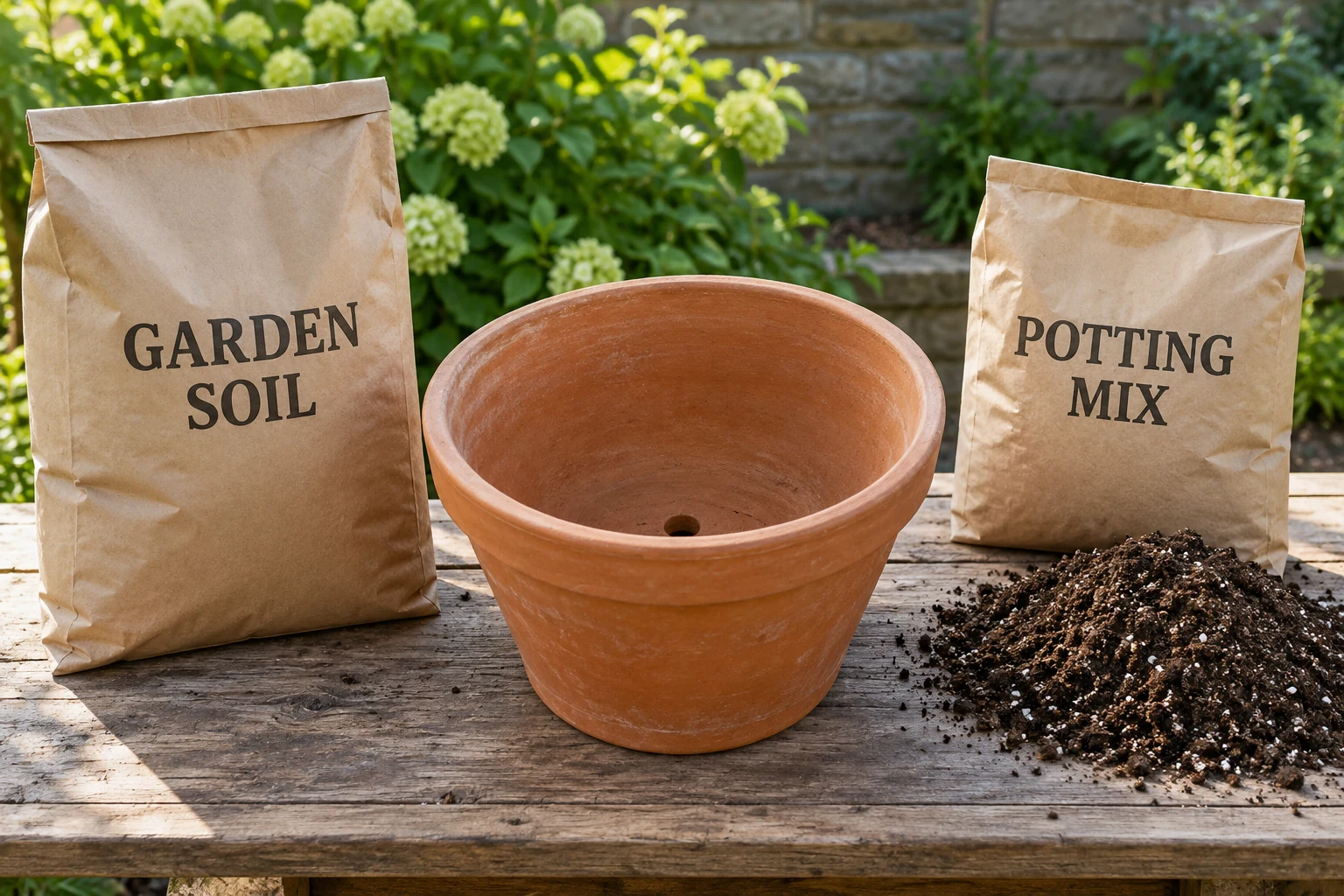
If you bought garden soil by mistake, pause before opening every bag. Check whether an unopened product can be returned or exchanged. If keeping it, check suitability for an existing garden project before using it there.
Use suitable pieces you already own for this idea.
You don’t need to invent a container recipe to justify the purchase. Ask a local extension service about your exact material if you want a specific mixing recommendation. Share the full label, container size and intended plant, rather than only the brand name.
The useful question is whether this medium fits this plant in this container. Answer that before adding fertilizer, drainage accessories or another bag. A clear starting choice makes later care easier to understand when something needs adjusting.
Visuals are original AI-generated editorial concepts, not photographs of actual products, tested projects, cooked results or real events.